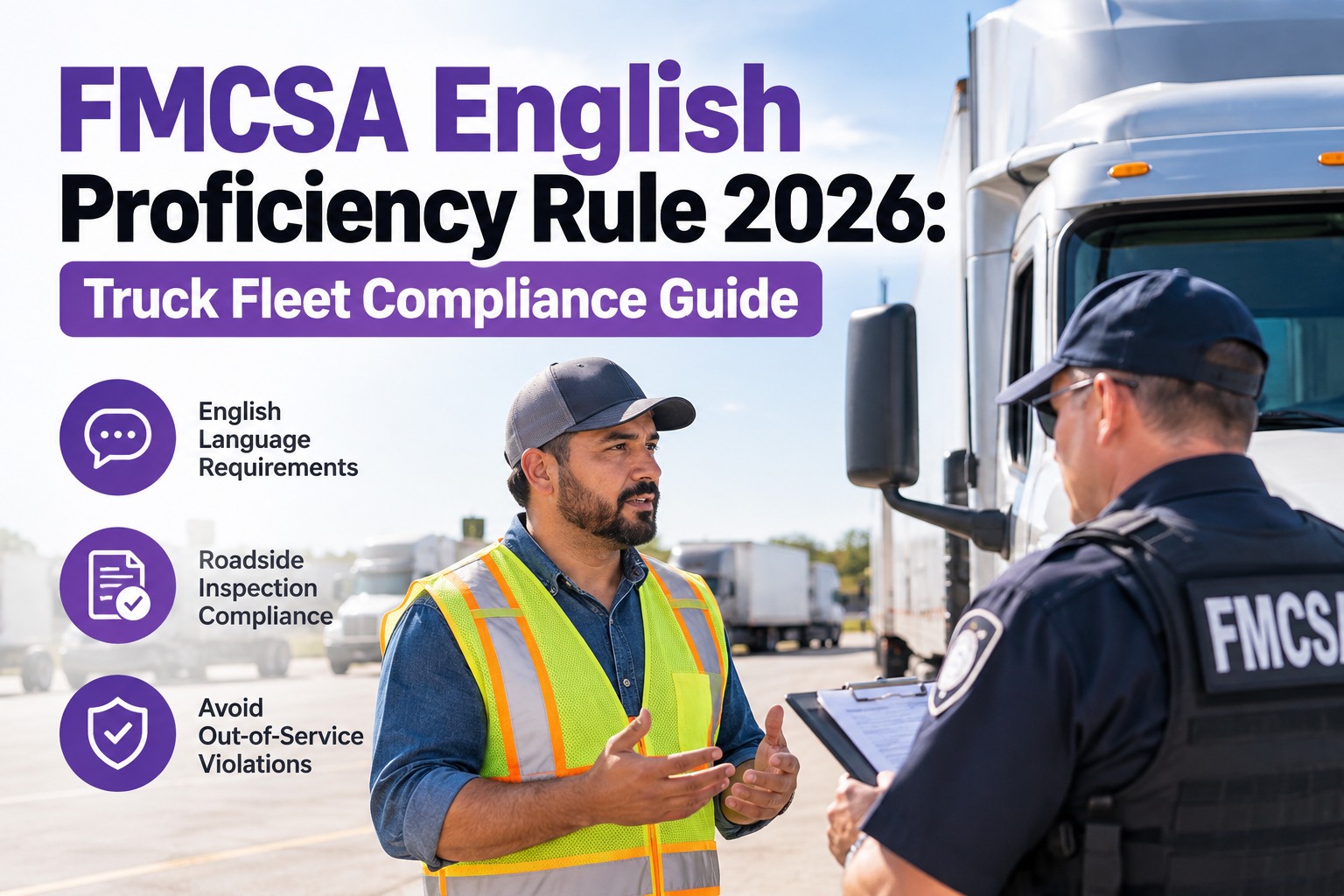
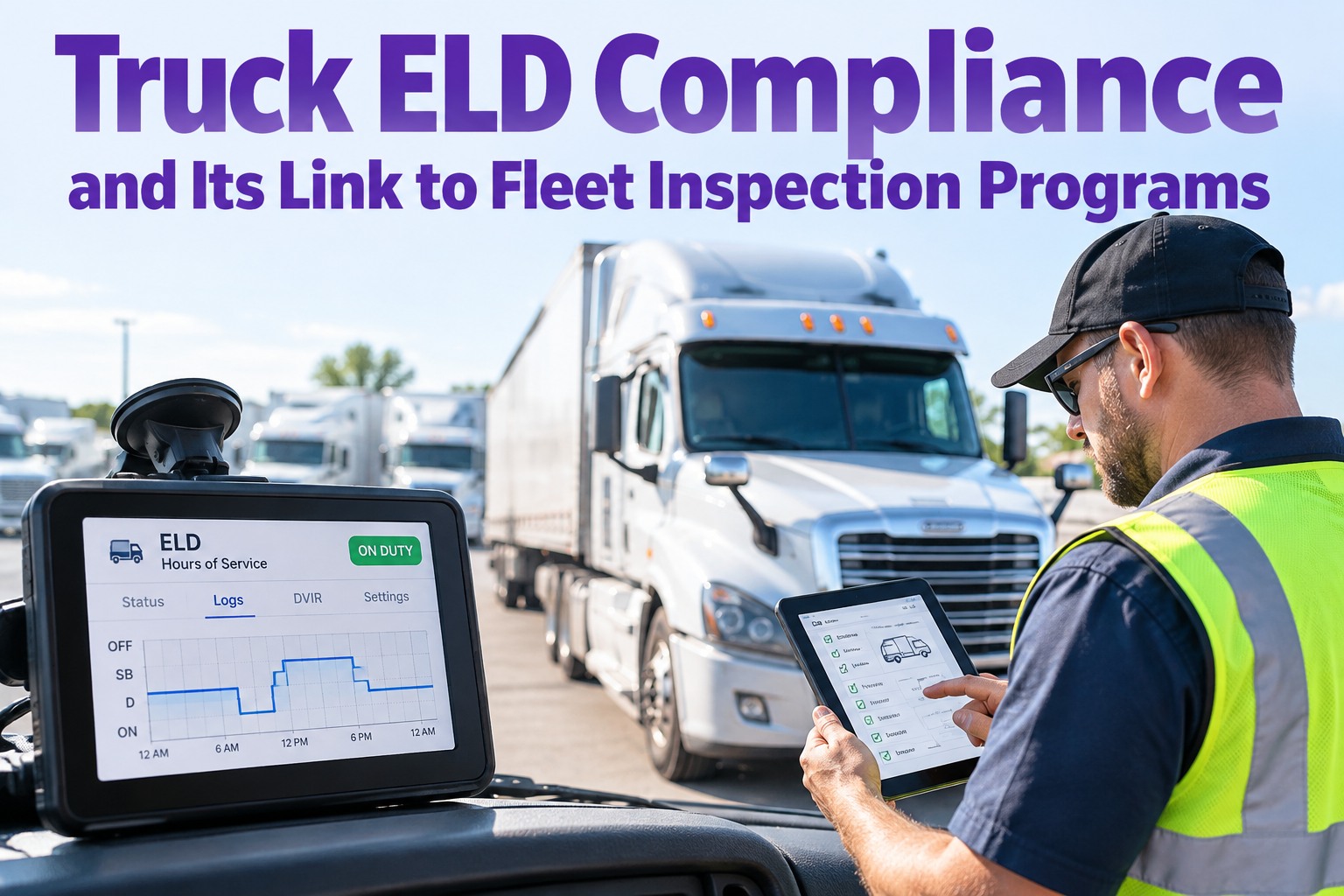
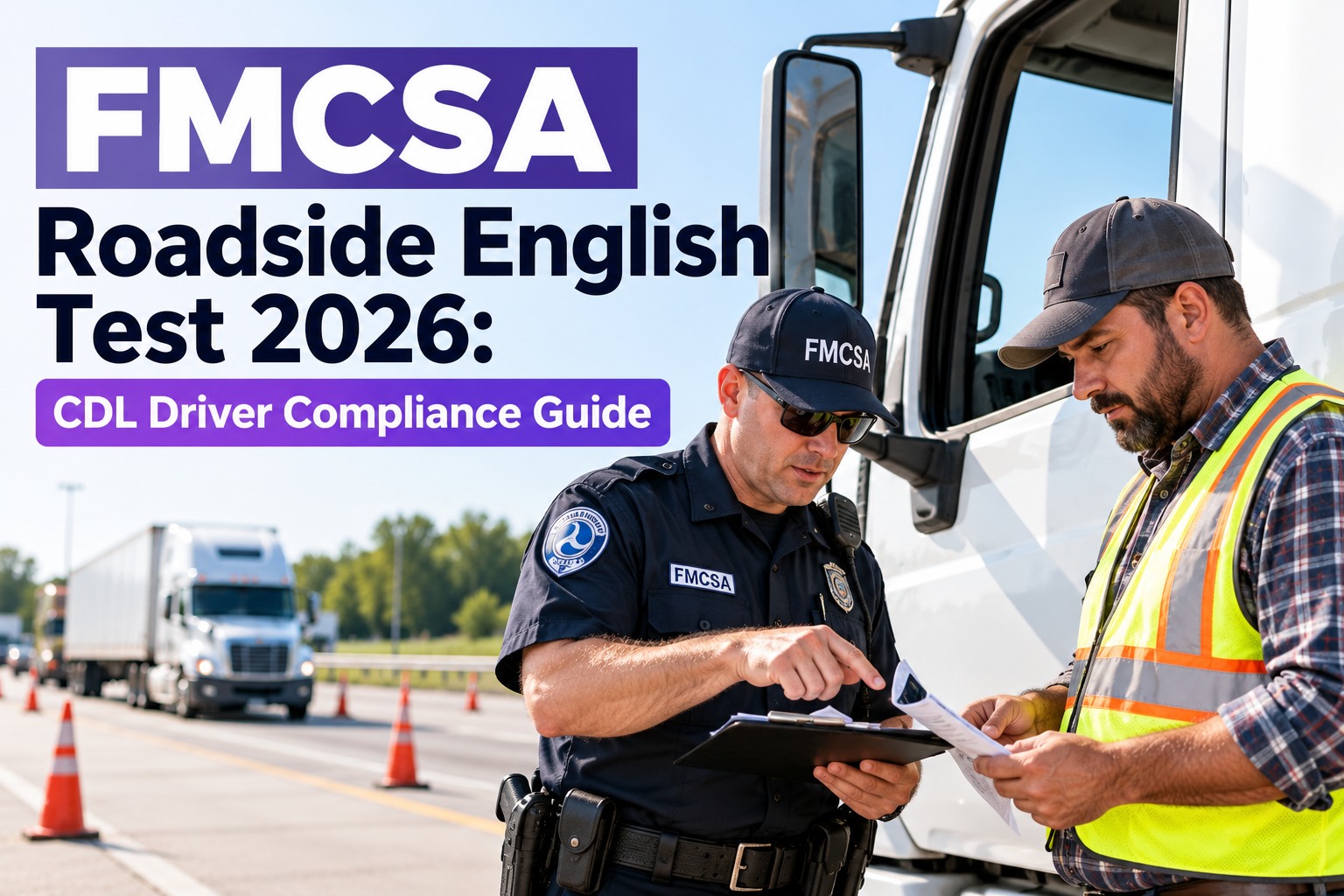
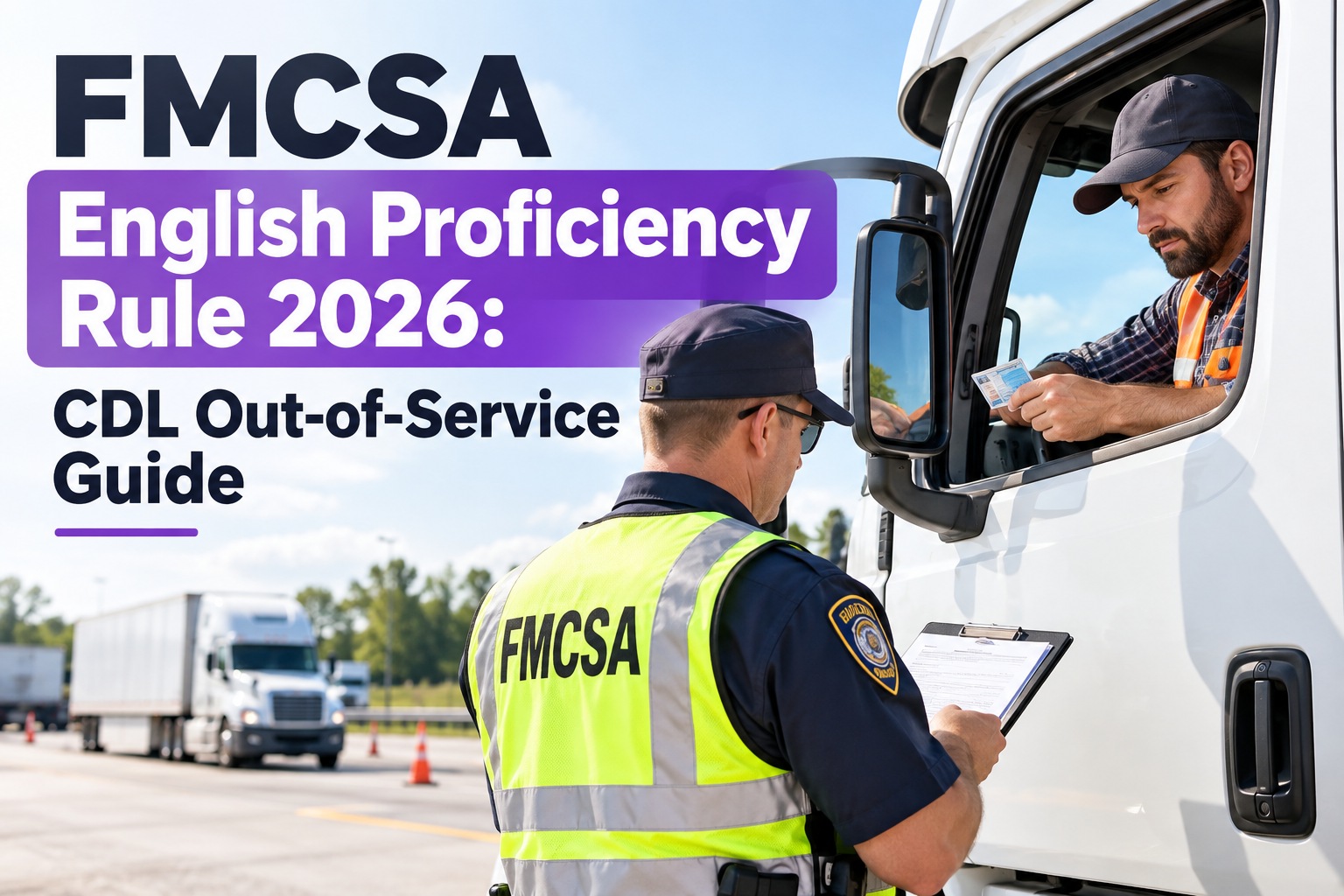
The FMCSA English Language Proficiency rule under 49 CFR §391.11(b)(2) is now enforced at every roadside — CVSA added it to the OOS criteria on June 25, 2025, and H.R. 7148 codified it into statutory law in 2026. A driver who fails the two-step assessment is placed out of service on the spot. Truck Inspection & Maintenance Management Software runs the compliance side — driver-qualification tracking, roadside-event capture, and CSA audit trail. Start free and build ELP compliance into your fleet on TIM.
49 CFR §391.11(b)(2) · CVSA OOS Effective June 25, 2025 · Codified 2026
The FMCSA English Proficiency Rule Is Now Enforced at Every Roadside — Here's What Your Fleet Needs to Do Before the Next Inspection
Every roadside inspection now begins in English. A two-step assessment — verbal interview + highway sign recognition, no interpreters or apps — decides whether the truck rolls or gets grounded. TIM tracks driver qualification and captures every roadside event with photo evidence.
Jun 25, 2025ELP re-added to CVSA OOS criteria
Feb 3, 2026H.R. 7148 passed the House — codified as statutory law
Immediate OOSon failed 2-step roadside assessment
The Regulatory Timeline — How We Got From 2016 Dormant to 2026 Federal Law
The ELP requirement itself has been on the books since 1937. What changed in the last 18 months is enforcement — from suspended to statutory in five moves. Below is the timeline every fleet compliance officer needs to know cold.
2016
DORMANT
FMCSA memo directs inspectors not to place drivers OOS for ELP→
Apr 28 2025
EO 14286
Trump signs "Enforcing Commonsense Rules of the Road" executive order→
May 20 2025
DIRECTIVE
Sec. Duffy issues formal FMCSA enforcement directive→
Jun 25 2025
OOS LIVE
CVSA adds ELP to OOS criteria — enforcement begins→
Feb 3 2026
FEDERAL LAW
H.R. 7148 (Consolidated Appropriations Act) passes House — codifies ELP OOS trigger→
Apr 1 2026
PERMANENT
Print CVSA criteria list ELP as permanent standard
The February 2026 codification is the key line — ELP OOS is no longer reversible by a future FMCSA memo. Contact our team to see how TIM tracks ELP status across your driver roster.
The 2-Step Roadside ELP Assessment Protocol — Exactly How the Inspection Runs
Per FMCSA memorandum MC-SEE-2026-0002 (issued April 16, 2026), every roadside inspection begins in English. If the driver shows signs of struggling, the inspector initiates the assessment. Below is the exact two-step protocol.
STEP 01
Driver Interview · Verbal English Proficiency
Inspector conducts a verbal interview in English. Driver must respond to official inquiries and directions in English, without the aid of an interpreter, a phone translation app, cue cards, or any other assistive device. The inspector evaluates whether the driver can converse sufficiently to satisfy §391.11(b)(2).
No interpretersNot from passenger, dispatcher, or shop
No phone appsGoogle Translate not permitted
No cue cardsOr pre-written prompts
▼
STEP 02
Highway Traffic Sign Recognition Assessment
Inspector shows the driver a set of standard highway traffic signs and evaluates whether the driver understands the messages conveyed. Signs include regulatory (STOP, YIELD, DO NOT ENTER), warning (DEEP WATER, LOW CLEARANCE, WEIGHT LIMIT), and guidance signs. Standard U.S. MUTCD symbols only — no supplemental language allowed.
MUTCD standardFederal sign catalog
Message understoodNot just sign identified
No assistive aidsSame rule as Step 01
▼
PASS
Driver cleared · inspection continues normally
FAIL
Driver placed OOS immediately · load abandoned · unit stranded until qualified driver arrives
The §391.11(b)(2) Requirement — What Every Driver Must Actually Be Able to Do
The regulation itself is four capabilities. A driver must demonstrate all four to remain qualified. Below is the working breakdown TIM uses in its driver qualification records.
01
Read and speak English
Sufficient to converse with the general public in the course of duties
02
Understand highway signs + signals
All MUTCD-standard regulatory, warning, and guidance signage in English
03
Respond to official inquiries
Answer questions and follow directions from law enforcement and DOT inspectors
04
Make entries on reports + records
Complete DVIRs, HOS logs, and required documentation in legible English
All four capabilities are qualification-file items — TIM records them per driver alongside CDL, medical card, MVR, and D&A. Start free and centralize driver qualification files in TIM.
The Fleet Compliance Checklist — 6 Actions Every Carrier Should Have Completed by This Quarter
Below is the working ELP compliance checklist. Each item is either done or open. Fleets that clear all six before the next roadside event have the paper trail to defend against subjective inspection calls and protect their CSA score.
✓
Audit every driver's qualification file for ELP evidence
Interview notes, sign-recognition test results, prior CDL exam records — all filed under the driver's DQ record
✓
Run an internal 2-step assessment mirroring the FMCSA protocol
Verbal interview + MUTCD sign recognition, documented per driver with the date and evaluator
✓
Update hiring + onboarding to include ELP verification
New CDL drivers pass the 2-step assessment before their first solo dispatch
✓
Provide English-language training for drivers who need it
Documented enrollment + completion; retest after training closes the qualification gap
✓
Brief drivers on the roadside protocol
What to expect, what's not allowed (phone apps, interpreters), and how to respond to inspector questions
✓
Capture every roadside inspection event with photo + narrative
TIM logs the inspection, inspector name, date, outcome, and any ELP-related notes for the CSA record
Driver Qualification · Roadside Capture · CSA Audit Trail — All in TIM
Truck Inspection & Maintenance Management Software runs the compliance side of ELP: driver qualification files with ELP status per driver, roadside inspection capture with photo evidence and inspector notes, CSA-facing audit chain preserved from hire through every roadside event. When the OOS call is subjective, the fleet's documentation is the defense.
Frequently Asked Questions
Does the ELP rule apply to Canadian and Mexican drivers?
Yes. The FMCSA memorandum confirms the enforcement policy applies to all drivers operating a commercial motor vehicle in interstate commerce in the U.S., regardless of country of domicile or license issuer — U.S. CDL, Mexican Licencia Federal de Conductor, and Canadian CDL are all subject to the same 2-step assessment. The only exception is drivers whose current trip stays inside the U.S.-Mexico border commercial zones.
Contact us for cross-border ELP tracking in TIM.
What happens to the load and the truck when a driver is placed OOS?
The truck cannot move until a qualified driver arrives to take custody. The carrier is responsible for recovery — dispatching a replacement driver, arranging tow if needed, and covering demurrage or load-abandonment costs. The OOS event stays on the carrier's CSA record and drives up SMS scores in the Unsafe Driving BASIC.
Start free with CSA event tracking in TIM.
Can we appeal an ELP OOS ruling?
The DataQs process lets carriers challenge inspection records, but ELP assessments are subjective and hard to overturn without contemporaneous evidence. The strongest defense is a documented pre-hire and periodic internal ELP assessment showing the driver was qualified. That's why the compliance checklist item on internal assessments matters.
Contact support to set up ELP evidence capture in TIM.
How does TIM support the ELP compliance program?
TIM records ELP assessment results per driver in the qualification file, tracks retest dates, captures roadside inspection events with photo + narrative, and produces the CSA-ready audit trail regulators expect. The compliance checklist above lives inside TIM as a per-driver status view.
Start free and run the ELP compliance program in TIM.
§391.11(b)(2) · CVSA OOS · Federal Law · TIM Compliance-Ready
ELP Enforcement Is Statutory — Your Compliance Program Should Be Too
TIM records ELP status per driver, captures roadside events with photo evidence, and preserves the audit chain that protects your CSA score. The rule is subjective at the roadside; your documentation doesn't have to be.
No credit card required · Free for up to 3 trucks · Driver qualification + roadside capture + CSA audit trail built in