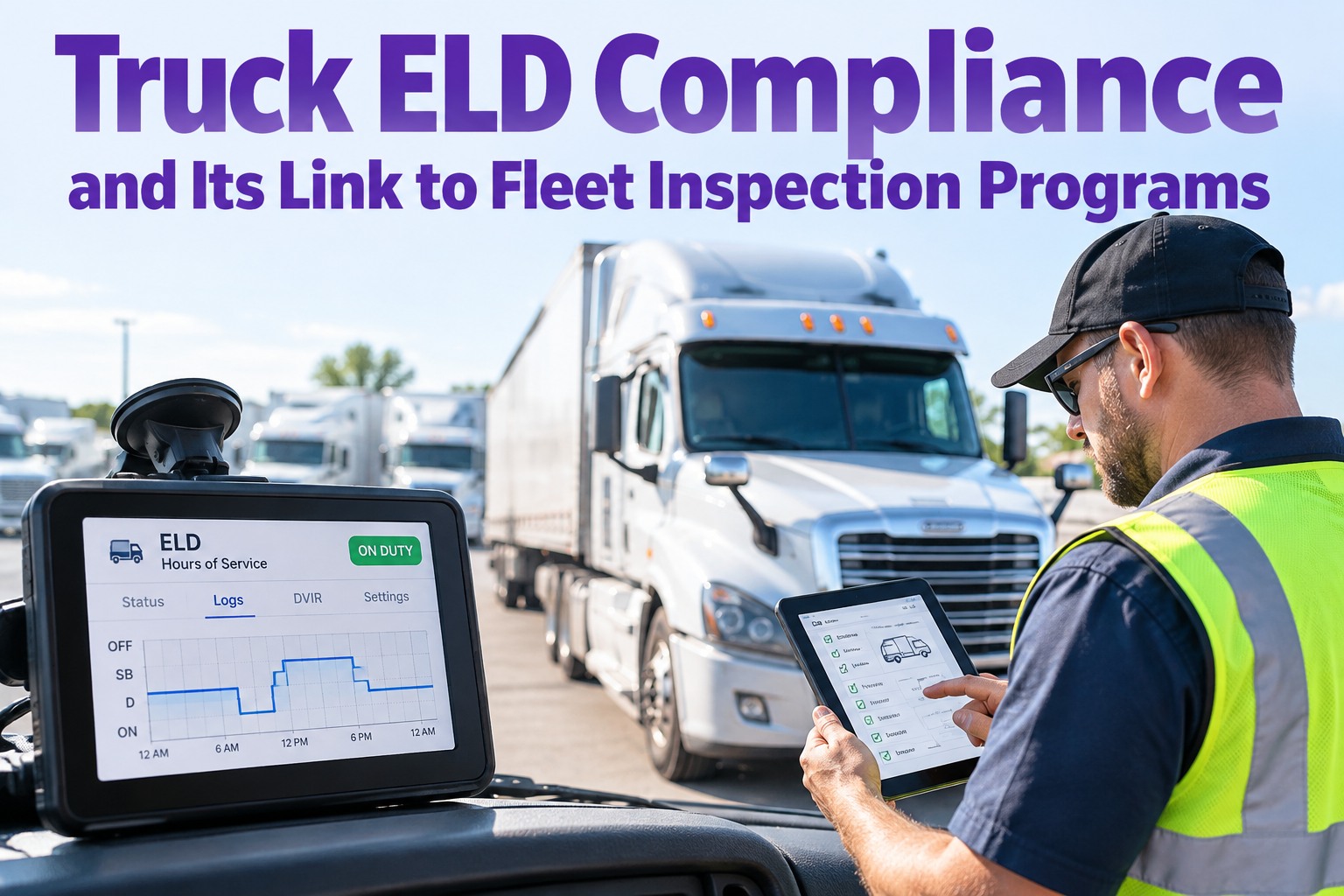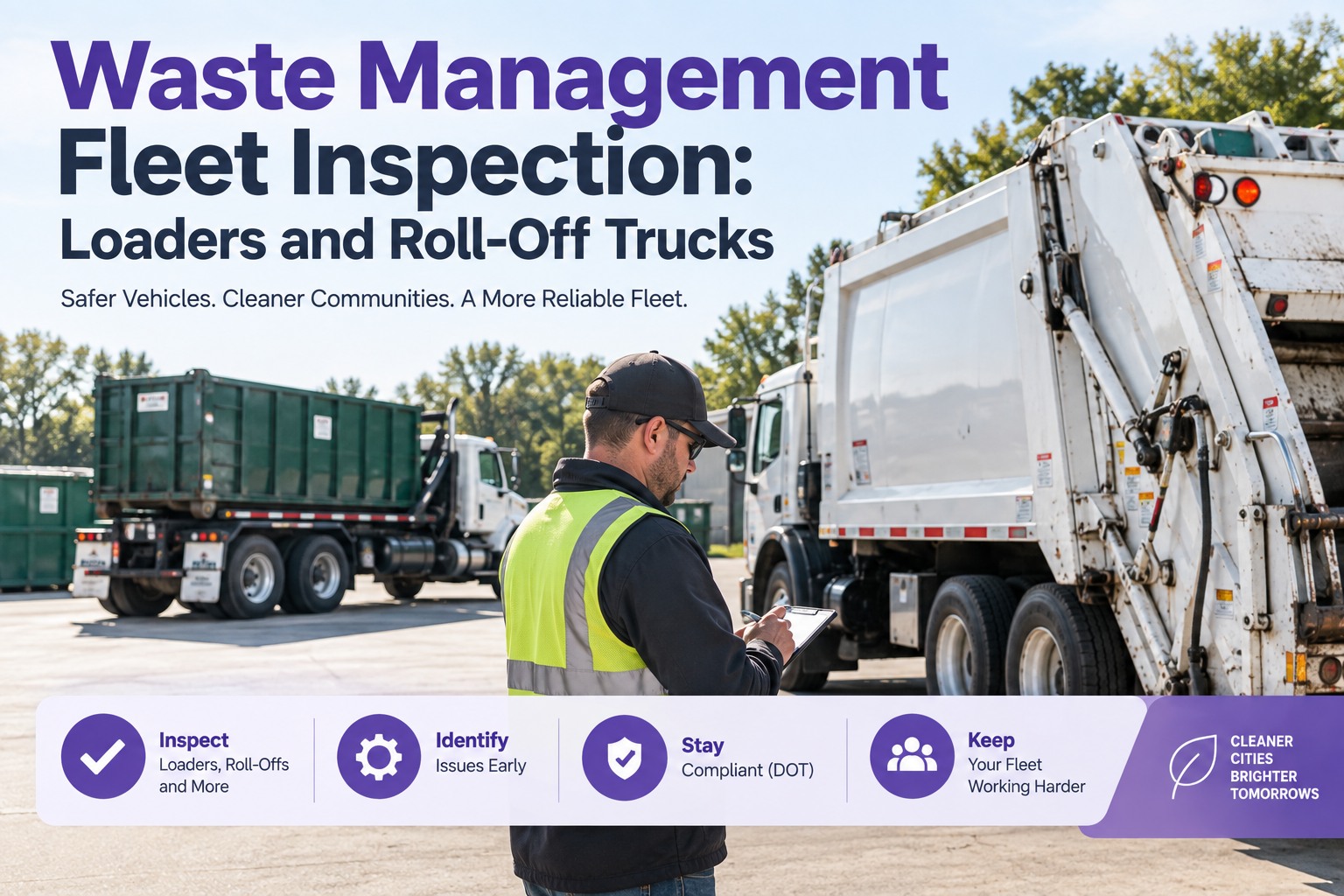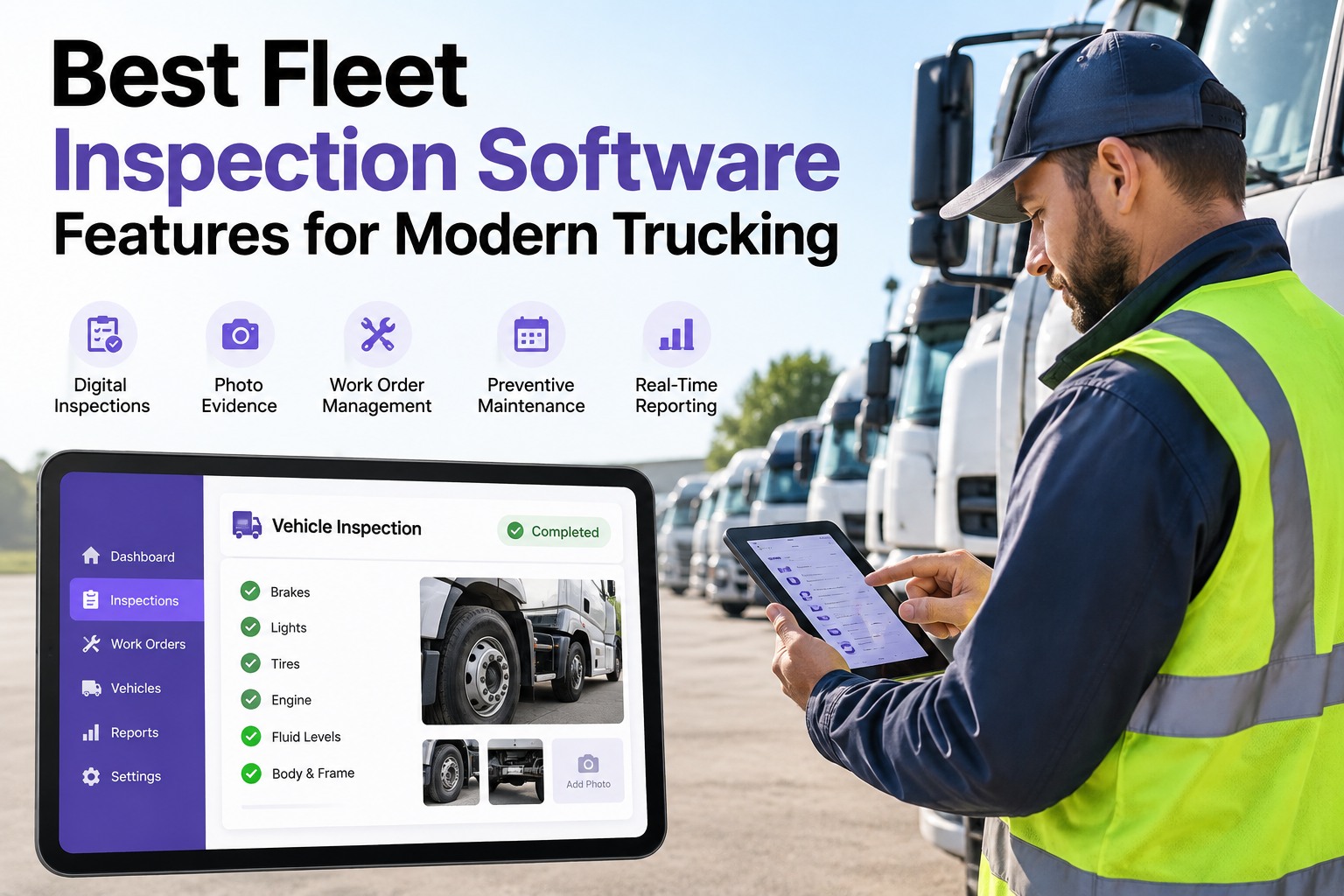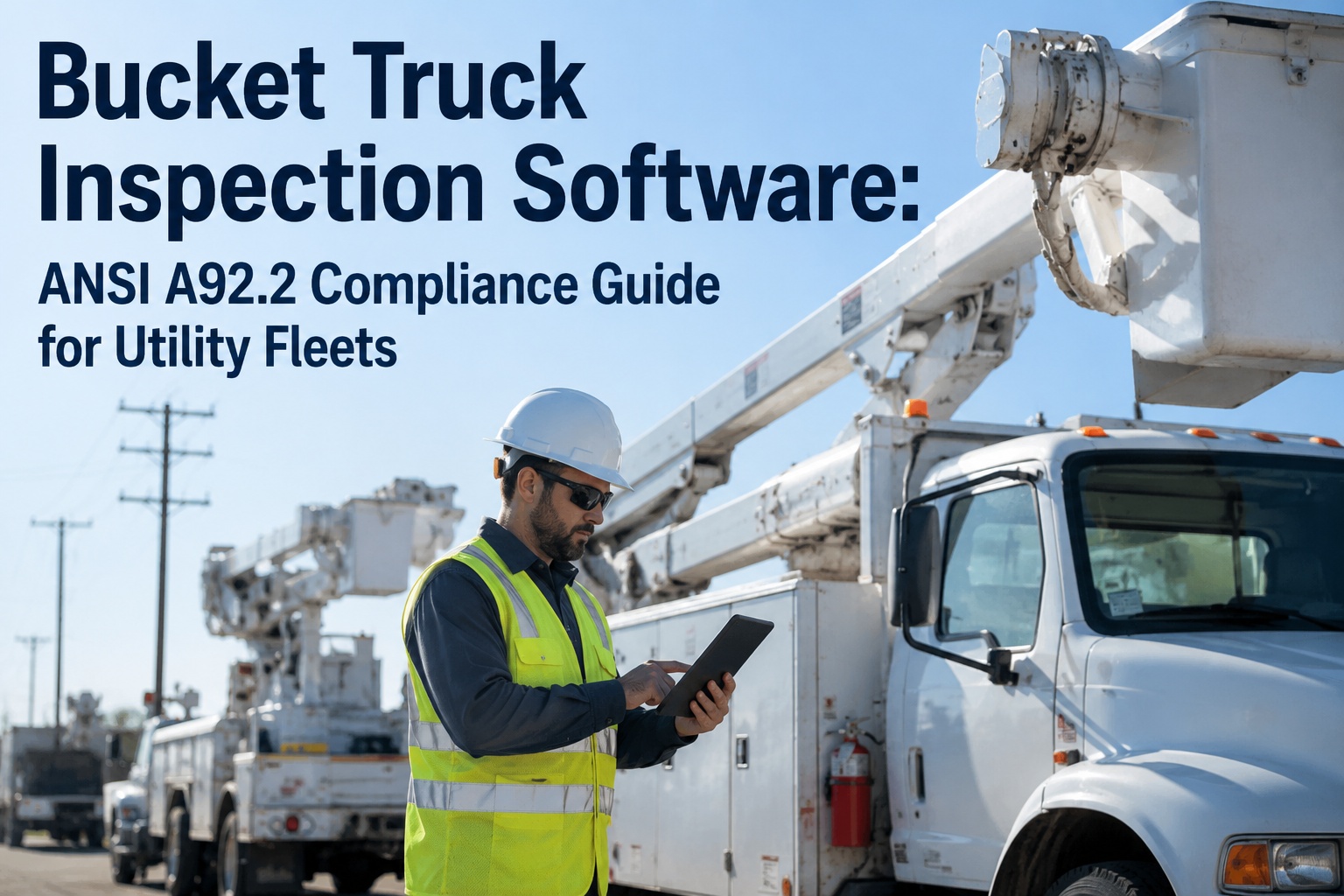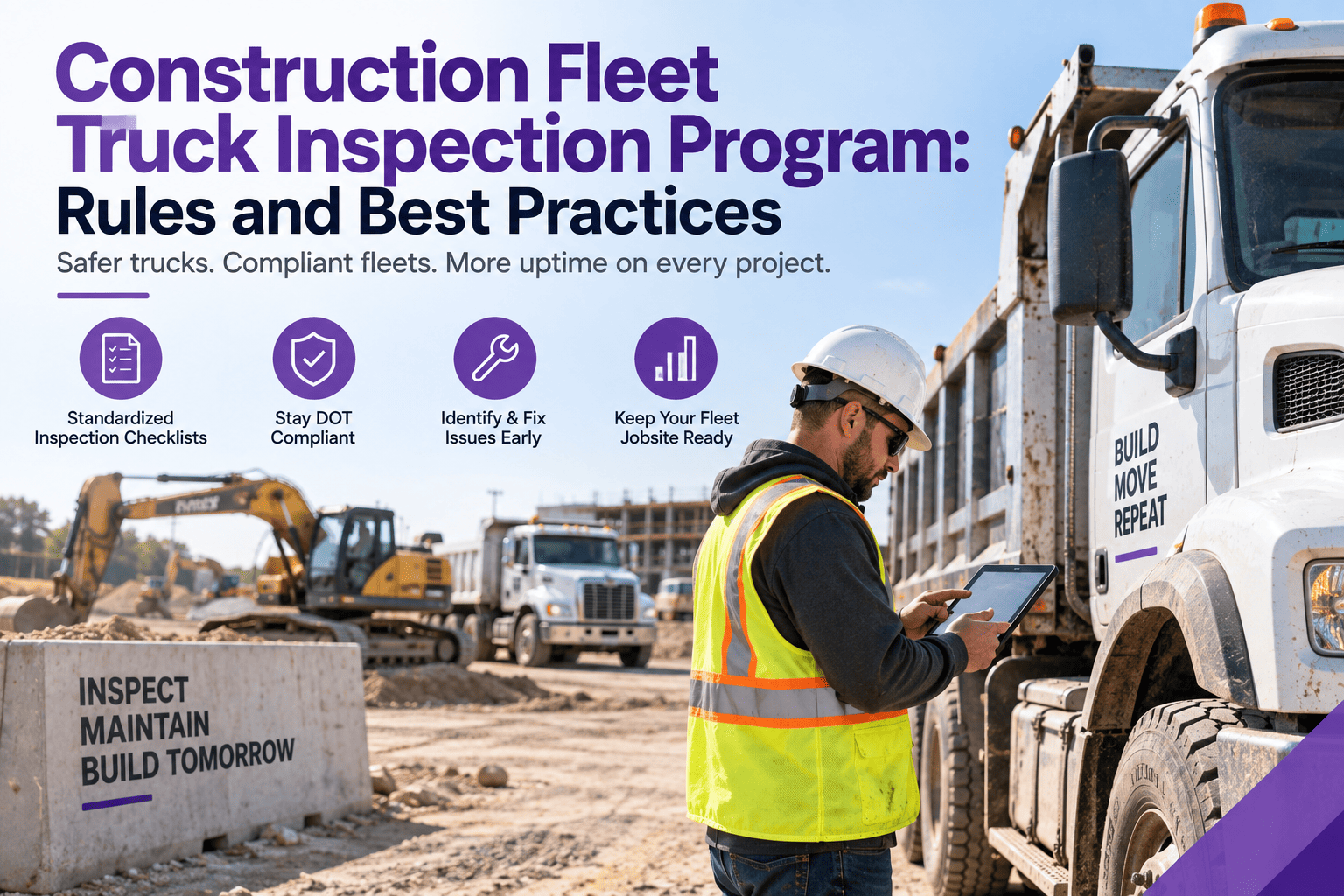
A construction fleet is the hardest inspection program to run because it stacks two regulatory frameworks under one fleet. A Class 8 dump truck answers to FMCSA §396.11. An excavator on the jobsite answers to OSHA §1926.602. A road-going mobile crane answers to FMCSA, OSHA, and ASME B30.5 at once. Miss any framework and the exposure is different — a DOT roadside for the on-road side, an OSHA citation on the jobsite. This guide is the inspection program built for that reality. Start free and put FMCSA + OSHA inspections on one platform.
Construction Fleets Live Under Two Rulebooks at Once — a Compliant Program Serves Both
A dump truck needs a DOT DVIR AND an OSHA pre-shift. A mobile crane needs both plus ASME. Truck Inspection & Maintenance Management Software runs asset-class-aware templates: on-road CMVs get FMCSA §396.11 DVIRs; jobsite equipment gets OSHA §1926 pre-shift; dual-jurisdiction assets get both — one unified record per asset.
The Two-Framework Reality — Where FMCSA Ends and OSHA Begins
Every construction asset falls into one of three buckets: on-road CMV (FMCSA), jobsite equipment (OSHA), or dual (both). Get the bucketing wrong and either the DVIR is missing from something that needed one, or the pre-shift is missing from something that did.
The Five Asset Classes of a Real Construction Fleet
Most construction fleets run five distinct asset classes at once. The right structure is one platform, five asset-class templates, so the right checklist loads automatically for whichever unit the operator opens.
Class 8 chassis with dump body. Full §396.11 DVIR plus OSHA §1926.601 for the body — dump-body blocking, hydraulic hoist, tailgate latch.
Class 8 chassis with rotating drum. DVIR plus mixer-specific checks — drum bearings, chutes, PTO, water/spray. Two machines, one record.
Heavy-haul tractor pulling lowboy with equipment. §396.11 on tractor and trailer plus OSHA rigging on the load.
Crew-hauling pickups and utility service trucks. §396.11 applies over 10,000 lb GVWR; lighter units still carry insurance discipline.
Excavators, loaders, dozers, telehandlers, rough-terrain cranes — never on public road. OSHA §1926 pre-shift only.
The Overlap Matrix — Which Rules Actually Fire per Asset
The matrix below is the practical reference — one row per asset class, one column per rule set. A road-going mobile crane triples up on all three regimes; a pure jobsite excavator carries OSHA alone. Get this map right and every inspection is triggered automatically.
| Asset class | FMCSA (49 CFR) | OSHA (29 CFR 1926) | ASME / ANSI | Overlap risk |
|---|---|---|---|---|
| Road-going mobile crane | §396 DVIR · §393 | §1926.1412 + §1926.1427 | B30.5 mobile crane | High · 3 regimes |
| Dump truck / mixer on public roads | §396 DVIR · full CSA stack | §1926.601 motor vehicles on site | — | High · 2 regimes |
| Rough-terrain crane (site only) | Not applicable | §1926.1412 + §1926.1427 | B30.5 | Medium · 2 regimes |
| Excavator / dozer / loader | Not applicable | §1926.20 + §1926.602 | OEM PM only | Medium · PM-driven |
| Lowboy + prime mover | §396 DVIR · §396.17 | Site rules when working | — | Medium · Road regime |
| Aerial lift / telehandler | Only if road-registered | §1926.453 aerial lifts | ANSI A92 series | Lower · PM-heavy |
| Pickup / service truck (10k+ GVWR) | §396 DVIR | Site awareness only | — | Lower · Simple |
Five Asset Classes · Three Regulatory Frameworks · One Platform
Asset-class-aware templates load the moment an operator opens a unit. Dump truck opens DVIR + dump-body pre-shift. Excavator opens the OSHA §1926 competent-person checklist. Road-going crane opens all three. One platform, one exportable audit trail per asset, no seam between the frameworks.
The Jobsite-to-Roadside Workflow — What a Compliant Day Looks Like
The proof of a real construction inspection program is whether the same asset can survive an OSHA jobsite audit and a DOT roadside on the same day. Below is the four-stage workflow that satisfies both.
Frequently Asked Questions
One Inspection Program That Serves Every Regulator Your Fleet Answers To
Asset-class-aware templates load automatically. FMCSA DVIRs, OSHA pre-shifts, ASME crane records — one unified per-asset trail. Every audit answered in seconds.