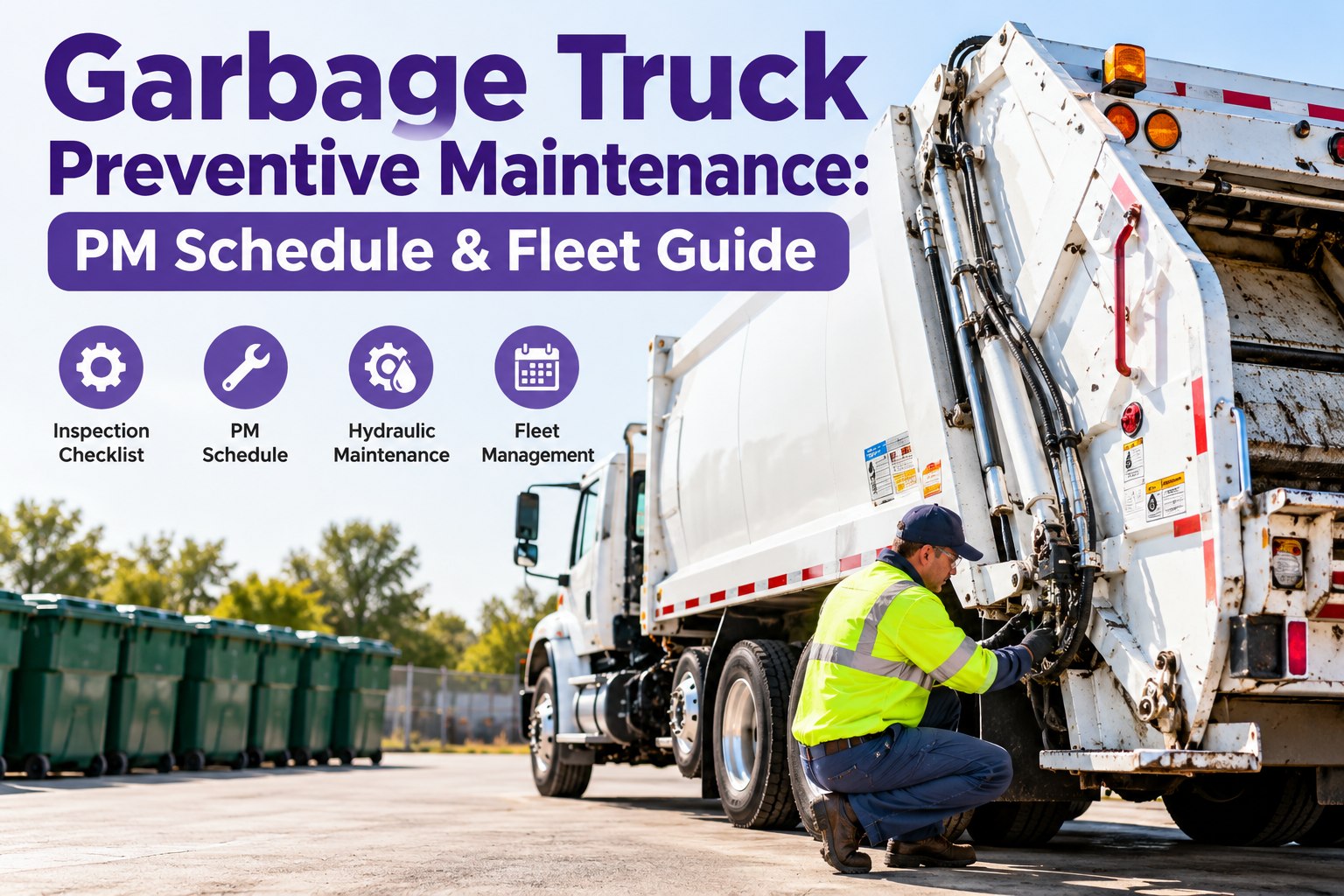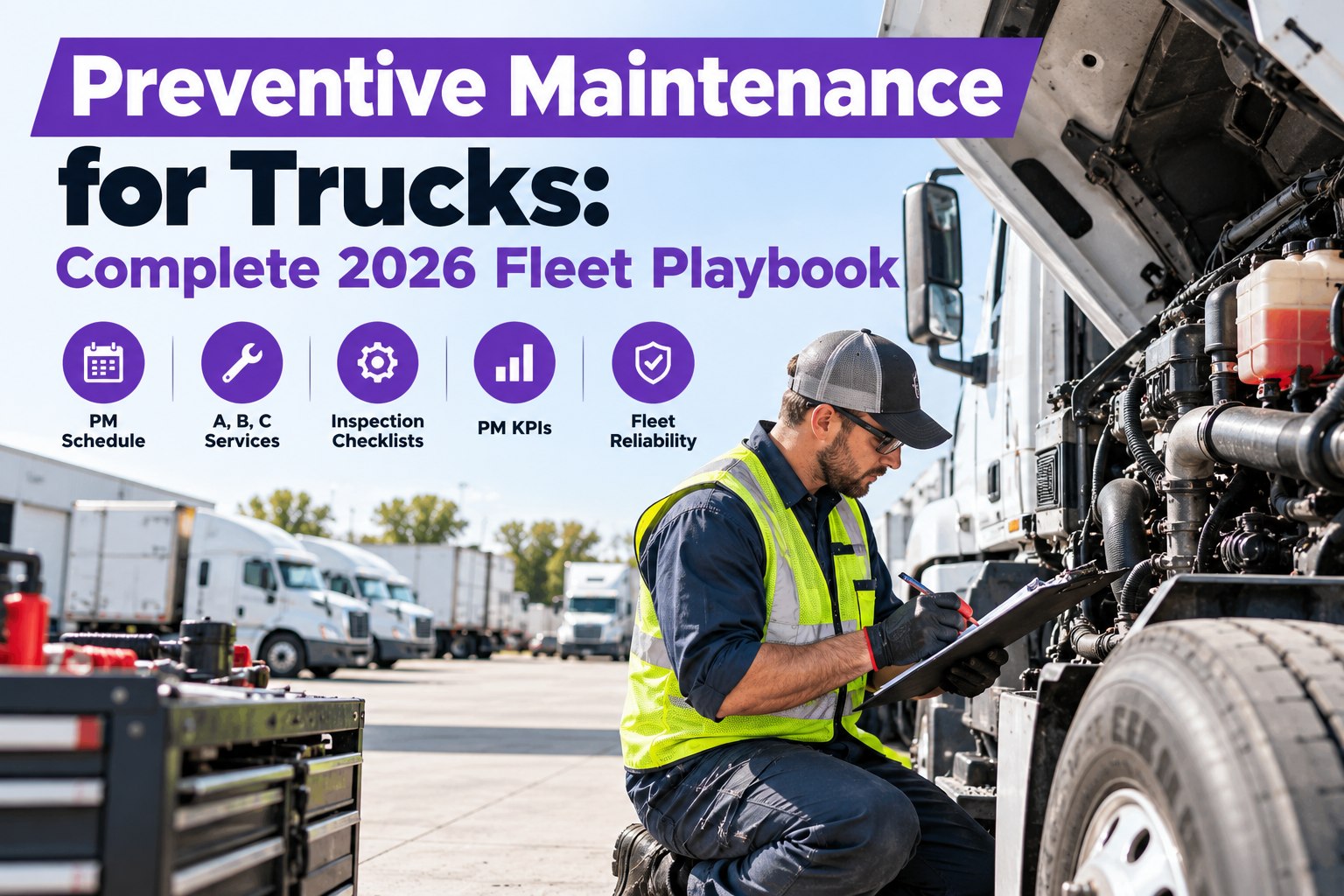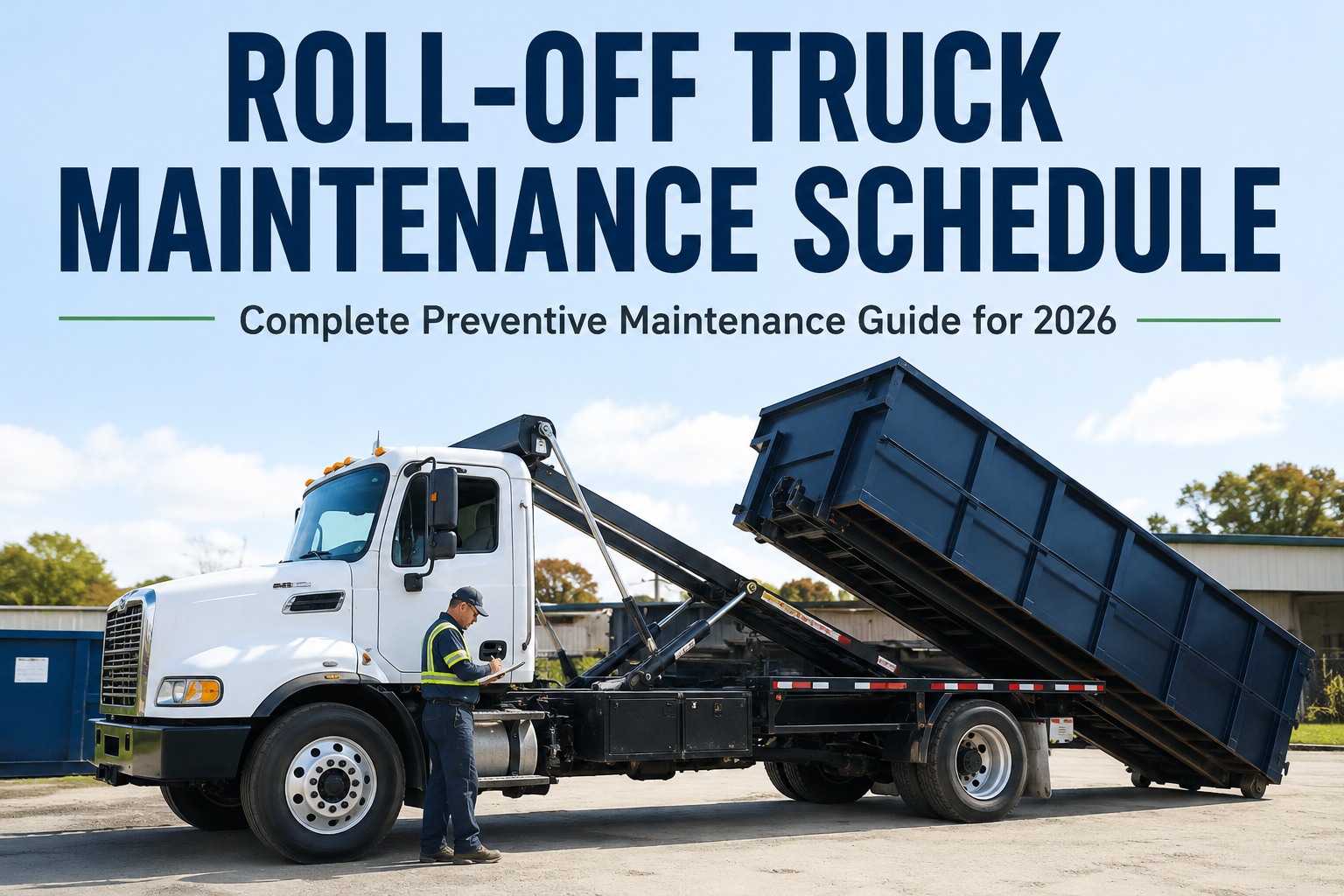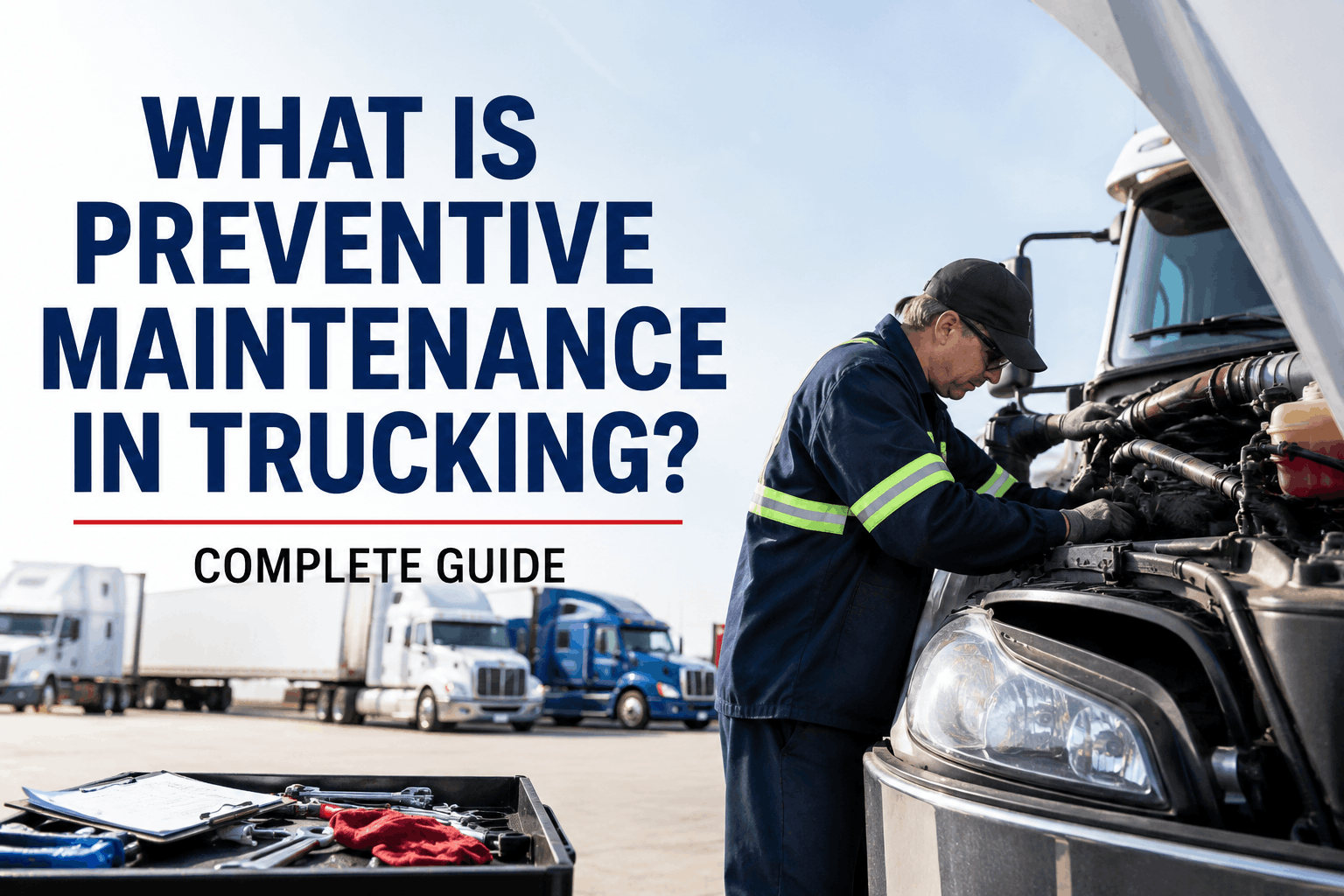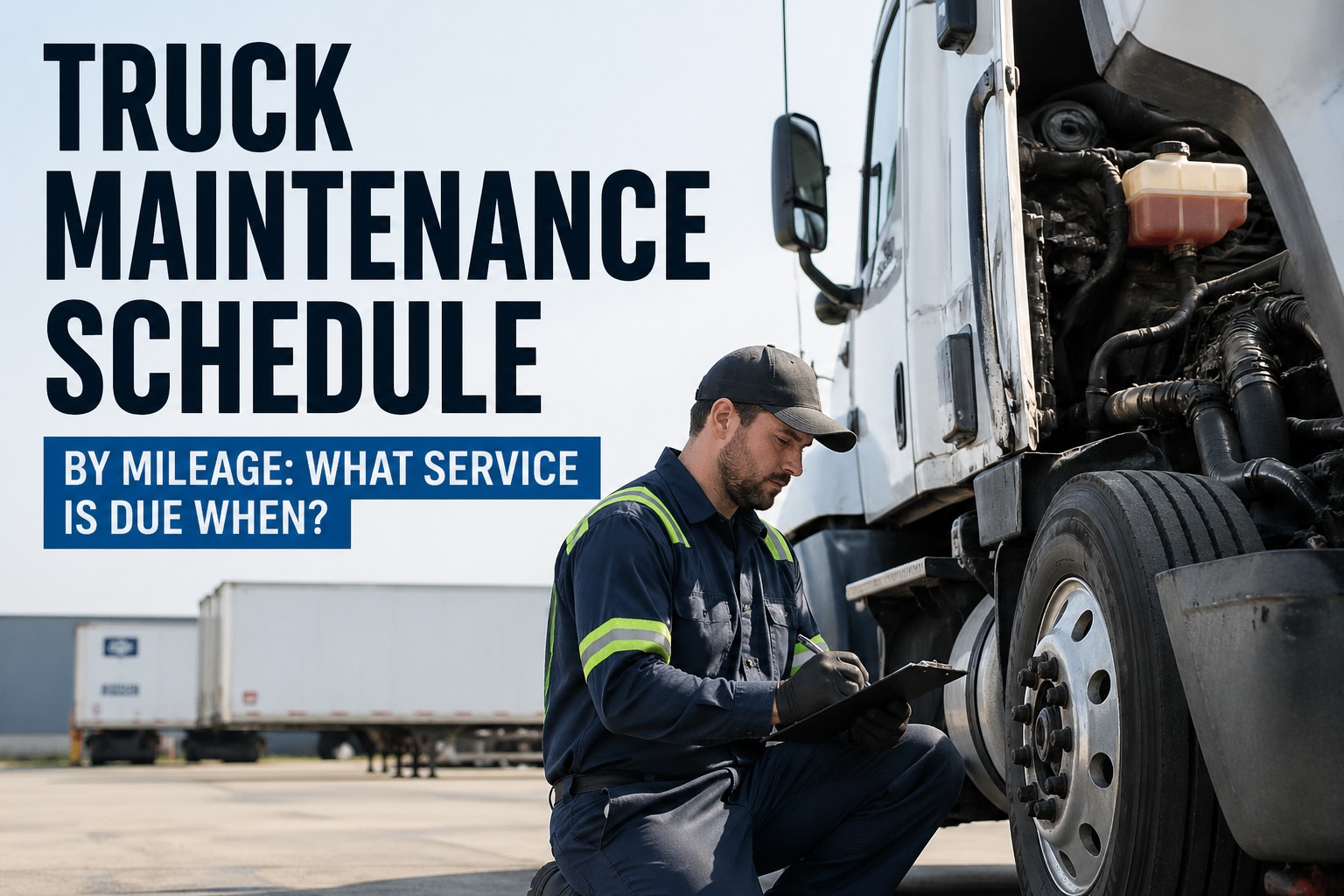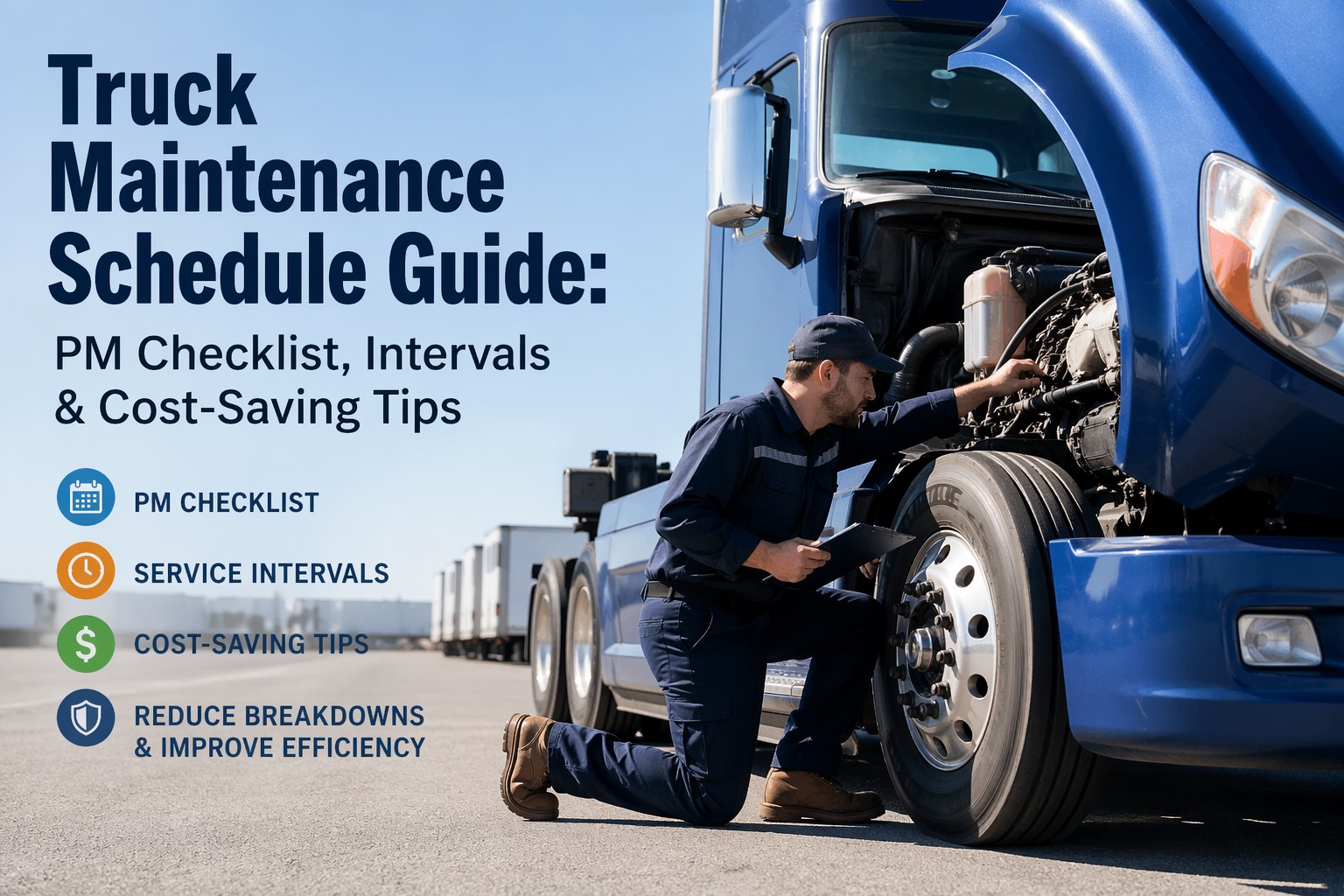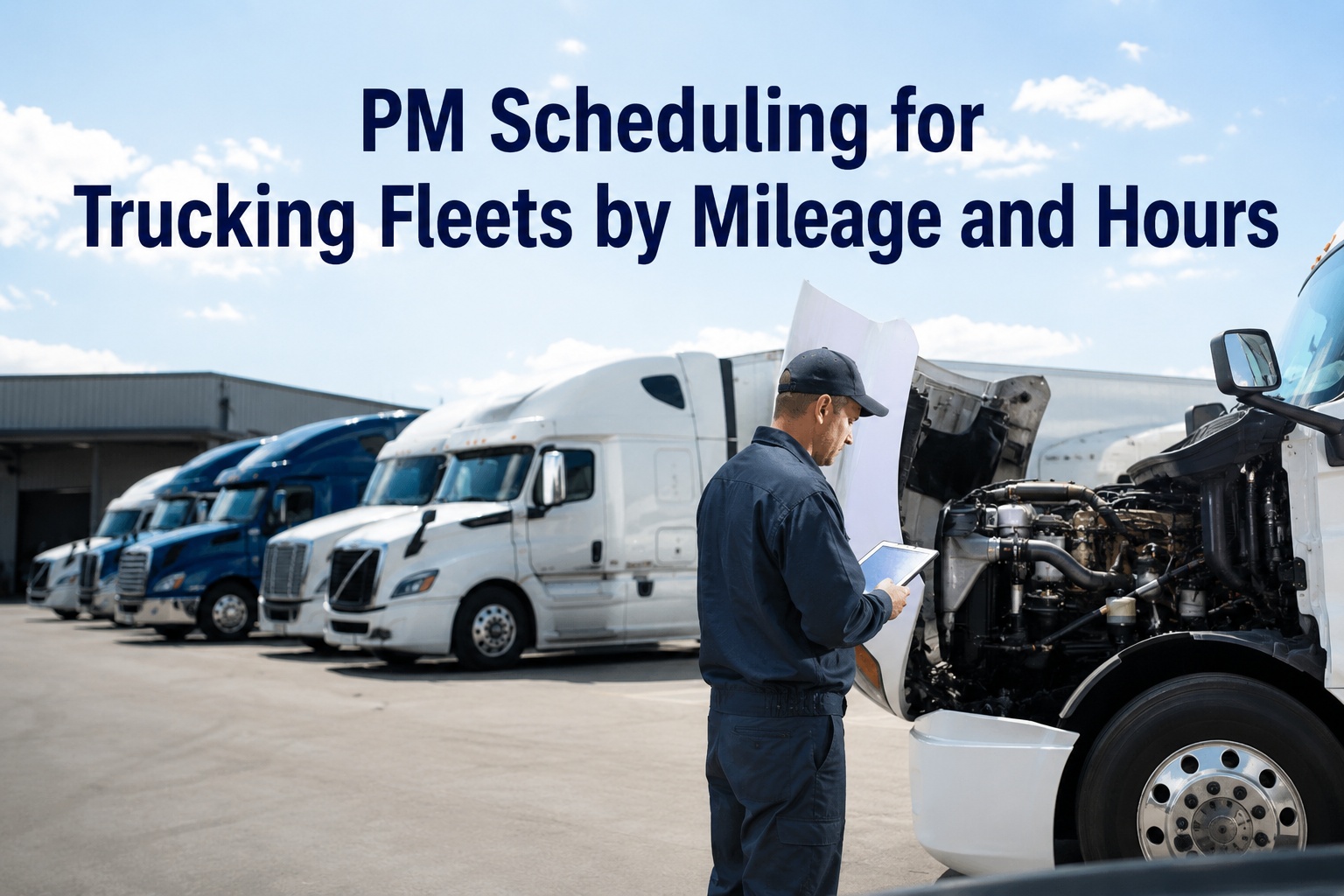
Two trucks leave the yard the same morning. One runs 600 highway miles; the other idles all day on a job site and covers 40. A calendar-based PM program services them on the exact same date — over-maintaining the idler, under-maintaining the highway runner, and missing how either one actually wears. That mismatch isn't harmless: fleets relying on manual, fixed-interval scheduling see 40% more unplanned breakdowns than those triggering service by real usage. The fix is to stop asking "what does the calendar say" and start asking "what has this truck actually done" — triggering PM by mileage, engine hours, and fault codes, whichever crosses the line first. This guide breaks down the trigger types, the whichever-first rule, and the tiered PM structure that prevents breakdowns instead of chasing them. Schedule PM by real usage free.
PM Scheduling for Trucking Fleets by Mileage and Hours
Calendar PM misses how trucks actually wear. Trigger service by mileage, engine hours, and fault codes — whichever fires first — so you prevent breakdowns instead of chasing them.
Why Calendar PM Fails Trucks
A date on the calendar knows nothing about what a truck did between services. Two vehicles on identical schedules can carry wildly different wear, and a fixed interval gets both wrong at once — paying for service the idler didn't need while the highway truck rolls past the work it did.
Heavy idle, low miles. Calendar PM services it on schedule, replacing parts that have plenty of life left — wasted labor and parts on a truck that barely moved.
600 miles a day, hard use. The same calendar date arrives long after it crossed its real wear threshold — now it's running on borrowed time toward a breakdown.
The Three Triggers That Match Real Wear
Wear comes from use, not from time — so the trigger has to measure use. Three triggers cover how trucks actually accumulate stress, and the best programs run all three at once. Here's what each one is built for.
The default for highway trucks with steady daily miles. Oil and wear items track closely to distance driven.
For trucks that idle heavily or work stationary — reefers, bucket trucks, mixers. One hour ≈ 25–33 miles of wear.
Condition-based: telematics flags a developing fault and generates a work order before it becomes a roadside call.
The Rule That Ties It Together: Whichever First
You don't pick one trigger — you set all three and service the truck the moment any one of them crosses its threshold. This single rule is what separates adaptive scheduling from fixed-interval blindness.
Set All Three Triggers, Service on the First
Truck Inspection & Maintenance tracks mileage, engine hours, and fault codes per truck and fires the work order the moment any threshold hits — no missed intervals, no calendar guesswork.
The Tiered PM Ladder
Top fleets don't run one service — they layer increasing inspection depth at each interval. Light services come often and fast; deep services come less often and cover everything. This structure minimizes downtime per visit while making sure every system gets checked at the right frequency.
Lube, oil, filter, and a safety walkaround. The frequent, fast service that catches the obvious.
Everything in A plus brakes, drivetrain, and deeper component checks. The mid-depth inspection.
The full inspection — all systems, fluids analyzed, wear items replaced ahead of failure.
Fault Codes: PM That Triggers Itself
The most precise trigger isn't a number you set — it's the truck telling you something's wrong. Real-time fault-code ingestion turns a developing problem into a scheduled repair instead of a roadside breakdown, and it closes the gap manual logs always leave open.
Frequently Asked Questions
Use all three and service whichever fires first. Highway trucks with steady daily miles benefit most from mileage triggers. Vehicles that idle heavily or work stationary — reefers, bucket trucks, mixers — should use engine hours, where one hour roughly equals 25–33 miles of wear. Low-use and seasonal vehicles still need a calendar backstop, typically every 90 days, because fluids and seals degrade regardless of usage.
You set a threshold for each trigger — say 15,000 miles, 500 engine hours, and 90 days — and the truck is serviced the moment any one of them is reached. A highway truck that hits 15,000 miles in 60 days gets serviced at 60 days; a parked truck that reaches 90 days with only 4,000 miles gets serviced at 90 days. Each vehicle is maintained on its own real usage, not a fleet-wide average.
Every $1 spent on PM saves an estimated $4–$8 in emergency repairs, towing, and downtime. Fleets with structured PM programs see 30–40% fewer unplanned breakdowns and around 20% longer vehicle lifespans. By contrast, fleets relying on manual fixed-interval scheduling experience about 40% more unplanned breakdowns — the cost of services that fire on the wrong day.
They're tiers of increasing depth. PM-A (every 10–15K miles) is the frequent light service — lube, oil, filter, safety check. PM-B (every 25–30K) adds brakes, drivetrain, and deeper component inspection. PM-C (every 50–60K) is the full inspection with fluid analysis and proactive replacement of wear items. Layering them means routine items get checked often while deep inspections happen at the right, less-frequent interval.
Fault codes are condition-based triggers — the most precise kind. Truck Inspection & Maintenance ingests codes from engine, transmission, and ABS modules in real time. A non-urgent code like a catalytic-converter efficiency fault doesn't need a roadside call; it generates a work order automatically and schedules into the next shop visit. That catches developing problems early and closes the manual-entry gap where fault codes otherwise get forgotten until the next PM.
Prevent Breakdowns Instead of Chasing Them
Truck Inspection & Maintenance schedules PM by mileage, engine hours, and fault codes — whichever fires first — layers tiered PM-A/B/C inspections, and turns fault codes into automatic work orders, so every truck is maintained on its real usage and breakdowns stop catching you off guard.