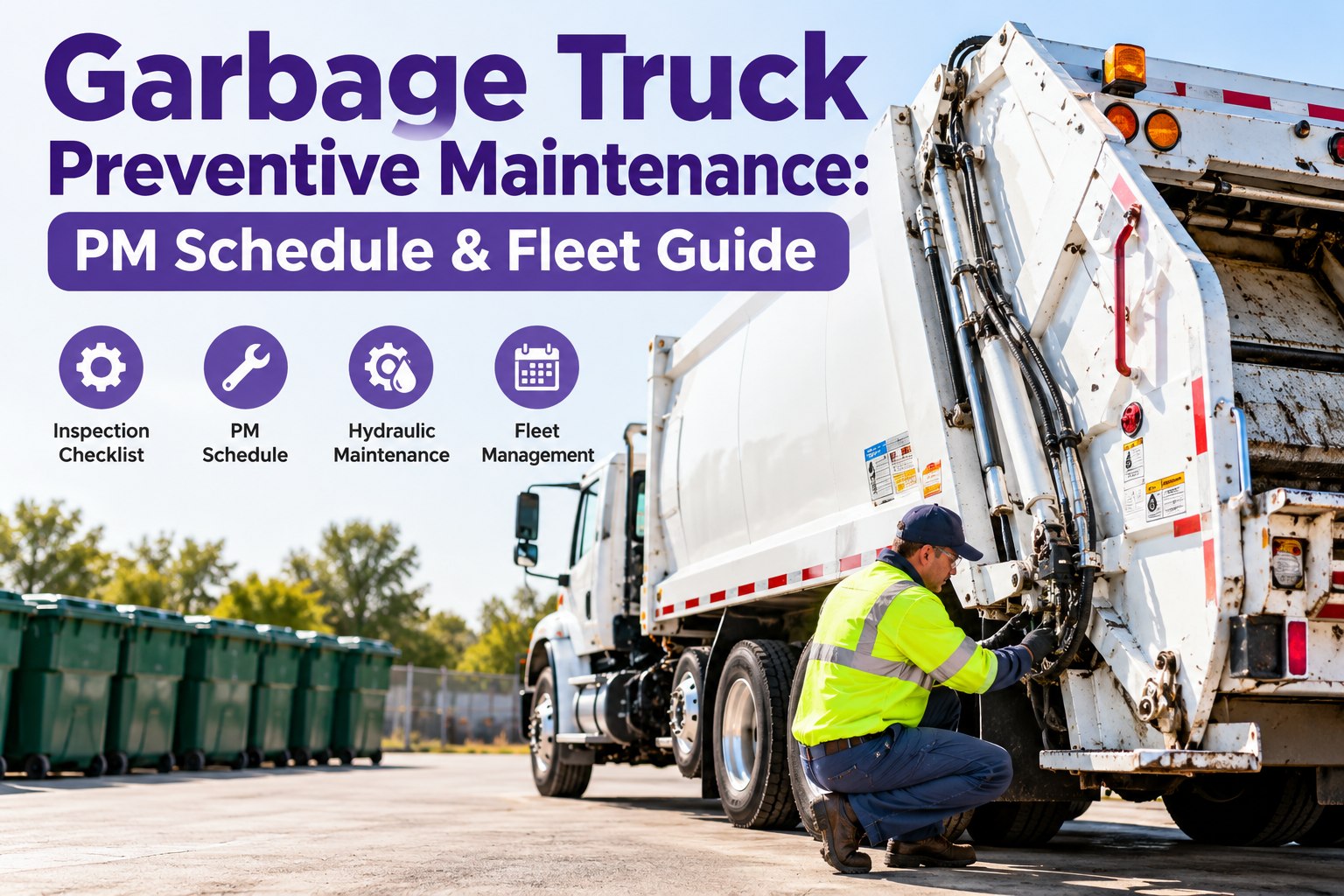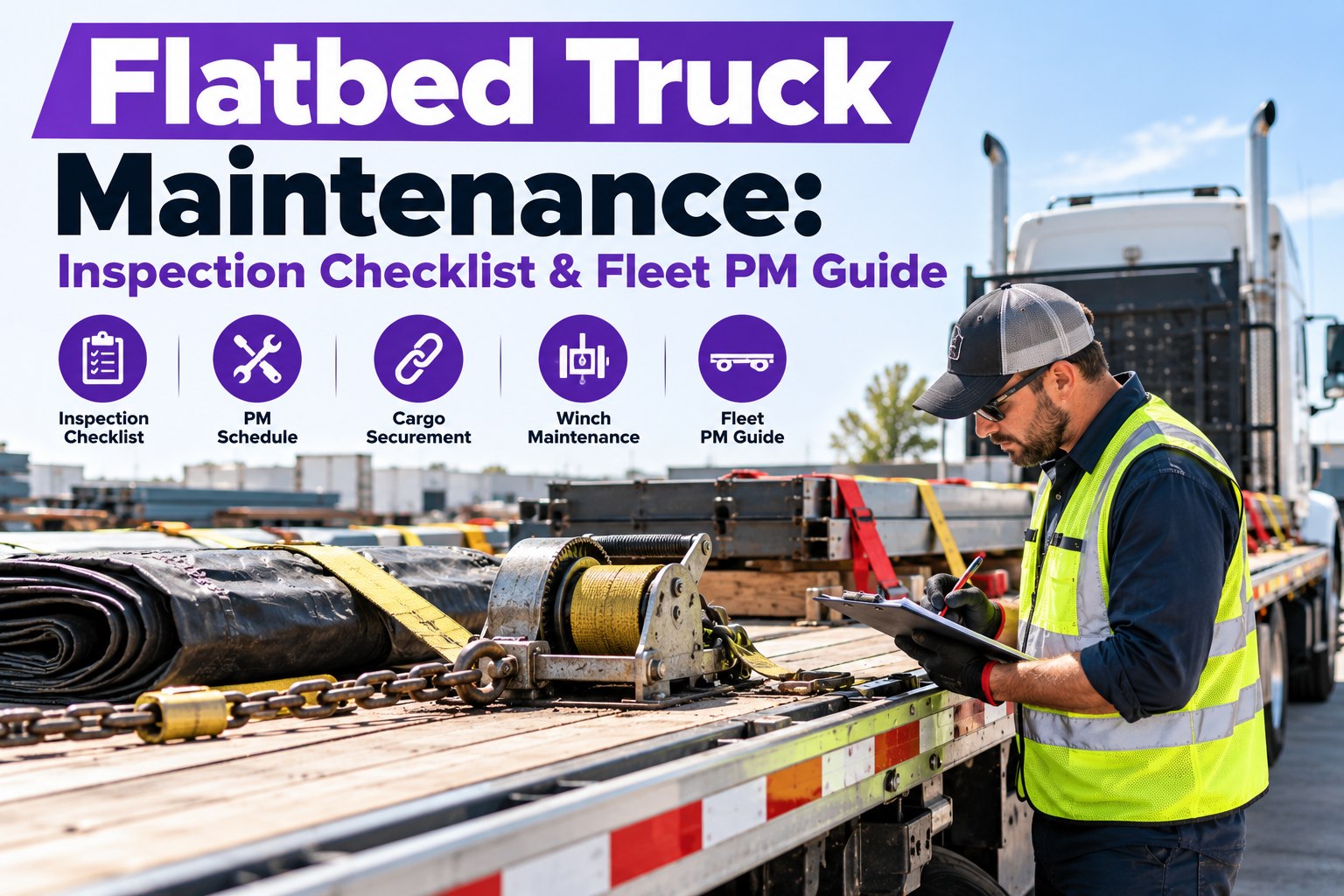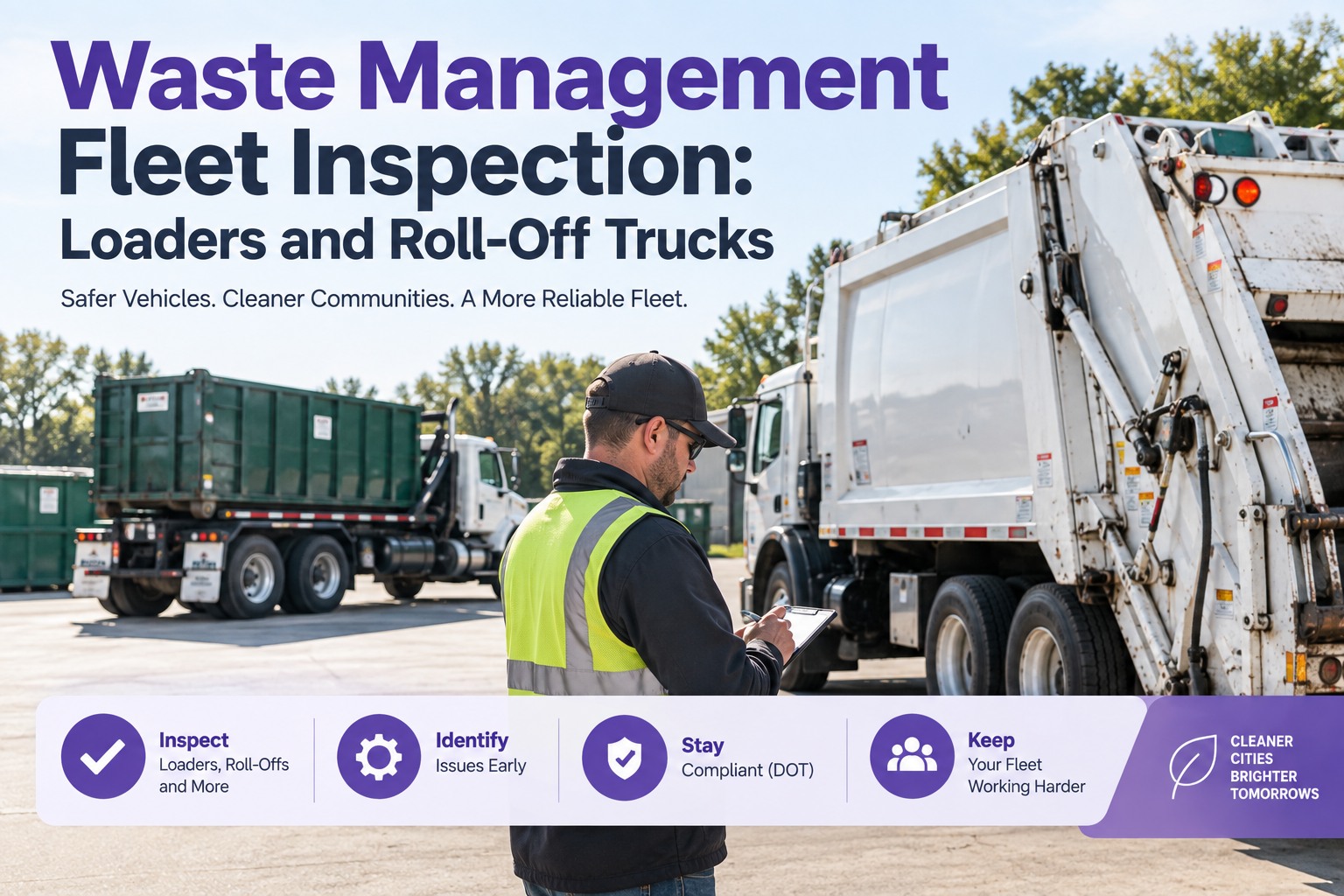
A roll-off truck breaks the rules every standard PM schedule is built on. Mileage-based maintenance assumes wear comes from driving — but a roll-off accumulates most of its damage through hoist cycles, lifting and dropping containers 10 to 25 times a day while the odometer barely moves. Run it on a generic truck schedule and you'll service the chassis on time while the cable frays, the PTO seal weeps, and the sub-frame cracks unseen. The stakes are real: a single cable failure costs $1,500 to $5,000 in lost productivity, and structured preventive maintenance extends a roll-off's service life from 7–10 years to 12–15 — protecting a $150,000 to $250,000 investment per unit. This guide lays out a roll-off PM schedule built around how these trucks actually wear: the seven systems, the right intervals, and the wire-rope rules that prevent the number-one failure. Build your roll-off PM schedule free.
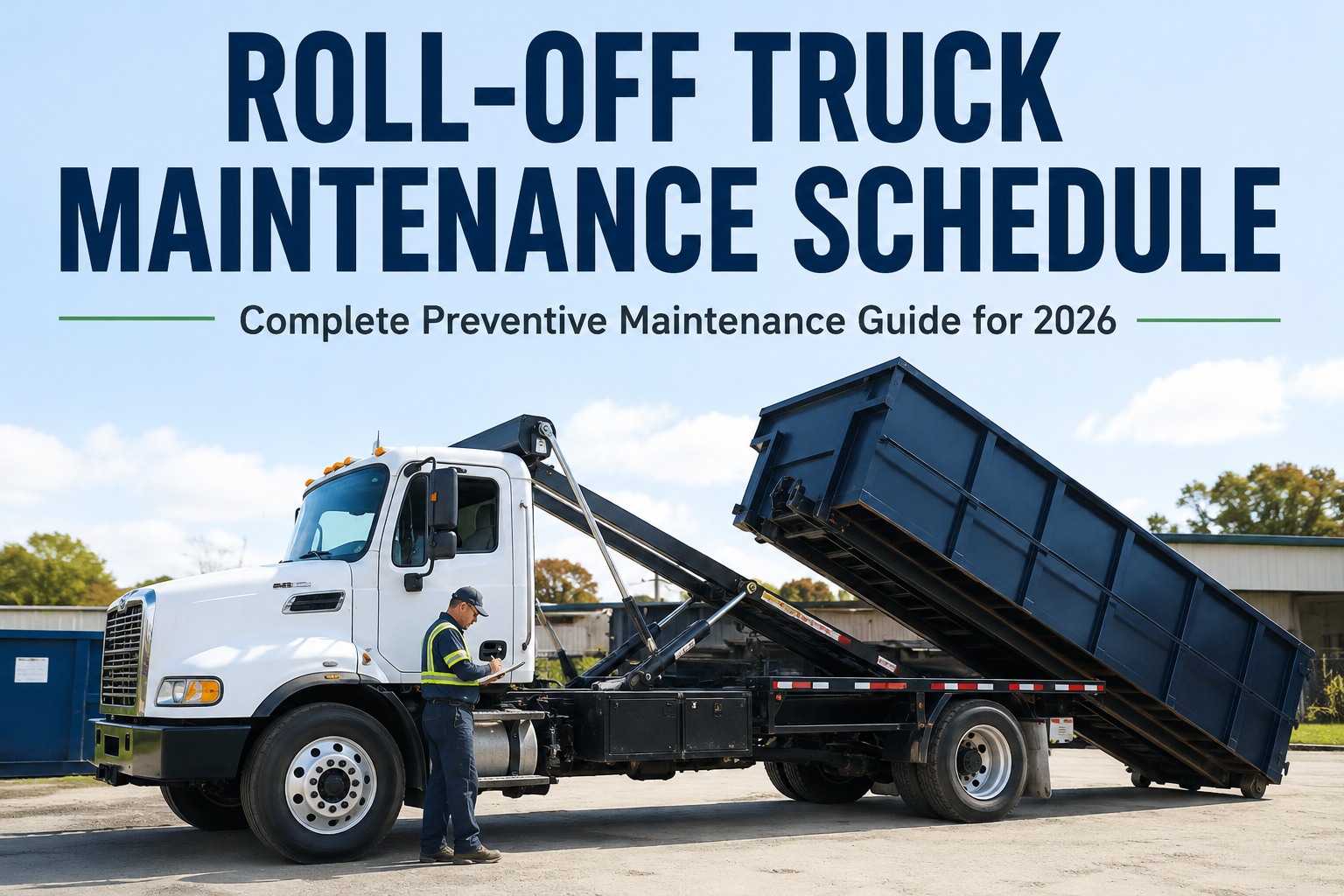
Roll-Off Truck Maintenance Schedule: Complete Preventive Maintenance Guide for 2026
Build a roll-off PM schedule around real wear — hoists, hydraulics, PTOs, cables, sub-frame, and chassis. Cycle-based intervals that prevent breakdowns instead of chasing them.
Why Roll-Off PM Is Different
The core mistake is scheduling a roll-off like a road tractor. These trucks live a different life, and three traits make a mileage-only program actively dangerous for them.
10–25 container cycles a day stress the hoist, seals, and PTO drivetrain far faster than the mileage suggests. The odometer lies about the wear.
Roll-offs run 4–8 hours of PTO engagement daily — far more than most hydraulic applications. Service intervals must track PTO hours, not miles.
Cable hoist or hook-lift, sub-frame, hold-downs, tarp — components a standard truck PM template never even mentions, let alone schedules.
The Seven Systems Every Roll-Off PM Covers
A complete roll-off PM cycle touches seven systems every time — the depth varies by interval, but the categories never change. Skip one and that's where the breakdown comes from.
The core lifting mechanism — cable, sheaves, and rollers, or hook-lift cylinders and pivots. Highest wear, highest stakes.
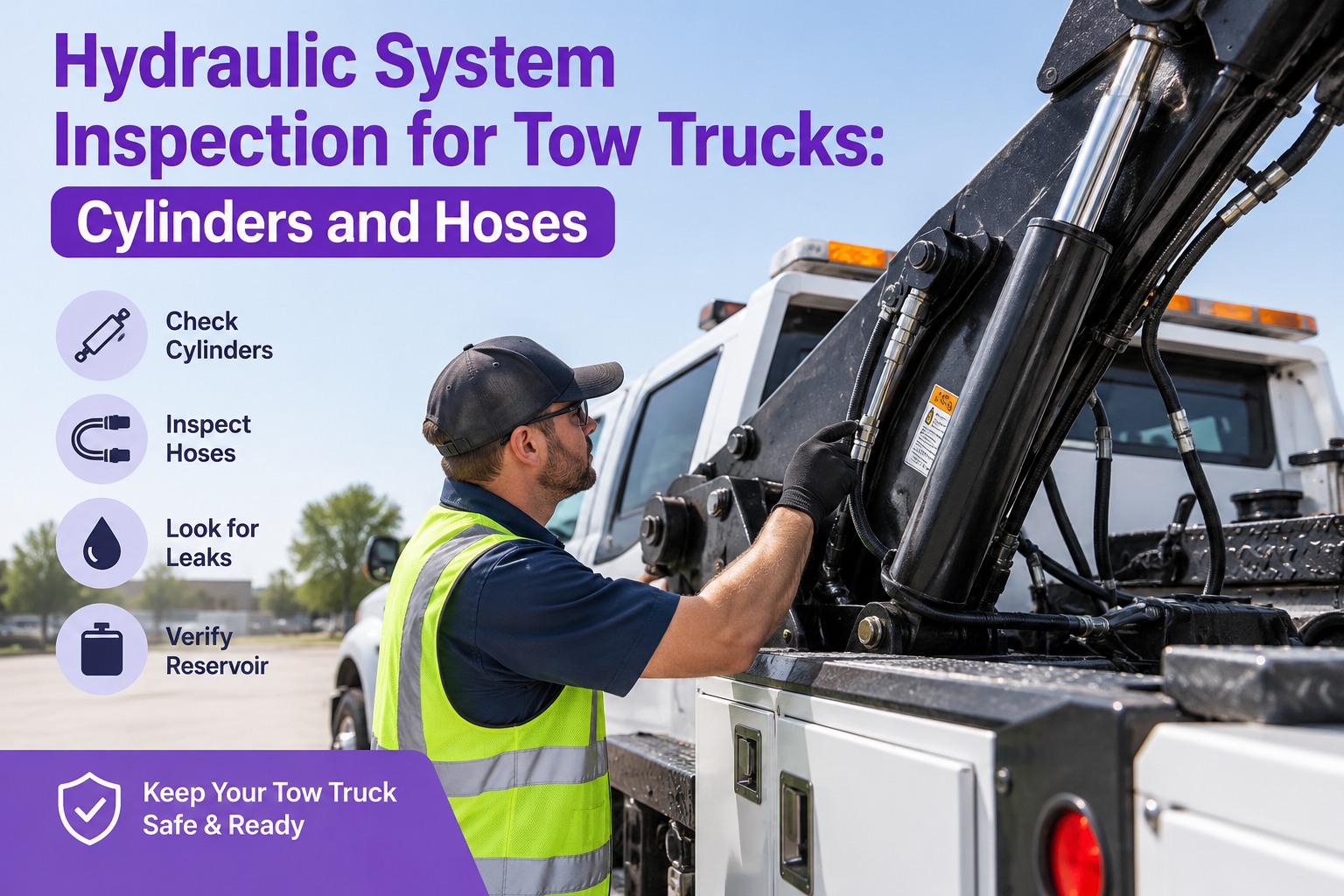
Pump, cylinders, hoses, valves, and fluid running 2,500–3,500 PSI. The system that powers every lift and the leading failure source.
Transfers engine power to the hydraulic pump. Seal degradation here is the #1 hydraulic failure — track engagement hours closely.
The structure tying the body to the chassis. Loose mounting bolts initiate the fatigue that cracks sub-frames — torque them quarterly.
Container hold-down mechanisms, pickup wheels, and rollers that keep the load secure and guide it on and off.
Automatic covers — legally required in many jurisdictions. Motor, arms, and fabric inspected for wear and function.
Brakes, tires, lights, steering — the standard CMV systems that still apply, under heavier-than-normal loads.
Schedule All Seven by Cycles and Hours
Truck Inspection & Maintenance runs a roll-off-specific 7-system template, tracking hoist cycles, PTO hours, and mileage together — so every system gets serviced on the trigger that actually drives its wear.
The Roll-Off PM Schedule
Layer the intervals so light checks happen often and deep service happens at the right, less-frequent point. Drive hoist-related items by hours and cycles; drive chassis items by miles and calendar. Here's the proven cadence.
Wire Rope: The Number-One Failure
For cable-hoist trucks, the wire rope is the single biggest cause of downtime — and OSHA requires a documented monthly inspection. A cable that snaps in the field strands a container, triggers emergency cost, and can become a safety incident. Know the replacement criteria cold.
The classic replacement threshold. Run the cable slowly through a folded cloth or leather pad — broken ends snag the material, catching breaks the eye misses.
Significant thinning means internal wear or core damage. Measure against spec; a reduced diameter is a replace condition even without visible breaks.
Kinks, crushing, corrosion, heat damage, or birdcaging condemn the cable immediately — no waiting for an interval.
No fixed interval exists — cable life runs 12–36 months by usage. Logged inspections reveal your fleet's real replacement pattern.
Cable Hoist vs Hook-Lift: What Changes
The two roll-off systems wear differently, so their PM differs too. Many fleets run a mix — and the schedule has to adapt to each.
Wire rope is the defining maintenance item — monthly documented inspection, regular lubrication, and replacement on condition. Simpler hydraulics, but the cable is a constant, safety-critical focus.
No cable to inspect or replace — but more complex hydraulics with additional cylinders and pivot points needing lubrication. Similar scope overall, different focus.
Frequently Asked Questions
Use operating hours and hoist cycles for hoist-related systems — PTO, hydraulics, and cable — because that's where wear actually accumulates, not from miles driven. Use mileage and calendar for chassis systems like brakes, tires, and the engine. A roll-off cycling 20 containers a day on short hauls puts massive wear on the hoist while barely moving the odometer, so a mileage-only schedule would dangerously under-service the most critical systems. Start a free trial to track cycles and hours.
There's no fixed replacement interval — cables are replaced when inspection criteria are met: 6 or more broken wires per lay, significant diameter reduction, or any critical damage like kinks, crushing, or corrosion. Average cable life runs 12–36 months depending on usage intensity, load weights, and lubrication practices. OSHA requires a documented monthly wire-rope inspection, and keeping detailed records lets you establish the real replacement pattern for your specific operation.
For cable-hoist trucks, wire rope failure is the number-one cause of downtime. On the hydraulic side, PTO seal degradation is the most common failure — it causes gradual fluid loss that eventually leads to pump cavitation and pump damage. Both are preventable with the right cycle- and hour-based inspection cadence, which is exactly why a roll-off needs a schedule built around its real wear drivers rather than a generic mileage template.
Hook-lift systems eliminate wire-rope maintenance entirely — there's no cable to inspect, lubricate, or replace. However, hook-lifts have more complex hydraulic systems with additional cylinders and pivot points that require regular lubrication. The overall maintenance scope is similar, but the focus shifts: cable hoists center on wire-rope condition, while hook-lifts center on hydraulic and pivot maintenance. Mixed fleets need a platform that supports both with template variants.
Consistent preventive maintenance reduces roll-off repair costs by 40–60% compared to reactive repair, and extends service life from 7–10 years to 12–15 — a major deferral on a $150,000–$250,000 replacement unit. A single cable failure alone costs $1,500–$5,000 in lost productivity. Because every dollar of PM saves several in emergency repair and downtime, structured maintenance is one of the highest-return investments a waste fleet can make. Contact our team to see the ROI on your fleet.
Keep Every Roll-Off Running, Route After Route
Truck Inspection & Maintenance runs a roll-off-specific 7-system PM template, tracks hoist cycles and PTO hours alongside mileage, schedules documented wire-rope inspections, and ties every defect to a work order — so a $1,500 cable failure never strands a container and your trucks last 15 years, not 10.