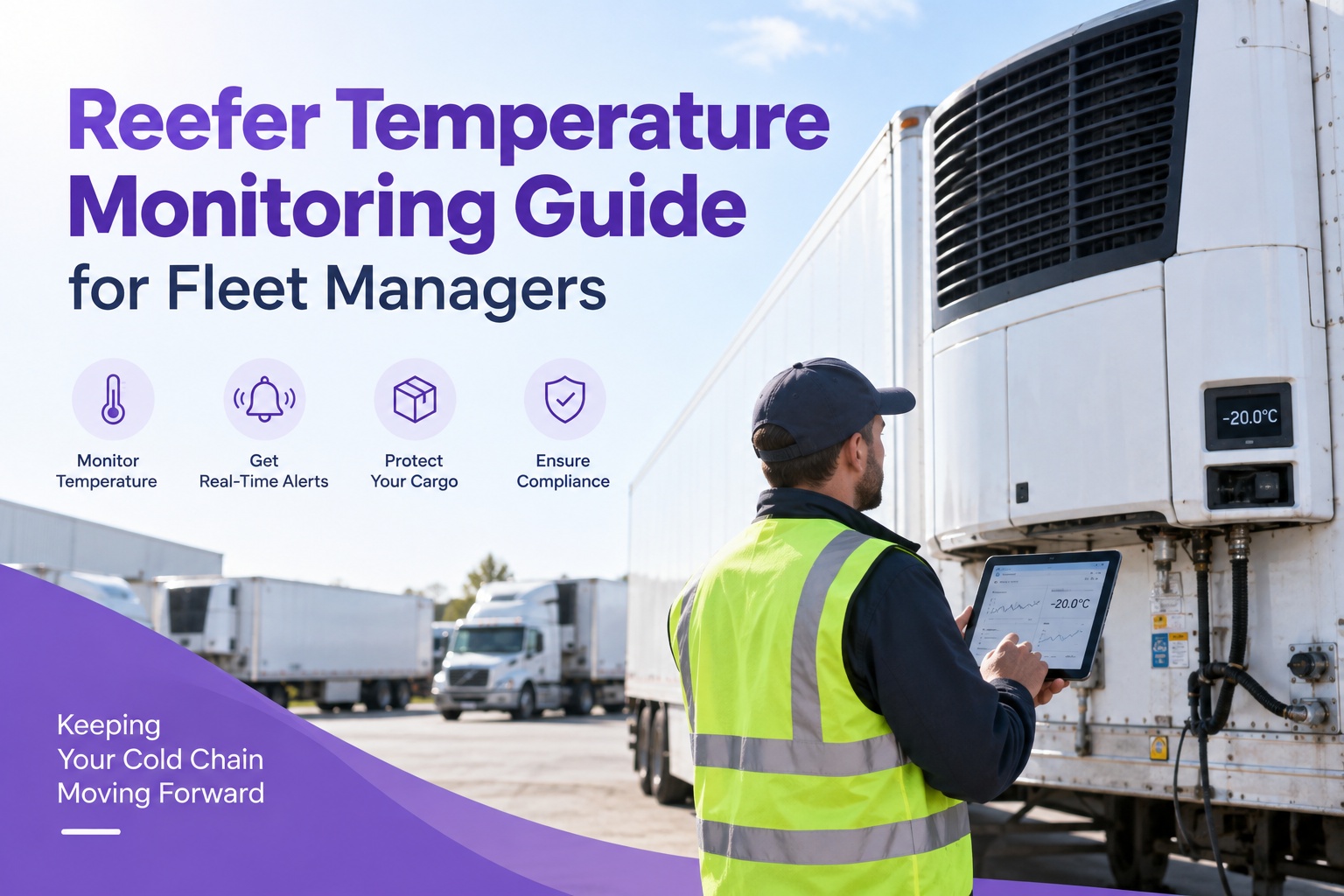
A reefer load almost never spoils all at once — it dies in the gaps. The trailer holds a perfect 34°F on the highway, then the unit cycles off at a dock, a door stays open 20 minutes during a multi-stop, and the product spends two hours above safe temperature in Dallas that nobody recorded. By the time anyone checks at delivery, the food is compromised and the load is rejected — and a rejected temperature-sensitive load costs far more than the single shipment. The fix isn't a better reefer unit; it's continuous, real-time visibility that catches an excursion while you can still save the load. This guide breaks down why excursions actually happen, the difference between point-in-time and continuous monitoring, and the prevention playbook — pre-cooling, sensor calibration, door alerts, and real-time intervention — that protects both the product and your compliance record. Monitor reefer temps in real time free.
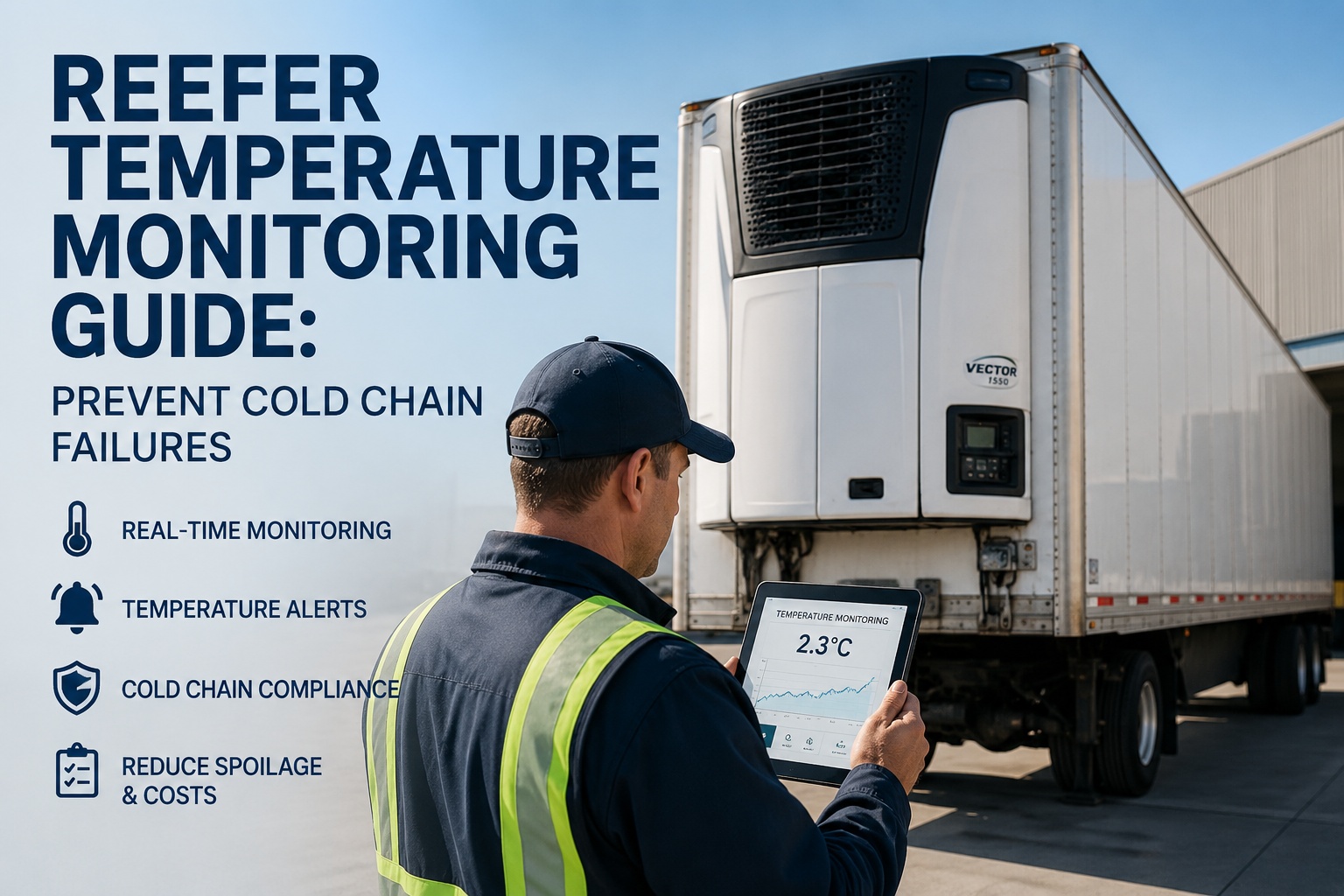
Reefer Temperature Monitoring Guide: Prevent Cold Chain Failures
Prevent temperature excursions with real-time monitoring, sensor calibration, pre-cooling, and door alerts — reducing food spoilage, cutting load rejections, and keeping your cold chain audit-ready.
Why Excursions Actually Happen
The reefer unit usually isn't the villain. Temperature abuse happens in the handoffs and pauses between control points — the moments most monitoring never captures. Four gaps cause the majority of spoiled loads.
Loading product into a reefer that hasn't fully pre-cooled means the unit spends hours fighting heat it should never have had — the most common excursion of all.
Extended or repeated door openings on multi-stop routes flood the box with warm air. Each one is an excursion window most logs never record.
A load sitting three hours at a receiving dock isn't in transit — it's accumulating time in an uncontrolled environment while no one's watching the temp.
A reefer that cycles off or malfunctions mid-route can let temperature climb for hours — invisible without continuous monitoring and alerts.
The Cost of a Compromised Load
Cold chain failures are expensive in ways that compound. The lost product is just the start — rejection, recall risk, and compliance exposure stack on top. The numbers make the case for prevention.
Point-in-Time vs Continuous Monitoring
This is the distinction that decides whether you catch a problem or just discover it. A reading at pickup and delivery tells you the endpoints — it says nothing about the hours in between, which is exactly where the damage hides.
A manual reading at pickup and at delivery. Both can look fine while the product spent two hours above safe temperature at a dock mid-route. You learn about the excursion only if the food visibly fails — too late to act.
Sensors log every 15–30 minutes and transmit live, with automated alerts the moment temperature drifts past threshold. Dispatch can intervene — call the driver, reroute, fix the unit — before a deviation becomes a ruined load.
Catch the Excursion While You Can Still Act
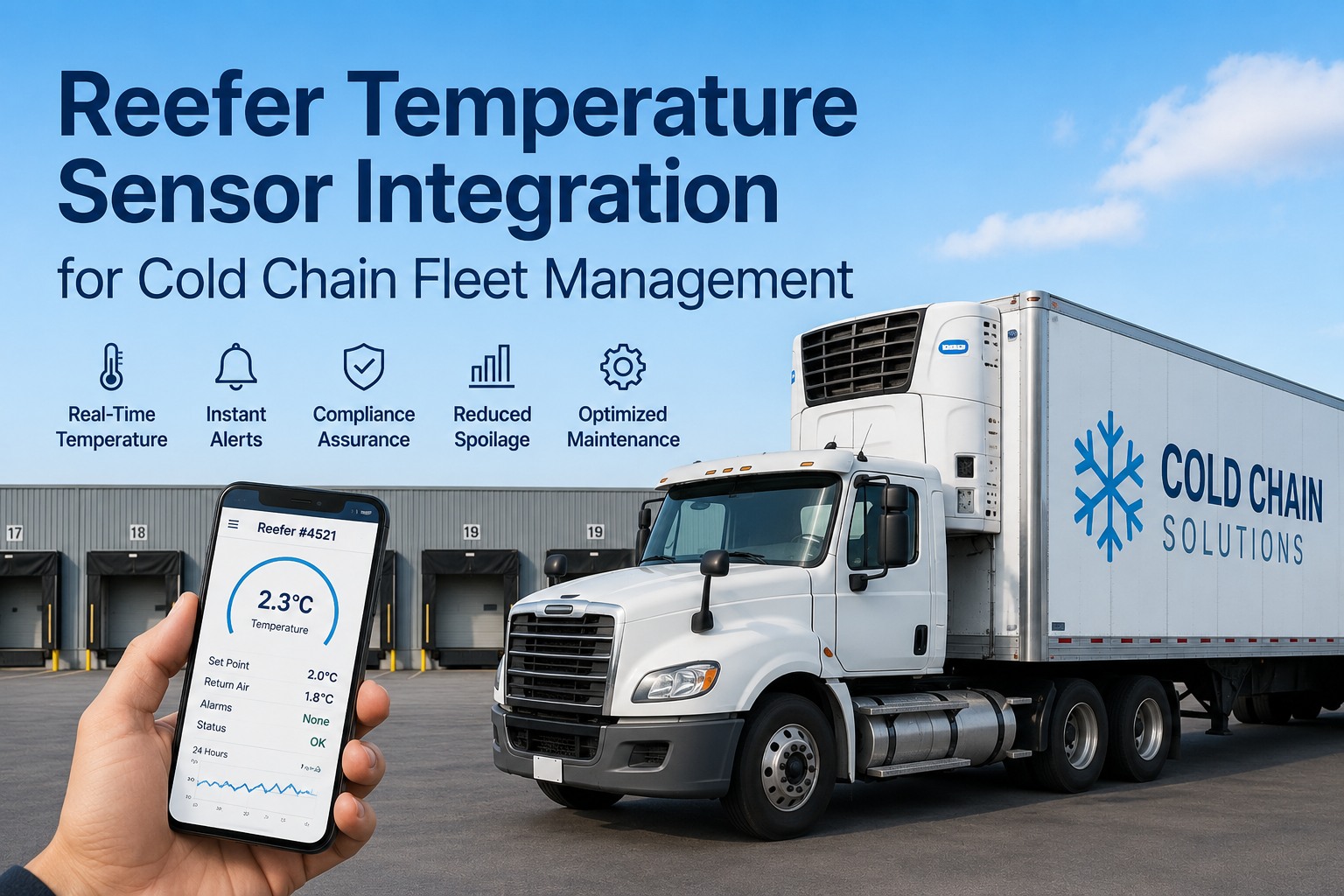
Truck Inspection & Maintenance tracks reefer temperature continuously, fires real-time alerts on threshold breaches and door events, and logs every reading — so dispatch saves the load instead of writing it off.
The Prevention Playbook
Preventing excursions is a routine, not a gadget. These five practices, run consistently and backed by monitoring, stop the vast majority of cold chain failures before they start.
What a Monitoring System Does
Modern reefer monitoring replaces manual driver checks with continuous, automated data — and adds the alerting and records that manual logs can't. These are the capabilities that matter.
Automatic temperature readings at set intervals, even multi-compartment, with no reliance on a driver remembering to check and write it down.
Instant notification on threshold breaches, door-open events, or unit malfunction — the early warning that buys time to intervene.
A verifiable digital temperature history per load, ready for FDA inspectors and customers — satisfying FSMA documentation in seconds.
Accurate continuous data removes the cost, human error, and falsification risk of manual product temperature checks.
Temperature tied to location and time, so an excursion is pinpointed to exactly where and when it happened on the route.
Reefer unit performance feeds maintenance, flagging a failing fridge before it costs you a load on the road.
Frequently Asked Questions
Usually not the reefer unit itself, but the gaps around it: loading product into a trailer that wasn't fully pre-cooled, extended or repeated door openings on multi-stop routes, loads sitting in uncontrolled receiving docks during delays, and the unit cycling off or malfunctioning mid-route. These create temperature-abuse windows that compound over a 24–72 hour transit. The product is often already compromised before anyone notices — which is why continuous monitoring with real-time alerts matters so much. Start a free trial to catch excursions early.
For a verifiable record, every 15 to 30 minutes throughout transit. A reading only at pickup and delivery captures the endpoints but misses what happened in between — the product could have spent hours above safe temperature at a mid-route dock without either endpoint reading revealing it. Continuous logging at defined intervals, transmitted live with automated deviation alerts, is what both prevents spoilage and satisfies FDA and customer documentation requirements.
Refrigerated foods requiring temperature control for safety should generally be kept at or below 41°F. Frozen food holds between roughly −18°C and −23°C (about −0.4°F to −9.4°F) to prevent microbial growth and enzymatic spoilage. The exact target is set by the shipper for each product and must be specified in writing under FSMA. The key is pre-cooling the reefer to that setpoint before loading and maintaining it continuously, not just hitting it on average. Contact our team about product temperature profiles.
Because a reefer unit is designed to maintain temperature, not pull it down quickly under a full load. If you load product into a trailer that's still warm, the unit spends hours fighting heat that should never have been there, and the product sits in an abuse window the entire time. Pre-cooling to setpoint before loading begins — and documenting it — eliminates the single most common excursion and gives the load the best possible start to a long transit.
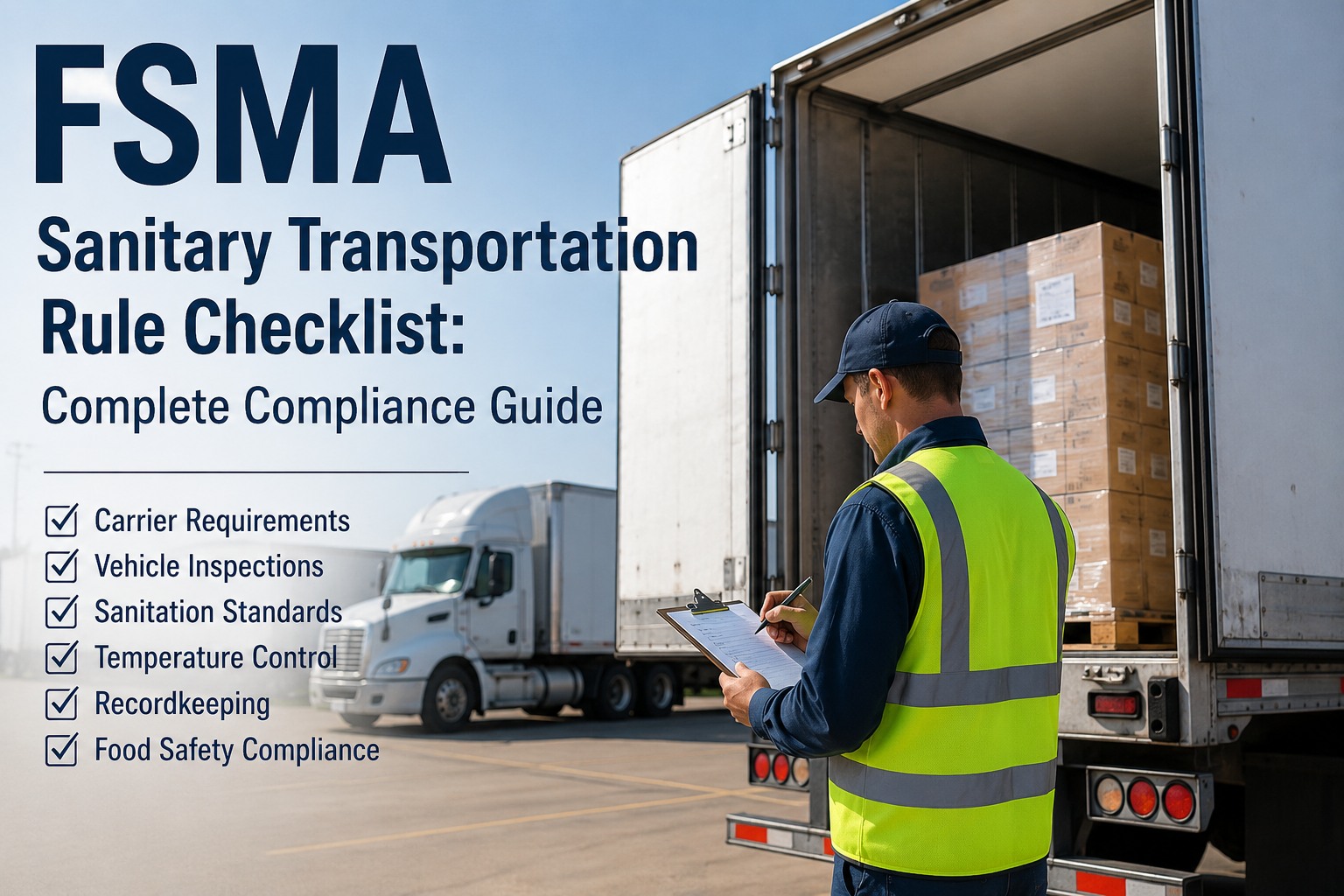
FSMA's Sanitary Transportation Rule requires that operating temperature be maintained and, on request, demonstrated. An automatic, timestamped temperature log per load is the cleanest way to prove it — far more defensible than handwritten checks. Truck Inspection & Maintenance logs reefer temperature continuously, records door and threshold events, and stores the history for audit, so the same system that prevents spoilage also produces the documentation FDA inspectors and customers require. Contact our team about compliance reporting.
Protect Every Cold Chain Load From Dock to Delivery
Truck Inspection & Maintenance monitors reefer temperature continuously, fires real-time alerts on threshold breaches and door events, links every reading to time and location, ties reefer health to maintenance, and keeps an audit-ready log — so you stop spoilage before it happens and prove your cold chain every time.