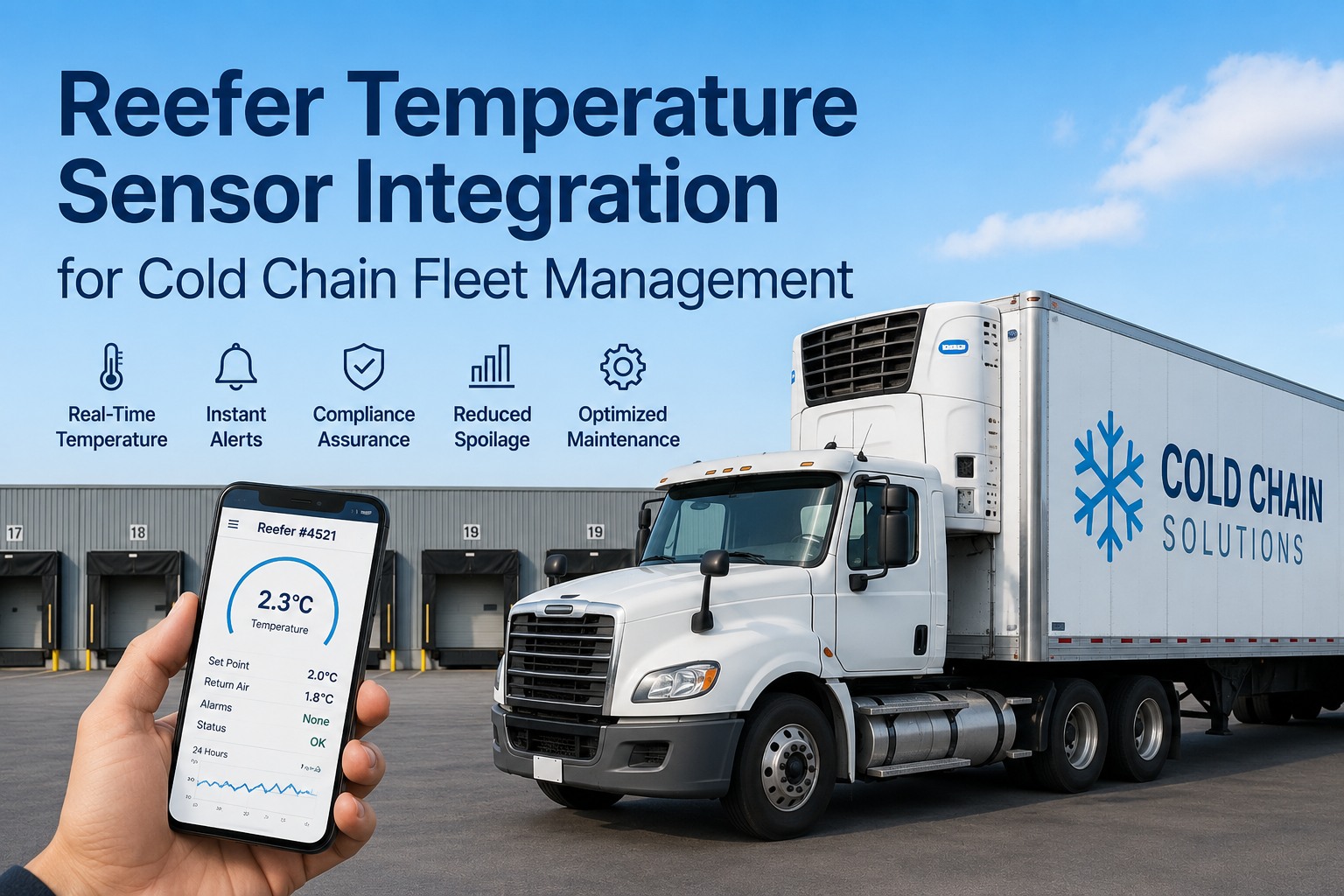
Choosing refrigerated truck fleet management software is structurally different from choosing generic fleet software — and most reefer operators discover this after deploying a generic platform that fails on the features that actually matter for cold chain operations. Generic fleet platforms handle drivers, vehicles, PM scheduling, and DVIRs. Refrigerated operations need all of that plus real-time temperature monitoring with deviation alerts, integration with Carrier Lynx Fleet and Thermo King TracKing telematics, FSMA Sanitary Transportation Rule 12-month record retention, multi-zone temperature management, cargo claim defense documentation, and customer-facing portals that increasingly major shippers require as contract conditions. The economic stakes are also fundamentally different: a dry-van fleet software failure produces administrative inconvenience; a reefer fleet software failure can cost $50,000-$500,000+ in destroyed perishable cargo per incident plus FSMA enforcement exposure. The software decision is genuinely consequential, not just an operational preference.
The 2026 refrigerated fleet software market sits at an inflection point. Real-time temperature monitoring has shifted from optional feature to mandatory shipper requirement for major cold chain accounts — Carrier Lynx Fleet, Thermo King TracKing, Coretex, CalAmp, and integrated fleet platforms all compete on the same baseline functionality, with differentiation increasingly happening on integration depth, compliance automation, and customer portal capabilities. CARB regulations are mid-implementation, with 15% annual diesel TRU phase-out through 2029 in California (16 additional states aligning) requiring software that can track refrigerant types (R-452A vs legacy R-404A), TRU emission compliance, and CARB IDN registration. The FSMA Sanitary Transportation Rule has matured into a baseline compliance expectation rather than emerging requirement. The eDVIR Final Rule (effective March 23, 2026) authorizes electronic DVIR records, eliminating one common objection to digital-first reefer platforms. This guide is the complete buyer's framework for refrigerated truck fleet management software in 2026.
This guide is the complete refrigerated truck fleet management software buyer's framework for 2026: the 8 must-have features, the 4-tier pricing landscape, the 3 most common software selection mistakes, and the cold chain ROI framework. Start your free trial of our truck inspection and maintenance software to evaluate the platform against your specific cold chain requirements — live in 10 minutes, free for up to 3 trucks.
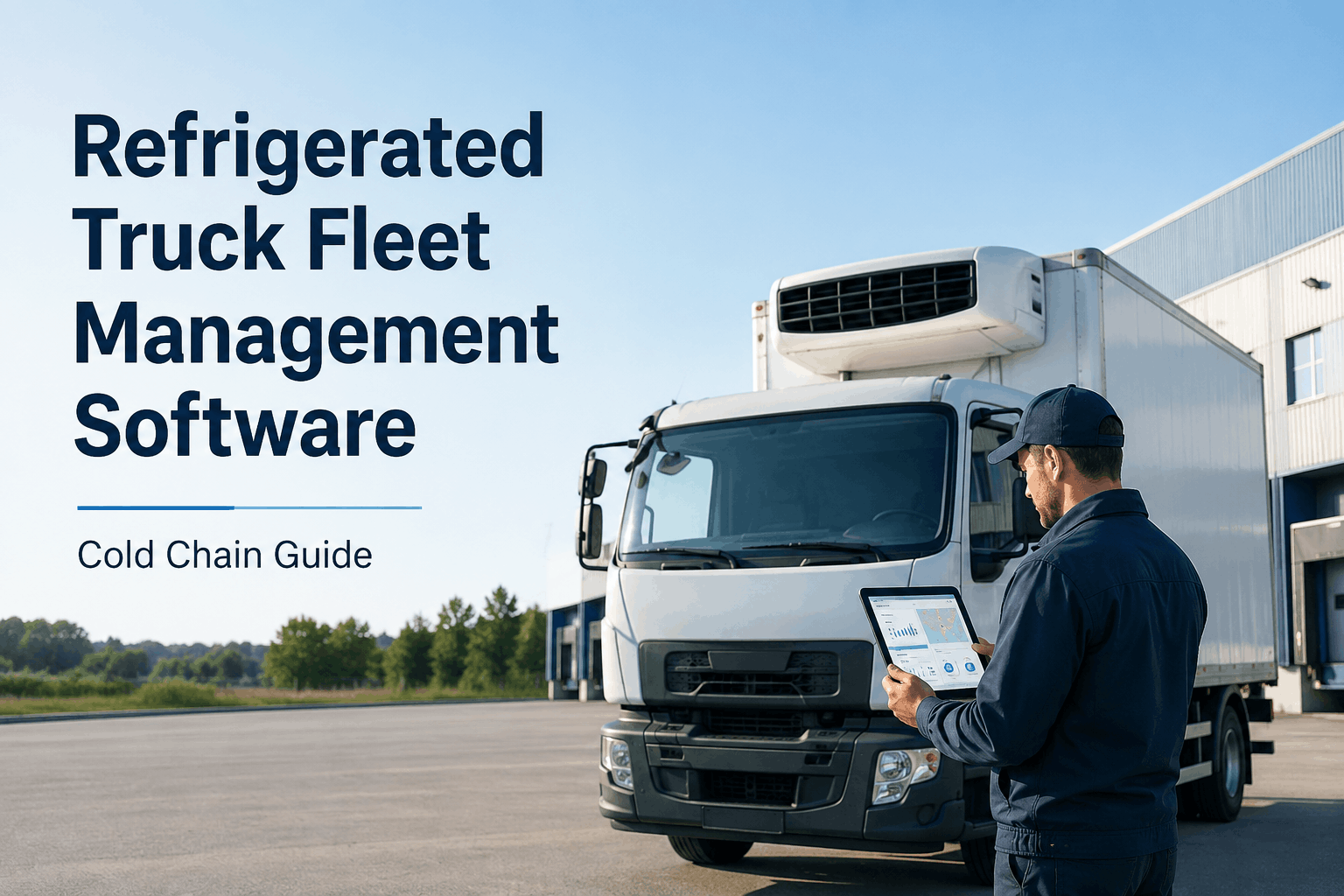
Refrigerated Truck Fleet Management Software (Cold Chain Guide)
The 8 Must-Have Features for Refrigerated Fleet Software
These 8 features distinguish cold chain platforms from generic fleet software. Missing any one creates an operational gap with six-figure consequences. Contact our sales team to evaluate platform fit against these requirements.
01 Real-Time Temperature Monitoring
02 TRU Telematics Integration
03 FSMA Compliance Records
04 Cold Chain Alert System
05 Engine-Hour PM Scheduling
06 Reefer-Specific Driver DVIR
07 Customer / Shipper Portal
08 Cargo Claim Defense Documentation
The 4 Pricing Tiers — From Entry to Enterprise
Refrigerated fleet software pricing aligns with feature depth. Match the tier to operational complexity rather than overpaying for unused features or underpaying and creating compliance gaps.
| Tier | Price /Truck /Mo | Best For | Key Capabilities |
|---|---|---|---|
| Entry | $20-30 | 1-10 trucks | Basic temperature logging, simple PM scheduling, DVIR, manual data download |
| Standard | $35-50 | 10-50 trucks | Real-time temperature monitoring, TRU telematics integration, alerts, FSMA records |
| Pro | $50-80 | 50-200 trucks | All standard + customer portal, advanced analytics, multi-zone management, claim defense |
| Enterprise | $80-150+ | 200+ trucks | Custom workflows, dedicated support, API access, white-label portals, advanced compliance |
| Free Tier | $0 (≤3 trucks) | Owner-operators | Basic features for small operations; useful for trial/validation |
Reefer software pricing premium over generic fleet software runs $10-30 per truck per month, reflecting the cold chain feature depth. The premium is trivial relative to the value: single avoided cargo loss event ($50K-$500K+) pays for years of platform cost across the entire fleet. The mistake to avoid: choosing generic fleet software ($10-25/truck/month) to "save" $15-25/month per truck, then discovering the compliance and operational gaps after a $300K cargo claim. The math doesn't work — pay the cold chain premium.
The 3 Most Common Reefer Software Selection Mistakes
Watch for these patterns when evaluating platforms. Each mistake creates predictable downstream problems that show up in the second year of operation when changes become expensive.
Choosing Generic Fleet Software
Bolt-On Point Solutions
Building In-House Software
The Cold Chain ROI Framework
Refrigerated fleet software ROI is structurally different from generic fleet software because the avoided-loss math is so dominant. Here's where the dollars come from.
Avoided Cargo Loss
FSMA Compliance Defense
Cargo Claim Defense
Faster Customer Contracts
Operational Efficiency
Frequently Asked Questions
What's the most important feature in refrigerated fleet software?
Real-time temperature monitoring with automated deviation alerts — this is the single feature that separates cold chain platforms from generic fleet software. Continuous temperature logging at 15-minute intervals minimum (FSMA standard) combined with set-range monitoring and immediate alerts when temperatures deviate from target ranges. The alerts must reach the right people through multiple channels (SMS + email + push notification) and escalate when unacknowledged. The reason this is the dominant feature: cold chain failures cascade rapidly. A reefer that warms 5°F above target for 30 minutes may already have compromised the cargo by the time a driver notices on next dock check. Real-time alerts give the operations team a chance to intervene before cargo damage occurs — restart the TRU, dispatch service, switch trailers, or recover the load. Without real-time alerts, you discover problems at delivery — too late. Start your free trial to test real-time temperature monitoring.
How much should refrigerated fleet software cost?
Pricing aligns with feature depth across four tiers. Entry tier ($20-30/truck/month) covers basic temperature logging, simple PM scheduling, and DVIR — appropriate for small operations (1-10 trucks) with limited cold chain complexity. Standard tier ($35-50/truck/month) adds real-time temperature monitoring, TRU telematics integration, automated alerts, and FSMA records — the practical baseline for serious reefer operations (10-50 trucks). Pro tier ($50-80/truck/month) adds customer portal, advanced analytics, multi-zone management, and cargo claim defense — appropriate for mid-size operations (50-200 trucks) and any fleet serving major shippers. Enterprise tier ($80-150+/truck/month) provides custom workflows, dedicated support, API access, white-label customer portals, and advanced compliance — for large operations (200+ trucks). Most platforms offer free tiers for 1-3 trucks to validate before scaling. Premium over generic fleet software ($10-30/truck/month) is trivial relative to the cargo loss prevention value.
Does the software work with both Thermo King and Carrier?
Yes — and this is a critical requirement. Thermo King and Carrier Transicold dominate the reefer market with combined 90%+ share, and most fleets run mixed brands across their operations. Quality cold chain software platforms integrate directly with both TracKing (Thermo King) and Lynx Fleet (Carrier) telematics, plus third-party platforms like Coretex and CalAmp. The integration provides automatic data feeds for temperature, fault codes, engine hours, fuel level, and unit health — eliminating manual data entry and ensuring all reefers report into one consolidated platform regardless of brand. Reject platforms that only integrate with one telematics provider — that limits future flexibility and creates problems when fleet composition changes. Also verify integration with diagnostic platforms (Thermo King SR-2/SR-3, Carrier APX/FaultRanger) for shop technicians performing service. Contact our sales team for TRU integration capability.
What's FSMA and how does software help with compliance?
FSMA is the Food Safety Modernization Act, with FDA's Sanitary Transportation Rule codified at 21 CFR Part 1, Subpart O. The rule requires carriers transporting human or animal food to maintain continuous temperature logs during transport, sanitize cargo areas between loads, train personnel on safe food handling, and retain records for 12 months minimum. Software helps with each requirement: continuous temperature logging from TRU controllers automatically captured and retained per FSMA standards; sanitization logs tracked digitally with photo evidence and personnel sign-off; training records maintained per employee with completion dates and certifications; 12-month retention handled automatically with audit-ready export capability. The compliance burden without software is substantial — manual paper records, sanitization tracking spreadsheets, training certifications in file cabinets — and the audit failure exposure is significant. Software automates compliance into the operational workflow, making it the byproduct of normal operations rather than a separate administrative burden.
How long does cold chain fleet software take to deploy?
Modern cloud-based reefer fleet software typically deploys in 10 minutes to 2 weeks depending on integration scope. Quick deployment (under 1 day): basic platform setup, driver mobile app, manual DVIR, basic PM templates. Most fleets start here. Standard deployment (1-2 weeks): TRU telematics integration with Lynx Fleet or TracKing, automated temperature monitoring, custom alert rules, FSMA workflow configuration. Full deployment (2-4 weeks): customer portal branding and access, API integrations with shipper systems, custom workflows, advanced analytics setup, training delivery. Most fleets can run a real pilot on 3-10 trucks within 10 minutes of starting a free trial, validating the platform against actual operations before committing to a full fleet rollout. The fast deployment is meaningful: legacy enterprise platforms commonly take 6-18 months to deploy, during which the business case erodes. Sign up free to test deployment speed.
Do shippers actually require real-time temperature monitoring?
Increasingly yes — major shippers have shifted real-time monitoring from "nice to have" to contract requirement, particularly in pharmaceutical, biotech, and high-value food applications. Walmart, Costco, Kroger, and major food processors expect API-level integration into their procurement systems showing temperature data in real time. Pharmaceutical shippers (Pfizer, Merck, AstraZeneca and others) typically require monitoring with cryptographic audit trails. Major restaurant chains demand customer portals with visibility into shipment status. The trend is unidirectional: shippers requiring real-time visibility today will be requiring more sophisticated integration in 2-3 years. Carriers building their software stack now position themselves for the contracts of 2027-2028 rather than the contracts of 2020. Reefer operators that can't deliver real-time visibility lose contract competitions to those that can — and the lost revenue from a single missed major contract typically exceeds 5-10 years of platform cost. Talk to our sales team for customer portal capability.