The two most expensive words in a tow dispatcher's day are "send the closest truck." A rollback sent to a Class 8 rollover can't do the job. A heavy-duty wrecker sent to a sedan repo burns diesel and blocks the truck that should have taken the call. A medium-duty with a red-tagged winch is worse than no truck at all. Real dispatch decisions need three data points at once — is the truck in the right class for the call, is it close enough to hit the response window, and is every piece of equipment actually operational right now. This guide is the readiness dashboard that gives dispatch all three. Start free and give dispatch live readiness for every wrecker in your fleet.
Send the Right Truck to the Right Call — Not Just the Nearest One
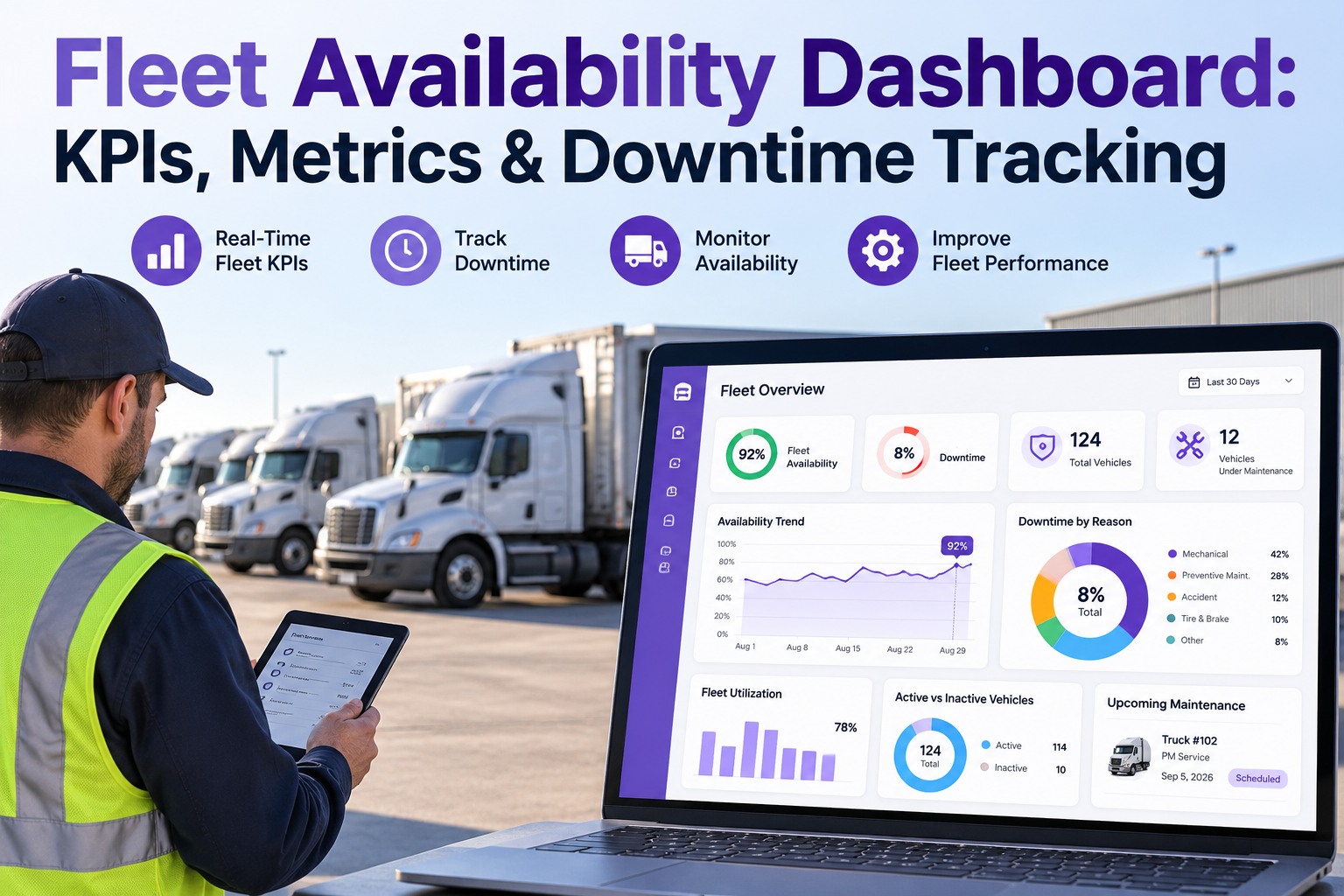
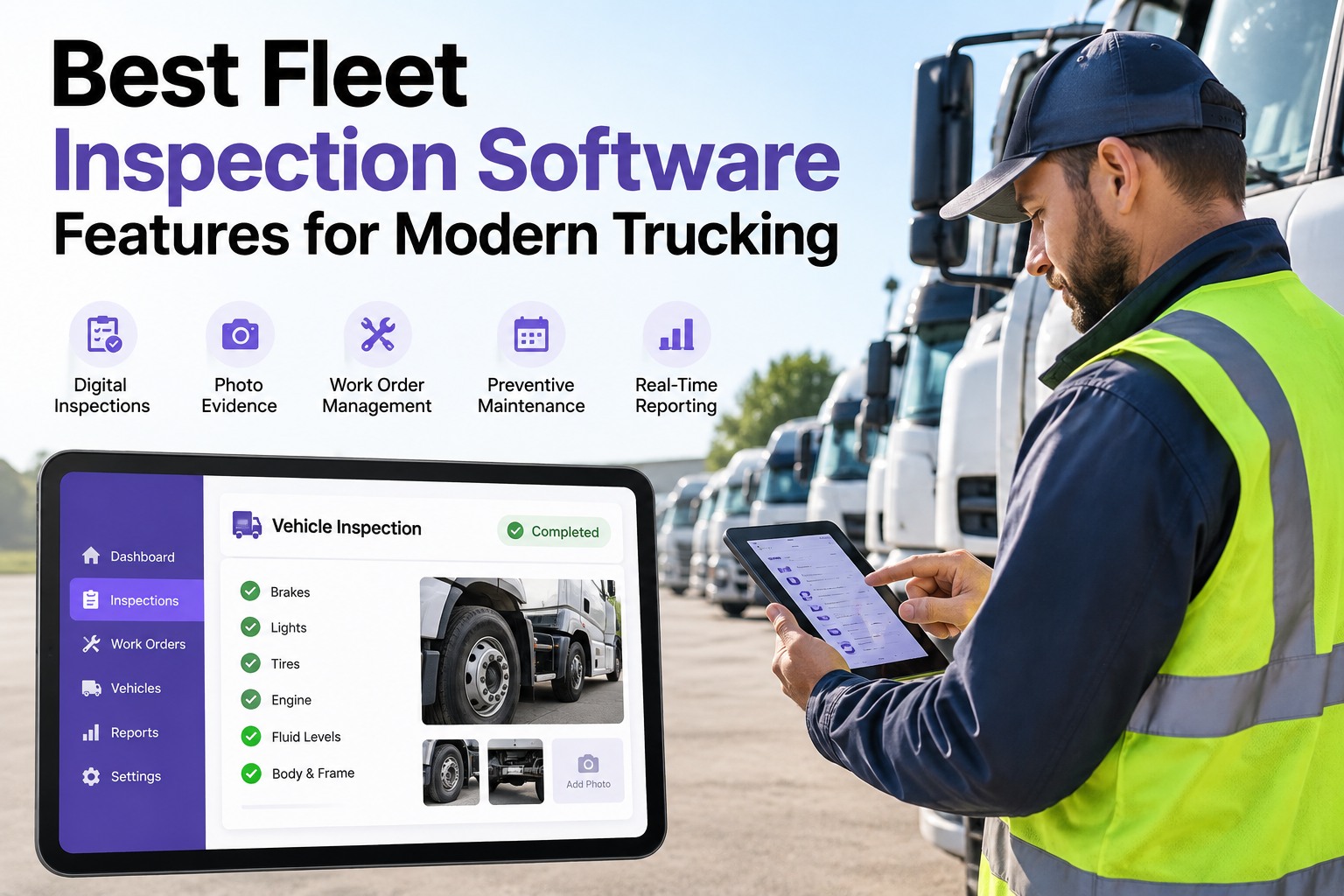
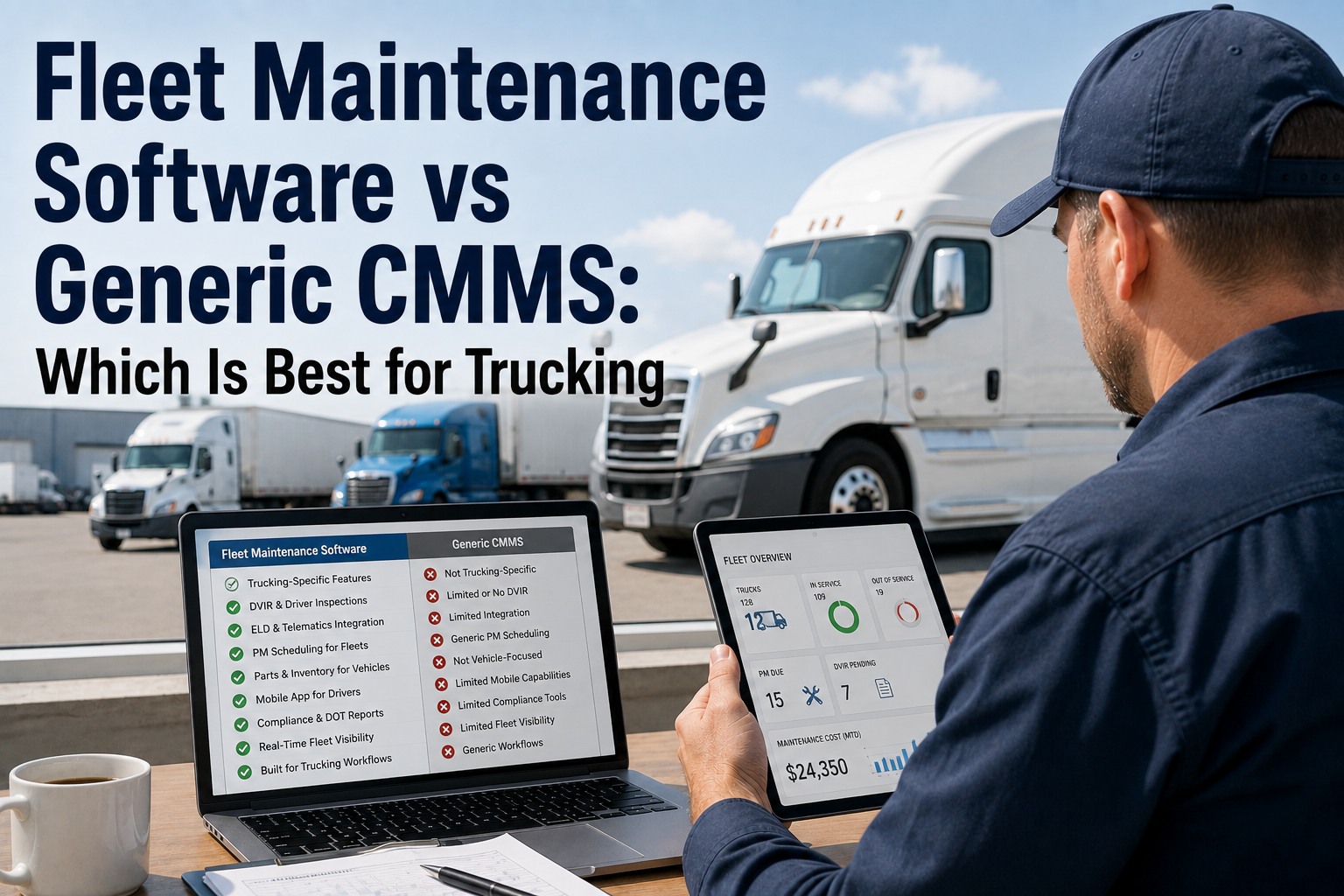
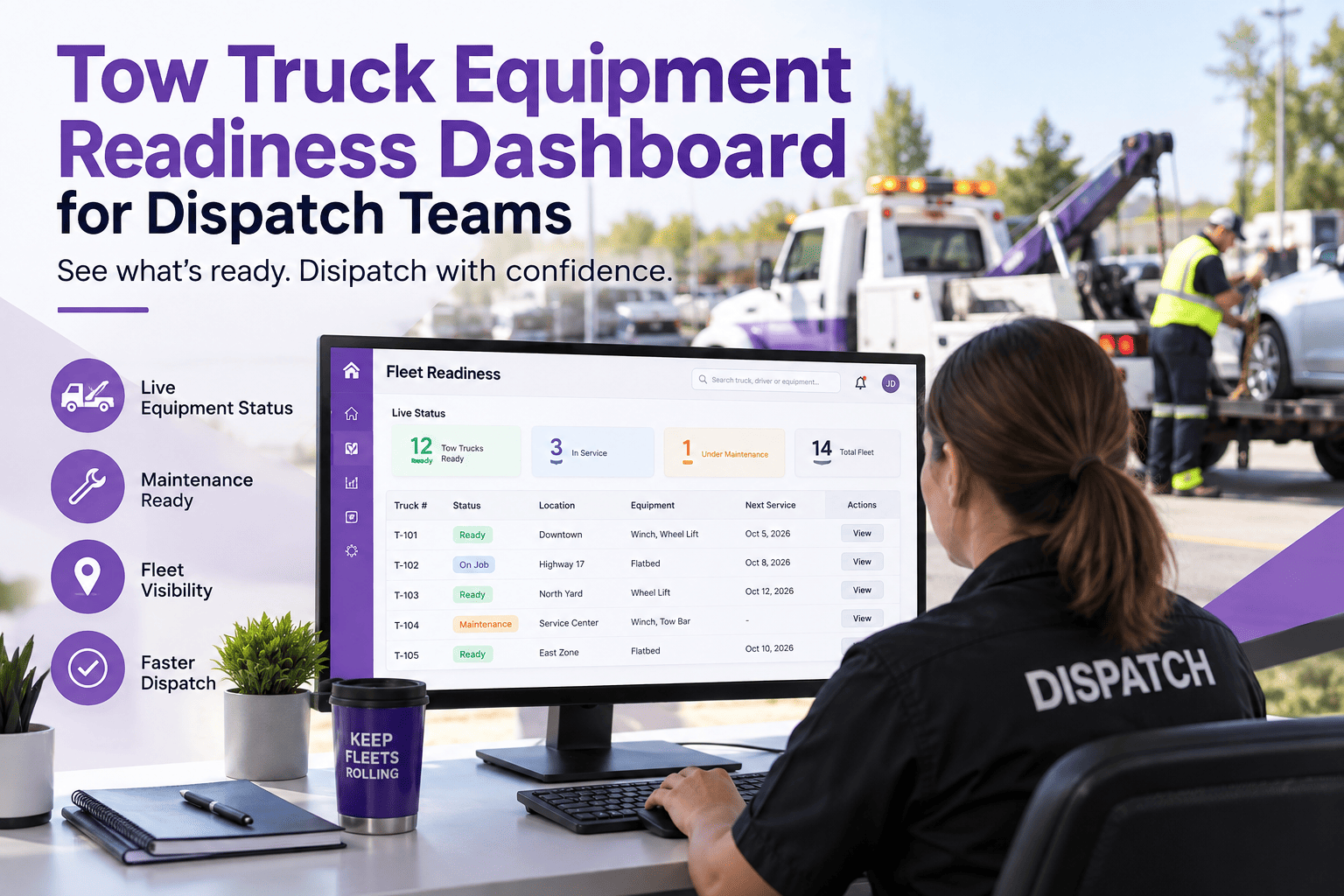
GPS alone tells dispatch where the trucks are. It doesn't tell them which winch is red-tagged, which wheel-lift is due for hi-pot testing, or which rotator is 20 minutes into a recovery and unavailable. Truck Inspection & Maintenance Management Software puts equipment readiness on the same board as location and class: dispatch sees every wrecker's live status, safety-critical defects hard-lock trucks out of the assignable pool, and every DVIR + PM record sits behind the same view — so the truck that gets the call is actually able to do the job.
The Three Data Points — Why Location Alone Fails Dispatch
A dispatcher looking at a GPS-only screen is making a two-thirds-blind decision. The map shows where the trucks are; it doesn't show what they can do. Every real tow-fleet dispatch decision combines three variables — the class of wrecker the call requires, the location of every candidate unit, and the current equipment-readiness of each. Miss any one and either the wrong truck rolls, or the right truck rolls in the wrong condition. Below is the three-layer view a dispatcher actually needs on the screen.
Light-duty rollback, medium-duty integrated, or heavy-duty rotator. Each call type has a minimum class — send anything under it and the truck can't complete the job.
GPS position updated every 30 seconds. Motor clubs benchmark 30–45 minute response; top operators hit 20. Dispatchers guessing without live GPS lose contracts they thought they'd hold.
DVIR filed for the shift, winch operational, wheel-lift straps present, amber-bar working, fire extinguisher charged. Any red-tagged item hard-locks the truck out of the assignable pool.
The Wrecker Class Matrix — What Each Class Can Actually Do
Every state that regulates towing splits wreckers into classes by GVWR and capability, and the matrix below is the working version most fleets and motor clubs operate under. Understanding the class capabilities is the first half of the routing decision — the readiness dashboard's job is to make the second half (which specific truck of that class) obvious.
- Rollback / flatbed 8k–19k capacity
- Wheel-lift 3.5k–8k capacity
- Sedans, SUVs, motorcycles, repos
- Winch min 8,000 lb / 3/8" cable
- Integrated boom + wheel-lift 12k–25k
- Under-lift ≥ 6,500 lb full extension
- Box trucks, RVs, mid-size commercial
- Light & air-brake hook-ups if towing trailers
- 25–50 ton boom on Class 7–8 chassis
- Under-lift ≥ 12,000 lb full extension
- Class 8 semis, buses, dump trucks
- Tandem rear axles required
- 30–75 ton, 360° rotating boom
- Rollovers, ravine recovery, uprighting
- Multi-axle stabilizer + outriggers
- Major accident scene recovery
The Dispatcher's Readiness Board — What Every Cell Should Say
The board below is the working screen most tow dispatchers need — one row per wrecker, columns for class, location, and the equipment-readiness signals that decide whether the truck is assignable. Live status color decides the routing before the dispatcher scrolls a map. Green rows go to the queue for auto-routing; amber rows require a supervisor tap; red rows are hidden from assignment entirely until a mechanic clears the flag.
| Unit | Class | Location | DVIR | Equipment | Status |
|---|---|---|---|---|---|
| W-101 | A · Rollback | I-95 mm 42 | Filed 05:12 | All green | READY |
| W-104 | A · Wheel-lift | Yard | Filed 04:58 | All green | READY |
| W-206 | B · Integrated | Rt-9 & 34 | Filed 05:03 | Amber bar out | WATCH |
| W-208 | B · Integrated | On call · ETA 22 min | Filed 04:44 | All green | ASSIGNED |
| W-311 | C · Heavy | Yard | Filed 05:20 | Winch red-tagged | OOS |
| W-315 | C · Heavy | I-287 mm 18 | Filed 05:07 | All green | READY |
| W-401 | D · Rotator | Yard | Not filed | — | AWAITING DVIR |
Live Readiness · Hard-Locked OOS · No More Sending the Wrong Truck
Our software runs the readiness board every dispatcher needs — GPS position live, DVIR status per shift, equipment condition graded per checkpoint. A red-tagged winch on W-311 auto-hides it from the assignable pool the moment the defect is logged; a filed DVIR on W-315 keeps it green. When the call comes in, dispatch sees the shortlist of trucks that are actually able to take it — sorted by class, filtered by readiness, ranked by ETA.
The Call-to-Truck Routing Matrix — Which Class Goes to Which Call
Every call type has a minimum class of wrecker that can complete it, and a set of readiness signals that have to be green before the truck can be assigned. Below is the routing matrix — the mapping that lives inside a well-designed dispatch platform, so the assignment decision becomes a filter rather than a judgment call.
| Call type | Minimum class | Response target | Required-ready checks |
|---|---|---|---|
| Sedan roadside disable | Class A | 20–30 min | Rollback deck, wheel-lift straps, DVIR filed |
| Motor club light tow | Class A | 30–45 min | Wheel-lift function, safety chains, amber bar |
| Repossession | Class A | Scheduled | Wheel-lift function, chain-of-custody camera |
| Box truck / RV recovery | Class B | 45–60 min | Integrated boom, under-lift ≥ 6,500 lb, air-brake hookup |
| Class 8 semi disable | Class C | 60–90 min | Heavy-duty boom, under-lift ≥ 12,000 lb, tandem-axle stability |
| Rollover / ravine recovery | Class D | Extended · safety first | Rotator function, outriggers, scene-stabilization kit |
| Multi-vehicle accident scene | Class C or D | Multi-unit dispatch | Coordination + readiness on every unit on scene |
Frequently Asked Questions
Dispatch the Right Wrecker, Ready to Work, Every Call
Live GPS on every unit. Live DVIR and equipment-readiness status per shift. Red-tagged trucks hard-locked from the assignable pool. Dispatch decisions become filters, not judgment calls.