Drivers rarely quit over pay alone — they quit over the dispatch board. The good loads always going to the same three names, the home-time promise broken again, the schedule that swings from a 14-hour grind to two days sitting idle. Manual dispatch runs on a dispatcher's memory and relationships, and that's exactly where unfairness creeps in: inconsistent schedules, long waits, and inefficient routes that burn drivers out and drive them off. With turnover already punishing and each replacement costing thousands to recruit and train, the dispatch board is quietly one of the most expensive systems in the fleet. Dispatch software changes the equation — assigning loads by clear rules, balancing workloads, respecting HOS and home time, and optimizing routes so every driver gets a fair, predictable shake. This guide breaks down how fair dispatch works and why it's a retention tool, not just a routing one. Build a fairer dispatch board free.
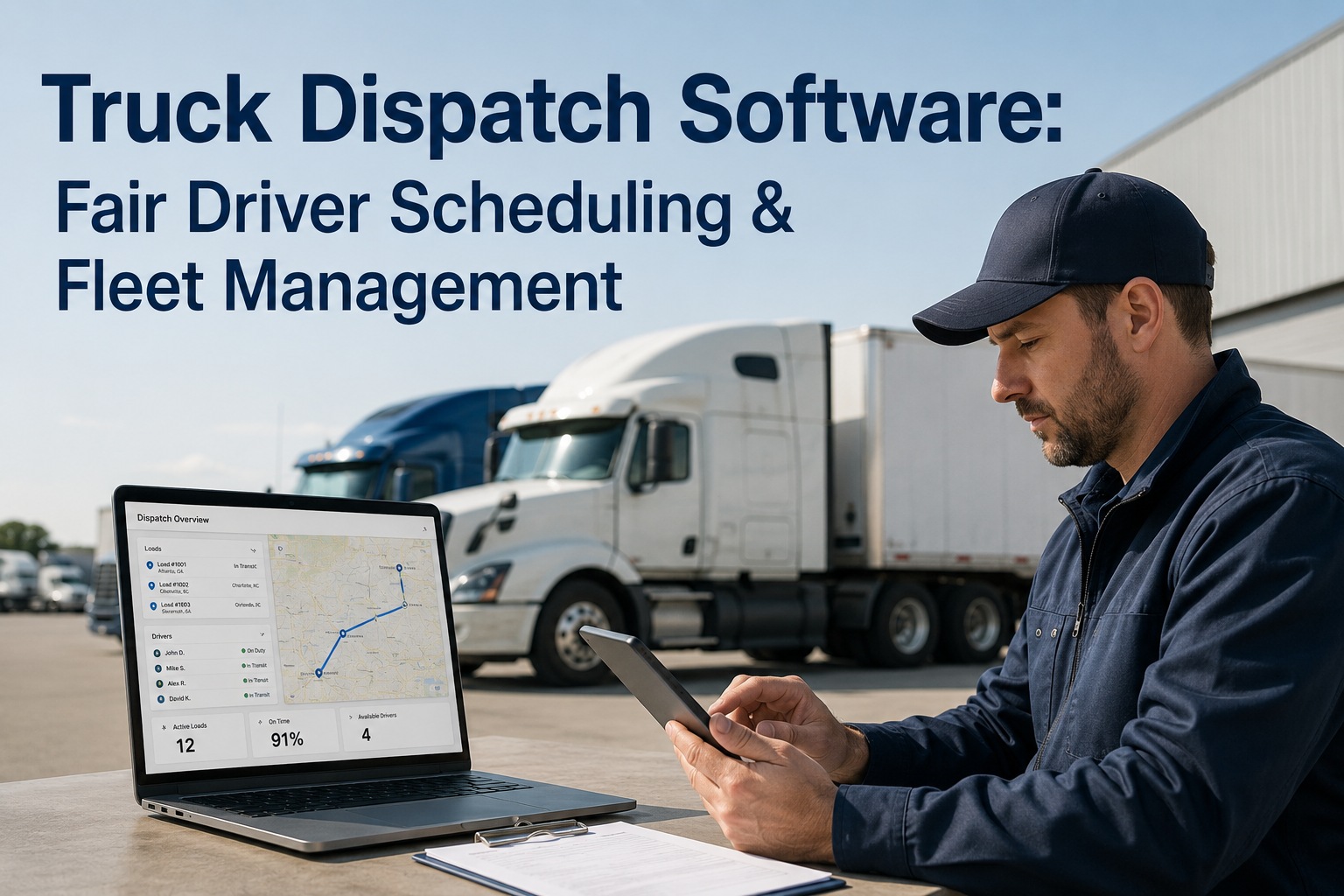
Truck Dispatch Software: Fair Driver Scheduling & Fleet Management
See how dispatch software improves driver scheduling, balances workloads, reduces turnover, and optimizes routes — making fair dispatch a retention strategy, not just a routing task.
The Real Cost of Unfair Dispatch
Turnover is the most expensive problem most fleets refuse to name, and dispatch sits at the center of it. When assignments feel arbitrary, the best drivers — the ones with options — leave first. The numbers behind that churn are brutal.
Why Manual Dispatch Breeds Unfairness
Nobody sets out to play favorites — but a manual board makes it almost inevitable. A dispatcher juggling loads from memory falls into patterns that feel efficient and land as unfair. Three failure modes do the damage.
The reliable drivers quietly get the best loads and miles; everyone else notices. Resentment builds, and the drivers passed over start looking elsewhere.
One driver runs 3,000 miles while another sits idle. Both are unhappy — one burned out, one not earning — and neither schedule was intentional.
Without the constraint built in, home-time promises slip under load pressure. Nothing erodes trust and retention faster than a missed weekend.
What Fair Dispatch Actually Looks Like
Fair doesn't mean identical — it means assignments follow clear, visible rules instead of a dispatcher's mood or relationships. Software encodes these factors so every driver knows the board is even. These are the dimensions a fair system balances.
Loads distributed so earning opportunity evens out over time — no one consistently starved or overloaded.
Assignments respect each driver's available hours, so no one is pushed past legal or safe limits to cover a gap.
Home time is a hard constraint the system schedules around — not a wish that load pressure overrides.
The right driver and truck for the load — endorsements, equipment, lane familiarity — so assignments make sense.
Desirable and undesirable loads rotate visibly, so drivers trust the system rather than suspecting favoritism.
Assignments minimize empty miles to the pickup — better for the driver's time and the fleet's cost at once.
Turn the Dispatch Board Into a Retention Tool
Truck Inspection & Maintenance helps balance assignments by miles, hours, and home time, and ties dispatch to vehicle readiness — so the right driver gets the right load in a truck that's actually ready to roll.
How Software Dispatches a Load
Where a manual board relies on a dispatcher scanning a whiteboard, software runs every assignment through the same checks in seconds. The result is a decision that's faster, fairer, and defensible.
Beyond Fairness: What Good Dispatch Software Does
Fair scheduling is the differentiator, but a dispatch platform earns its keep across the whole operation. These capabilities turn a balanced board into a more profitable, compliant fleet.
Sequences stops and routes for fewer miles and less fuel — cutting cost and the hours that wear drivers down.
Schedules within hours-of-service limits, cutting violations by as much as 80% and protecting CSA scores.
Loads, routes, documents, and messaging in one place — no phone tag, no confusion about the next move.
Flags overloading and spreads work across the fleet automatically, preventing both burnout and idle trucks.
Live status of every load and driver, so dispatch reacts to delays instead of discovering them after the fact.
Cost per mile, utilization, and on-time rates per driver and lane — the data to keep improving the board.
Frequently Asked Questions
It removes the inconsistency and perceived favoritism that drive drivers away. By assigning loads through clear rules — balancing miles and pay, respecting HOS and home time, and rotating desirable loads transparently — software makes the board feel fair to everyone. Combined with real-time communication and predictable schedules, this directly addresses the burnout and dissatisfaction that cause churn. Since each replacement driver costs thousands to recruit and train, even a small retention gain delivers strong ROI. Start a free trial to see fair scheduling.
Fair doesn't mean identical — it means assignments follow visible, consistent rules rather than a dispatcher's relationships. A fair system balances earning opportunity (miles and pay) over time, respects each driver's available hours and fatigue limits, protects home-time commitments as hard constraints, matches skills and equipment to the load, and rotates the good and bad loads transparently. When drivers can see the logic, they trust the board — which is what actually retains them.
No — it makes them far more effective. The software handles the heavy lifting of filtering available drivers, checking HOS, ranking candidates by fairness, and optimizing routes, then surfaces the best assignment for a dispatcher to confirm. The dispatcher still applies judgment, handles exceptions, and manages relationships — but without juggling everything from memory. It stabilizes the operation rather than removing the human from it.
It factors each driver's available hours into every assignment, so loads aren't given to a driver who can't legally complete them. By scheduling within hours-of-service limits and flagging conflicts before dispatch, these systems reduce HOS violations by as much as 80%. That protects your CSA score, avoids fines that can reach into five figures per violation, and keeps drivers from being pressured into unsafe situations to cover a gap. Contact our team about compliance-aware dispatch.
The strongest setups don't dispatch a truck that isn't ready. Truck Inspection & Maintenance ties dispatch decisions to vehicle readiness — so a unit with an open defect, an overdue inspection, or a due PM doesn't get assigned a long haul it can't safely finish. Pairing fair driver scheduling with real-time vehicle health means the right driver gets the right load in a truck that's actually fit to roll, preventing roadside breakdowns that wreck both schedules and trust.
Make Every Dispatch Fair, Fast, and Ready
Truck Inspection & Maintenance helps balance loads by miles, hours, and home time, optimizes routes, keeps assignments HOS-compliant, and ties every dispatch to vehicle readiness — so drivers trust the board, stay longer, and roll in trucks that won't strand them.