A tow truck is the one vehicle that can't break down — because when it does, there's no one to call. Recovery fleets run 24/7, in storms and at 3 a.m., on the same highways everyone else is trying to get off of. That puts a brutal double demand on every wrecker: it has to be the rescue vehicle and a fully compliant commercial motor vehicle at the same time. Miss a boom service interval, let a permit lapse, or break the DVIR chain, and a single missed call or roadside citation costs more than a month of preventive maintenance. This guide breaks down what it takes to keep a tow and recovery fleet ready around the clock — dispatch, equipment health, and compliance — and how the right system keeps every unit on call. Keep your recovery fleet ready free.
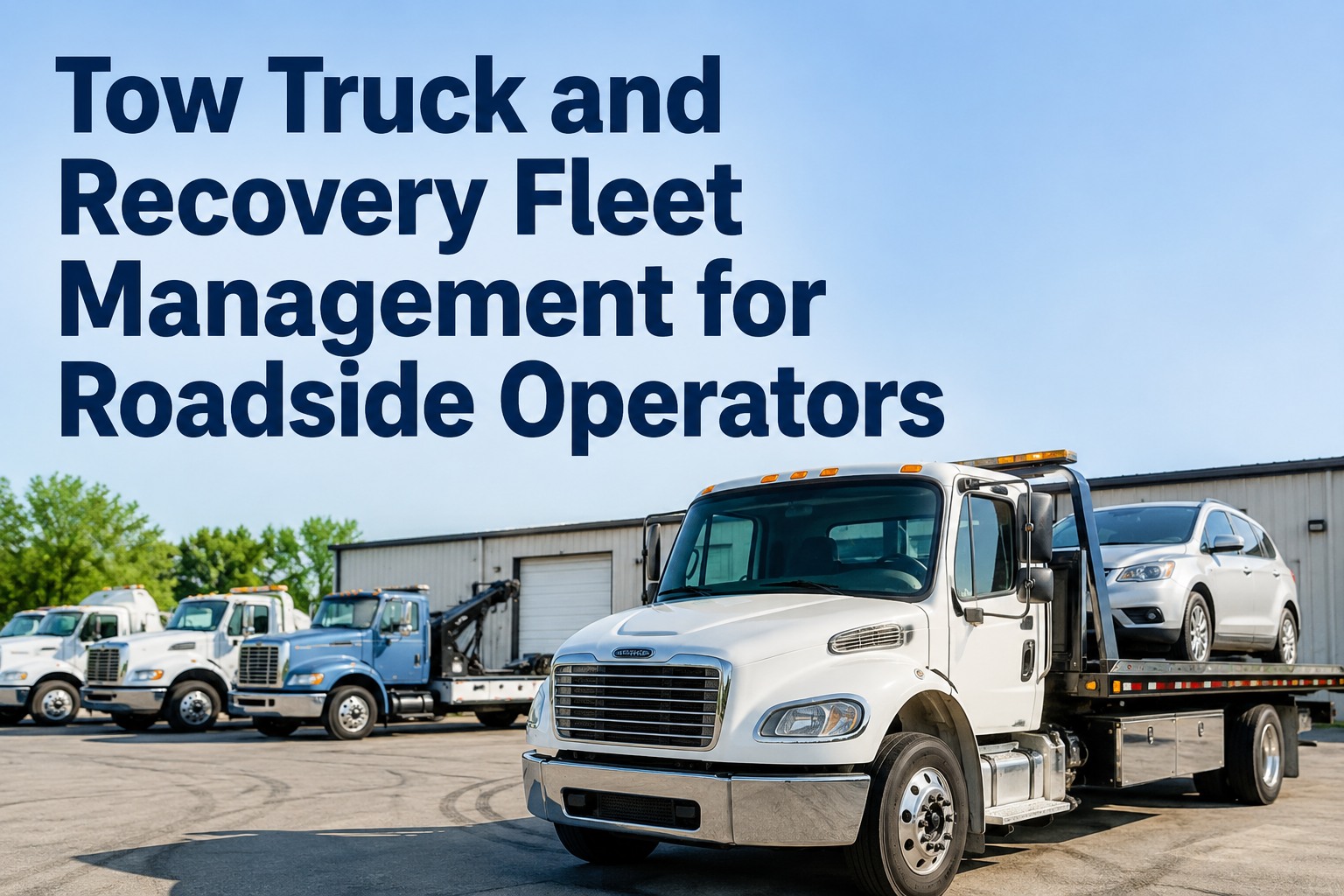
Tow Truck and Recovery Fleet Management for Roadside Operators
Tow and recovery fleets run 24/7 on call. Track tow-truck maintenance, dispatch, and inspections so recovery operators stay ready and compliant around the clock — and no call goes unanswered.
Why Tow Fleets Are Harder to Run
A linehaul truck runs a predictable lane on a schedule. A recovery fleet does the opposite — unpredictable calls, mixed equipment, scene work that punishes hydraulics, and zero tolerance for downtime because the truck itself is the emergency service. Three pressures make it uniquely demanding.
Nights, holidays, storms — the call comes when conditions are worst. A unit that's down at 3 a.m. is a job that goes to a competitor.
Booms, winches, and wheel-lifts cycle under extreme loads at every recovery. Wear is heavy and failure mid-lift is dangerous and costly.
The wrecker is a regulated CMV and carries towing-specific permits. Two layers of paperwork, both citable, both easy to let slip.
The 24/7 Readiness Loop
Keeping a recovery fleet ready isn't a checklist you finish — it's a loop that never stops turning. Every call cycles through these four stages, and a weak link anywhere drops a unit out of service. Strong fleets close the loop with data instead of memory.
Close the Readiness Loop With Data
Truck Inspection & Maintenance ties dispatch, inspections, and equipment health into one view — so every wrecker's status is known before the phone rings, not after it breaks down.
Track the Equipment That Actually Fails
A tow truck isn't just a truck — it's a truck with a crane on the back. The recovery equipment is what makes the money and what fails most under load. Generic fleet maintenance misses it; recovery fleets track it by cycle, not just by mileage.
Cycle-based service intervals catch seal and ram wear before a mid-lift hydraulic failure. The single highest-stakes system on the truck.
Cable fraying, drum wear, and brake condition logged every cycle. A cable failure under load is a safety event, not a repair.
Pins, pivots, and locking mechanisms inspected for the wear that comes from constant load-and-release at every call.
Rated equipment checked for cuts, stretch, and corrosion — the securement that keeps a recovered vehicle on the deck.
Standard CMV systems still apply, under heavier-than-normal loads. Brakes and tires wear fast hauling recovered weight.
Amber beacons, work lights, and arrow boards keep operators visible at roadside — a failure here is a liability on a live highway.
The Double Compliance Burden
Most fleets manage one set of regulations. Recovery operators carry two — federal CMV rules and towing-specific licensing — and an inspector or contract auditor can pull on either. Here's what has to stay current on every unit, all the time.
Where Recovery Fleets Lose Money
Profit in towing is made and lost on the margin of each call. The same factors that strand a competitor's truck quietly drain yours — and all of them are measurable once you track them.
Frequently Asked Questions
Tow fleets carry recovery equipment — booms, winches, wheel-lifts — that fails under load and must be tracked by cycle count, not just mileage. They also run 24/7 on unpredictable calls and carry a double compliance burden: standard CMV regulations plus towing-specific permits and certifications. Generic fleet software misses the equipment tracking and the licensing layer that recovery operators depend on.
The hydraulic boom and winch systems. They cycle under extreme load at every recovery, so seal wear, ram condition, cable fraying, and drum wear accumulate fast. A failure mid-lift is a safety event, not just a repair — which is why these systems should be serviced on cycle-based intervals rather than waiting for a calendar date or a mileage threshold.
Two layers. As commercial motor vehicles, wreckers need daily DVIRs with an intact defect-to-repair chain, an annual inspection under 49 CFR 396 Appendix A, a documented maintenance program, and current driver credentials. On top of that, towing requires state and municipal permits, operator certifications, rotation-list insurance proof, and certified rigging — any of which can be audited by a contract holder.
Proximity-based routing assigns the nearest qualified unit instantly instead of a dispatcher guessing from a whiteboard. That eliminates overlapping routes and the response delays manual assignment creates — one 50-unit fleet cut significant minutes off average response time. Faster, smarter dispatch means more calls cleared per shift and lower fuel cost per job.
It centralizes the records auditors and contract holders ask for. Truck Inspection & Maintenance stores digital DVIRs with a complete defect-to-repair chain, tracks permit and certification expirations with advance alerts, logs boom and winch cycles against maintenance, and keeps everything timestamped and exportable — so an audit or contract review is a quick export instead of a scramble through binders.
Keep Every Wrecker Ready Around the Clock
Truck Inspection & Maintenance tracks boom and winch cycles, fires permit and certification alerts before they lapse, keeps digital DVIRs audit-ready, and ties it to dispatch — so your recovery fleet stays on call, compliant, and profitable 24/7.