If you don't know your cost per mile, you're guessing — and in a freight market this tight, guessing loses money one load at a time. The industry average cost to run a truck hit $2.26 per mile in 2024, with non-fuel costs reaching a record $1.78. When spot rates compress toward those numbers, the gap between what a load pays and what the mile actually costs is the entire margin — and it's razor-thin. The carriers still standing when the market turns are the ones who know their real number, including the deadhead miles and downtime most operators quietly leave out. This guide breaks down the full cost-per-mile stack, the hidden expenses that wreck the math, and the levers that move CPM down and profitability up. Track your true cost per mile free.
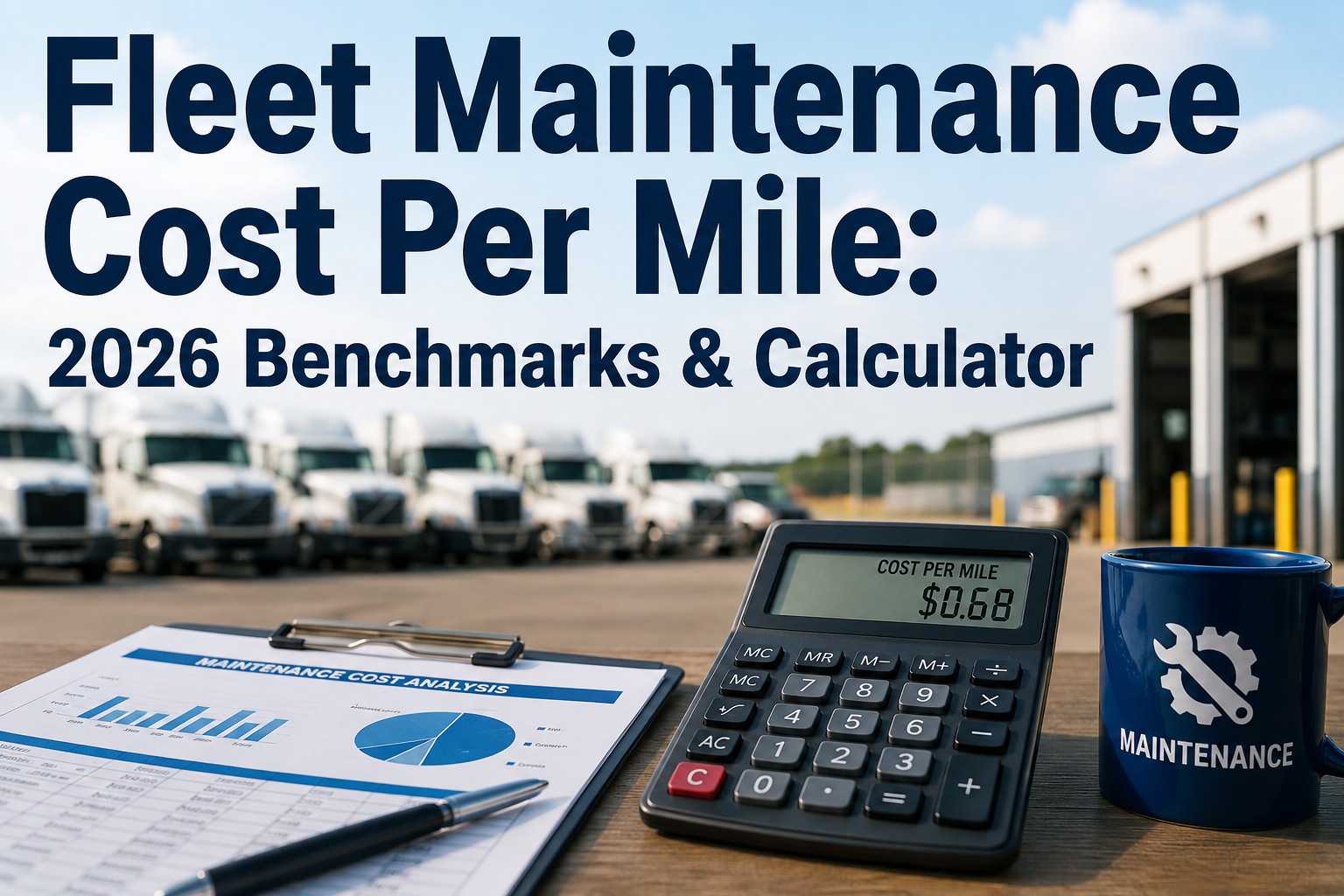
Trucking Fleet Cost Per Mile Analysis: Reduce Costs & Improve Profitability
Calculate and optimize cost per mile across fuel, maintenance, labor, idle time, and operating costs. Find the hidden expenses, lift your margins, and price every load to profit.
What Cost Per Mile Actually Is
Cost per mile is the total cost to operate a truck divided by total miles driven in a period — and the word that trips everyone up is total. Total cost means every dollar, including the repair you didn't plan for. Total miles means every mile, including the empty ones. Get either wrong and you'll price loads that quietly lose money.
The Cost-Per-Mile Stack
Every mile carries a stack of costs. Knowing the size of each layer tells you where the money goes — and where the biggest savings hide. Here's the breakdown for a typical Class 8 operation.
Fixed vs Variable: Why the Split Matters
Every cost falls into one of two buckets, and they behave in opposite ways. Fixed costs punish low-mileage months; variable costs punish inefficiency. Knowing which is which tells you whether the fix is "run more miles" or "run smarter." Talk to our team about mapping your cost structure.
Don't change with miles — truck payment, insurance, permits, ELD subscription, admin. Run fewer miles and these spread over less, so CPM jumps. The reason a slow month hurts.
Move with the miles — fuel, maintenance, tires, tolls, repairs. These swing fast and surprise you, which is exactly where disciplined tracking and prevention pay off most.
See Your Real CPM by Truck and Lane
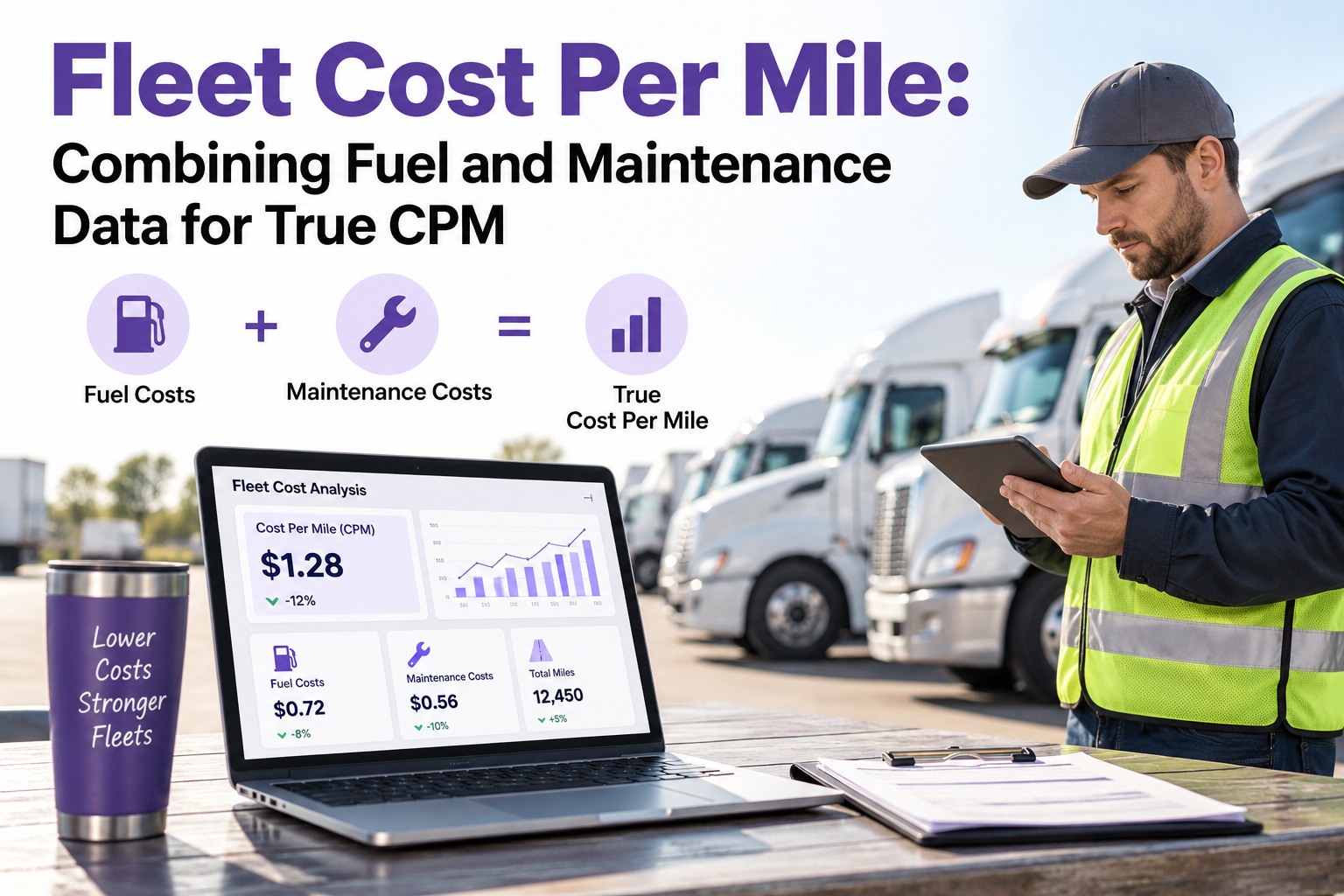
Truck Inspection & Maintenance tracks fuel, maintenance, and operating costs against actual mileage per unit — so your cost per mile is a live number, not a quarterly guess.
The Deadhead Trap
The single biggest CPM mistake is calculating on loaded miles only. Your truck burns fuel, wears tires, and depreciates on every empty mile too — but those miles earn nothing. Ignore them and your CPM looks great on paper while your bank account disagrees.
That $0.46 gap is the difference between a load that pays and one that quietly loses money. Always calculate on total miles, then attack deadhead with better backhaul planning. See deadhead impact on your lanes.
CPM vs Rate: Where Profit Lives
Cost per mile is what the mile costs you. Rate per mile is what the broker pays. The gap between them is your profit per mile — and if you don't know your CPM, you can't know whether a load sits above or below the line.
The Levers That Lower CPM
Once you know your number, you can move it. These are the highest-impact levers — and because fixed costs spread as miles rise, even small per-mile wins compound fast across a year. Start a free trial and start lowering your CPM today.
The fastest lever — fuel is 30–40% of cost. Slowing from 68 to 62 mph and cutting idle can lift MPG 15–20%.
Empty miles are pure cost. Better backhaul planning and load-board use turn dead miles into paid ones.
A scheduled service is far cheaper than a roadside failure plus tow, delay, and missed delivery window.
A CPM you check monthly catches a creeping cost early; a number you never run lets it compound unseen.
Fixed costs run whether the truck moves or not — every down day raises CPM with zero revenue to offset it.
Knowing your CPM lets you walk from money-losing loads and negotiate rates with data, not hope.
Frequently Asked Questions
ATRI's 2025 report put the 2024 industry average at $2.26 per mile all-in, with non-fuel costs reaching a record $1.78 per mile. That figure reflects large carriers with full overhead — owner-operators with lower overhead often land between $1.20 and $1.80 depending on equipment age and lanes. Your real number depends on your truck, routes, and how much deadhead you run.
Add all fixed and variable costs for a period — truck payment, insurance, fuel, maintenance, tires, tolls, driver pay, everything — then divide by total miles driven, including deadhead. Use at least three months of data to smooth out seasonal swings. The most common error is using only loaded miles or leaving out maintenance and downtime, both of which make your CPM look artificially low.
Always. Your truck burns fuel, wears tires, and depreciates on empty miles just like loaded ones, but they earn no revenue. Industry deadhead averages 16.7% of total miles. If you calculate on loaded miles only, a real $2.31 CPM can look like $1.85 — and you'll price loads that lose money. Use total miles, then work to reduce the empty ones.
Fuel efficiency, because fuel is 30–40% of total cost. Reducing speed from around 68 to 62 mph and cutting idle time can improve fuel economy 15–20%. After fuel, attacking deadhead and tightening preventive maintenance deliver the biggest gains. Because fixed costs spread across more miles as utilization rises, even a $0.05 per-mile reduction saves $5,000 a year per truck at 100,000 miles. Start a free trial to track these levers automatically.
It turns CPM from a quarterly guess into a live metric. Truck Inspection & Maintenance tracks fuel, maintenance, and operating costs against actual mileage for each truck and lane, surfaces units running above the fleet average, ties low MPG to the maintenance behind it, and flags vehicles due for preventive service — so you can see exactly where cost per mile is climbing and act before it eats your margin. Contact our team to see it on your fleet.
Turn Cost Per Mile Into Profit Per Mile
Truck Inspection & Maintenance tracks fuel, maintenance, and operating costs against real mileage by truck and lane, exposes the deadhead and downtime that inflate your CPM, and ties efficiency to the maintenance behind it — so you price every load to profit and watch your margin climb.