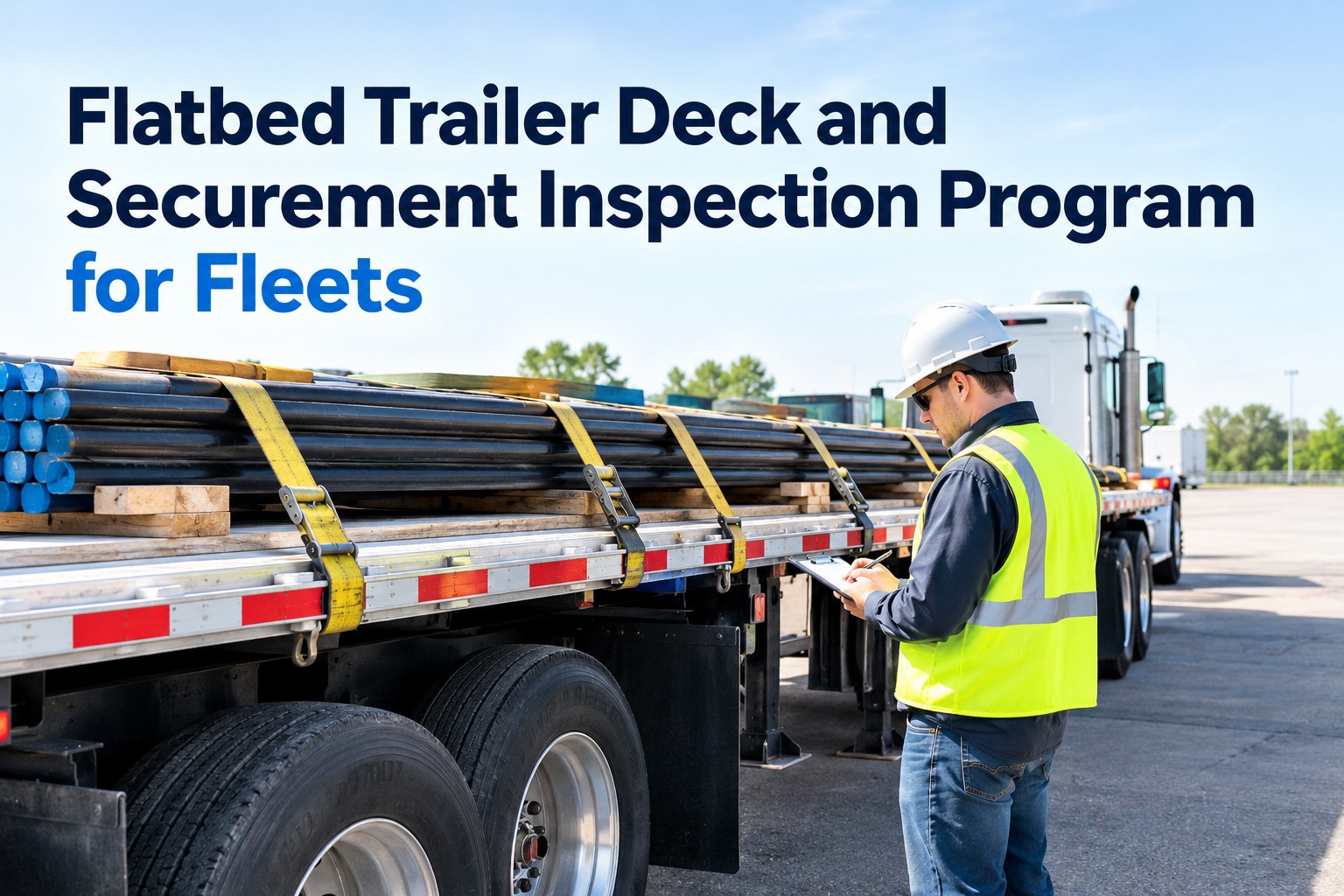
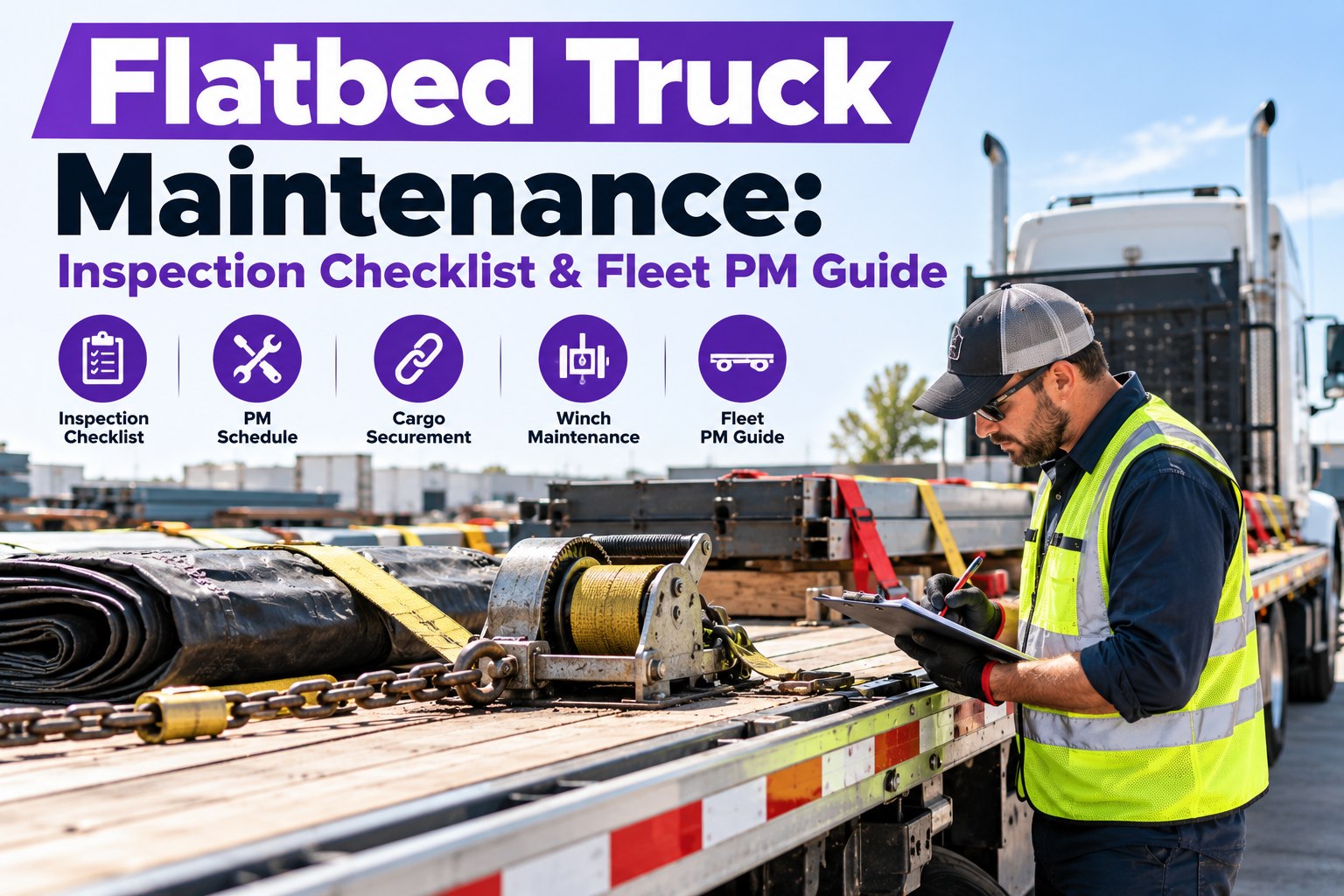
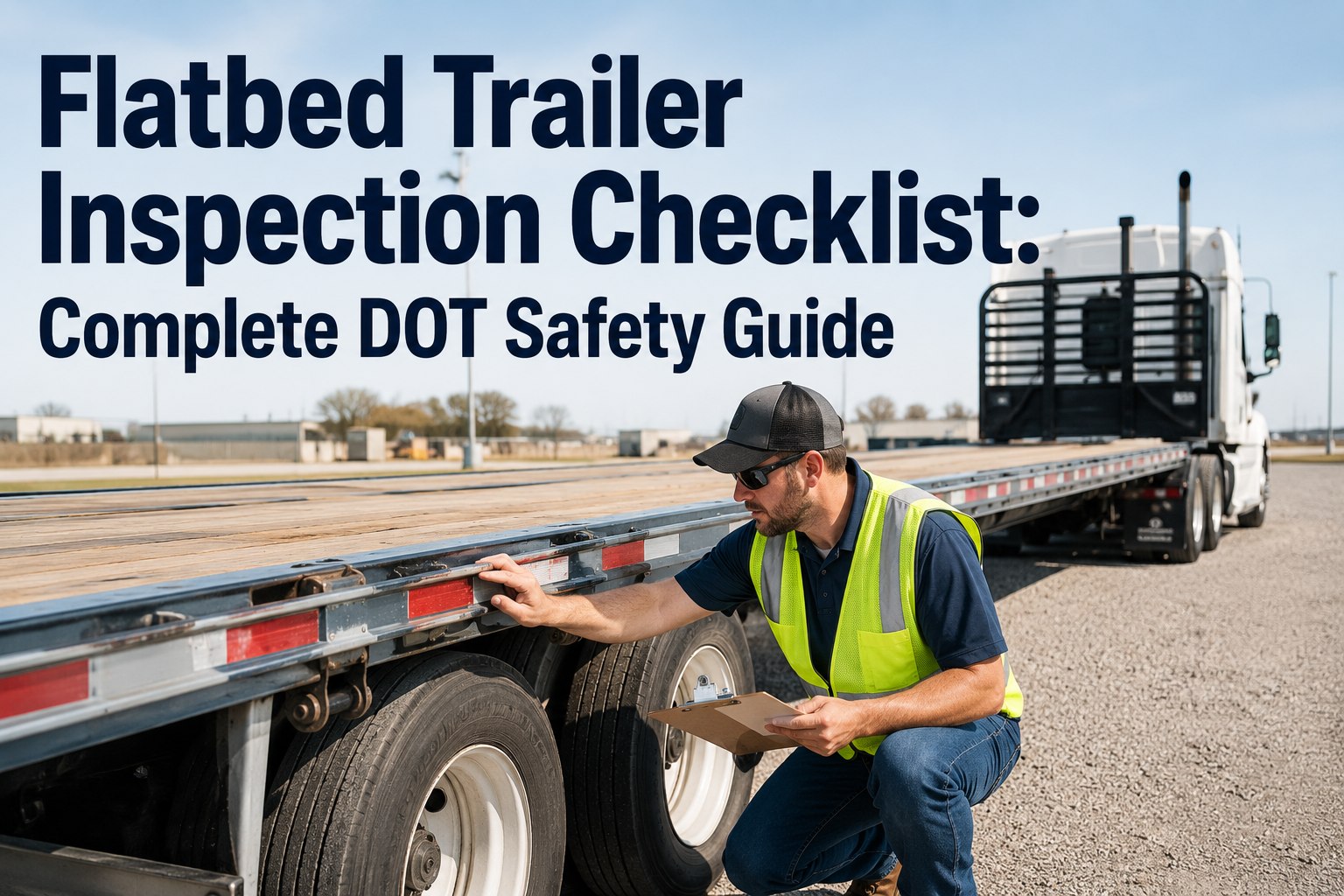
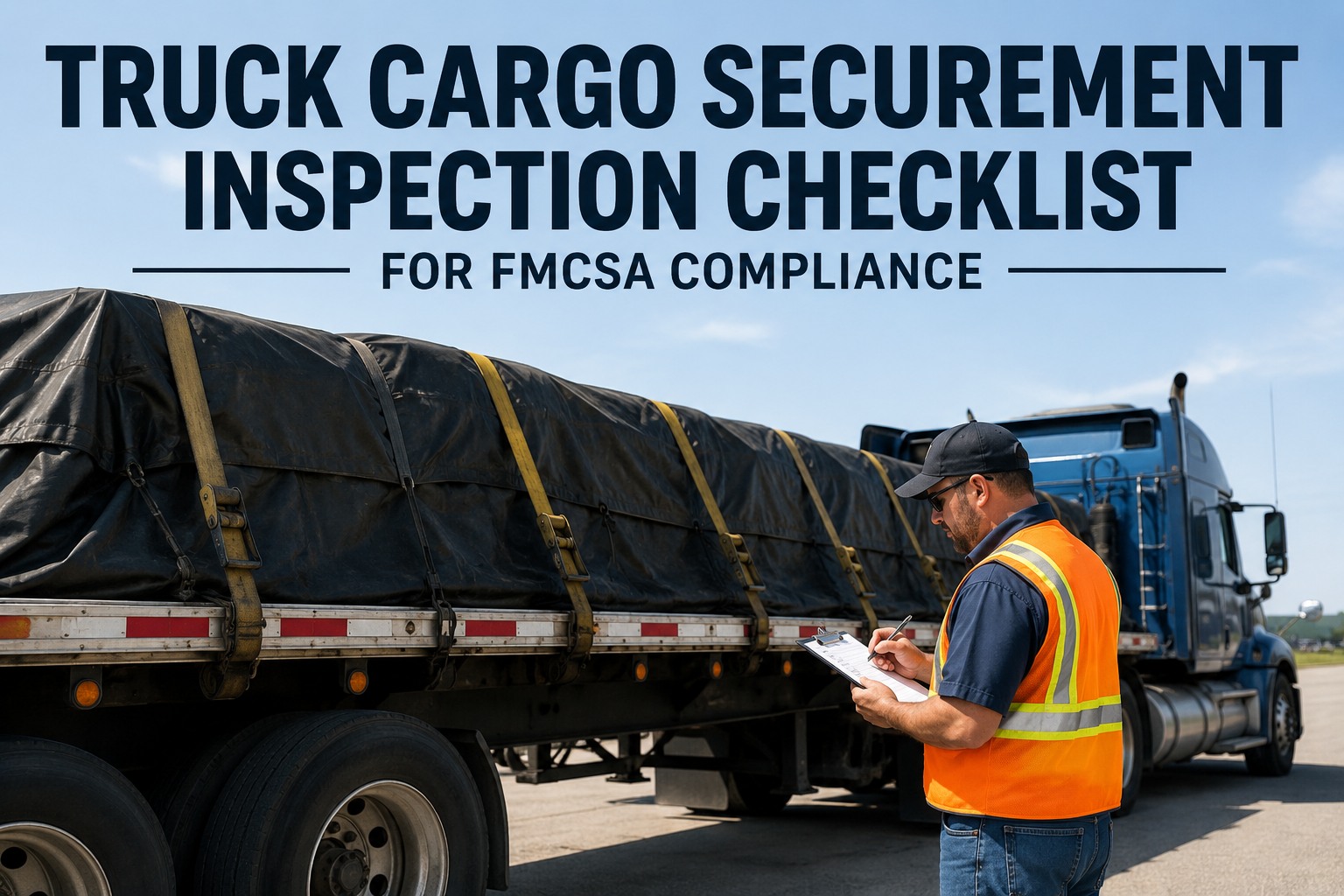
Your DVIR program inspects the truck. On a flatbed, that's only half the safety system. An enclosed trailer has walls to contain a load; a flatbed has nothing but a deck and a web of chains, straps, and binders — and that cargo-control hardware is exactly what most fleet inspection programs never formally cover. The gap shows up in the numbers: cargo securement drew more than 85,000 roadside violations in 2024, more than brakes, lighting, or hours-of-service. This guide builds the flatbed-specific inspection program that closes it — the two layers every open-deck check must cover, the working-load-limit math that decides pass or fail, the device defects that zero out a tiedown on the spot, and the re-tension timeline the road requires. Start a free trial and put deck-and-securement checks into every driver's inspection.
Flatbed · Deck & Securement Program
The Flatbed Deck & Securement Inspection Program
A flatbed's deck and its tiedown system are the safety system — no walls, no backup. Yet standard DVIRs barely touch them. Here's the open-deck inspection program built for the two things that actually keep the load on the trailer.
85,000+cargo securement violations cited in 2024
50%min aggregate WLL vs. cargo weight (§393.102)
50 mifirst mandatory re-tension stop (§393.110)
Two Layers Every Flatbed Check Must Cover
A flatbed inspection isn't one thing — it's two systems that fail in different ways. The deck is the structure that carries the load and anchors the tiedowns; the securement system is the hardware that holds the cargo to it. Miss either and the load leaves the trailer.
Layer 1
The Deck & Anchor Points
The platform, its structural members, and every rated anchor ring, stake pocket, and rub rail the tiedowns connect to. A corroded anchor point tears out under load shift — the securement can be perfect and still fail if what it's bolted to gives way.
Deck boards / plate: rot, cracks, holes, soft spots
Anchor rings & D-rings: corrosion, cracks, elongation
Stake pockets, rub rails, winch tracks: intact & secure
Frame & crossmembers: no bends, cracks, or rust-through
Layer 2
The Securement System
Every chain, strap, binder, winch, and edge protector that holds cargo down. Each device has a rated working load limit — and a single damaged one legally counts as zero, no matter how good the rest of the array looks.
Chains: cracks, stretch, gouges, corrosion thinning
Straps: cuts, abrasion, knots, UV rot, readable WLL tag
Binders & ratchets: function, deformation, seating
Edge protectors: present at every sharp contact point
The blind spot Most DVIR templates were written for the tractor and the running gear. They inspect tires, brakes, and lights beautifully — and say nothing about whether the anchor ring is cracked or the strap has a knot in it. On a flatbed, that's the half of the inspection that keeps the load on the deck.
Ask how flatbed-specific checks get built in.
The Math That Decides Pass or Fail: Aggregate WLL
Every securement decision comes back to one calculation. Working Load Limit is the rated capacity of a device; aggregate WLL is the sum across all tiedowns on a load. The federal rule is blunt: the total must be at least half the cargo weight.
× 50%
20,000 lb
Minimum aggregate WLL required
Tiedown countA minimum of 2 tiedowns, plus 1 for every additional 10 ft of cargo length — more if the weight demands it to hit the 50% line.
Unmarked = lowestAn unmarked chain or strap gets assigned the default lowest rating at inspection. No legible WLL tag, no credit for its real strength.
Damaged = zeroA cut strap, knotted webbing, or gouged chain link contributes zero to the aggregate — the array can be one bad device away from failing.
Build WLL and Device Checks Into the Inspection Itself
Truck Inspection & Maintenance gives dispatch, drivers, and the shop one system for it all: a flatbed-specific mobile inspection that captures deck condition, anchor-point integrity, and every tiedown's condition with a photo — and flags a load whose aggregate WLL falls short before it leaves the yard. A cracked anchor ring or frayed strap routes straight to the shop as a work order, and every check becomes an audit-ready, timestamped DOT record. No defect, PM, or securement gap slips.
The Device Defects That Zero Out a Tiedown
An inspector doesn't average your securement — a single defective device counts for nothing toward the aggregate WLL, and can trigger an out-of-service order on its own. These are the defects that take a device to zero.
Chains
Cracked or fractured links
Stretched / elongated links
Gouges or corrosion thinning
Bent or damaged hooks
Straps & Webbing
Cuts, tears, or heavy abrasion
Any knot (shortening or joining)
UV degradation / rot
Missing or unreadable WLL tag
Binders & Anchors
Deformed or cracked binders
Ratchet won't hold tension
Corroded or torn anchor ring
No edge protector on sharp edges
The Re-Tension Timeline the Road Requires
Securement isn't a one-and-done at the dock. Loads settle and straps stretch in the first miles, and federal rules put the checks on a clock. Build this rhythm into the driver's routine — the first window is the highest-risk one.
Within 50 mi
First mandatory check. New loads settle and straps find slack in the opening miles — the single highest-risk window. Stop, walk the load, retighten every tiedown.
Every 150 mi / 3 hr
Recurring check thereafter. Full walkaround: tension on every device, tiedown condition, edge protectors still seated, blocking hasn't moved. Whichever comes first.
On any change
Event-driven re-check. Hard braking, rough roads, construction zones, mountain grades, weather shift, or a driver change — don't assume the load is still tight. Re-verify.
Log each one
Document time, location, findings. Timestamped in-transit checks are audit-ready proof the securement was maintained, not just set once and forgotten.
Deck rot, a cracked anchor ring, and a knotted strap are three different failures on three different clocks — and none of them show up on a standard truck DVIR. A flatbed-specific program catches all three before the load rolls.
Start free and give your open-deck fleet the inspection it actually needs.
Frequently Asked Questions
How do I calculate how many tiedowns a flatbed load needs?
Two rules run in parallel and you must satisfy both. First, the count rule: a minimum of 2 tiedowns, plus 1 more for every additional 10 feet of cargo length (rounded up). Second, the weight rule under §393.102: the aggregate working load limit of all tiedowns must total at least 50% of the cargo's weight. A 40,000-lb load needs at least 20,000 lb of combined WLL — and if the count minimum doesn't get you there, you add tiedowns until it does. Whichever rule demands more, that's your number.
Start free and let the inspection flag a short load automatically.
Why does a strap's working load limit differ from its breaking strength?
Because the WLL builds in a safety margin. A device's breaking strength is where it fails; its working load limit is the maximum it's rated for in normal service, typically around one-third of breaking strength. A driver who assumes a strap with 15,000 lb breaking strength can secure a 15,000-lb load is wrong — its legal WLL is closer to 5,000 lb, and the securement math uses the WLL, never the breaking strength. Always work from the rated WLL stamped or tagged on the device, and remember an unmarked device is assigned the lowest default rating at inspection.
Does a damaged chain or strap really count as zero?
Yes. Inspectors don't discount a damaged device — they exclude it. A chain with a cracked or stretched link, a strap with a cut or a knot in it, a binder that won't hold — each contributes nothing to your aggregate WLL. That's why one overlooked defect can drop an otherwise-compliant load below the 50% line and earn an out-of-service order. It's also why the device-condition inspection matters as much as the count: your aggregate is only as strong as the sum of your undamaged tiedowns.
Isn't securement the driver's job, not a maintenance program?
The daily securement of a specific load is the driver's responsibility — but the condition of the deck, the anchor points, and the tiedown inventory is a maintenance and asset question, and that's where fleets fall down. Chains stretch, straps rot, anchor rings corrode, and deck boards fail over time regardless of how well any single load is strapped. A program tracks device condition and deck integrity as inspectable assets, retires worn gear before it fails, and gives drivers a maintained inventory to work with. The two jobs reinforce each other.
Talk to our team about building it on Truck Inspection & Maintenance.
Deck · Anchors · Tiedowns · On the record
Inspect the Whole Flatbed, Not Just the Truck
Truck Inspection & Maintenance gives dispatch, drivers, and the shop one system for inspections, preventive maintenance, and repair tracking — flatbed-specific deck and securement checks in a mobile DVIR, aggregate-WLL flags before a load leaves the yard, instant defect routing on a cracked ring or frayed strap, and audit-ready DOT records for every check. Cut the securement violations that standard inspections never see coming.
No credit card required. Free for up to 3 trucks. Built for FMCSA-compliant fleets.