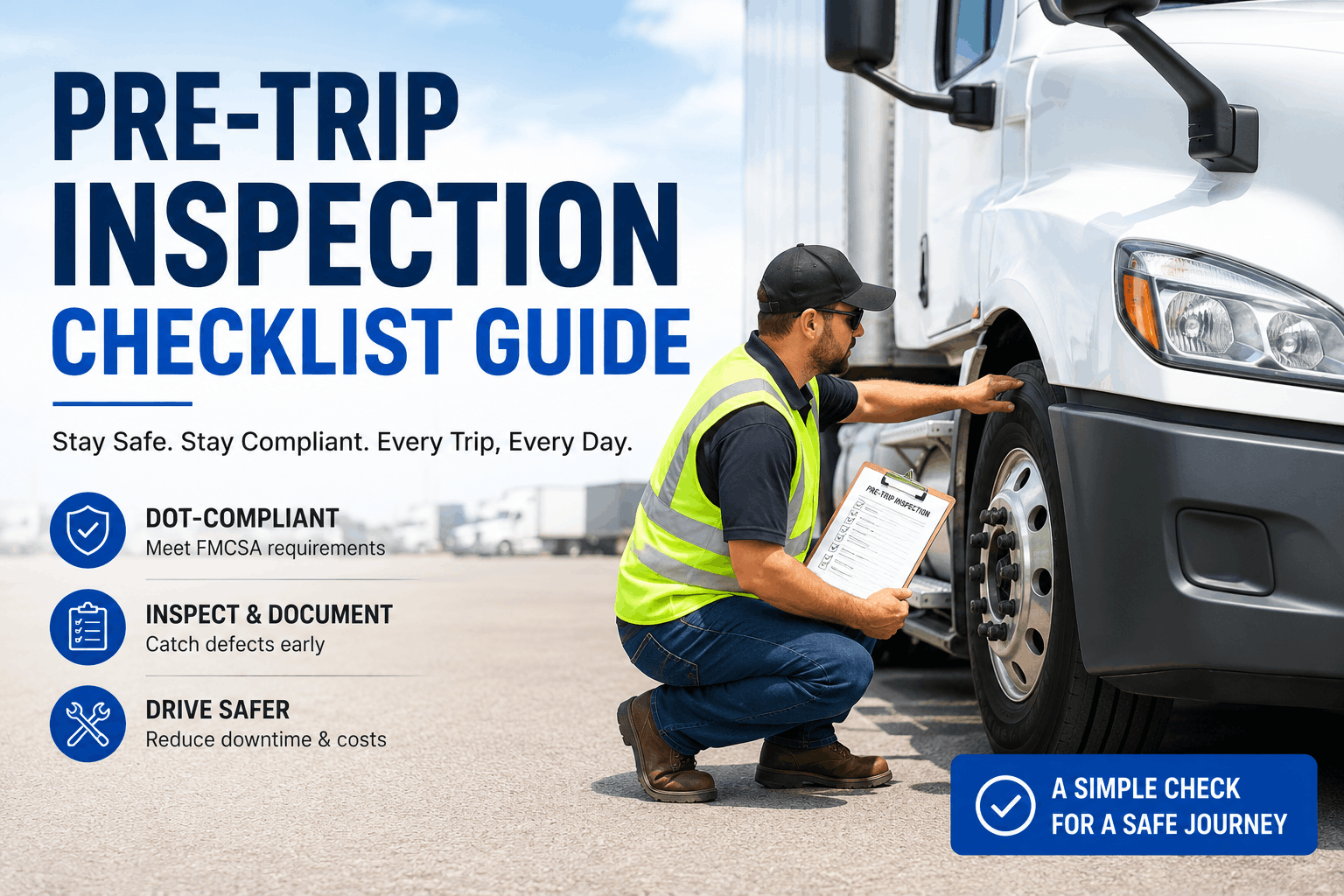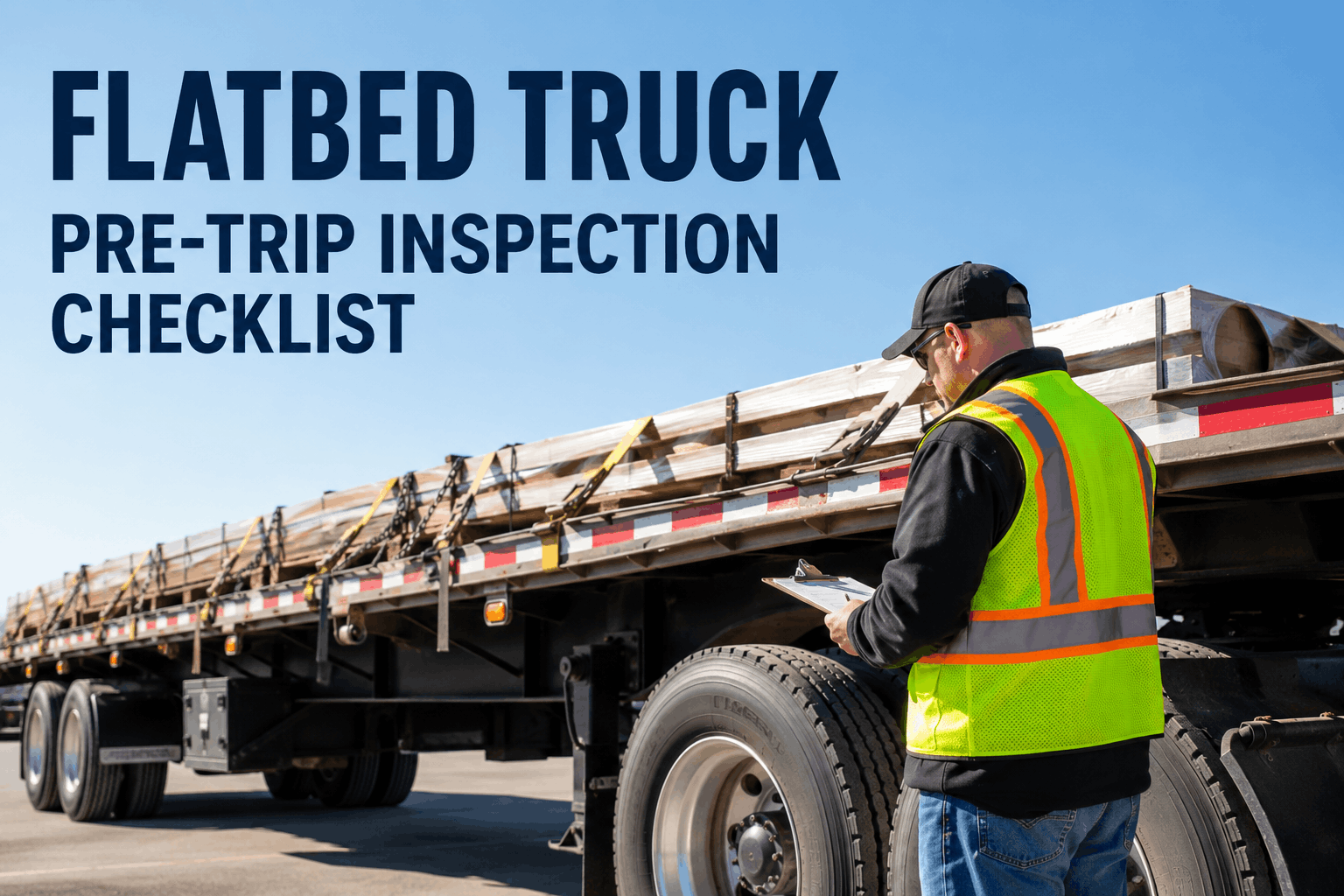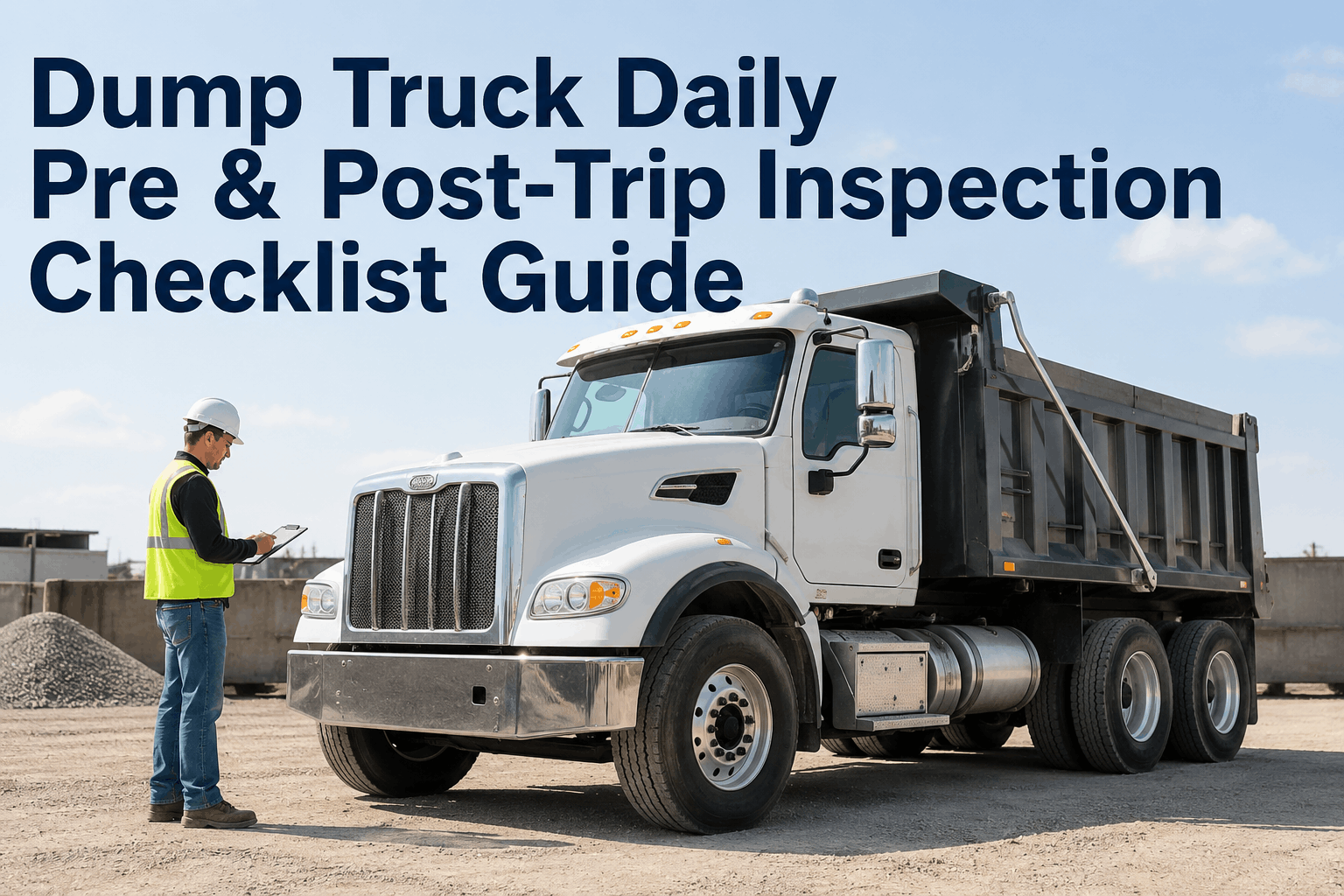
The question "how often should a commercial truck be inspected" doesn't have a single answer — and that's the problem most fleet managers face when building their compliance program. FMCSA requires inspections at multiple cadences simultaneously: pre-trip every day before driving under §392.7, post-trip DVIR at the end of every workday under §396.11, and annual periodic inspection within 12 months under §396.17. Layered on top: PM service intervals tied to mileage and engine hours, weekly and monthly visual checks that aren't federally mandated but separate well-run fleets from compliance-failure fleets, plus triggered inspections after incidents, repairs, or roadside checks. The 2025 CVSA International Roadcheck placed 22.6% of inspected vehicles out of service — the majority for defects that proper daily inspections would have caught before the truck left the yard.
The cost of getting frequency wrong is documented and significant. FMCSA estimates that thorough daily inspections and DVIRs prevent approximately 14,000 accidents every year. Emergency repairs run 150-200% premiums over planned maintenance, and fleets with structured multi-tier PM programs report 20-30% maintenance cost reductions, dramatically fewer breakdowns, and extended equipment lifespan. Yet only about 7% of motor carriers pass focused FMCSA compliance reviews without at least one DVIR-related violation — meaning the inspection frequency problem isn't theoretical. The 2026 CSA scoring overhaul made the stakes higher: out-of-service violations now carry 2× severity weight, Vehicle Maintenance was split into two BASIC categories, and a new "Driver Observed" category makes the quality of each pre-trip walkaround directly visible in carrier safety scores. The eDVIR Final Rule (effective March 23, 2026) authorized electronic records explicitly, raising the operational standard that fleets are expected to meet.
This guide is the complete commercial truck inspection frequency framework for 2026: the 6-tier inspection schedule, FMCSA-mandated cadences with regulatory citations, multi-trigger PM service intervals (PM-A through PM-D), the 5 most common frequency mistakes, and the digital workflow that coordinates all six tiers across mixed fleets. Start your free trial of our truck inspection and maintenance software to deploy multi-tier inspection scheduling across your fleet — live in 10 minutes, free for up to 3 trucks.
Truck Inspection Frequency Guide: How Often Should Commercial Trucks Be Inspected in 2026?
The 6-Tier Inspection Frequency Framework
Every well-run fleet operates on a 6-tier inspection schedule. Each tier catches different failure modes — daily checks find obvious problems, weekly and monthly checks catch gradual degradation, PM service catches mileage-driven wear, annual periodic catches everything missed. Contact our sales team for help deploying multi-tier inspection scheduling across your fleet.
Daily Pre-Trip Inspection
§392.7 · MANDATORYDaily Post-Trip DVIR
§396.11 · MANDATORYWeekly Visual Check
BEST PRACTICEMonthly Deep Check
BEST PRACTICEMulti-Trigger PM Service
PM-A / B / C / DAnnual DOT Periodic
§396.17 · MANDATORYPM Service Intervals — PM-A Through PM-D
The PM-tier system is the backbone of commercial truck maintenance. Each tier escalates depth — PM-A is basic, PM-D is comprehensive. Mileage intervals adjust for severe-duty operation (construction, refuse, high-idle) and trigger sooner.
| Tier | Interval | Service Scope |
|---|---|---|
| PM-A (Basic) | 10,000-15,000 mi | Oil + filter, tire/brake check, fluid levels, belt/hose visual, lights |
| PM-B (Intermediate) | 25,000-30,000 mi | PM-A + fuel filter, air filter, coolant test, suspension, wheel bearings |
| PM-C (Comprehensive) | 50,000-60,000 mi | PM-B + transmission service, differential fluid, brake overhaul, electrical |
| PM-D (Major) | 100,000 mi / annual | PM-C + DOT annual items, DPF cleaning, emission service, drivetrain |
| Severe Duty | Reduce intervals 30-50% | Construction, refuse, mining, high-idle operations |
| Engine Hours | 250-400 hrs typical | For high-idle operations (30%+ idle time) — track hours, not miles |
Multi-trigger PM scheduling is non-negotiable for mixed-duty fleets. A truck running 80,000 highway miles per year and a truck running 30,000 urban miles per year both need PM service — but mileage-only triggers under-service the urban truck (where engine hours and stop-start cycles do the damage). Calendar triggers catch fluids and seals that degrade over time regardless of use. Engine hour triggers catch idle-driven wear that mileage misses entirely. Running all three triggers simultaneously on "whichever first" logic eliminates the gap.
The FMCSA Frequency Mandates
Five specific FMCSA regulations dictate inspection frequency. Failure to meet any of them produces violations that compound into CSA score damage, audit triggers, and out-of-service orders.
Pre-Trip Inspection — Every Day
Post-Trip DVIR — Daily When Defects
Prior DVIR Review — Before Driving
Annual Periodic — 12 Months Max
Systematic Maintenance — Continuous
The 5 Frequency Mistakes Fleets Make
Inspection frequency failures cluster around the same five patterns. Each is preventable — and each compounds into CSA damage and breakdown costs that dwarf the cost of doing it right.
Pre-Trip "Performed" But Not Documented
Single-Trigger PM Scheduling
Annual Inspection Scheduled to 12-Month Maximum
Skipping Weekly & Monthly Tiers
No Triggered Inspections After Repairs or Incidents
Frequently Asked Questions
How often must commercial trucks be inspected?
Commercial trucks must be inspected at six layered cadences: pre-trip daily before operation (§392.7), post-trip DVIR daily when defects found (§396.11), weekly visual checks (best practice), monthly deeper assessments (best practice), PM service at mileage/hours intervals (PM-A every 10K-15K miles through PM-D every 100K miles), and annual DOT periodic by qualified inspector within 12 months (§396.17). The first two (pre-trip and DVIR) and the annual are federally mandated. The weekly/monthly tiers and PM service are operational best practices that separate compliant fleets from breakdown-prone fleets. Triggered inspections also occur after incidents, repairs, or roadside violations. Inspection frequency isn't a single answer — it's a coordinated 6-tier framework. Start your free trial to deploy multi-tier scheduling across your fleet.
What's the maximum interval between DOT annual inspections?
49 CFR §396.17 sets 12 months as the maximum interval between annual periodic inspections. Critically, this is a maximum — not a target. Best practice is to schedule annual inspections at 11-month intervals to build buffer time for repairs, re-inspection, and unexpected delays. Operating a commercial vehicle with an expired annual inspection violates §396.17 and results in fines ranging from $1,000 to $10,000+ per violation, plus likely out-of-service order at roadside until inspection is completed. More importantly, an expired annual inspection signals systemic compliance failure to FMCSA and often triggers a full DOT audit. The inspection record itself must be retained for 14 months under §396.21.
What's the difference between pre-trip, DVIR, and DOT annual inspections?
Three distinct events at different cadences. Pre-trip inspection under §392.7 is performed before driving each day by the driver — confirming vehicle is safe to operate that specific shift. DVIR (Driver Vehicle Inspection Report) under §396.11 is completed at the end of the workday when defects are found — documenting vehicle condition for the next driver and creating a maintenance chain of custody. DOT annual periodic inspection under §396.17 is a comprehensive inspection by a qualified inspector covering all 13 categories in Appendix A, performed within 12 months of the previous annual. All three are required and serve different purposes: pre-trip catches problems before operation, DVIR documents what developed during the day, and annual catches everything routine inspections might miss. Contact our sales team for help coordinating all three inspection types.
How often should PM service be performed on a Class 8 truck?
PM service follows the PM-tier framework with multi-trigger scheduling. PM-A every 10,000-15,000 miles (basic — oil/filter, tires, brakes visual, fluids, lights). PM-B every 25,000-30,000 miles (PM-A + filters, fluids, suspension, wheel bearings). PM-C every 50,000-60,000 miles (PM-B + transmission, differential, comprehensive brake overhaul). PM-D every 100,000 miles or annual (PM-C + DOT annual items, DPF cleaning, emission service). Severe-duty operations (construction, refuse, mining, heavy idle) should reduce intervals 30-50% from these baselines. High-idle operations (30%+ idle time) should track engine hours instead of miles — typically 250-400 hours between PM-A intervals. Multi-trigger scheduling (mileage + hours + calendar simultaneously) is the 2026 standard because single-trigger PM misses two-thirds of wear modes.
Do trailers require the same inspection frequency as tractors?
Trailers require daily driver inspections (pre-trip and post-trip DVIR) and annual DOT periodic inspections just like tractors — the federal requirements under §392.7, §396.11, and §396.17 apply identically. However, PM service intervals may differ since trailers have fewer mechanical systems. Trailer PM focuses on the highest-failure components: brakes (the single largest OOS category at every Roadcheck), tires (tread depth, sidewall condition, pressure), lighting (marker, brake, signal), coupling devices (kingpin, fifth wheel jaws), suspension, and floor/structural integrity. Most fleets schedule trailer PM-A every 15K-25K miles, PM-B every 50K miles, with annual inspection coordinated with the tractor. Triggered trailer inspections after any cargo damage incident are essential. Sign up free to coordinate tractor and trailer inspection schedules.
What happens at a roadside inspection and how often do they occur?
Roadside inspections occur randomly — at scales, weigh stations, focused enforcement campaigns like CVSA International Roadcheck (3 days each May), and as initiated by individual inspectors. They're categorized into 6 levels: Level I (full inspection, vehicle + driver + cargo), Level II (vehicle + driver, walkaround), Level III (driver-only), Level IV (special study), Level V (vehicle-only, no driver), Level VI (radioactive material). The 2025 CVSA Roadcheck inspected 56,000+ vehicles and placed 22.6% out of service — the highest OOS rate in recent years. Brake violations led at 41% of OOS, tires at 21.4%, lighting at 12.8%. Roadside inspections aren't scheduled, but they're significantly more likely if your CSA score is poor or you've had recent violations. The 2026 CSA overhaul makes each OOS violation count 2× in severity weight. Talk to our sales team for help building inspection programs that pass roadside checks.