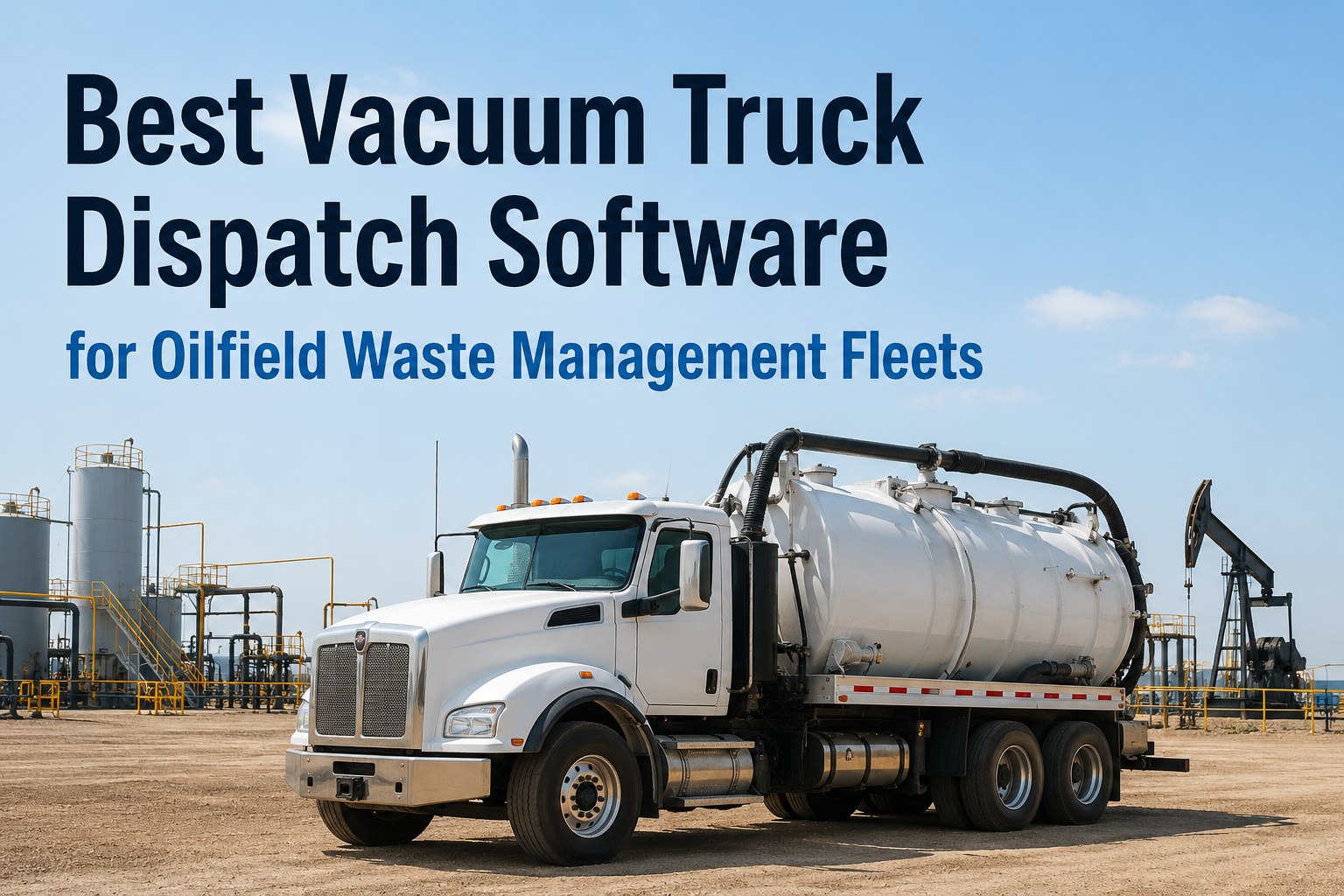
Oilfield fleet management isn't a variation on standard logistics — it's a different operational universe. Service trucks, water haulers, vacuum trucks, hot oilers, frac sand haulers, and wireline rigs run 24/7 across remote drilling sites with no cell signal, no paved roads, and no service center for a hundred miles. They haul hazardous cargo under strict DOT and PHMSA rules, operate in sand, salt, and H₂S that chews through equipment, and back operations where a single asset failure can cost $80,000–$250,000 a day in lost production. Generic fleet software, retrofitted from delivery apps, simply breaks in this environment — GPS trackers go dark and compliance gaps open at audit. This buyer's guide lays out the oilfield-specific criteria that separate purpose-built platforms from generic tools, the must-have features, the pricing reality, and how to choose. Truck Inspection & Maintenance handles the severe-duty inspection and maintenance core. Talk to our team for a tailored walkthrough.
Best Fleet Management Software for Oil & Gas
Built for remote, hazardous, 24/7 operations — not retrofitted from delivery apps.
Why Oilfield Fleets Break Generic Software
Before comparing platforms, understand what makes the oil patch different — because these realities disqualify most general-purpose fleet tools outright. A platform that can't handle these conditions doesn't just underperform; it fails when you need it most, in the middle of nowhere with a hazmat load. Five realities define the oilfield challenge.
Remote, no signal
No cell coverage across vast leases and pipeline corridors. Standard GPS trackers go dark — you need satellite fallback and offline capability.
Hazmat cargo
Crude, frac chemicals, H₂S — strict DOT/PHMSA rules, routing restrictions, and driver certifications that must never lapse.
24/7 operations
Drilling never stops, so neither does the fleet. Shift-based accountability and round-the-clock uptime are mandatory.
Severe-duty wear
Sand, salt, H₂S, and continuous operation destroy equipment far faster — standard PM intervals are simply too long.
Multi-agency compliance
DOT, OSHA, EPA, plus contractor systems like ISNetworld and Veriforce demand granular, audit-ready documentation.
The 6 Must-Have Features
These six capabilities separate a purpose-built oilfield platform from a generic tool with an energy-sector landing page. Score every option against them. Start a free account to test the severe-duty inspection and PM core on your own equipment.
Offline DVIR & satellite-ready
Inspections complete and sync without signal, with satellite fallback (Iridium/Globalstar-style) so remote sites never go dark.
Severe-duty PM scheduling
Shorter, adjustable intervals for sand/salt/H₂S and continuous-run equipment — by hours, mileage, calendar, or whichever comes first.
Mileage + engine-hour triggers
Wireline trucks, cement mixers, and hot oilers run stationary — PM must fire on engine hours, not just odometer miles.
HAZMAT & certification tracking
Track H₂S, tanker, and hazmat endorsements with renewal alerts; block dispatch of uncertified drivers to hazmat loads.
Shift-based inspections
Configure inspections per tour/shift for 24/7 ops — each crew inspects before assuming control, with overdue escalation.
Contractor-grade documentation
Photo evidence, inspector qualifications, and real-time certification status to satisfy ISNetworld and Veriforce profiles.
Severe-duty inspections that work where signal doesn't
Truck Inspection & Maintenance delivers offline DVIRs, severe-duty PM by hours or miles, shift-based inspections, and contractor-grade photo documentation — built for the oil patch, not retrofitted. No hardware to start, no contracts. Sign up free and run a real pilot on your equipment.
The 8 Evaluation Criteria
The strongest way to compare oilfield platforms is a weighted scorecard. These eight criteria — ranked by how critical they are — surface the gaps a polished demo hides. Eliminate any vendor that can't demonstrate the CRITICAL items. Reach our team to run this scorecard against your shortlist.
Satellite / offline connectivity
Works where there's no signal. Platform fails oilfield ops without it.
HAZMAT compliance
Routing, certifications, permits, DOT/PHMSA documentation.
Offline DVIR capability
Inspections complete and sync without connectivity.
Multi-region regulatory reporting
DOT, OSHA, EPA, and contractor compliance in one place.
Severe-duty predictive maintenance
Shorter intervals and failure prediction for harsh conditions.
Contractor compliance evidence
ISNetworld / Veriforce-grade inspection documentation.
Transparent pricing & TCO
No per-feature fees or hidden hardware/contract costs.
Integration with ERP & telematics
Open API to dispatch, ERP, and existing GPS hardware.
The Pricing Reality
Oilfield platform pricing spans from lean per-asset software to enterprise suites with satellite hardware. Knowing the bands keeps you from overbuying — or from underbuying a tool that fails in the field. Open a free account to start at the low end with no commitment.
Per-asset maintenance & inspection
Offline DVIR, severe-duty PM, HAZMAT and certification tracking, contractor documentation. Cloud setup in days, no hardware to start. Best entry point for most oilfield fleets.
Telematics + satellite suites
Adds real-time GPS, satellite connectivity hardware, and driver behavior scoring. More capability — but device cost per asset and usually annual contracts.
Full upstream / midstream suites
AI predictive maintenance, HSE dashboards, multi-region orchestration, deep ERP integration. Custom-quoted for major operators and large service companies.
Frequently Asked Questions
Why can't I use generic fleet software for oilfield operations?
Because the oil patch breaks it. Generic tools assume cell coverage, paved roads, standard cargo, and normal wear — none of which hold in remote, hazmat, 24/7, severe-duty operations. GPS trackers go dark without signal, standard PM intervals are far too long for sand and H₂S environments, and compliance gaps open at audit. Purpose-built oilfield platforms handle satellite/offline operation, hazmat, and severe-duty maintenance natively. Start a free account to test the oilfield core.
What's the single most critical feature?
Connectivity that survives no signal — satellite fallback plus offline capability. It's the criterion that eliminates vendors fastest: a platform whose tracking and inspections go dark in a remote oil patch fails the operation regardless of how good its dashboards look. Inspections must complete and sync offline, and tracking must continue via satellite where cellular dies. Demand a live demonstration, not a claim. Talk to our team about offline operation.
Should oilfield PM run on miles or engine hours?
Both — and on severe-duty intervals. Many oilfield assets (wireline trucks, cement mixers, hot oilers) run stationary, racking up engine hours while barely moving, so mileage-only scheduling misses most of the wear. And because sand, salt, H₂S, and continuous operation accelerate failure, intervals must be shortened versus standard ratings. Look for multi-trigger PM by hours, mileage, calendar, or whichever comes first.
How does the software handle HAZMAT compliance?
A purpose-built platform tracks driver certifications (H₂S, tanker, hazmat endorsements, including refresher requirements) with automated renewal alerts, enforces hazmat routing restrictions, manages permits, and maintains audit-ready DOT/PHMSA documentation. Critically, it blocks dispatch of uncertified drivers to hazmat loads — preventing a violation before it happens rather than recording it after. Sign up free to track certifications automatically.
What is contractor compliance, and why does it matter?
Major operators increasingly require contractors to maintain granular equipment-inspection evidence through systems like ISNetworld and Veriforce — including photo documentation, inspector qualifications, and real-time certification status. Falling short can cost you contracts. Software that generates this evidence automatically turns a compliance burden into a competitive advantage when bidding on operator work. Contact us about contractor-grade documentation.
How much does oilfield fleet software cost?
It ranges widely. Lean per-asset maintenance-and-inspection platforms start around $3/asset/month with no hardware and all features included. Telematics suites with satellite hardware run higher ($20–$45/asset plus devices and annual contracts). Full upstream/midstream enterprise suites are custom-quoted. Given downtime can cost $80,000–$250,000 a day, even the premium tiers pay back fast — but match the spend to your real needs. Sign up free to start lean.
Severe-duty maintenance that holds up where it counts.
Truck Inspection & Maintenance delivers offline DVIRs, severe-duty PM by hours or miles, shift-based inspections, HAZMAT certification tracking, and contractor-grade documentation across every oilfield asset. Free for up to 3 vehicles, no hardware, no contracts.