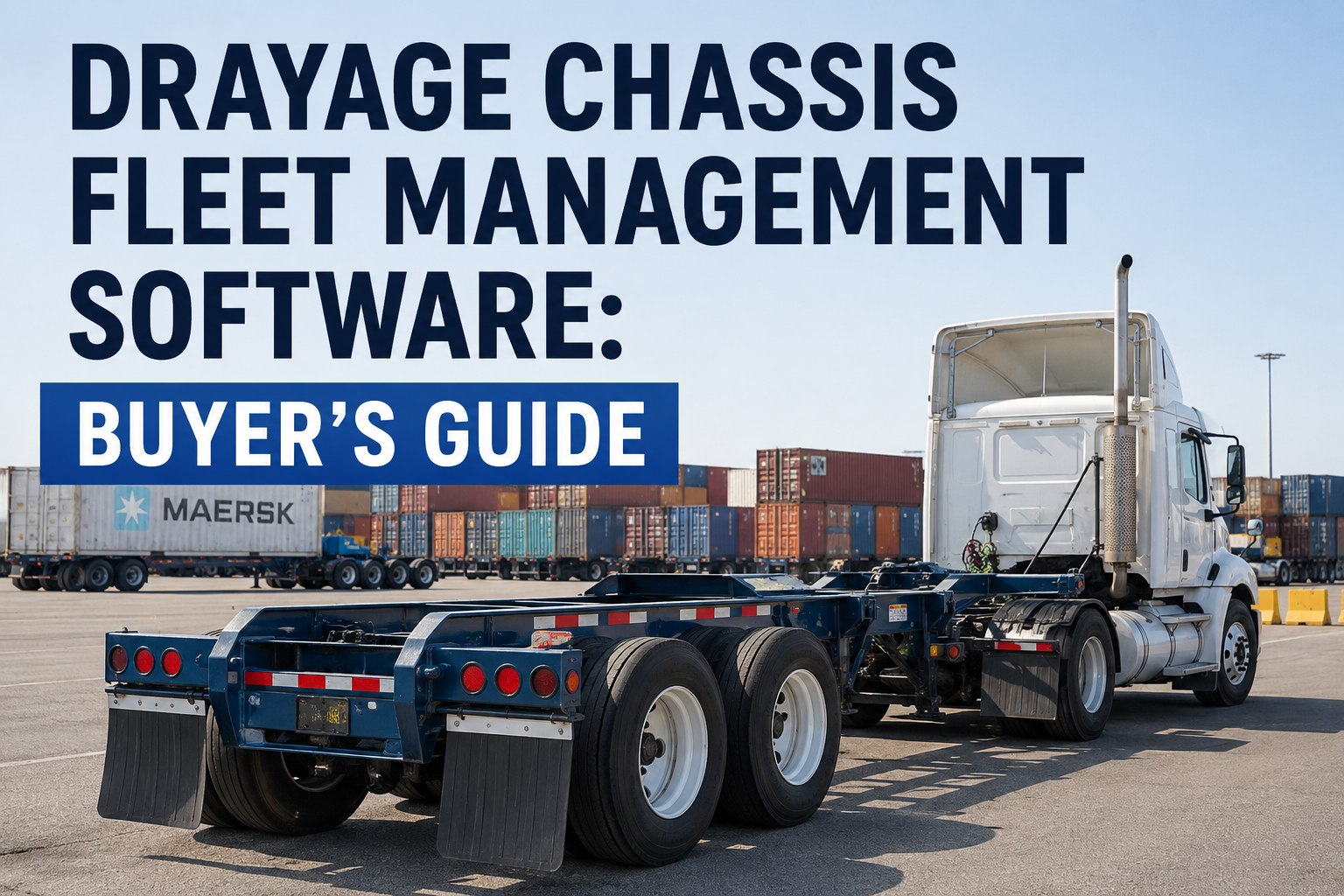
For a drayage operation, the chassis is the asset that quietly makes or breaks your margin. Manage it well and containers flow; manage it poorly and you're bleeding per-diem charges, eating M&R costs you can't trace, and putting roadworthy-questionable equipment under loaded boxes. The trouble is that "chassis management software" means two very different things, and most buyers conflate them. One side is the dispatch and billing engine — the TMS that handles pool reconciliation, per-diem, and rail EDI. The other is the maintenance, repair, and roadability side — the platform that keeps each chassis safe, documents defects, and stops the roadside out-of-service orders that ground your fleet. This guide untangles the categories, lays out the capabilities that actually matter, the pricing reality from $3 a unit to $50,000-a-year enterprise TMS, and how to choose. Truck Inspection & Maintenance owns the M&R and roadability layer. Talk to our team for a tailored walkthrough.
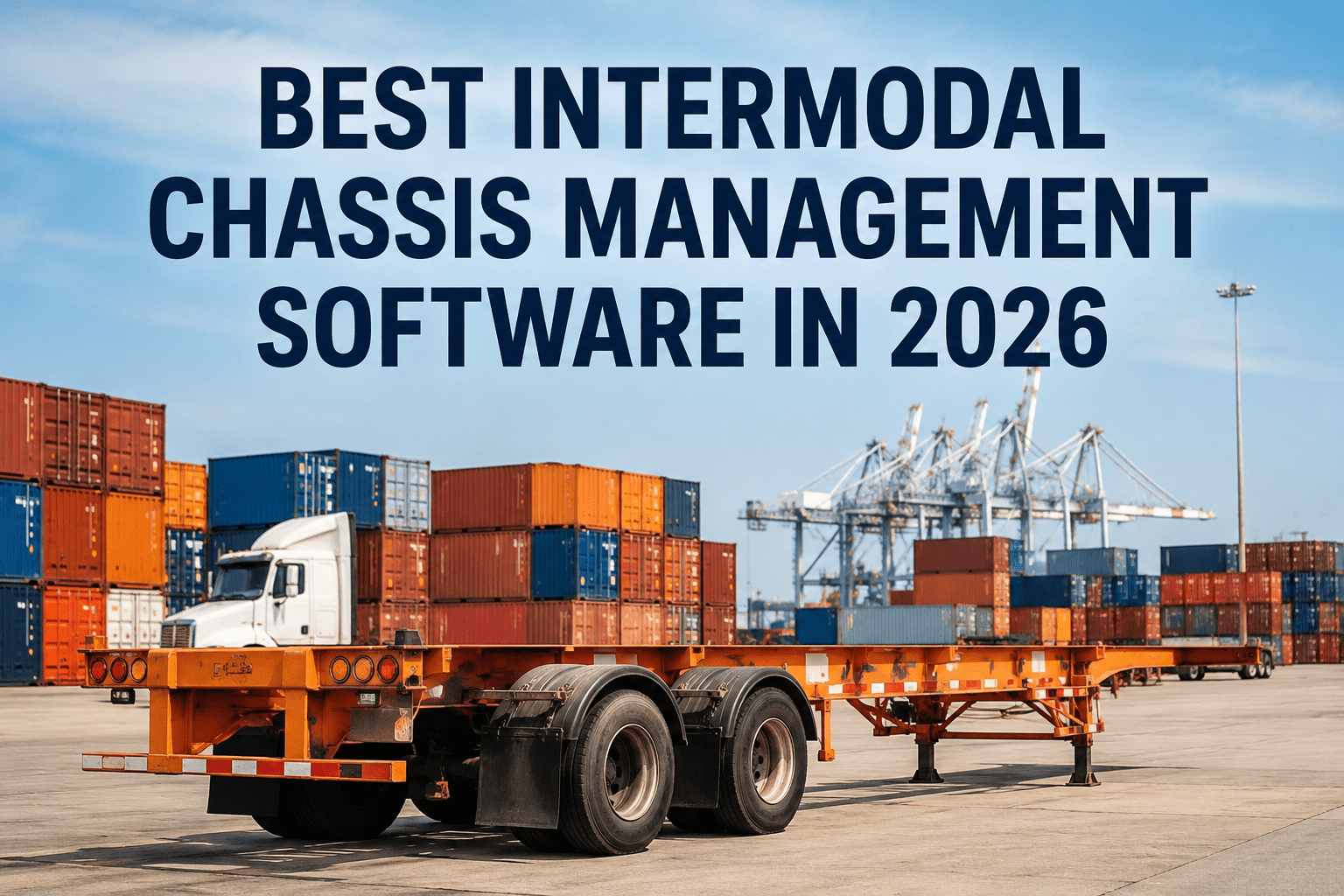
Best Intermodal Chassis Management Software
TMS or M&R? Decode the categories, capabilities, and pricing for drayage.
First: TMS or M&R Software?
This is the distinction that determines what you should buy. A drayage TMS answers "where's the box and who pays?" — dispatch, pool allocation, per-diem, rail EDI, and billing reconciliation. A maintenance & roadability platform answers "is this chassis safe and legal to roll?" — inspections, defect tracking, M&R history, and FMCSA compliance. Large operations need both, but they're sold separately and priced worlds apart. Buying an enterprise TMS won't fix a roadability problem, and vice versa.
Moves & bills the box
- Dispatch & load optimization
- Chassis pool allocation & tracking
- Per-diem & demurrage alerts
- Rail EDI, gate & billing reconciliation
Keeps the chassis safe & legal
- Pre-trip inspections & digital DVIRs
- Defect-to-repair (M&R) tracking
- FMCSA roadability documentation
- Provider/terminal quality history
Why the M&R Side Gets Neglected
Most drayage software spend goes to the TMS, leaving chassis condition tracked on paper or not at all — and that's exactly where the costly failures hide. Roughly 17% of chassis checked at roadside are placed out of service, and the same three defects drive nearly all of it. A chassis that sat idle between loads degrades invisibly, then fails a mile from the yard. The M&R layer is the cheapest insurance against that.
Tires
The largest breakdown category — over half of roadside failures. Idle-sat chassis develop flats and low tread unseen until inspection.
Brakes
The top out-of-service violation. Corrosion and out-of-adjustment components from long idle periods between loads.
Lights
The most common defect found — and a "gateway" that gives officers cause for a full inspection of the whole rig.
The 6 Capabilities That Matter
Whichever category you're shopping, these six capabilities separate software that controls chassis cost and risk from a tool that just records it. Score every option against them. Start a free account to test the M&R and roadability core on your own chassis.
Digital pre-trip / DVIR
Drivers inspect tires, brakes, and lights from a phone at gate-out — with photos and one-tap defect reporting that beats paper.
M&R defect tracking
Every defect routes into a repair record with parts and cost — so M&R spend is traceable, not a mystery line item.
Pool & provider tracking
Log defects by source pool and terminal to push back on IEPs supplying bad equipment and steer away from problem yards.
Per-diem & demurrage alerts
Flag chassis approaching free-time limits so charges don't pile up unnoticed — a core TMS-side cost control.
FMCSA roadability records
Audit-ready documentation of inspections and repairs, satisfying the shared-responsibility roadability rule.
EDI / API integration
Connects to rail carriers, dispatch, and accounting so chassis data isn't stranded in a silo.
Own the roadability layer your TMS skips
Truck Inspection & Maintenance gives every driver a digital gate-out DVIR, routes defects into M&R records, tracks provider quality by terminal, and keeps FMCSA roadability documentation — the chassis-condition side a TMS doesn't cover. No hardware, no contracts. Sign up free and close the OOS gap.
The Pricing Reality
Chassis software pricing spans an enormous range — and the gap between the M&R layer and an enterprise TMS is the widest in trucking software. Match the spend to the problem you actually have. Reach our team for transparent per-unit pricing.
Per-unit maintenance & roadability
Digital DVIRs, M&R defect tracking, provider history, FMCSA documentation. Cloud setup in days, no hardware. The right fit for closing the roadability/OOS gap.
Per-user drayage TMS
Full dispatch, pool management, per-diem, rail EDI, and billing reconciliation — priced per user per month. Built for active drayage dispatch operations.
Enterprise intermodal TMS
Custom-quoted suites with AI optimization, deep rail/ocean EDI, and multi-modal orchestration. For high-volume 3PLs and large drayage carriers.
Frequently Asked Questions
What's the difference between a drayage TMS and chassis M&R software?
A drayage TMS handles dispatch, chassis pool allocation, per-diem and demurrage, rail EDI, and billing — it moves and bills the box. Maintenance & roadability software handles inspections, defect-to-repair tracking, and FMCSA roadability documentation — it keeps the chassis safe and legal. They solve different problems and are priced very differently. Large operations often need both, but the M&R side is the cheaper, frequently neglected one. Start a free account to add the M&R layer.
Why does chassis condition get overlooked?
Because most software budget goes to the TMS, leaving chassis condition on paper or untracked. That's costly: roughly 17% of chassis checked at roadside are placed out of service, almost always for tires, brakes, or lights — the "Big Three." A chassis that sat idle between loads degrades invisibly and fails shortly after pull-out. Digital inspection and M&R tracking is the cheapest defense against those out-of-service orders. Talk to our team about closing that gap.
Can software help me push back on bad pool chassis?
Yes — that's one of the highest-value features. By logging every defect with its source pool and terminal, you build a documented history that lets you push back on Intermodal Equipment Providers supplying poor equipment, support DataQ-style disputes, and steer drivers away from problem yards. Without that data, you're absorbing M&R cost and OOS risk for equipment that isn't even yours. Sign up free to track provider quality.
How much does chassis management software cost?
It varies enormously by category. Per-unit maintenance-and-roadability platforms start around $3–$15/unit/month with no hardware. Drayage TMS platforms run roughly $300–$600 per user per month. Enterprise intermodal TMS suites are custom-quoted and often start at $50,000+ annually. The key is matching spend to your real pain — a roadability gap doesn't need a $50K TMS, and a dispatch bottleneck won't be fixed by an inspection app. Contact us for per-unit pricing.
Who's responsible for chassis maintenance — me or the IEP?
Both, under FMCSA's shared-responsibility roadability rule. Intermodal Equipment Providers must register and maintain the equipment, but drivers and carriers must perform a pre-trip assessment, report defects, and ensure immediate roadworthiness of tires, wheels, and lights before leaving the gate. Software that documents your inspections protects you in disputes and audits — proving you met your obligations. Start a free account to document your side.
Do I need to replace my TMS to add roadability tracking?
No. The maintenance-and-roadability layer complements your existing TMS rather than replacing it — and good platforms integrate via EDI/API so chassis-condition data flows into your dispatch and accounting systems. You keep the dispatch engine you already use and add the inspection, M&R, and roadability documentation it doesn't provide. Start with the gap, not a rip-and-replace. Contact us about integration.
Add the roadability layer your TMS leaves out.
Truck Inspection & Maintenance gives drivers digital gate-out DVIRs, routes defects into M&R records, tracks provider quality by terminal, and keeps FMCSA roadability documentation — complementing any drayage TMS. Free for up to 3 vehicles, no hardware, no contracts.