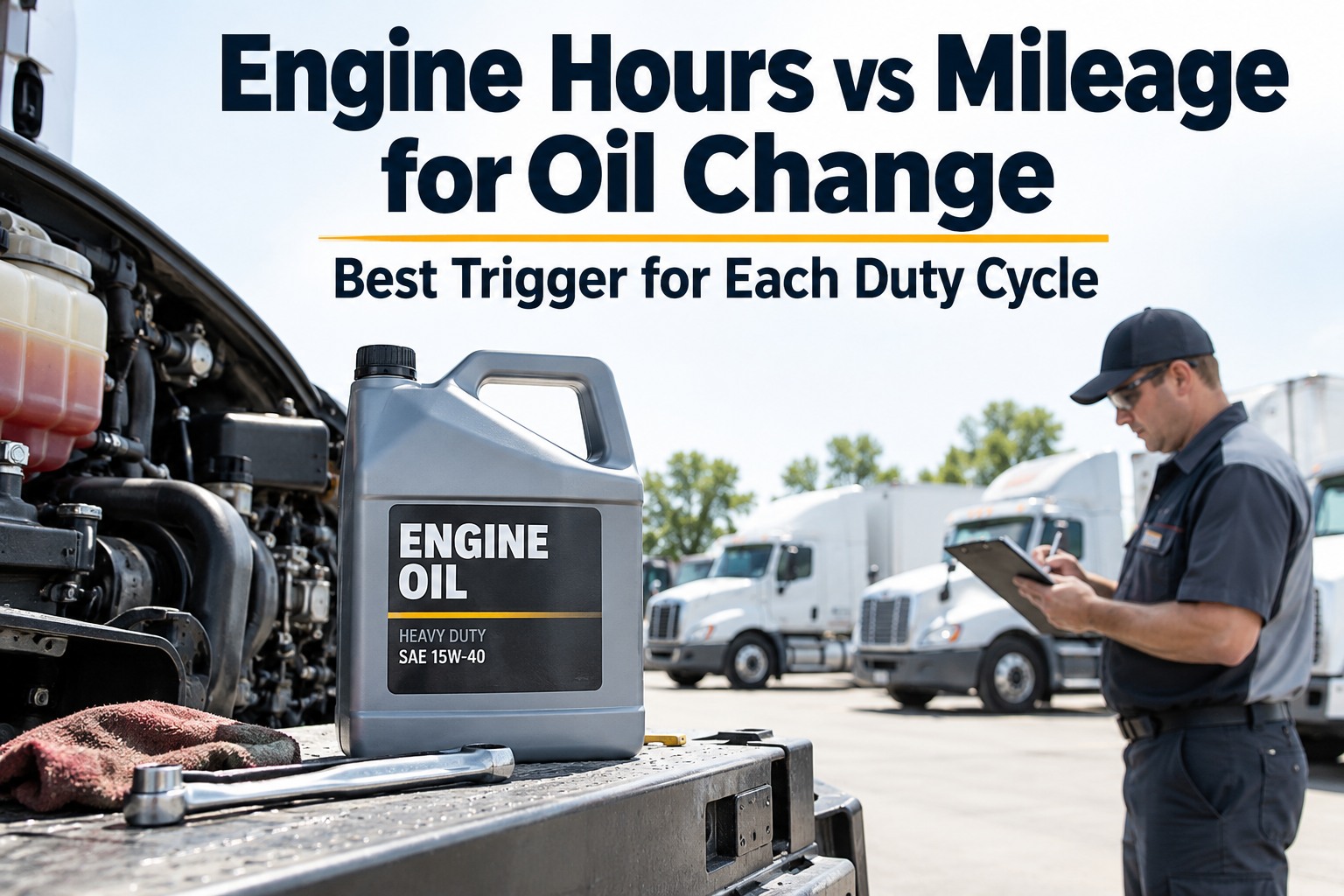
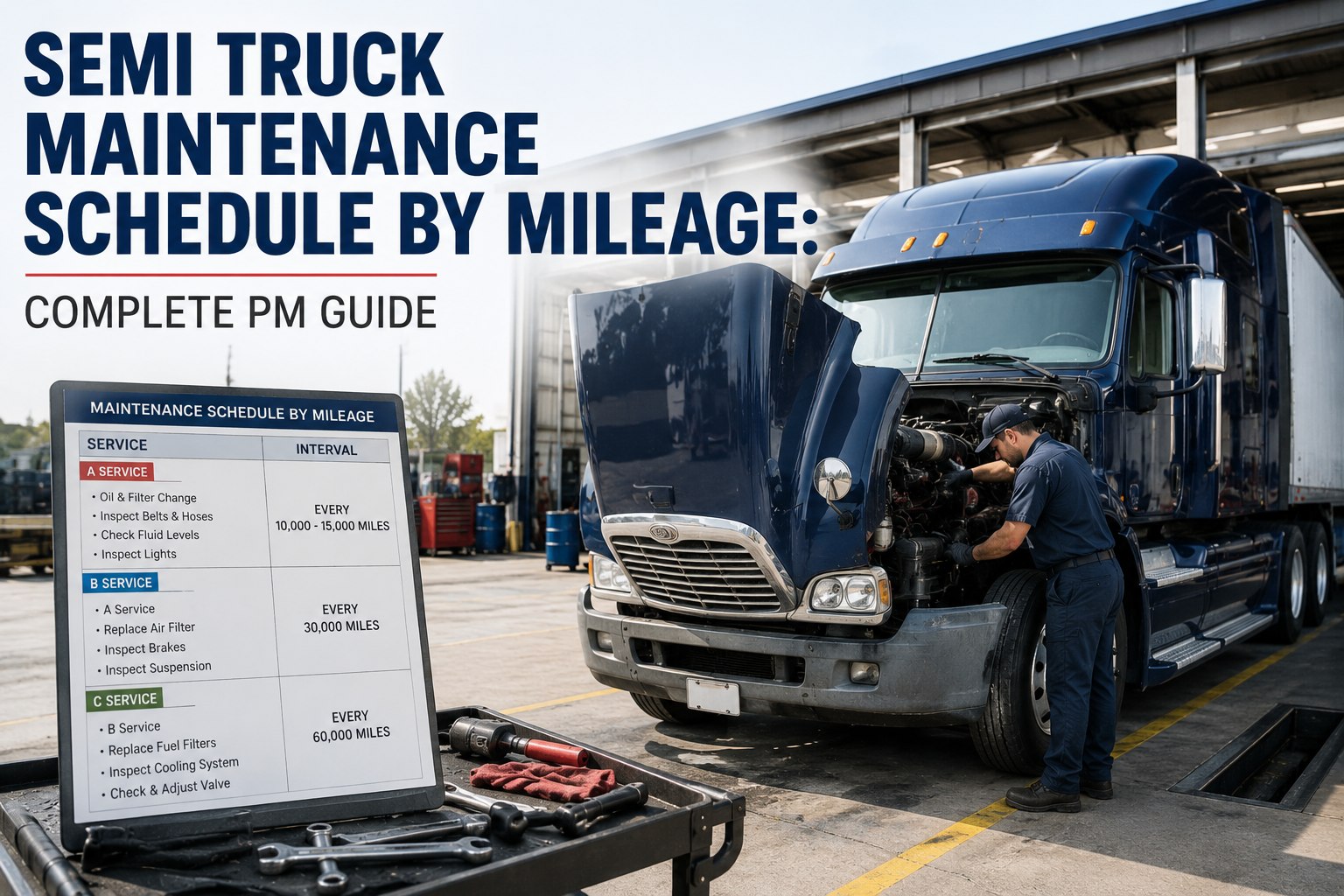
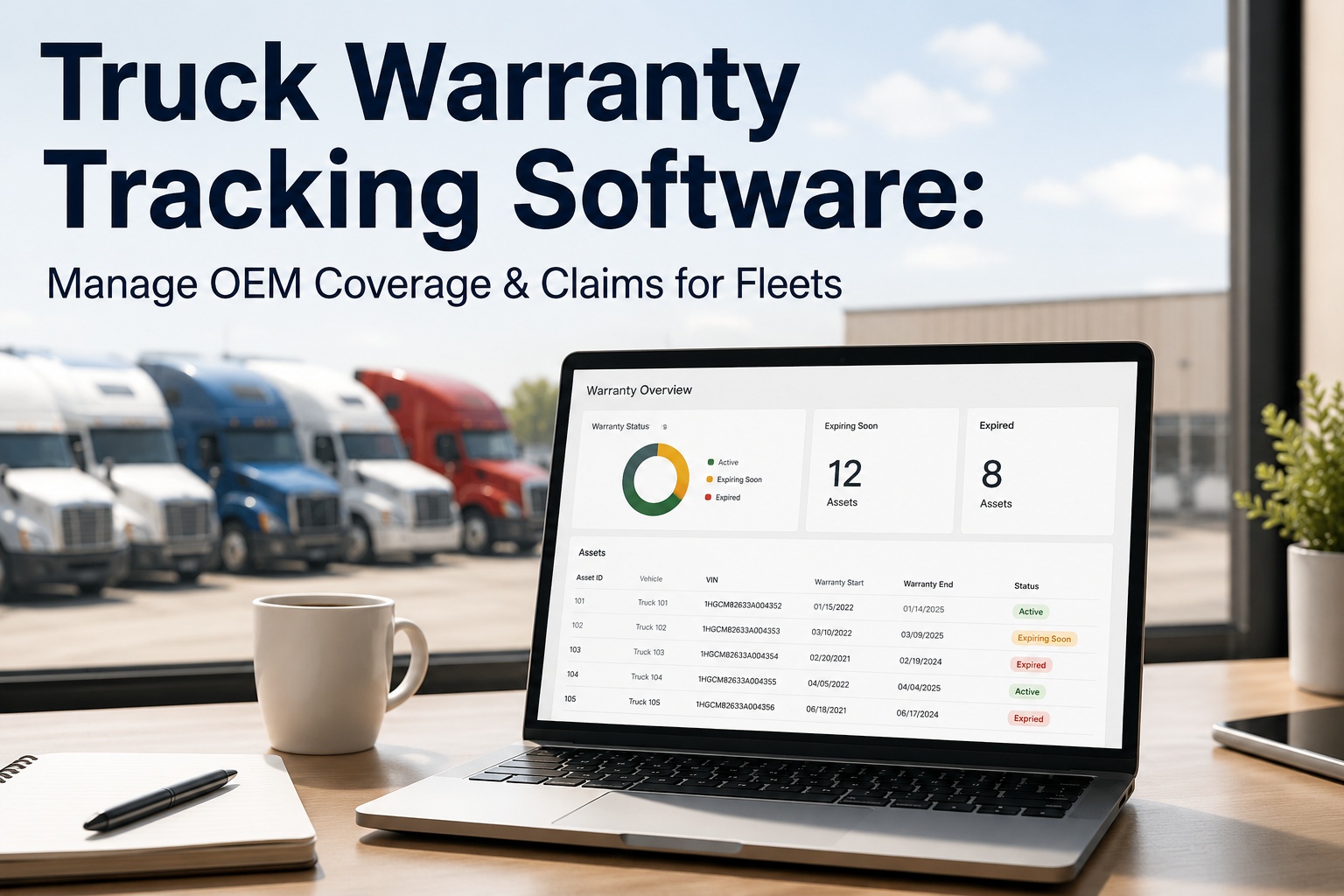
Two trucks hit 30,000 miles the same week. One's oil is still in spec; the other's is thick with soot and overdue — because it spent 600 hours idling and in stop-and-go that the odometer never counted. Mileage alone can't see that work. This is when to schedule PM by miles, when by engine hours, and why the right answer is usually both. Start free and schedule PM on real usage — mileage and engine hours, whichever comes first.
Oil Change & PM Scheduling · Miles vs Engine Hours
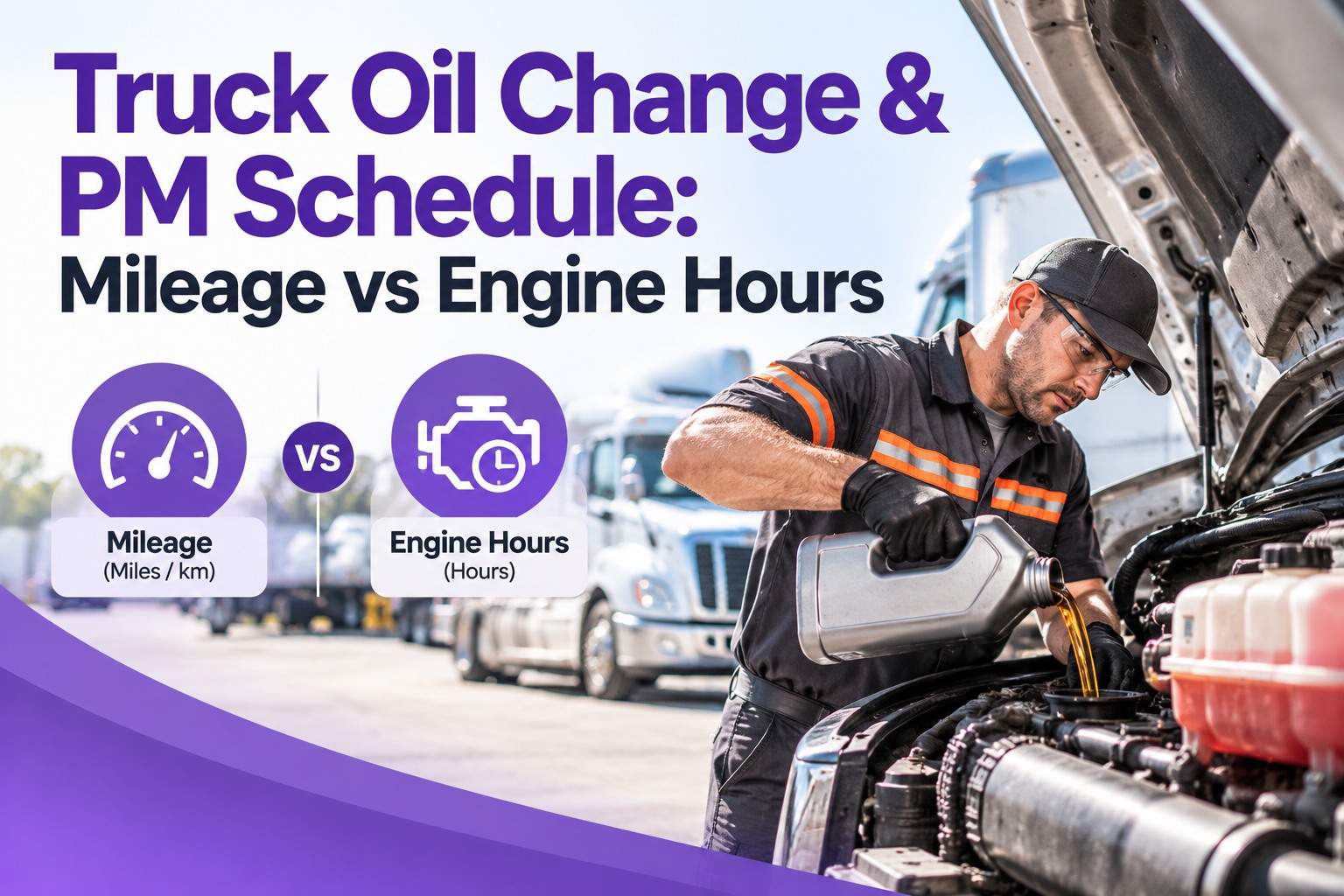
Truck Oil Change & PM Schedule: Mileage vs Engine Hours.
A mileage-only PM schedule assumes every mile and every hour line up — and for an idle-heavy or stop-and-go truck, they don't. The fix isn't picking one metric; it's tracking both and servicing on whichever hits first. Truck Inspection & Maintenance Management Software pulls mileage and engine hours from usage data and schedules each truck's oil change and PM on how it actually ran.
1 hr ≈ 25–30 mirough engine-hour to highway-mile rule
Idle = hours, 0 mithe work the odometer never records
Whichever firstservice on the limit the truck reaches first
Same Miles, Different Engine
The clearest way to see the gap is two trucks with identical odometers and very different lives. Miles measure distance; oil wears on engine work — and those two only match when the truck is mostly moving.
Truck A · Long-haul
30,000 miles
- Steady interstate miles, little idling
- Consistent temperature and RPM, low soot
- Engine hours track closely with miles
- Mileage interval reflects the real wear
Miles work fine here
Truck B · Idle-heavy
30,000 miles + 600 idle hours
- Hours piling up while parked and in traffic
- Heat cycles and soot the odometer can't see
- Engine did far more work than the miles show
- Oil is overdue while the mileage counter says "fine"
Miles lie here
Rule of thumb A common trucking estimate puts one engine hour at roughly 25 to 30 highway miles — so 600 idle hours is the engine equivalent of tens of thousands of extra miles the odometer simply never recorded. It's an estimate, not an exact conversion, because real wear also depends on load, temperature, RPM, and idle time.
Which Metric Fits Your Trucks
Duty cycle decides the right method. Match each truck to how it actually runs — and when in doubt, track both and let whichever limit arrives first trigger the service.
Duty cycleBest metricWhy
Long-haul / highway
Mileage
Mostly moving, little idle — miles reflect engine work well.
Stop-and-go delivery
Whichever first
Frequent stops add hours and heat cycles beyond the miles.
Refuse / mixer / construction
Engine hours
Heavy idle and jobsite running pile up hours at low mileage.
PTO / utility / bucket
Engine hours
The engine runs equipment while parked — pure hours, no miles.
Mixed fleet
Whichever first
Set both limits per unit so no truck slips either way.
Miles Hours Both, whichever first
Why the Odometer Lies on Idle Trucks
Idling is the whole problem in one word. The engine burns fuel, circulates oil, builds heat, and makes soot — and the odometer records none of it, because the truck isn't moving. A mileage-only schedule quietly stretches the real interval every hour the truck sits running.
01
Fuel burns, miles don't climbThe engine works at idle, but the odometer stays put — so the service clock barely moves while wear keeps accumulating.
02
Soot and heat cycles buildLow-speed and idle running produce more soot and more thermal stress than steady highway cruising, loading the oil faster.
03
Hours keep accumulating everywhereTraffic, loading and unloading, PTO work, jobsite running, and cold-weather warm-up all add engine hours at zero miles.
The Practical Answer: Whichever Comes First
You don't have to choose. The approach fleets actually run is to set both a mileage limit and an engine-hour limit for each truck, then service it the moment either one is reached. The highway truck usually trips the mileage limit; the idle-heavy truck trips the hour limit — and neither one runs long on tired oil.
Set two limits per unitA mileage interval and an engine-hour interval, based on the manufacturer's guidance and the truck's duty cycle.
Service on the first to hitWhichever limit the truck reaches first triggers the oil change and PM — no truck waits on the metric that lags.
Let data do the watchingMileage and hours tick up on their own from usage data, so the due date finds you instead of the reverse.
PM on Real Usage, Not a Flat Calendar
Truck Inspection & Maintenance Management Software tracks both mileage and engine hours for every unit and triggers the oil change and PM on whichever interval comes first. Each service is logged against the truck, the next one is scheduled automatically, and the idle-heavy unit gets attention on time instead of coasting past due because its odometer looked fine.
How Accurate Is Each Method?
The three ways to judge when oil is done aren't equal. Here they are, least to most precise — and why most fleets pair a scheduled interval with the occasional sample.
Good
Mileage
Simple and fine for steady highway trucks, but blind to idle and low-speed work. The baseline, not the ceiling.
Better
Engine hours
Counts the work the engine actually did, idle included — the truer measure for vocational and stop-and-go trucks.
Best
Oil analysis
A lab sample reads the oil's real condition directly. The most accurate, and worth pairing with an interval on high-value units.
How Truck Inspection & Maintenance Software Helps
The decision above is only useful if something acts on it. Here's how the software turns the miles-and-hours rule into a PM program that runs itself.
Both metrics trackedMileage and engine hours accumulate per unit from usage data — no manual odometer photos or logbooks.
Whichever-first triggersEach truck carries a mileage and an hour interval, and the PM fires on the first one reached.
Intervals by duty cycleSet tighter limits for idle-heavy and vocational units, looser for long-haul — matched to how each runs.
Service logged to the unitEvery oil change and PM stays on the truck's record, building a full maintenance history.
Due-soon remindersThe next service surfaces before it's overdue, so nothing coasts past its interval.
Records for complianceThe maintenance history is retained and produced on demand for your DOT file.
Frequently Asked Questions
Should I schedule truck oil changes by miles or engine hours?
It depends on how the truck runs, and the safest approach is to track both and service on whichever limit is reached first. A long-haul truck that mostly accumulates steady highway miles can usually follow the manufacturer's mileage interval, because its miles and engine hours stay closely aligned. A truck that idles heavily or runs stop-and-go — refuse, construction, delivery, PTO work — does far more engine work than its odometer shows, so engine hours are the truer measure. Setting both a mileage and an hour limit per unit covers both cases without having to pick one.
Start free and schedule on whichever comes first.
How many miles is one engine hour?
A common trucking rule of thumb puts one engine hour at roughly 25 to 30 highway miles, though it's an estimate rather than an exact conversion. The real figure shifts with idle time, engine load, RPM, ambient temperature, and driving conditions. The point of the rule isn't precision — it's to show how much engine work hides behind a low odometer reading. A truck that idles 600 hours has done the engine equivalent of tens of thousands of extra miles that the mileage-based schedule never counted, which is exactly why hour tracking matters for idle-heavy trucks.
Why does idling matter for oil change intervals?
Because idling is engine work the odometer can't see. While a truck sits running, the engine burns fuel, circulates oil, builds heat, and produces soot — all of which age the oil — yet the mileage counter doesn't move. A mileage-only interval therefore stretches further and further past the real service point the more a truck idles. Low-speed and idle operation also generate more soot and more heat cycles than steady highway cruising, loading the oil faster per unit of time. For any truck that spends significant time idling or in traffic, engine hours capture that wear far better than miles.
What is the most accurate way to know when to change oil?
Oil analysis is the most accurate, because a lab sample reads the oil's actual condition — soot, wear metals, viscosity, contamination — rather than estimating from miles or hours. Engine hours come next, since they count the work the engine actually did including idle, and mileage is the least precise because it's blind to idle and low-speed running. In practice, most fleets run a scheduled interval by miles and hours as the backbone and add periodic oil analysis on high-value or high-hour units to fine-tune the timing. The interval keeps you safe; the sample tells you whether you can safely extend it.
How do I track engine hours across a fleet?
Engine hours are available from the truck's own data and modern fleet maintenance systems pull them automatically alongside mileage, so both accumulate per unit without anyone writing down a reading. From there, you set a mileage interval and an engine-hour interval for each truck and let the system trigger the oil change and PM on whichever is reached first. That removes the two failure modes of manual tracking — forgetting to log a reading, and discovering a truck is overdue only after the fact — and it means the idle-heavy unit gets serviced on its hours while the highway unit gets serviced on its miles, each on time.
Miles · Hours · Whichever Comes First
Service Every Truck on the Work It Actually Did.
A mileage-only schedule serves the highway truck right and lets the idle-heavy one run past due on tired oil. Tracking both miles and engine hours — and acting on whichever comes first — fixes that for the whole fleet. Truck Inspection & Maintenance Management Software accumulates both from usage data, triggers each truck's oil change and PM on its own first limit, and keeps the record for your file.
Free to start. Always follow the engine maker's service intervals — not a substitute for manufacturer guidance.