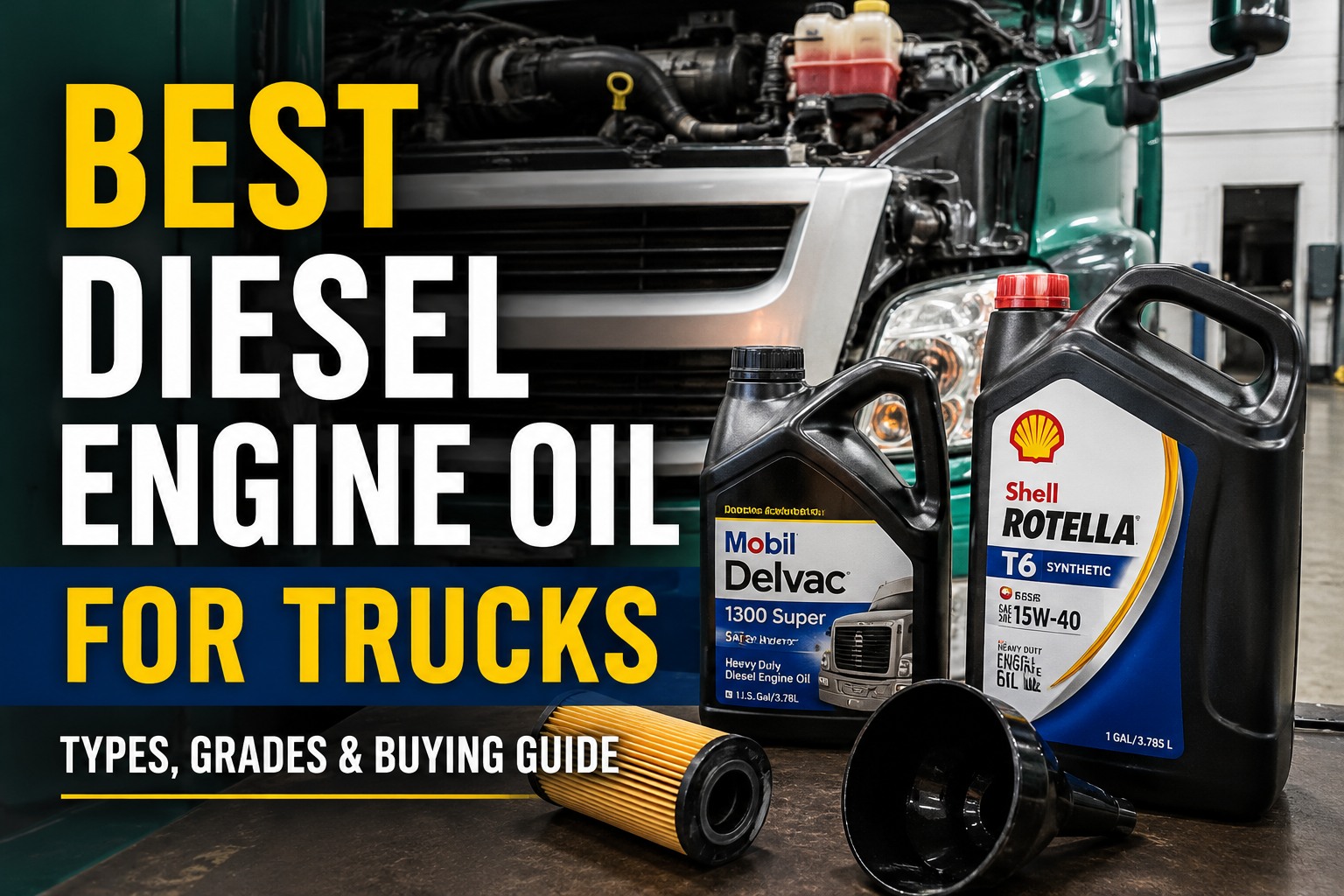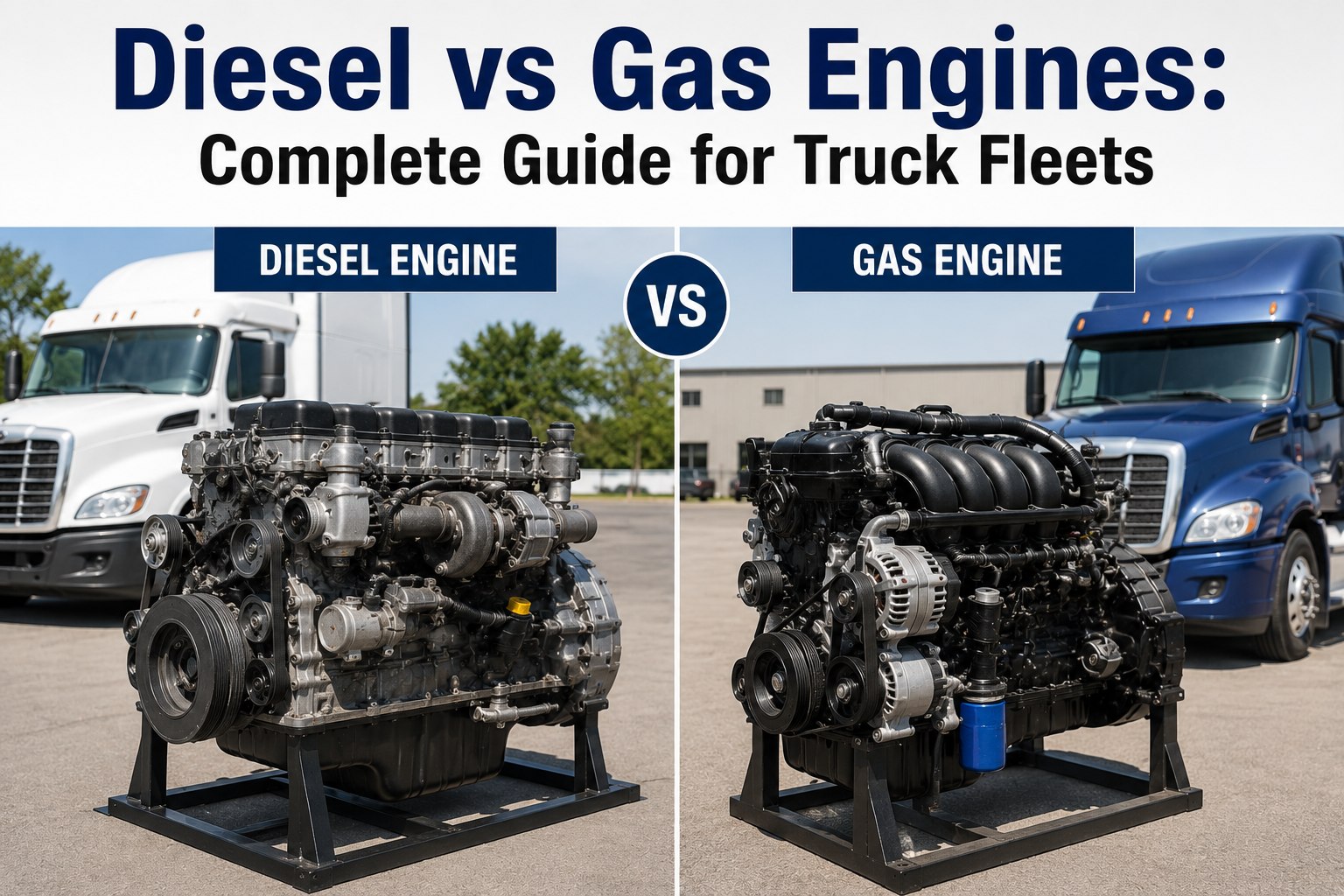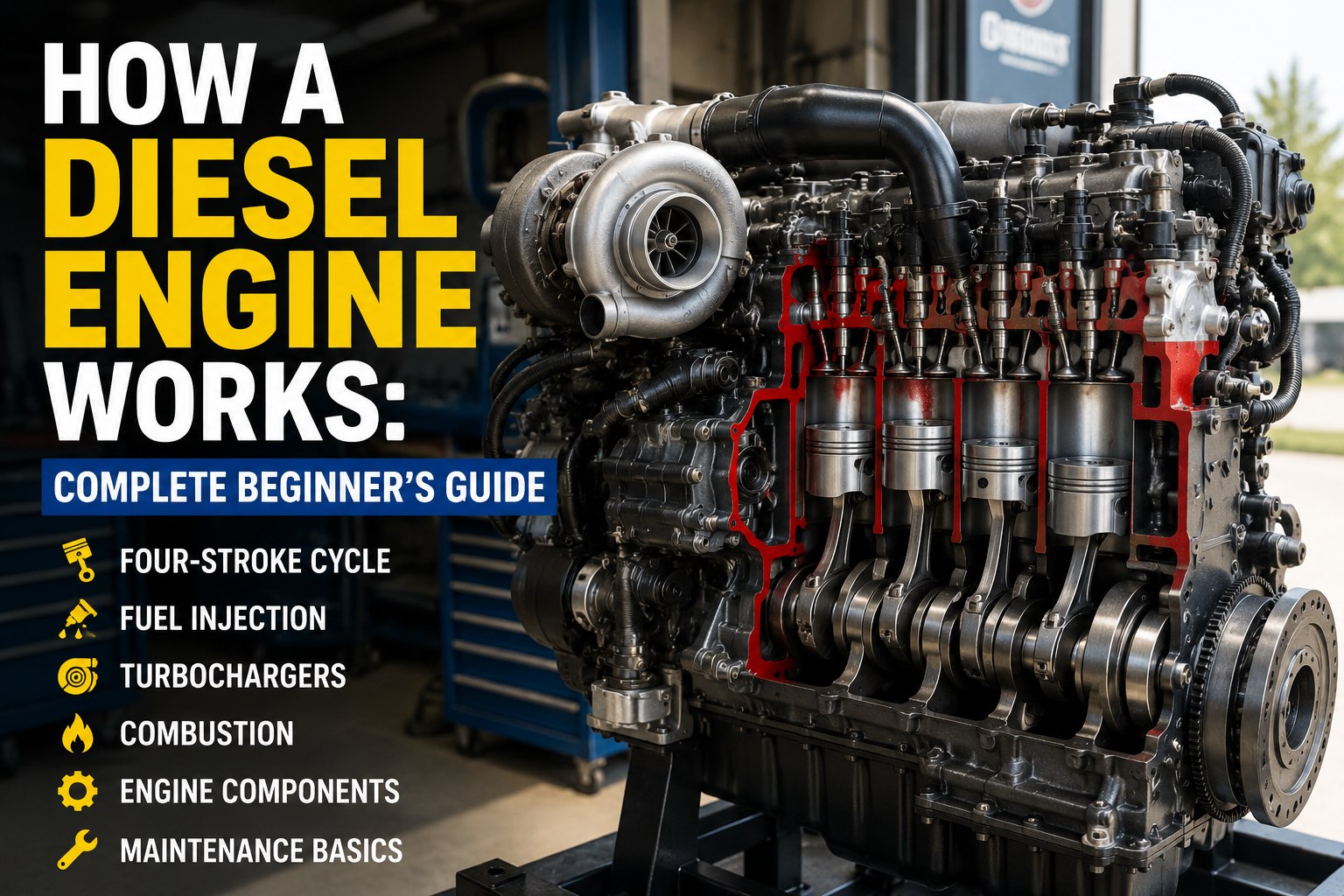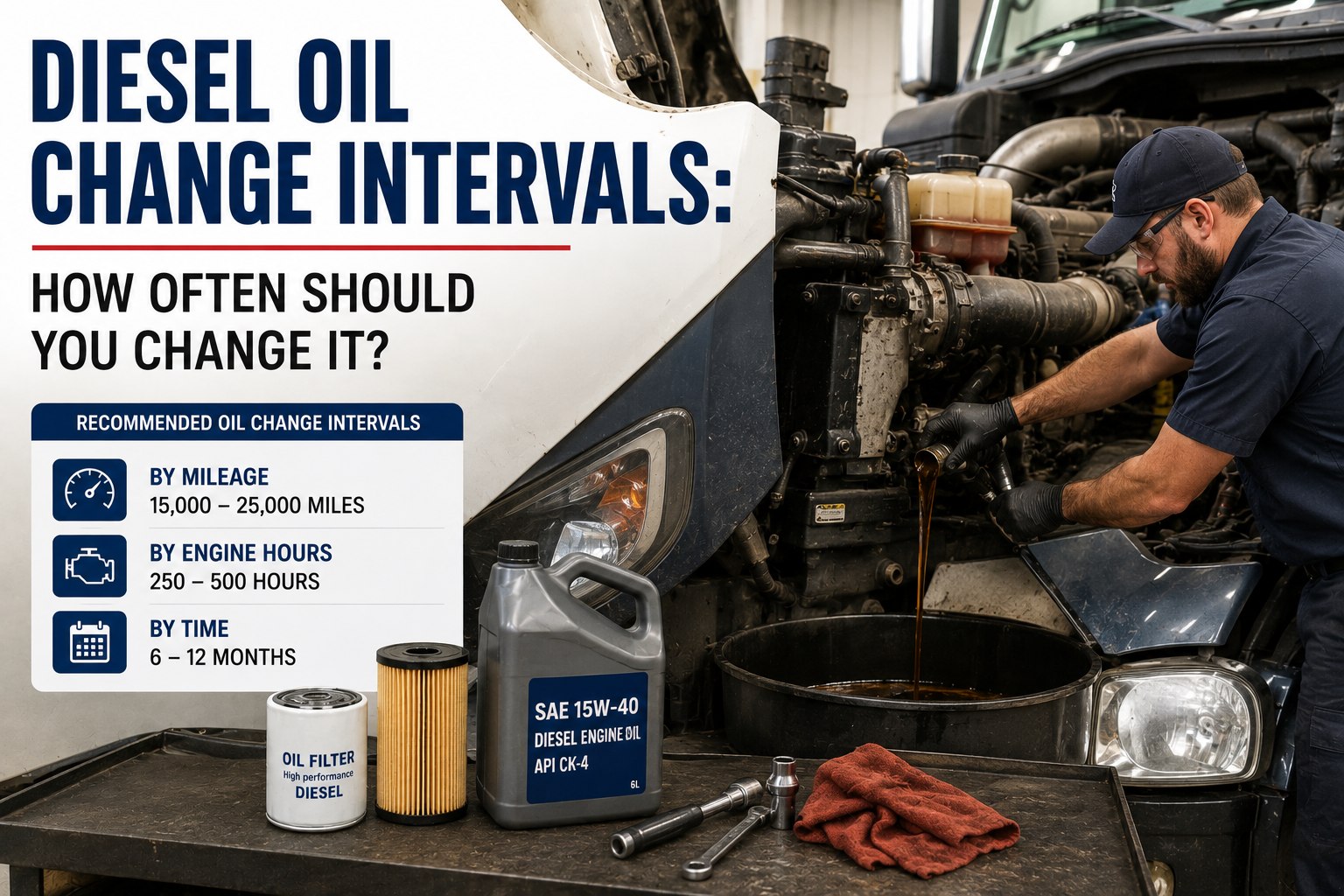
Diesel oil change intervals used to be simple: 5,000 miles or 250 hours, whichever came first. That rule still works for a lot of older engines. But modern diesels have complicated the picture: 2007+ emissions systems shorten intervals due to soot loading, but modern low-SAPS oils and higher-capacity sumps extend them. Some OEMs approve 25,000-mile intervals under specific conditions. Some fleet trucks in severe service need 4,000-mile intervals. And the "5,000 miles or 250 hours" rule fails entirely for a service truck that idles 8 hours a day and drives 40 — hours-based scheduling saves that engine while mileage-based scheduling destroys it. Getting oil intervals right is the single highest-leverage maintenance decision in diesel fleet operations. A properly timed oil change costs $200 and extends engine life to 500,000+ miles. A missed interval by 3,000 miles can start a turbocharger failure cascade that ends in a $12,000 engine replacement. This guide walks through the complete framework: the three ways to schedule diesel oil changes (mileage, hours, and oil analysis), OEM interval recommendations by manufacturer, oil type specifications decoded, duty-cycle severity adjustments that actually matter, warning signs of an overdue interval, and the fleet software that automates oil-change scheduling across a mixed fleet. Ready to automate oil-change scheduling across every diesel in your fleet? Start a free trial of our fleet maintenance software, or reach out to our support team for a walkthrough.
Diesel Oil Change Intervals: How Often Should You Change It?
The complete framework — mileage, hours, oil analysis, OEM tables, duty-cycle severity. Get the intervals right and diesels run to 500,000+ miles. Get them wrong and $200 becomes $12,000.
The 3 Ways to Schedule Diesel Oil Changes
There isn't one right answer to "how often" — because different duty cycles need different scheduling methods. Most fleets should use one primary method with a backstop from another.
OEM Interval Recommendations by Manufacturer
Every diesel manufacturer publishes its own oil-change intervals. These are the current published intervals under normal duty for common heavy-duty and pickup diesels — always confirm against the truck's specific service manual.
Diesel Oil Specs Decoded: CJ-4, CK-4, FA-4, and OEM Grades
Diesel oil specifications look like alphabet soup — CJ-4, CK-4, FA-4, plus manufacturer-specific codes like Cummins CES 20086 or Detroit 93K222. Here's what each spec actually means and when to use it.
Duty-Cycle Severity: When "Normal" Interval Isn't Normal
OEM published intervals assume "normal" duty — which almost no commercial fleet truck actually runs. Six severity factors each cut interval length. Apply the multipliers that match your operation.
The Cost Math: Why $200 Turns Into $12,000
Skipping oil intervals doesn't just risk engine damage — it triggers a specific cascade of failures. Here's what actually happens when a fleet stretches intervals to save money.
Warning Signs Your Interval Is Overdue
Diesel engines announce oil problems before they cause damage. Six warning signs mean the interval was missed and something is degrading. Any one of these means change oil now and investigate the cause.
Auto-schedule oil changes across every diesel
Both mileage AND hours tracked per truck. Duty-cycle severity adjustments applied automatically. Complete oil-change history archived by VIN.
The Extended-Interval Question: When Is 25K Actually Safe?
Extended oil-change intervals (25,000–50,000 miles) can work — but only under specific conditions. Here's the checklist that determines whether your fleet qualifies.
OEM-Approved Extended-Drain Oil
Only certain oils are formulated for 25K+ intervals. Look for OEM approval codes on the product data sheet. Standard CK-4 15W-40 is NOT designed for extended drains.
Highway-Dominant Duty Cycle
Extended intervals require highway operation with minimal idle. Any fleet with more than 20% urban or idle time cannot safely run extended intervals regardless of oil quality.
Active Oil Analysis Program
Every extended interval needs oil sample analysis to confirm the oil is still fit for service. Sample at 15K, 20K, and 25K. Skip the analysis, don't run the interval.
Bypass Filtration or Extended-Capacity Filter
Standard filters are sized for standard intervals. Extended intervals need bypass filtration systems or extended-capacity filter media to handle the additional contamination load.
Documented Fleet Justification
Extended intervals only pay back on fleets over 25 vehicles running highway routes. Below that scale, the analytical overhead and risk aren't worth the labor savings.
Frequently Asked Questions
Depends on the engine and duty cycle. Heavy-duty diesels (Cummins ISX, Detroit DD15, PACCAR MX): 25,000–50,000 miles normal duty, 15,000–25,000 severe duty. Pickup diesels (Cummins 6.7L, Ford Power Stroke, GM Duramax): 10,000–15,000 miles normal, 7,500 severe. Always run mileage AND engine hours in parallel — whichever hits first triggers the service. Automate scheduling in our fleet software.
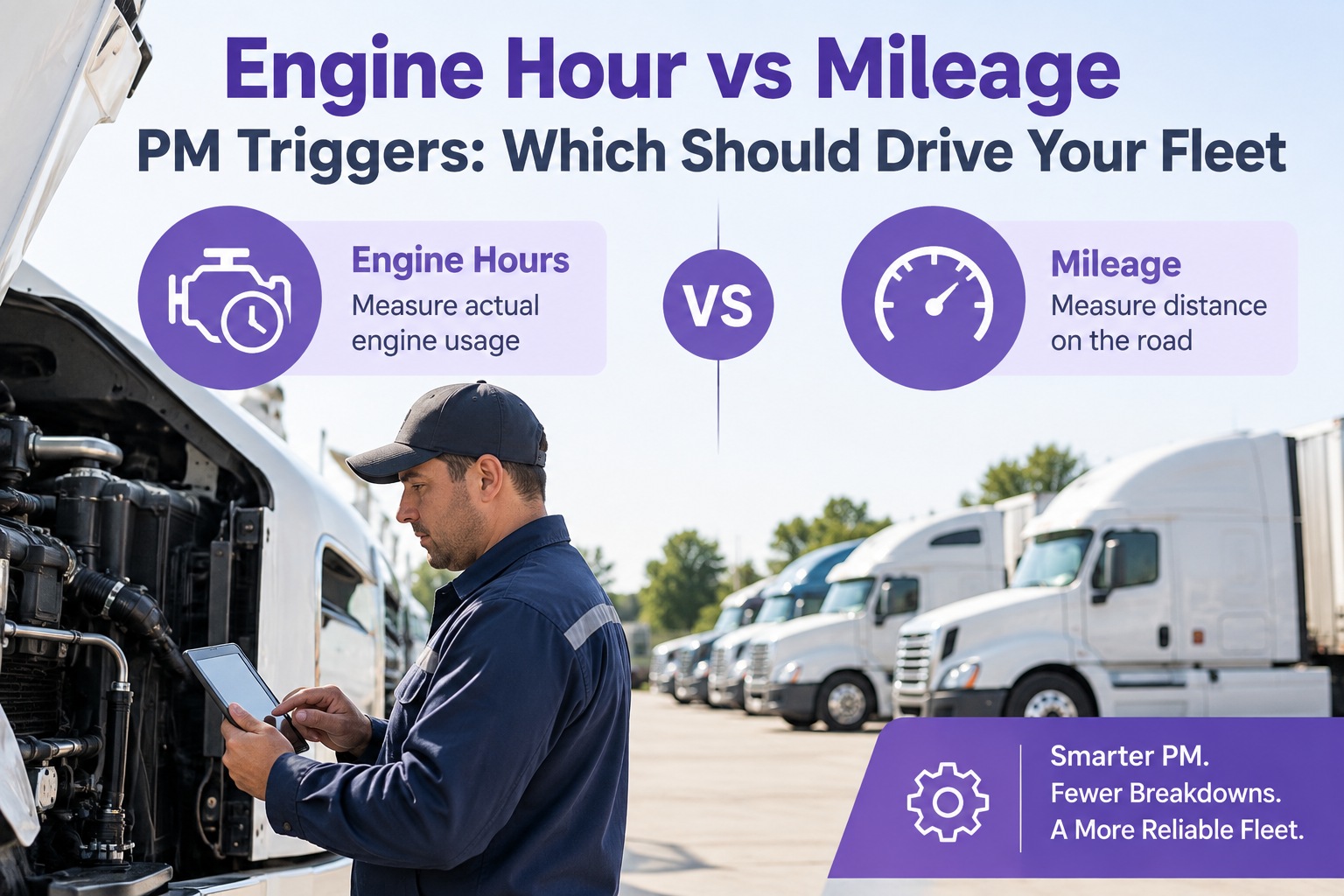
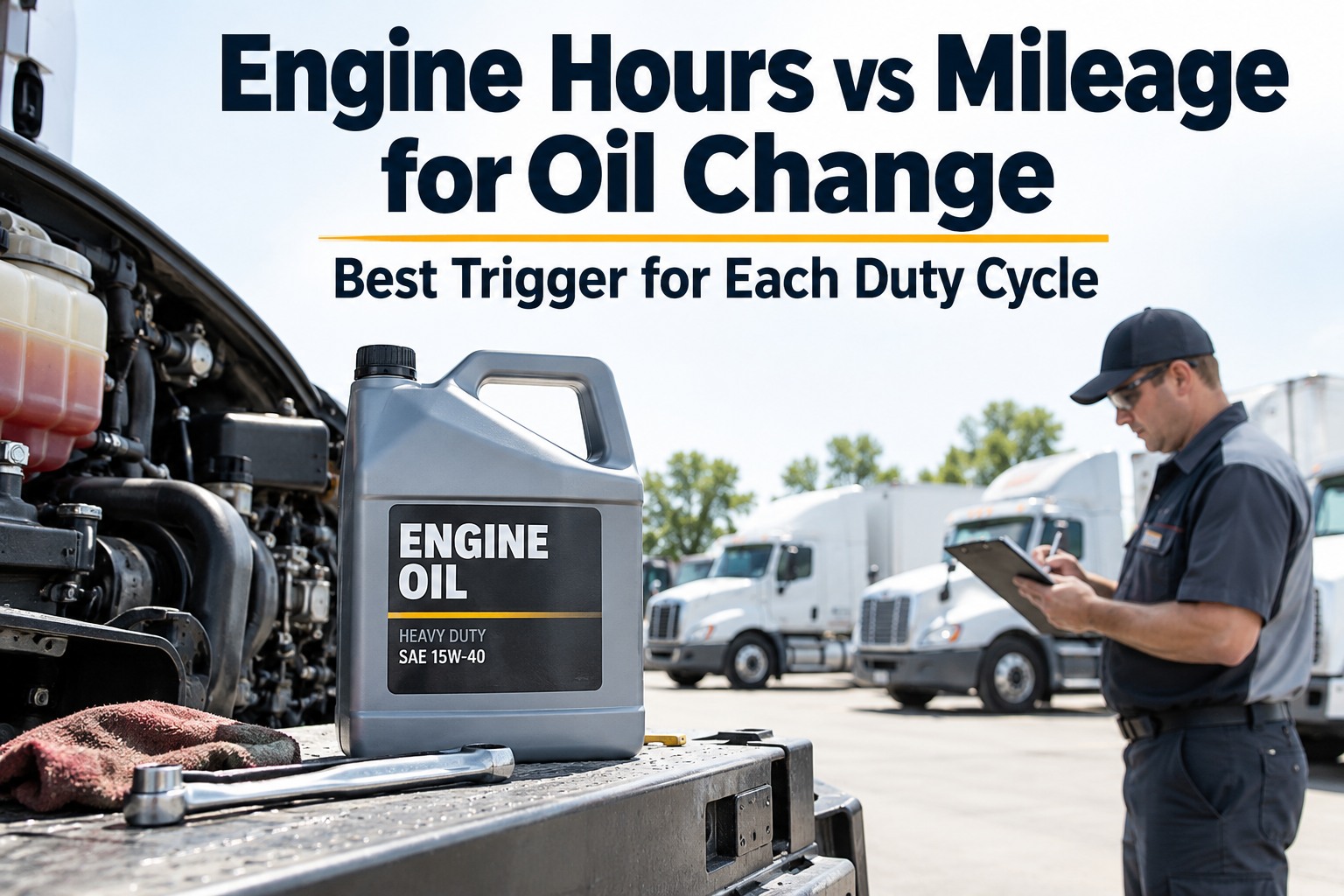
Use both. Whichever threshold hits first triggers the service. Mileage works for highway trucks that accumulate distance predictably. Engine hours captures idle time, PTO operation, and urban duty that mileage misses. A service truck idling 8 hours a day and driving 40 miles can rack up 250 hours in a week while showing negligible mileage — hours-based scheduling saves that engine while mileage-based scheduling destroys it.
CJ-4 (2007 standard) was designed for the first-generation emissions systems with DPF. CK-4 (2016 standard) is the current standard, backwards compatible with CJ-4 applications — this is the default choice for post-2010 engines. FA-4 is a lower-viscosity fuel-economy grade (10W-30 typical) for newer engines designed specifically to run it, but is NOT backwards compatible. Check the OEM manual before substituting FA-4 for CK-4.
Only if the OEM approves the specific oil for extended intervals AND you have supporting conditions: highway-dominant duty cycle, active oil-analysis program, extended-capacity or bypass filtration, and OEM-approved extended-drain oil (not standard CK-4). Skipping any of those requirements while extending intervals is how fleets destroy engines. Standard synthetic oil doesn't automatically qualify for extended drain — the formulation matters more than the base stock. Contact our team about extended-drain program requirements.
A specific cascade unfolds over 20K–60K miles. First, oil shears and loses viscosity — invisible so far. Then turbo bearing wear accelerates ($2,500–$4,500 to replace). Then injector deposit buildup causes misfires ($2,000–$5,000). Then main bearing damage leads to engine failure ($12,000–$25,000). The $200 saved on the oil change becomes $12,000–$25,000 on the engine — with weeks of downtime. Skipping intervals is the highest-cost fleet decision most managers ever make.
Fleet maintenance software auto-schedules oil changes per truck based on mileage, engine hours, and duty-cycle severity multipliers. When a truck crosses either its mileage OR its hours threshold, a work order is generated automatically — no manual tracking, no missed intervals. Complete oil-change history is archived by VIN for warranty defense and cost-per-mile analysis. Try free tracking: sign up here.
Every diesel, every interval, tracked automatically
Mileage AND engine hours in parallel per truck. Duty-cycle severity multipliers applied automatically. OEM-specific intervals per engine model. Warning-sign alerts when intervals approach thresholds. Complete oil-change history archived by VIN for warranty defense. Everything a fleet needs to keep diesel engines running to 500,000+ miles instead of losing them at 250,000 to skipped-interval cascade failures.