On an SCR-equipped diesel, a single emissions fault doesn't just light a lamp it counts down to a speed derate that can strand the truck at 5 mph. Most of those faults trace to one thing: the DEF, the sensors or the dosing. And the most valuable check is also the cheapest — a refractometer test of DEF quality, done before anyone replaces an expensive sensor or injector. This checklist walks the whole system in the right order. Start free and log every SCR check on the truck's record.
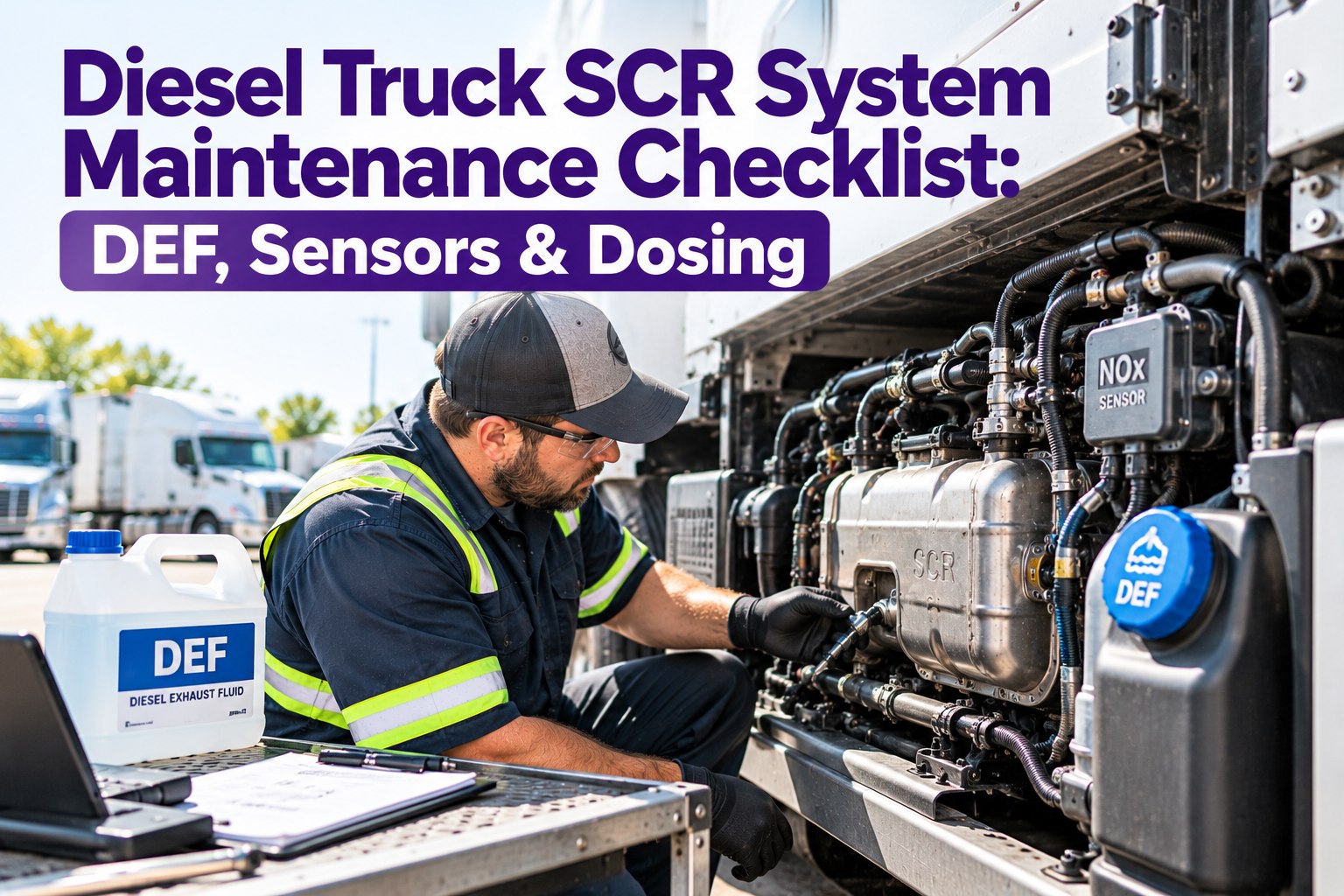
Diesel Truck SCR System Maintenance Checklist: DEF, Sensors & Dosing
Test the DEF Before You Replace Anything
This is the rule that saves the most money on the SCR system. Bad or out-of-spec DEF throws the same codes as a failed sensor or injector — so a two-minute refractometer test tells you whether you're chasing a fluid problem or a hardware one, before you spend on parts.
DEF is nominally 32.5% urea, and healthy fluid reads between 31.8% and 33.2%. A refractometer check costs almost nothing and takes two minutes. Out of range, drain and replace the fluid before any other diagnostic — contaminated DEF can irreversibly poison the catalyst, and swapping a good sensor won't fix bad fluid.
Read the DEF-to-Fuel Consumption Ratio
Before you pull the injector, look at how much DEF the truck is using. The consumption ratio against fuel is a free diagnostic — it points straight at a stuck-open or a clogged injector without a single tool.
The Four Parts That Fail — and How They Show It
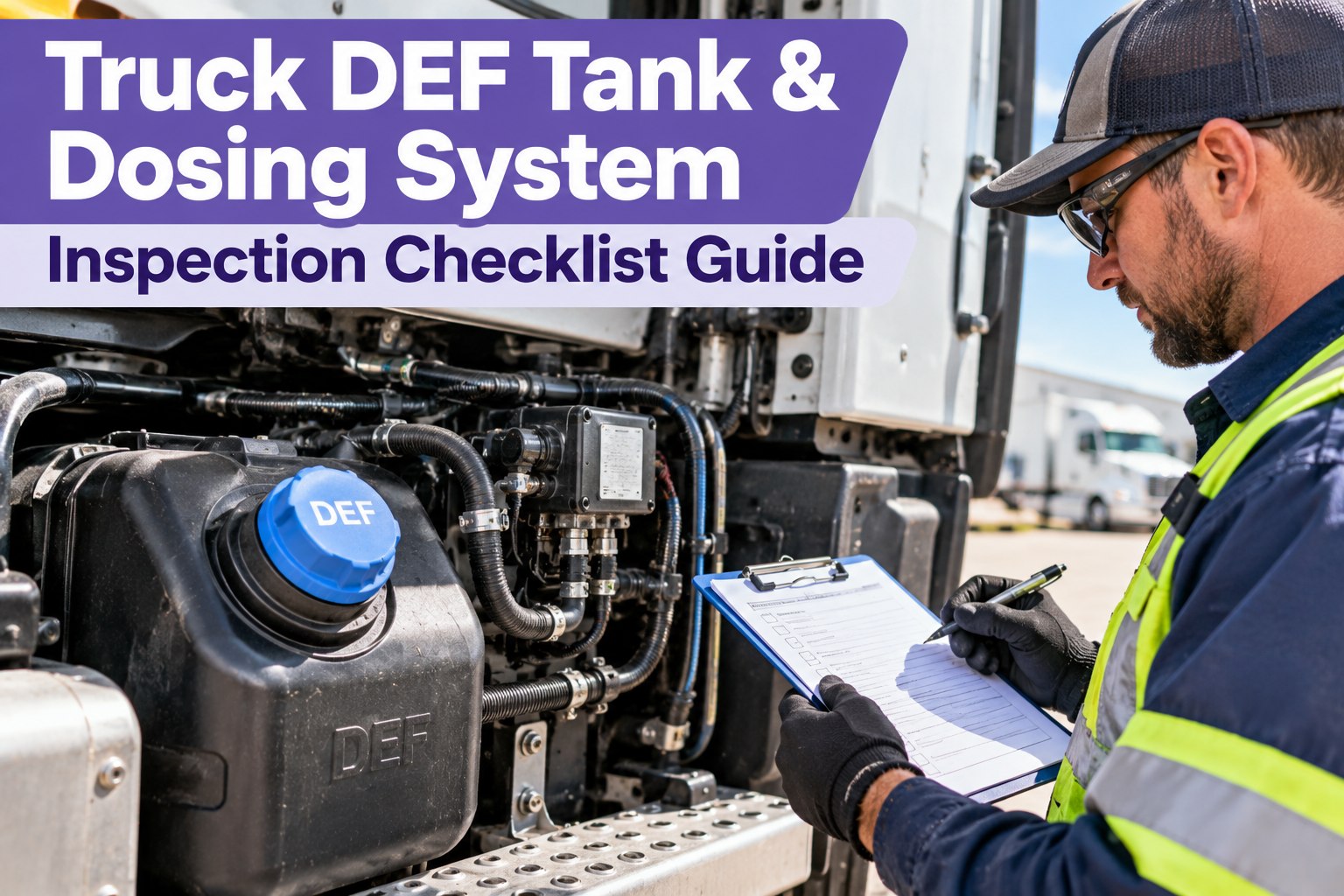
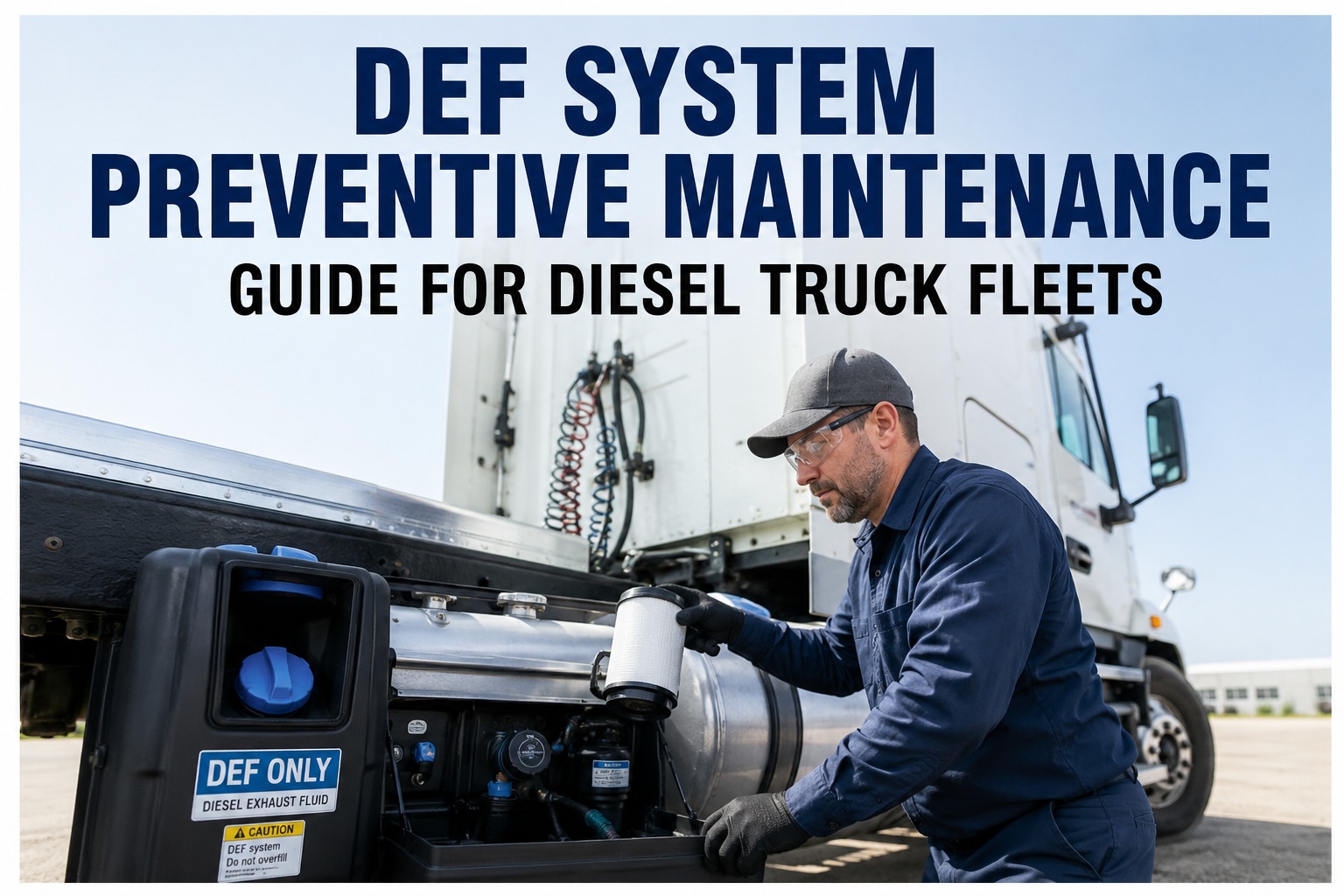
SCR faults trace to four components. Knowing what each one does and how it fails tells you where to look when a code appears.
32.5% urea, freezes at 12°F. Heaters keep it liquid; contamination or dilution throws P207F and can ruin the catalyst.
Upstream reads engine-out, downstream grades the catalyst. They drift as soot and condensation foul them; service life 100,000–150,000 miles, replace around 120,000.
Sprays DEF at 70–100 PSI. Crystal buildup at the tip blocks it — rinse with deionized water; coil failure is the other common fault.
Converts 90%+ of NOx above 500°F. Oil, coolant or fuel contamination poisons it for good; otherwise it lasts 400,000+ miles.
Fault Codes and the First Thing to Check
A code tells you where, not why. Each of these has a correct first step — run it before you condemn a part, because the wrong replacement leaves the real fault in place.
Catch the Derate Before It Catches the Driver
Truck Inspection & Maintenance Management Software logs the DEF reading and the fault scan at every PM, flags a sensor or filter nearing its mileage, and opens a work order the moment a code appears — so an emissions fault becomes a scheduled repair, not a 5 mph limp home.
The SCR System Maintenance Checklist
Work the groups in order — a full SCR check runs about 12–15 minutes at every PM. Tick each item as you confirm it; Truck Inspection & Maintenance Management Software keeps the readings and the codes on the truck's record.
A $2 Fluid Test Can Save a $1,000 Sensor
The SCR system punishes a wrong guess — a replaced sensor that didn't fix the real fault is money and downtime gone. Truck Inspection & Maintenance Management Software keeps the DEF reading, the consumption ratio and the fault history on record, so the next decision is informed, not a guess.
Why Fleets Track SCR Maintenance in Software
A fault code scrawled on a work order tells you nothing about the trend that caused it. A logged DEF reading and consumption ratio over time catch the fault building before the derate hits. Start free and see SCR faults coming, not surprising.
Frequently Asked Questions
Keep the SCR System Healthy, Keep the Truck at Speed
Give technicians a guided SCR check that tests the DEF first, reads the consumption ratio, scans the codes and logs it all — so an emissions fault is caught at the PM, not at a roadside derate.