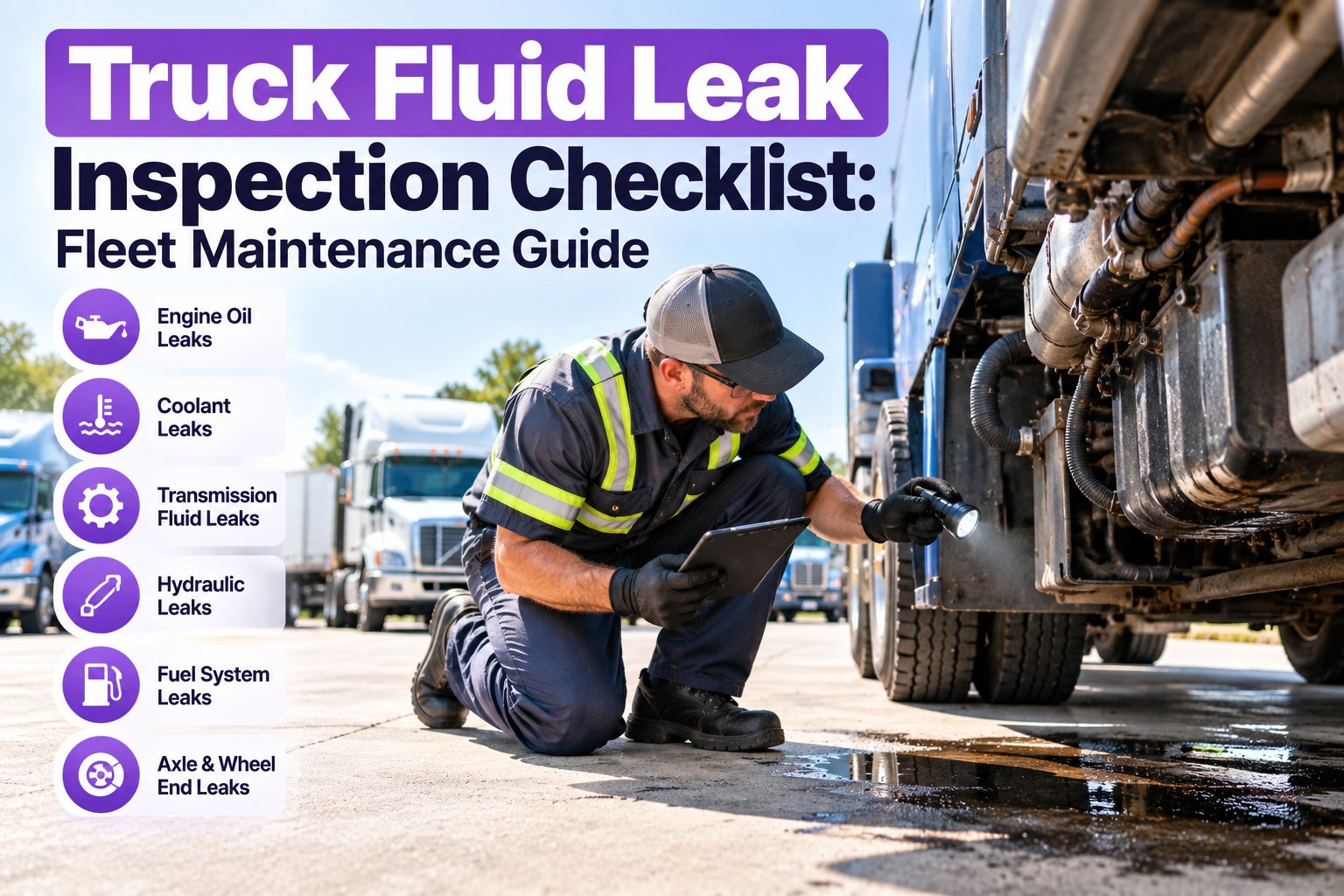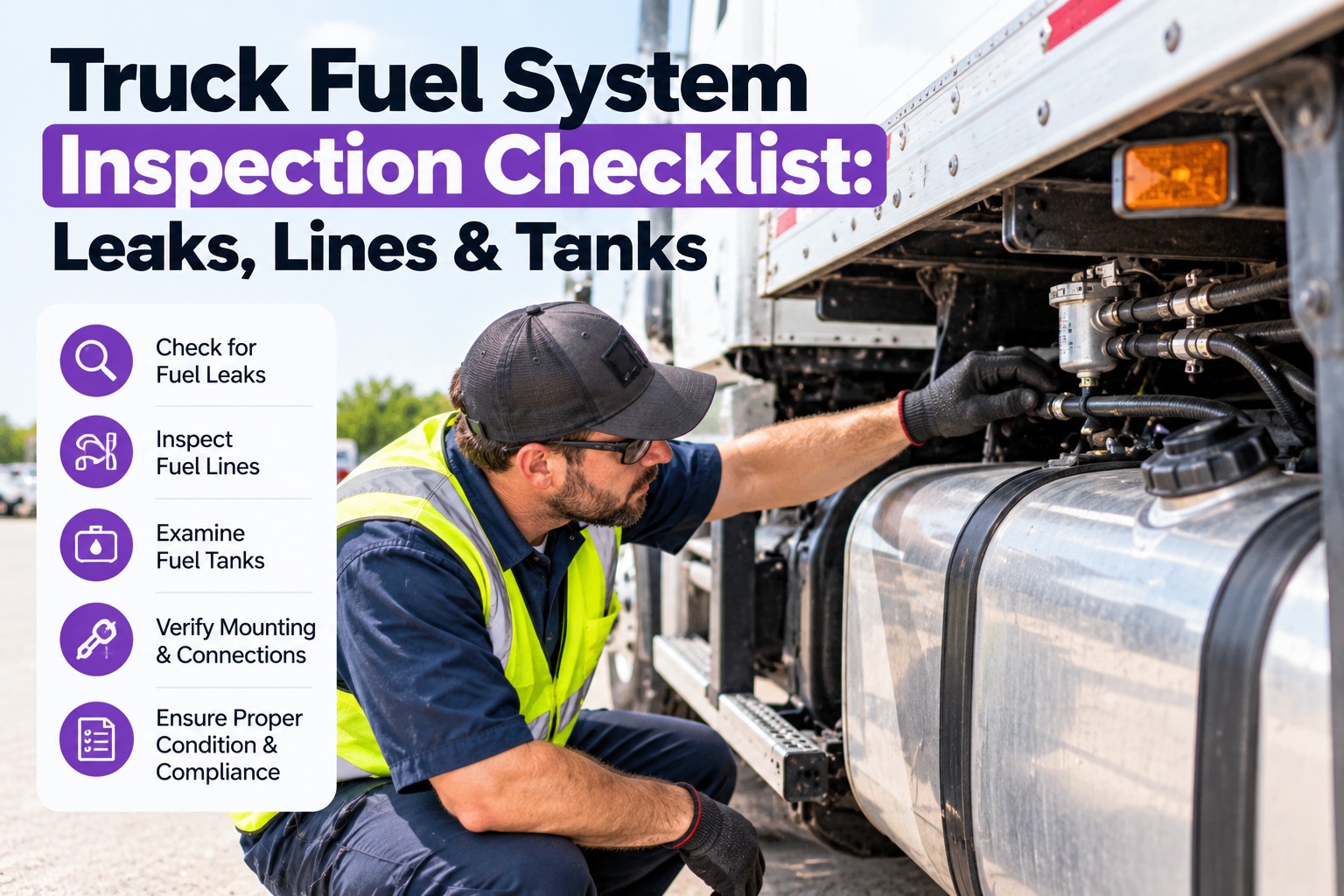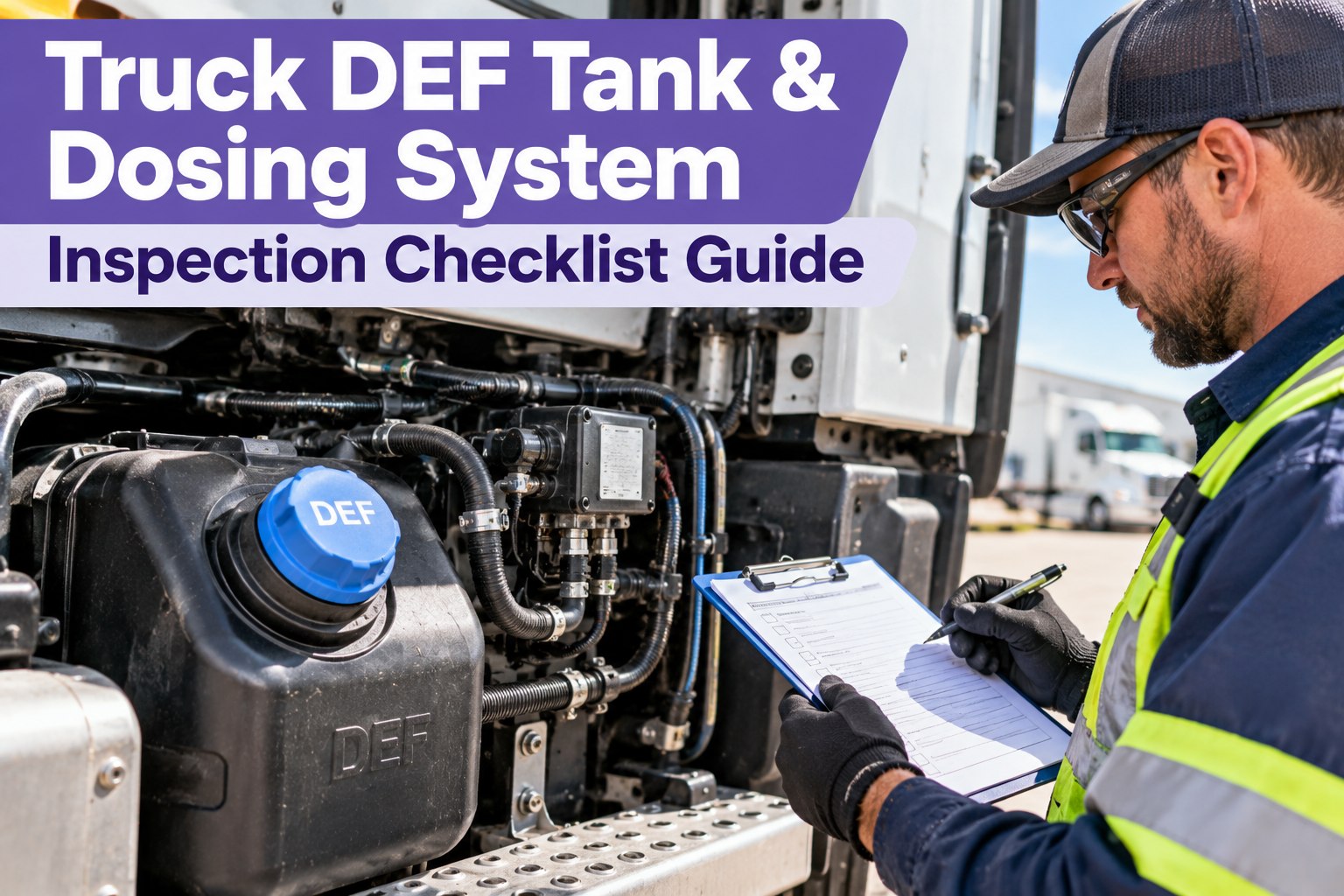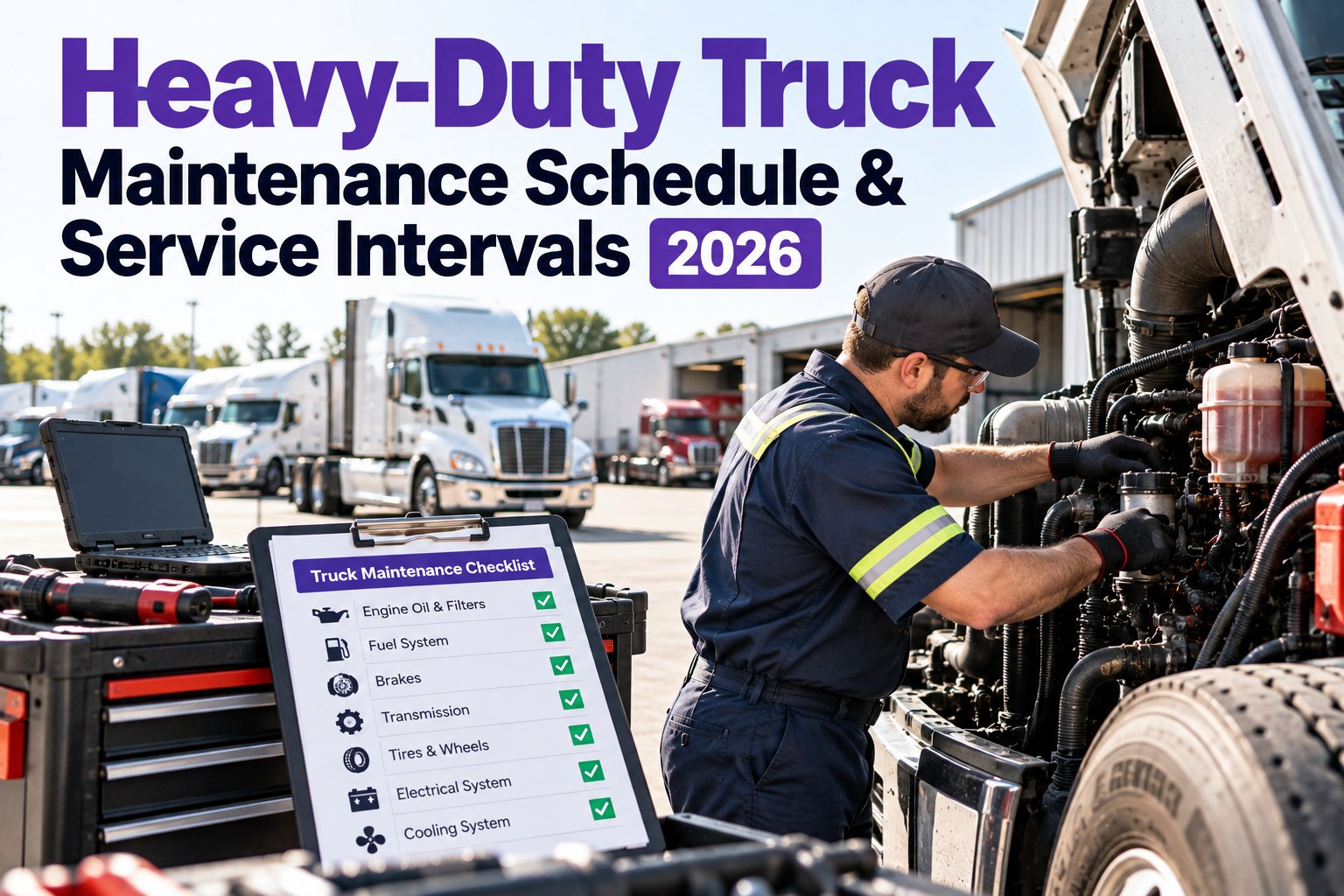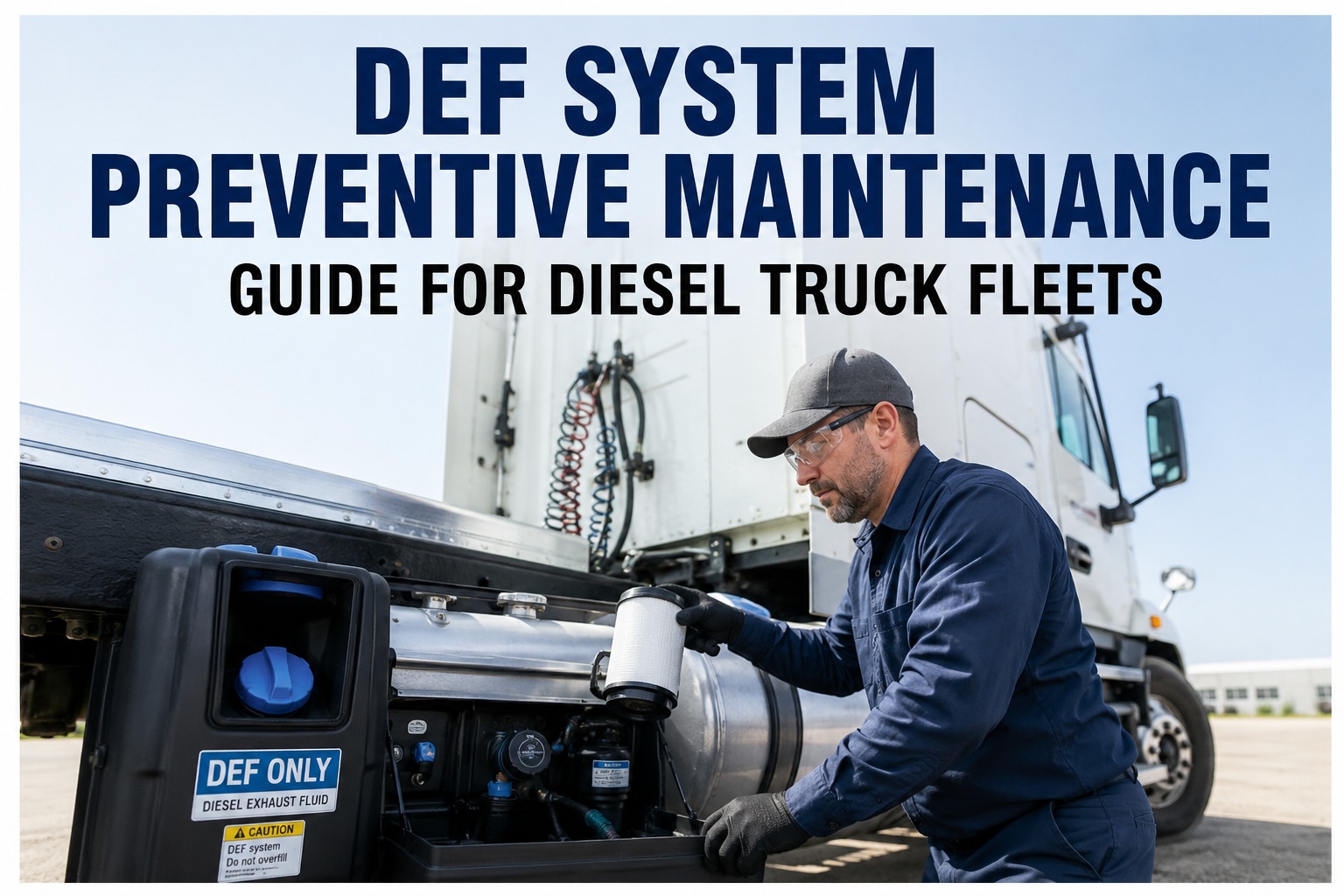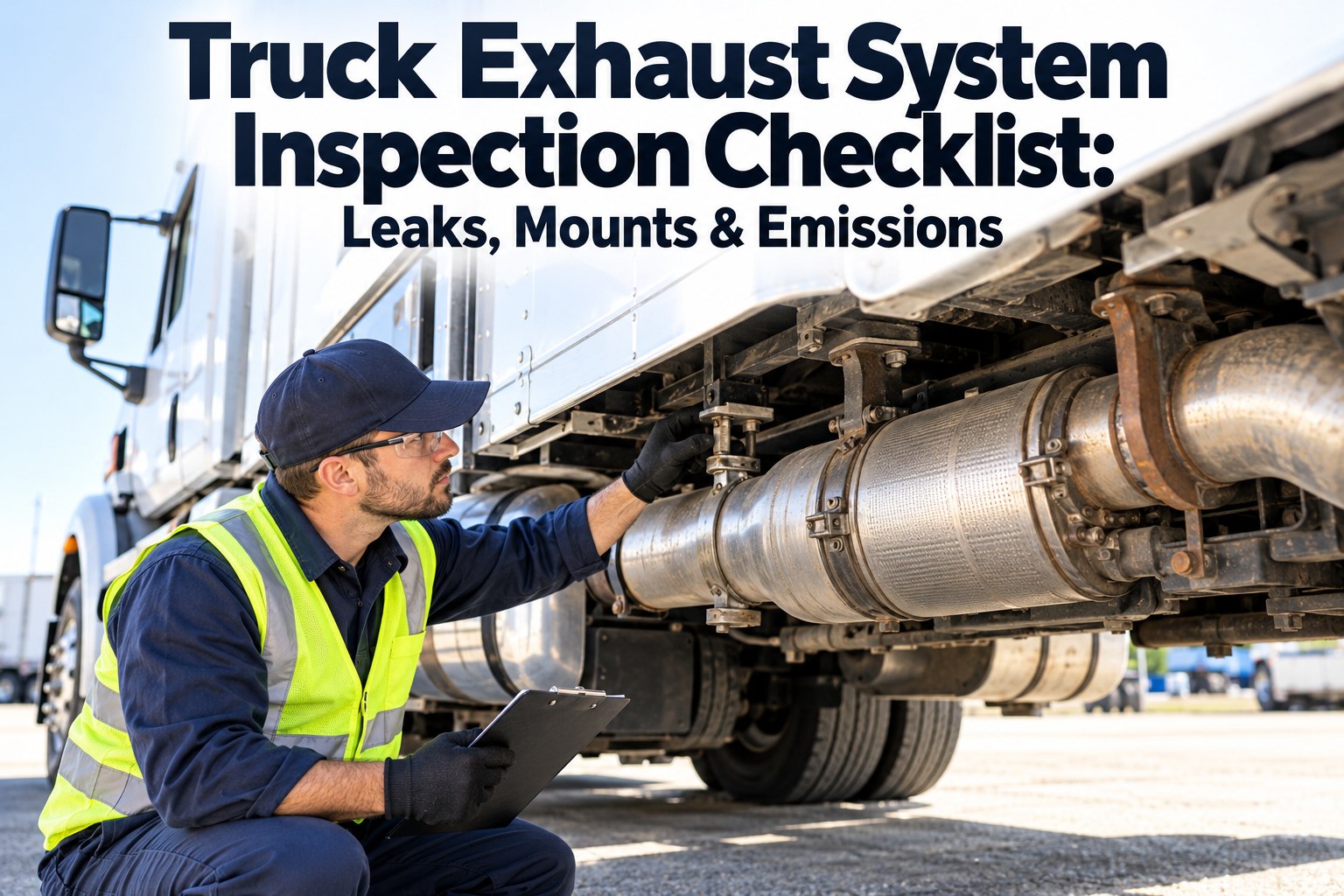
An exhaust leak is the one defect that can hurt the driver before it hurts the truck. A cracked manifold or a leaking joint under the cab doesn't just get loud — it can push carbon monoxide into the sleeper, and under federal rules that's reason enough to park the truck. Add the modern emissions stack — DPF, SCR, DEF — and "check the exhaust" now means a system that runs from the manifold to the tailpipe. This checklist walks all of it, in the order the gas flows. Start free and inspect the full exhaust path against its own limits.

Manifold → DPF → SCR → Stack

Truck Exhaust System Inspection Checklist: Leaks, Mounts & Emissions

Exhaust defects split two ways: leaks and mounts that threaten safety, and emissions components that threaten uptime and a derate. Truck Inspection & Maintenance Management Software puts each stage of the system on the inspection with its own pass/fail limit, and turns a leaking joint or a clogged DPF into a dated work order before it becomes a CO risk or a 5-mph crawl home.

§393.83no exhaust leak forward of or below the cab/sleeper
5 mphderate if DEF quality falls outside spec
No patchtape and clamp-on repairs are prohibited by rule

Follow the Gas — The Exhaust Flow You're Inspecting

Inspect the exhaust the way the gas travels: out of the engine, through the pipes and mounts, into the aftertreatment that cleans it, and out the stack. Each stage has its own failure mode, and skipping one is where leaks and derates hide.

1Manifold & turboCracks, studs, V-band
→
2Pipes & mountsFlex pipe, clamps, hangers
→
3DPFSoot, regen, cracks
→
4SCR / DEFDosing, quality, NOx
→
5StackDischarge, rain cap
The safety rule that comes first49 CFR §393.83 · §392.66

No exhaust leak or discharge is allowed forward of, or directly below, the driver or sleeper compartment — that's the line that keeps fumes out of the cab. Trucks and tractors must discharge behind the cab, never below the fuel tank or filler, and never where heat can reach wiring or fuel lines. Under §392.66, a truck can't be operated if carbon monoxide is detected inside or a condition is likely to cause dangerous exposure. And temporary wrap or clamp-on patches aren't a legal fix — the leak has to be properly repaired.

Checklist 1 — Leaks, Pipes & Mounts

Walk the system manifold to stack, looking for the three tells of a leak: a sooty streak, a ticking or hissing sound at start-up, and the smell of fumes. Fresh, smeared soot at a joint means it's leaking right now.

01Manifold, Turbo & Flex Pipecrack · clamp · bellows
02Clamps, Hangers, Muffler & Stacksecure · discharge
03Cab Safety & Heat RoutingCO · clearance

Checklist 2 — Emissions System (DPF & SCR/DEF)

The aftertreatment side fails quietly — a warning light, a regen that keeps asking, DEF that's drifted out of spec — right up until a derate slows the truck to a crawl. Check the numbers, not just the lamps.

01Diesel Particulate Filter (DPF)soot · regen · ash
02SCR, DEF & NOxquality · dosing · sensor
03Warnings, Smoke & Codeslamp · opacity · DTC

Software Built to Run This Checklist for You

Helping with exactly this is the job. Truck Inspection & Maintenance Management Software puts every item above on the tech's device with its own limit attached — soot %, regen interval, DEF concentration, the §393.83 cab-leak rule. A reading or finding that fails flags the component, and a failed component opens a dated work order routed to the shop with the detail and a photo on it. The safety leaks and the slow-building emissions faults both get caught on a schedule instead of at a roadside or a derate.

Read the Smoke — A Fast Field Diagnostic

Before you chase codes, look at the stack. Exhaust colour narrows the fault to a system in seconds and tells you which part of this checklist to work first.

Black smokeToo much fuel or too little air — restricted air filter, injector fault, boost leak, or a failed DPF.
Blue-grey smokeOil burning — worn rings, valve seals, or a leaking turbo seal.
White smokeUnburned fuel on a cold start — or coolant if it persists and smells sweet.

Frequently Asked Questions

What are the signs of an exhaust leak on a diesel truck?
Three tells cover most leaks. Soot — a dark, smeared streak downstream of a clamp, slip joint, or gasket, which means the joint is leaking now if the soot is fresh. Sound — a ticking or puffing that's loud at start-up and fades as the engine warms is the classic cracked-manifold signature; rattles at idle also count. And smell — any exhaust odour in the cab or sleeper is a reason to stop, because carbon monoxide has no colour or smell and a leak forward of the cab can push it inside. Under §392.66, a truck can't be operated when CO is detected inside or a condition is likely to cause dangerous exposure.
Can I use exhaust tape or a clamp-on patch to fix a leak?
No — temporary wrap and clamp-on patches aren't an acceptable repair under 49 CFR §393.83(f), and broken hangers are a defect in their own right. The system has to be properly repaired and securely fastened. The reason the rule is strict is that an exhaust leak isn't only a noise or emissions issue; a leak in the wrong place routes hot gas and carbon monoxide toward the cab, wiring, or fuel lines, so a "good enough for now" patch is exactly the kind of fix the regulation is written to prevent.
How often does a DPF need regeneration and cleaning?
Regeneration — burning off accumulated soot — happens roughly every 300–500 miles in city operation; noticeably shorter intervals suggest high soot production from injector wear, an EGR fault, or the wrong fuel spec. Regen doesn't remove ash, though, so the DPF still needs physical cleaning: about every 150,000–200,000 miles for highway trucks, and as often as every 50,000–75,000 miles or six months for severe-duty urban vehicles. Tracking both soot load and regen frequency is what lets you clean on schedule instead of after a clogged filter forces the issue.
Why does bad DEF put the truck into a 5-mph derate?
DEF needs to be 32.5% urea for the SCR catalyst to convert NOx properly; the usual acceptance window is about 31.8–33.2%. When concentration drifts outside roughly 30–35% — from contamination, dilution, or the wrong fluid — it can poison the catalyst, and the engine management responds with a derate that can limit the truck to 5 mph to force the problem to be fixed. Checking DEF quality and watching consumption (normal is 3–5% of fuel use) catches the drift before the derate strands a loaded truck. Contact us to build DEF and DPF checks into your inspection.
Leak-Free · Secure · In Spec

Catch Exhaust Faults in the Bay, Not on the Shoulder

Truck Inspection & Maintenance Management Software turns this checklist into a live inspection on your tech's device — every leak, mount, DPF, and DEF item carrying its own limit, every failed point opening a tracked work order with a photo. Fleets run it to keep fumes out of the cab and emissions faults off the derate list.

No credit card required. Free for up to 3 trucks. Built for FMCSA-compliant fleets.