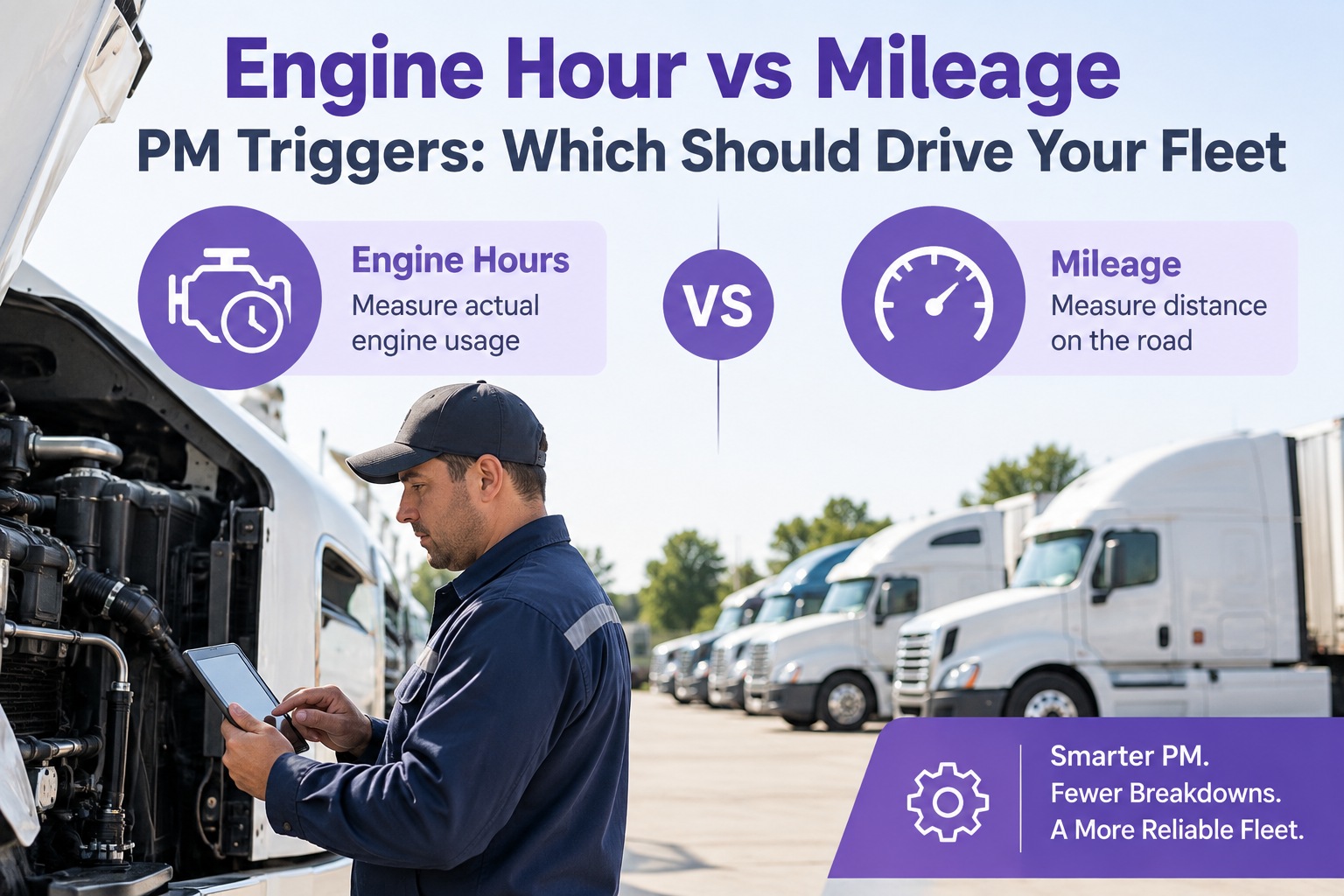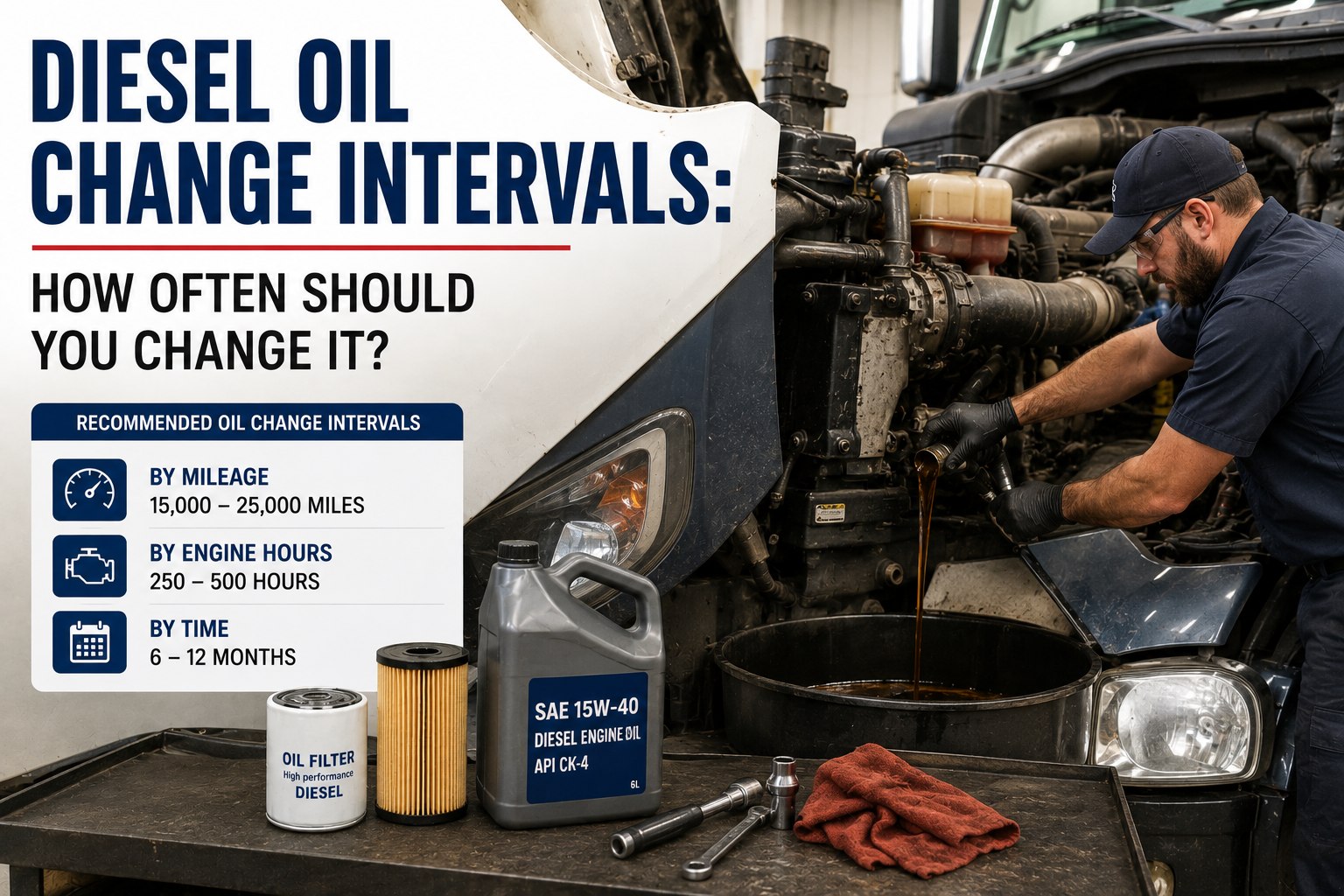
Two trucks roll into your shop with 60,000 miles each. One ran steady highway lanes; the other idled at docks, ran a PTO, and crept through stop-and-go all year. On the odometer they're identical. Inside the engine they're not even close — and if you change both on the same mileage interval, you're over-servicing one and starving the other. The odometer measures how far a truck moved. Oil degrades on how long the engine ran — heat cycles, contamination, hours under load — none of which the odometer sees when the wheels aren't turning. This guide is the decision framework for picking the right trigger per truck: where mileage works, where engine hours win, the idle-ratio self-test that flags which of your trucks are quietly under-served, and how to run both without doubling your workload. Start a free trial and trigger PM on whichever comes first, per truck, automatically.
Engine Hours vs Mileage: The Right Oil Trigger
Same mileage, different engines. The trigger that keeps a long-haul tractor on schedule quietly under-services an idle-heavy vocational truck. Here's how to match the right basis to each truck — and catch the ones mileage is missing.
Why the Odometer Lies on Some Trucks
Oil doesn't wear out by distance. It breaks down from run time, heat cycles, and combustion contamination — all of which pile up whether the truck is doing 65 or sitting still with the engine on. That's the whole problem with a mileage-only schedule.
Distance the wheels traveled. Great for road-wear items and for engines that spend their run time actually moving. Blind to every hour the engine runs parked.
How long the engine actually ran — moving or not. Idle six hours at a dock and the odometer barely moves while the oil ages a full shift. Hours capture the wear mileage can't see.
The Duty-Cycle Spectrum: Which Trigger Wins
There's no universal answer — the right primary trigger slides along a spectrum from pure highway to pure vocational. Find where each truck sits and the trigger picks itself.
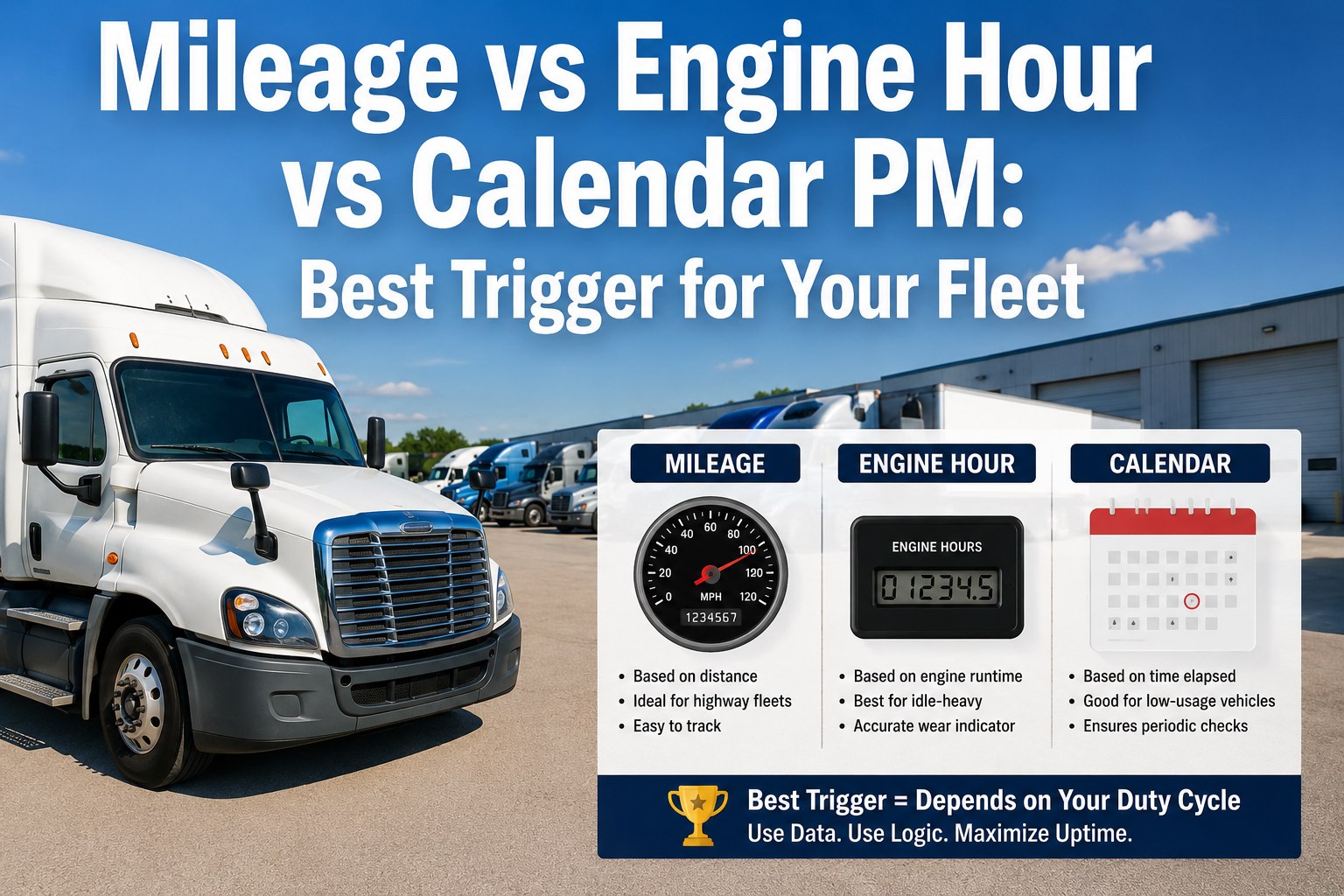
Steady highway miles, engine under load and moving nearly all its run time. The odometer is a fair proxy for wear. Track hours as a background check, but miles lead.
Real highway miles plus meaningful idle, traffic, and stops. Neither number alone tells the truth. Set both intervals and service on whichever arrives first.
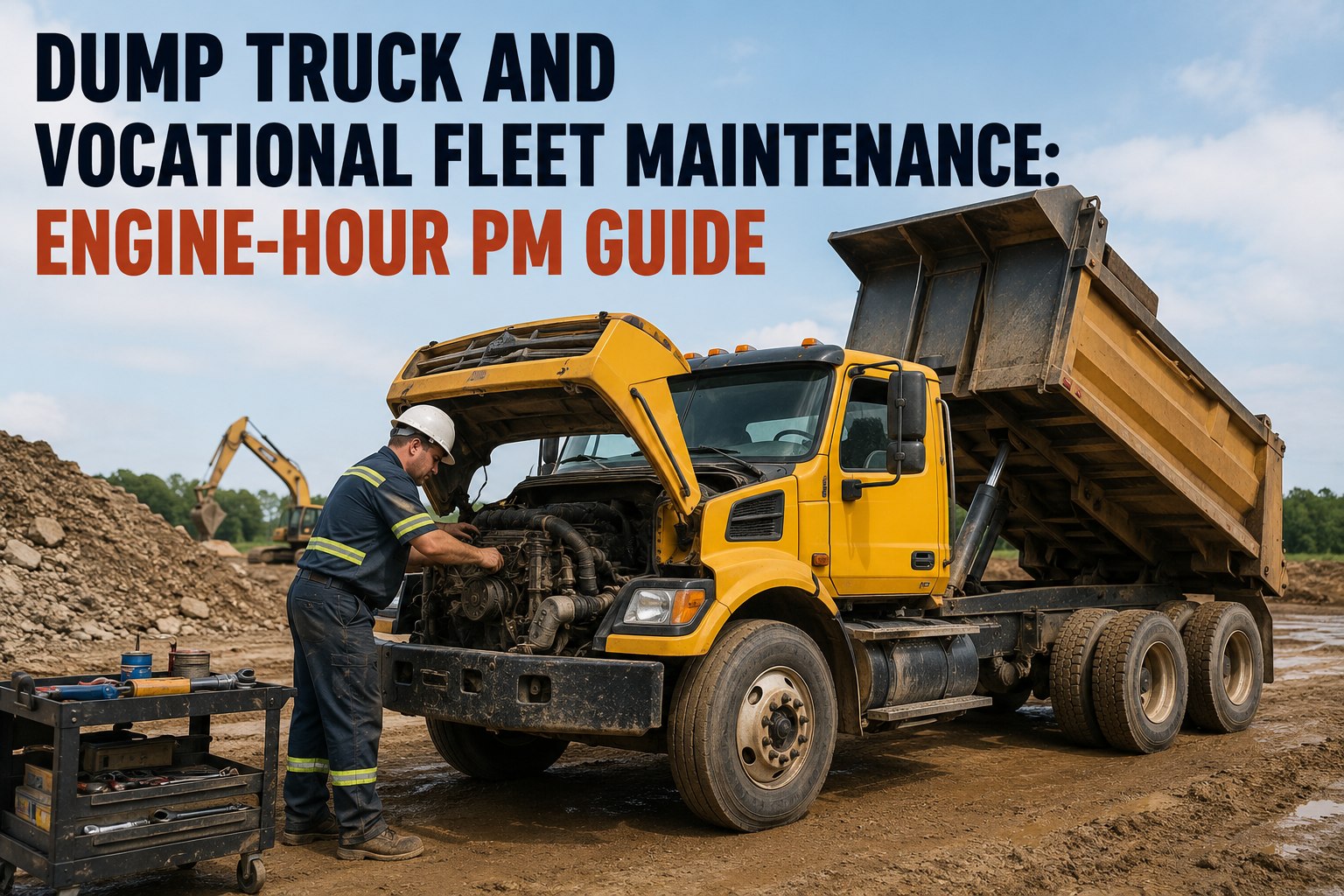
Yard trucks, local delivery, plow/utility, PTO equipment, jobsite units. The engine runs far more than the wheels turn. Hours are the honest measure; miles will badly under-service.
The Idle-Ratio Self-Test: Find the Trucks Mileage Is Missing
You don't have to guess where a truck sits on the spectrum — a two-minute calculation using data your telematics or ECM already has tells you. This is the single most useful diagnostic in the whole hours-vs-miles question.
Run Every Truck on Its Own Right Trigger — Automatically
Truck Inspection & Maintenance replaces paper DVIRs and PM spreadsheets with a system that pulls both mileage and engine hours per truck and fires the oil-change PM on whichever threshold hits first — mileage for your linehaul tractors, hours for your yard and vocational units, both for the mixed fleet in between. It flags the trucks whose idle ratio says mileage is under-serving them, generates the work order automatically, and keeps every service as an audit-ready record. That's how fleets lift PM compliance above 95% without a spreadsheet per truck.
Setting the Numbers: A Starting Framework
Exact intervals are OEM- and oil-specific — always confirm against your engine's guidance — but these are the industry-standard reference points to build each truck's trigger around.
On-highway baseline with approved CK-4/FA-4 oil and normal duty. Extended-drain programs push further with oil analysis.
Roughly a 7,500-mile-equivalent interval at the ~27.5 mph factor. The go-to hours trigger for idle-heavy and severe duty.
e.g. Cummins X15 extreme-severe: 4,500 mi / 500 hr / 12 months, whichever comes first. Calendar catches the low-use truck.
The Warranty Angle Most Fleets Miss
There's a compliance reason to track hours even on mileage-primary trucks: the engine already is. Modern ECMs log engine hours, and manufacturers use them.
Some dealerships calculate a "true mileage" by multiplying logged engine hours by a speed factor. If that figure exceeds your warranty's mileage threshold, coverage can be denied — even if your odometer says you're under it. A truck that idles heavily can blow past its warranty in engine terms while looking fine on the dash. Tracking hours isn't just about oil timing; it's about knowing where your warranty actually stands.
Frequently Asked Questions
Stop Guessing the Oil-Change Trigger
Truck Inspection & Maintenance pulls mileage and engine hours for every unit, fires the oil PM on whichever threshold hits first, flags the idle-heavy trucks mileage is under-serving, and keeps a calendar backstop on all of it — with audit-ready records and real-time compliance dashboards. Replace one-size-fits-all intervals and PM spreadsheets with a system that services each truck the way it's actually used, and holds PM compliance above 95% year-round.