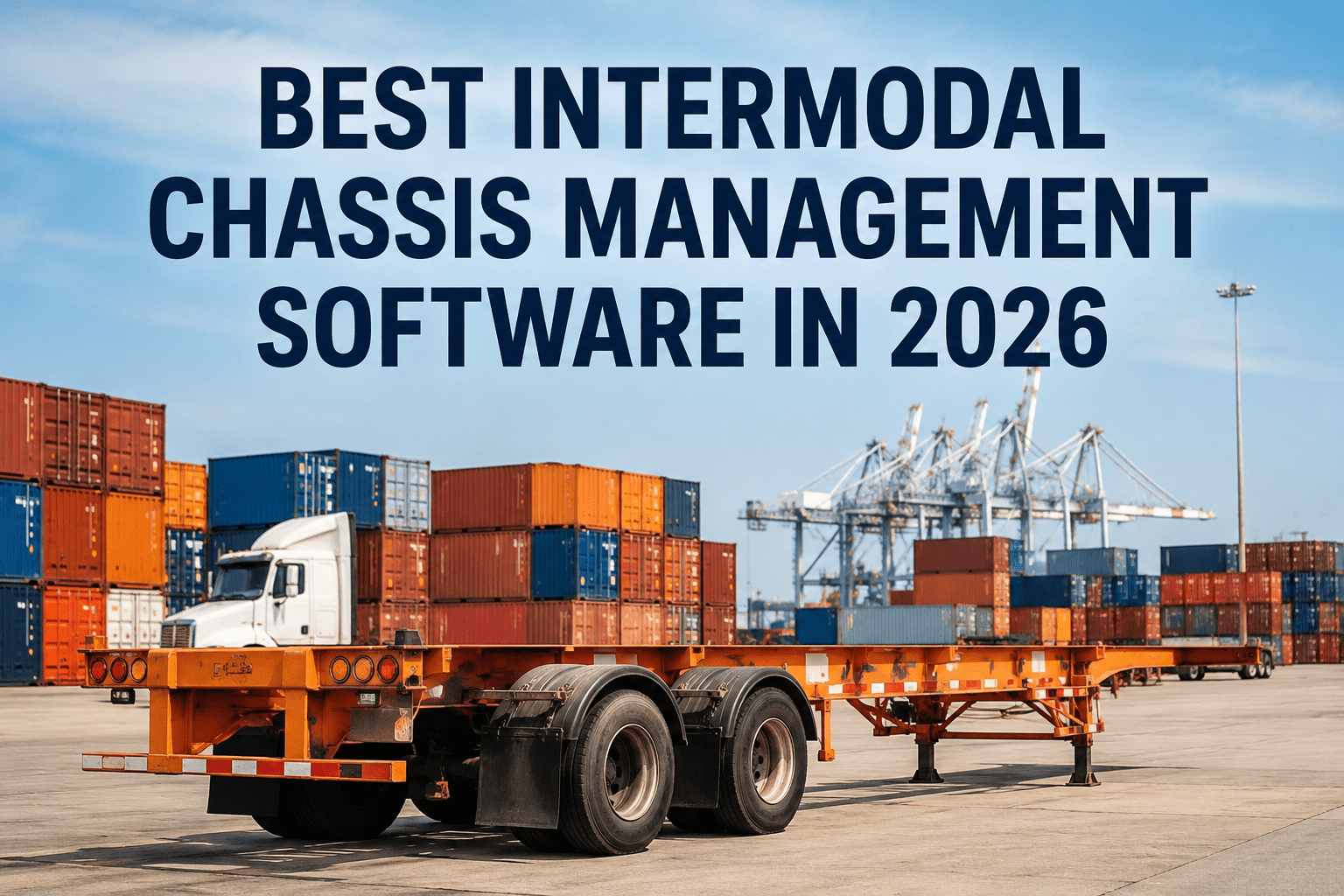
A chassis is the most overlooked asset in drayage — until it costs you. A single unit sitting bad-ordered on a roadability line can blow an appointment window; a missed per-diem return can quietly bleed $30 a day per chassis across a whole fleet; and one poorly documented repair can become an M&R liability claim when a lawyer goes looking. Chassis fleet management software exists to close those gaps, but the market is a confusing mix of full drayage TMS platforms, chassis-specific M&R systems, and pool-tracking tools that each solve a different slice of the problem. This buyer's guide breaks down what chassis software actually needs to do in 2026 — M&R, pool and per-diem tracking, billing audit, and integrations — and how to pick the platform that fits your port and rail operation. Talk to our team for a walkthrough tailored to your lanes.
Buyer's Guide · Drayage & Intermodal · 2026
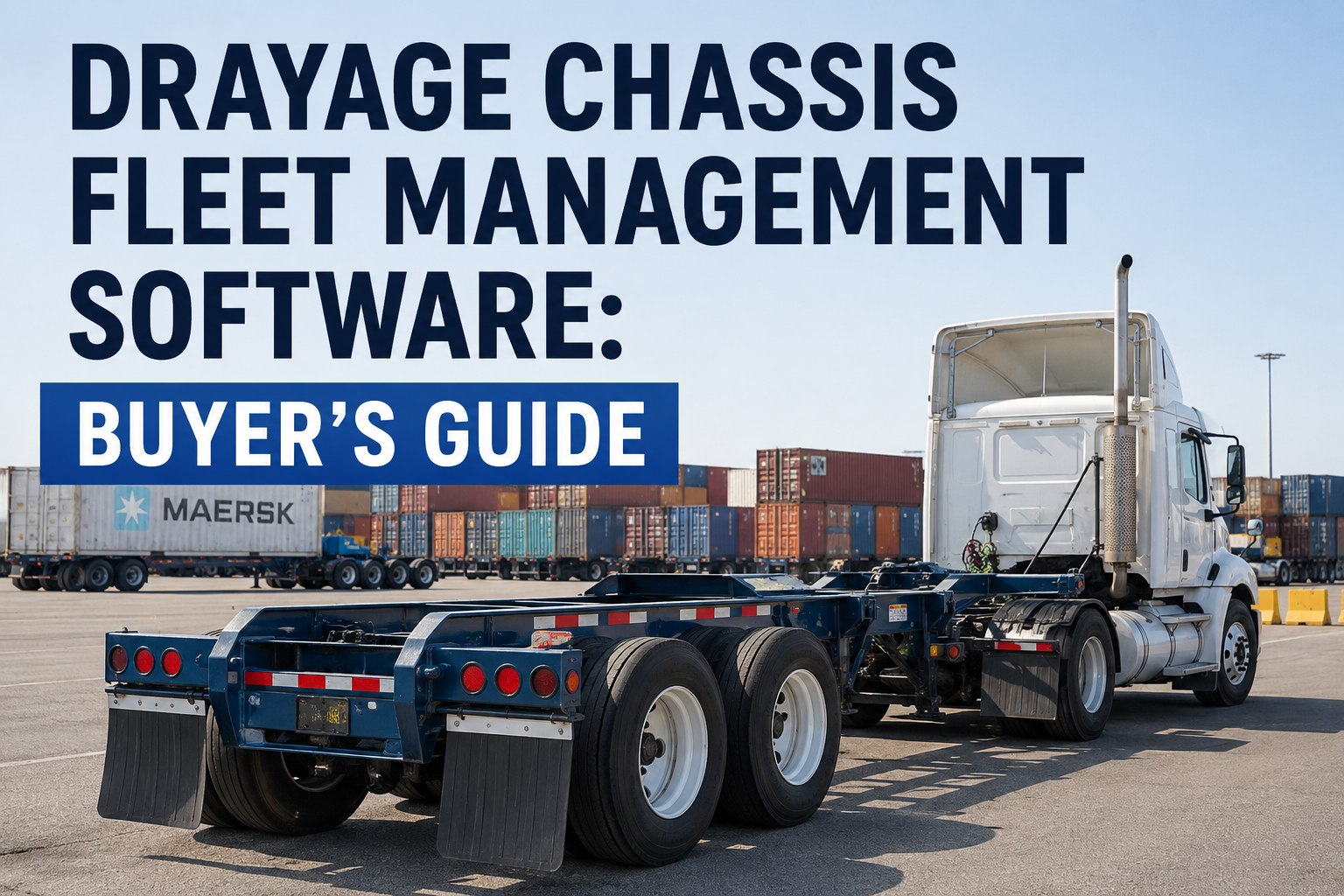
Drayage Chassis Fleet Management Software: The 2026 Buyer's Guide
From M&R and pool tracking to per-diem billing and port integrations — the capabilities that matter, the categories that compete, and the evaluation framework that protects your margin.
30-50%
Demurrage exposure cut by digital drayage platforms
$150-400
Demurrage per container, per day
30 min
IEP window to repair or replace a bad-ordered chassis
$500/mo
Typical entry point for drayage platforms
Three Charges That Look Alike — and Aren't
Before comparing software, get the money right. Demurrage, detention, and per diem are three distinct clocks that drayage fleets constantly confuse — and chassis software has to track the one most people forget. Per diem is the chassis charge, and it's the one your platform must watch:
Demurrage
$150-$400 / day
Charged by the steamship line when a container sits inside the terminal past free time.
Detention
$75-$200 / day
Runs after the container leaves the terminal until the empty is returned.
Per Diem Chassis
Provider rate / day
Billed by the chassis provider when equipment isn't returned to the pool on time — the charge chassis software exists to prevent.
The Four Capabilities That Define Chassis Software
Strip away the marketing and every chassis platform is judged on four core capabilities. A tool strong in one but weak in another leaves a gap that shows up as a fee, a fine, or a failed audit:
Maintenance & Repair (M&R)
Roadability-compliant inspection, defect capture, and repair workflows. FMCSA holds IEPs to the same standard as motor carriers — parts 390, 393, and 396 — so every repair needs a documented, defensible trail.
Pool & Per-Diem Tracking
Real-time visibility of which chassis is out-gated, where it is, and when it's due back. Last-free-day tables and per-diem alerts stop overdue charges before they accrue.
Billing & Bill Audit
Chassis rental invoices are riddled with errors. Bill-audit features match rental to shipment, catch duplicate billing, and reconcile per-diem invoices so you only pay what you actually owe.
Integrations
Chassis data doesn't live in a vacuum. Connections to port and rail systems, chassis pools, ELD/GPS, and accounting keep status current without manual refreshing.
Which Category Fits Your Operation?
"Chassis software" isn't one product. The market splits into three categories, and picking the wrong category — not the wrong vendor — is the most expensive buyer mistake:
Full Drayage TMS
$500+/moDispatch, container track & trace, billing, and chassis management in one enterprise platform. Deep port/rail EDI, but a steep learning curve and premium pricing.
Best for: Mid-to-large carriers wanting one system for the entire drayage workflow.
Chassis M&R / CMMS
Per-assetPurpose-built for inspection, maintenance, and repair of chassis fleets. Strong on roadability compliance, defect-to-work-order flow, and documentation. Lighter on dispatch.
Best for: IEPs, pool operators, and carriers where M&R compliance is the dominant pain.
Pool / Per-Diem Tools
ModuleFocused on equipment visibility and per-diem control — gate events, LFD tracking, and bill audit. Often a module bolted onto a TMS rather than standalone.
Best for: Fleets whose biggest leak is overdue-equipment and billing-error costs.
Free · Up to 3 Assets
Start with the compliance layer that protects you
Truck Inspection & Maintenance software handles the M&R backbone every chassis fleet needs — roadability-compliant inspections, defect-to-repair workflows, annual inspection scheduling, and audit-ready records that hold up in an IEP roadability review. Sign up free for up to 3 assets and run it against your operation in 10 minutes.
The Roadability Repair Clock
Chassis M&R isn't optional paperwork — it's a federally timed process. When a driver flags a defect at pre-trip, the IEP is on the clock. Software that routes the defect instantly is the difference between a 30-minute swap and a blown appointment:
Driver pre-trip & DVIR
Driver inspects the chassis (UIIA 16-point standard) and reports any defect. A driver must not accept a unit with known OOS defects.
Defect routed to IEP / M&R
The report reaches the pool via chassis.com or IANA's bad-order service, then the designated M&R vendor — automatically, not by phone tag.
Repair or replace
The IEP makes a repair-or-replace decision fast and completes it before departure — with every action documented for the M&R file.
Why documentation matters: in an M&R liability claim, lawyers hunt for evidence of improper repair — and with multiple vendors touching one chassis, an undocumented "over-the-road" fix is a serious exposure. The minimum UIIA motor-carrier insurance is $1M for bodily injury, so a clean, timestamped repair history is your first line of defense.
The Must-Have Checklist
Score every platform against these non-negotiables before you look at anything else. A gap here is a gap in compliance, cost control, or both:
Roadability-compliant inspection & DVIR/DVER capture (parts 390/393/396)
Defect-to-work-order routing with full repair history per chassis
Annual FMCSA inspection scheduling with lapse alerts
Last-free-day tables & per-diem alerts to prevent overdue charges
Chassis bill audit — rental-to-load matching & duplicate detection
Port/rail integration (eModal, Rail Inc) for live equipment status
Driver mobile app with photo capture for gate tickets & defects
Audit-ready record retention producible on demand
Frequently Asked Questions
What's the difference between drayage TMS and chassis M&R software?
A drayage TMS manages the whole workflow — dispatch, container track & trace, billing, and settlements — with chassis management as one module. Chassis M&R software is purpose-built for inspection, maintenance, and repair compliance: DVIR/DVER capture, roadability, defect-to-repair routing, and audit-ready documentation. Many fleets run both, using the M&R system as the compliance backbone.
What is per diem and why does chassis software track it?
Per diem is a daily charge from the chassis provider when equipment isn't returned to the pool on time — separate from demurrage (steamship line, inside the terminal) and detention (after the container leaves). Because per-diem leaks accrue quietly across a whole fleet, software with last-free-day tables and automated alerts is the most direct way to stop the bleed.
Do I need software to stay FMCSA roadability compliant?
Not strictly, but it's the practical way. Since 2008, IEPs are subject to the FMCSRs and must run a systematic inspection, repair, and maintenance program with documentation, plus respond to driver defect reports. FMCSA conducts on-site roadability reviews against parts 390, 393, and 396. Software gives you the timestamped, producible records those reviews demand. Contact our team to see how the M&R workflow maps to the rule.
How much does drayage chassis software cost?
Full drayage TMS platforms typically start around $500/month for basic plans and scale with fleet size and modules, often with quote-based enterprise pricing. Chassis-specific M&R and per-diem tools are usually priced per asset or as modules, and some — like Truck Inspection & Maintenance — offer a free tier for small fleets so you can validate fit before committing.
What integrations should chassis software have?
At minimum: port and rail connections (eModal, Rail Inc) for live equipment status and gate updates; chassis.com / IANA for defect reporting to pools; ELD/GPS for real-time location; and accounting/EDI so you enter data once. Missing integrations mean manual refreshing — the exact friction that causes missed returns and inaccurate billing.
How should I run an evaluation?
Pilot on real chassis with real drivers for at least two weeks. Test the defect-to-repair loop end to end, verify per-diem alerts fire before the last free day, run a mock roadability audit and time the record retrieval, and confirm the bill-audit catches a planted duplicate. Score against the must-have checklist, get hidden costs in writing, then decide. Sign up free to start a no-risk pilot.
Buy Smart in 2026
Get the chassis compliance layer right first.
Truck Inspection & Maintenance software gives you roadability-compliant inspections, defect-to-repair workflows, annual inspection scheduling, and audit-ready records that stand up in an IEP roadability review — free for up to 3 assets, live in 10 minutes, no hardware. Use it as your M&R backbone alongside any TMS.