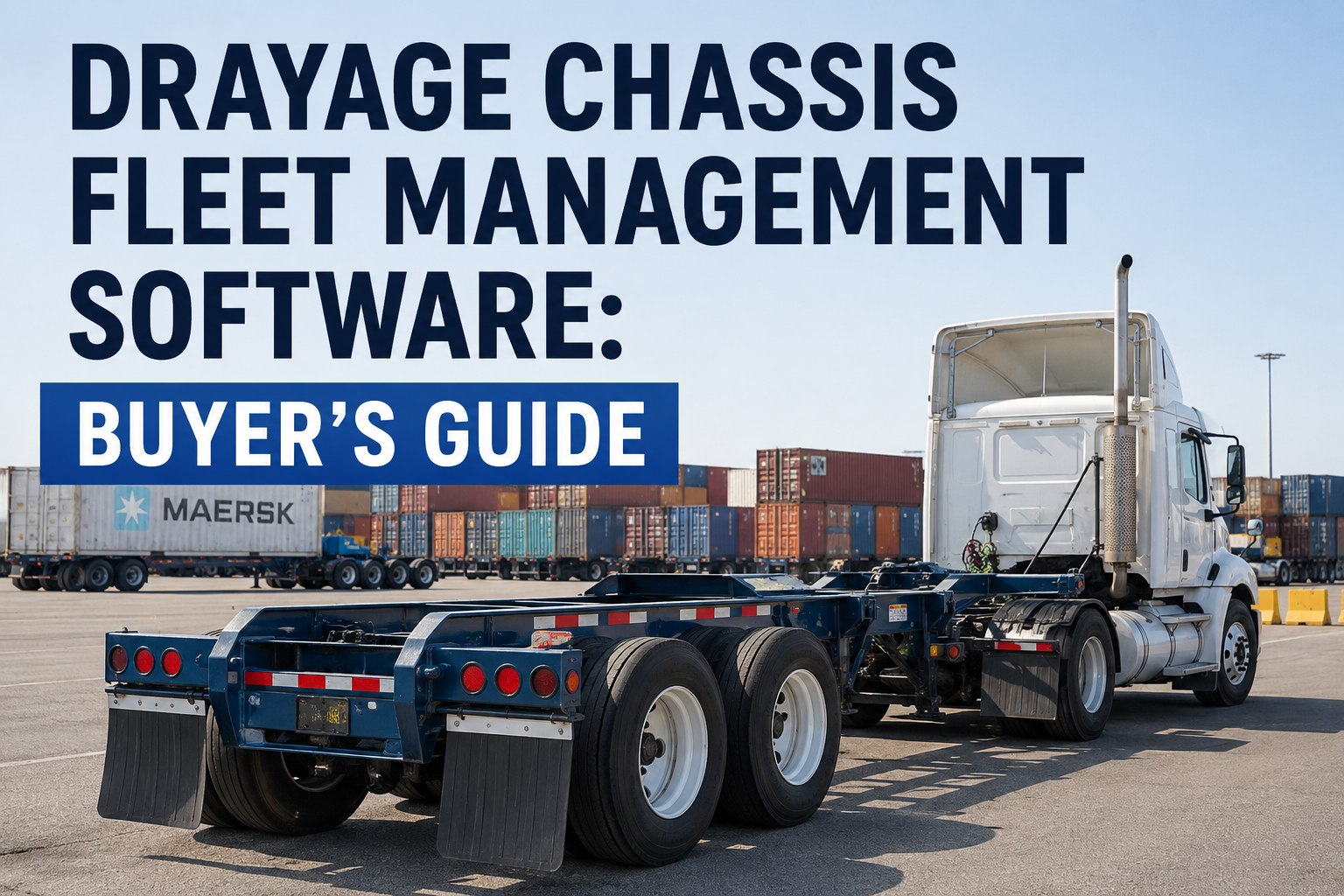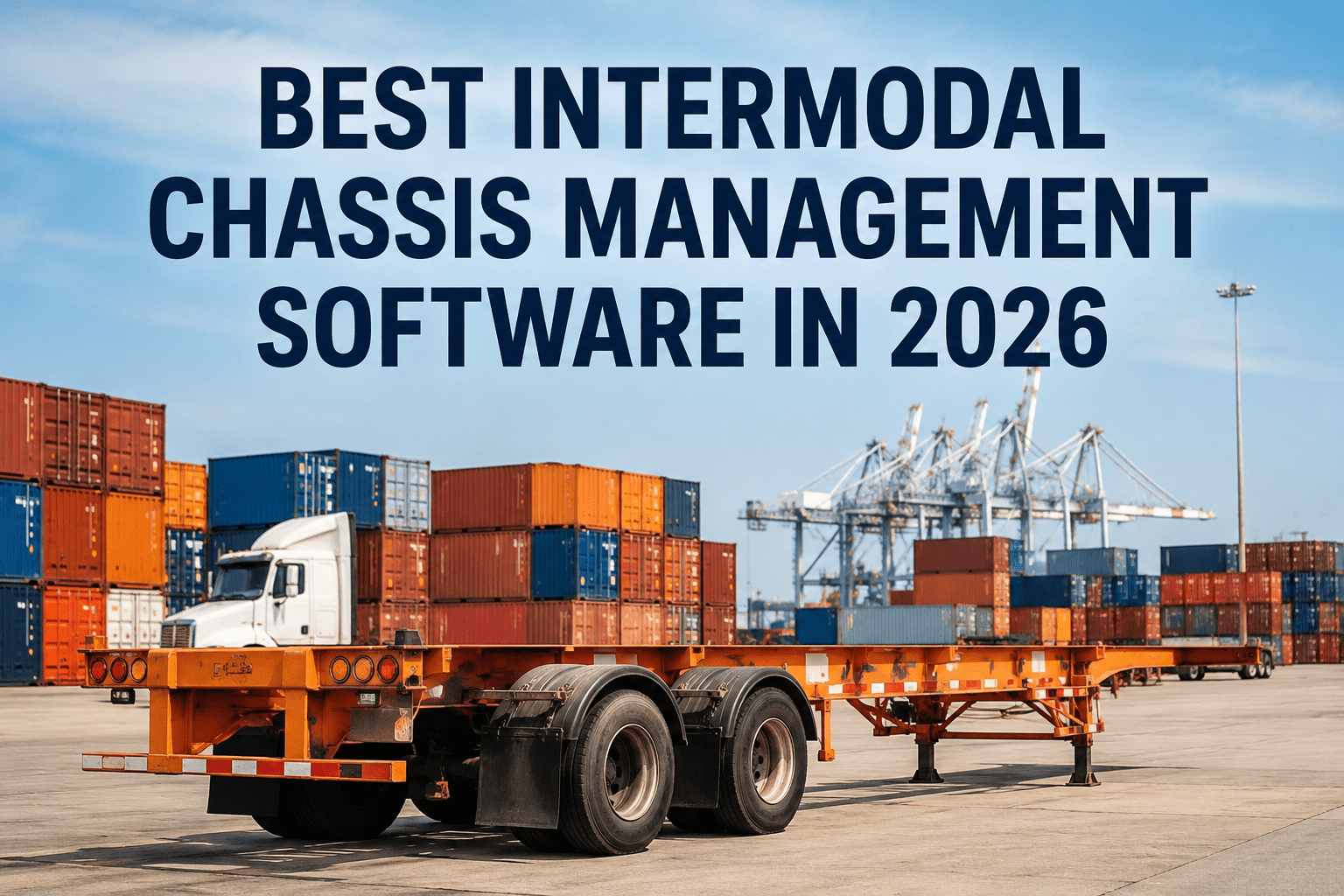
Container chassis are the most mismanaged asset in drayage and intermodal operations. They sit in port terminals, rail ramps, customer yards, and IEP pools for weeks while drayage carriers chase per diem disputes worth $40-$60/day per chassis. They go missing for stretches that turn into asset write-offs. They get roadability citations because FMCSA-mandated inspections lapsed. They show up loaded when dispatch thought they were bare, and bare when the system said loaded. A truck has a driver, a truck has ELD telematics, a truck has a dispatcher watching it. A chassis has none of that — unless the fleet runs purpose-built container chassis tracking software. This guide covers the 10 essential features chassis tracking software must have, the multi-terminal visibility that separates working platforms from broken ones, and the ROI math for a drayage fleet running 200-500 chassis across port, rail, and customer locations in 2026. Start your free trial and run chassis tracking on software built for intermodal.
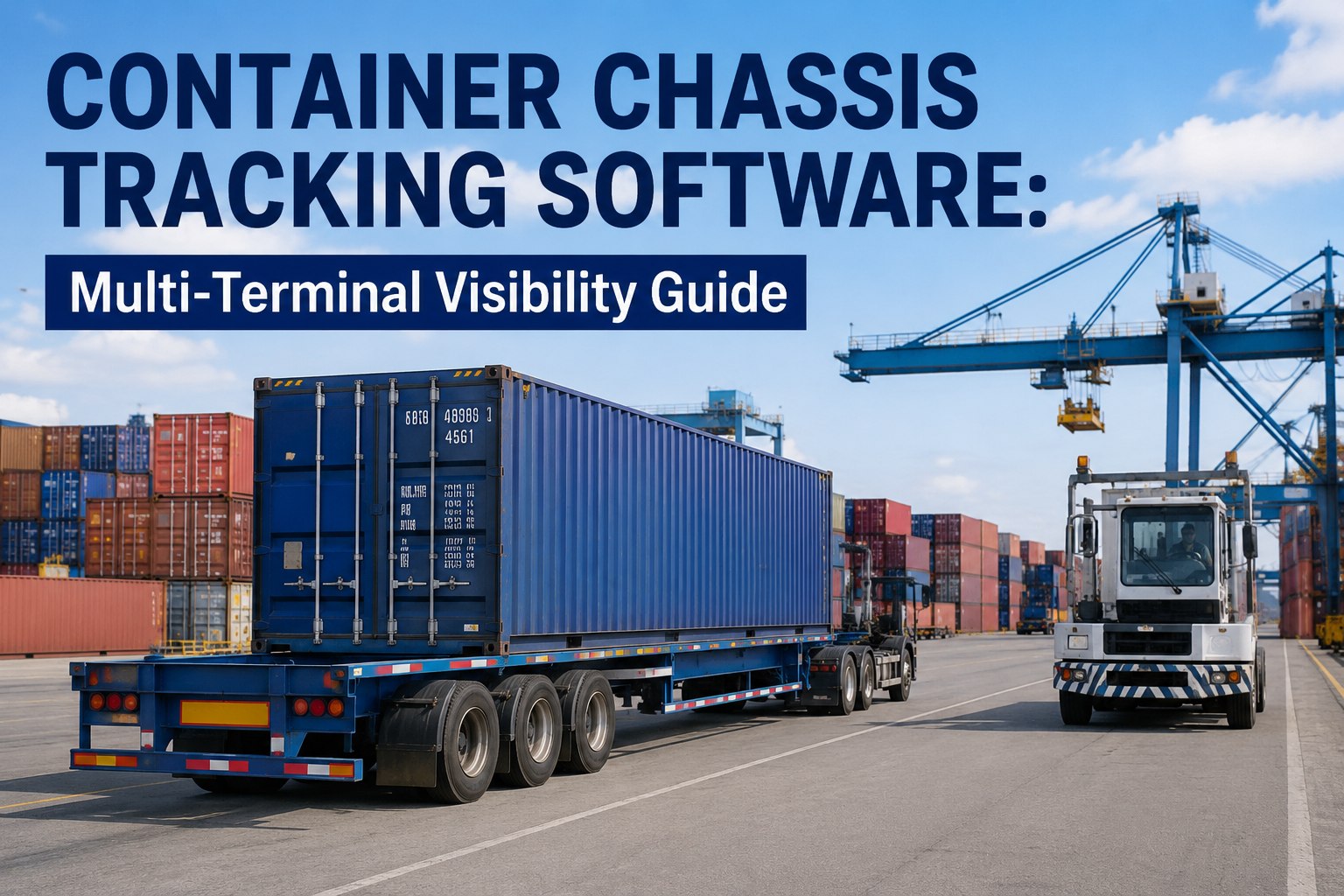
Container Chassis Tracking Software
Real-time multi-terminal visibility across ports, rail ramps, and customer yards — built for intermodal drayage fleets.
Why Chassis Tracking Is Different From Truck GPS
Most fleet GPS platforms are built for power units — tractors, straight trucks, vans. A chassis has no engine, no driver, no ELD. It sits when nobody is hooked to it. It moves through terminals where carriers don't always own visibility. And it bills by the day, not the mile. Container chassis tracking is a separate discipline:
Multi-Terminal Visibility
Chassis move through 5+ terminals per cycle: port pickup, customer drop, customer pickup, rail ramp, IEP pool. Each terminal is a black box without GPS telematics.
Per Diem Billing Model
IEPs charge $40-60 per chassis per day. Disputes hinge on exact pickup/return timestamps. GPS proof beats paper interchange receipts every time.
Asset Without Operator
A chassis can sit untracked for days or weeks. Trucks have drivers logging HOS. A chassis has only the GPS unit between knowing where it is and writing it off.
FMCSA Roadability
49 CFR 385.4 and Part 390 Subpart C make Intermodal Equipment Providers responsible for systematic inspections. Software tracks the cycle so drivers don't take a non-roadable chassis.
The 10 Essential Features Chassis Tracking Software Needs
Every vendor markets "fleet tracking" — but only a few handle the drayage-specific workflow. The 10 features below are the working set for intermodal operations:
GPS-Enabled Chassis Telematics
Solar-powered or self-contained GPS units mounted to the chassis frame. Report location every 5-15 minutes, run for 5+ years untouched, survive port environments and weather.
Multi-Terminal Geofencing
Geofences around every port, rail ramp, IEP pool, and customer yard. Auto-event entry/exit timestamps with 1-2 minute accuracy — the foundation for per diem audit.
Per Diem Audit & Reconciliation
Match every IEP invoice line against actual GPS dwell time. Auto-flag billing discrepancies and generate dispute packages. Industry data: 15-25% of per diem charges are recoverable through audit.
Chassis Utilization Analytics
Days in use vs days idle, dwell time by terminal, per-chassis revenue, turn time by lane. Most drayage fleets discover 30-40% of their chassis sit idle — invisible without analytics.
Loaded vs Bare State Tracking
Sensors detect whether a container is mounted on the chassis. Dispatch sees which chassis are loaded, which are bare, which are repositioning empty — without driver check-ins.
Roadability Inspection Tracking
Annual federal inspection (FMCSA 49 CFR 396.17), daily DVIR pre-trip, and IEP-mandated roadability checks all tracked per chassis. Lapses auto-flag and block dispatch.
Asset Recovery & Loss Prevention
Lost chassis location surfaces instantly via GPS history. Geofence-exit alerts catch unauthorized moves. Industry estimate: 2-4% of chassis are written off annually as lost — most recoverable with GPS.
Driver Mobile App for Interchange
Driver scans chassis number, captures TIR (Terminal Interchange Receipt), photo-documents condition at pickup/return. The audit trail that defends against bogus damage claims.
IEP Pool Integration
Direct integration with TRAC, DCLI, FlexiVan, Milestone, and other IEPs. Pull chassis assignments, return windows, and pool-specific billing rules. Eliminates manual pool reconciliation.
TMS / Dispatch Integration
API hooks to McLeod, MercuryGate, DrayMate, Trinium, TMSEZ. Chassis assignment, status, and location flow into dispatch screens — no double-entry, no spreadsheet reconciliation.
Built for intermodal drayage. All 10 features included.
Truck Inspection & Maintenance covers every chassis-specific feature on this list — multi-terminal geofencing, per diem audit, roadability tracking, IEP integration, asset recovery. Free for up to 3 assets. Contact support to plan your drayage rollout.
Chassis Lifecycle — The 5-Terminal Visibility Map
A single container move runs a chassis through up to 5 terminal types before returning to a pool. Without GPS, every transition is a paper trail. With GPS, every transition is a timestamped event:
IEP Pool Pickup
Driver pulls bare chassis from TRAC / DCLI / FlexiVan pool. GPS event: pool geofence exit + interchange timestamp.
Port / Rail Terminal
Chassis enters port (LA-LB, NY-NJ, Savannah) or rail ramp to be mated with import container. GPS event: terminal entry, container mount detected.
Customer Delivery
Loaded chassis delivers to consignee. GPS event: customer geofence entry, dwell time begins. Demurrage clock starts.
Empty Return (Port/Rail)
Bare chassis or empty container returns to terminal. GPS event: customer exit, return terminal entry, container dismount detected.
Pool Return / Re-pull
Chassis returned to IEP pool OR immediately re-paired with next load. GPS event: pool entry timestamp ends per diem clock.
Three Hidden Cost Centers — What Chassis Software Solves
Drayage carriers running without chassis tracking carry three structural cost leaks that compound monthly. Each one is solvable with proper telematics:
Per Diem Overbilling
IEPs charge daily until the chassis returns to pool. Without GPS, "return" is whatever the paperwork says. Audits routinely find 15-25% over-charging. On 200 chassis × $50/day × 365 days = $3.65M annual exposure; even a 5% recovery = $182K.
Lost / Strayed Chassis
Industry data: 2-4% of chassis are written off annually as lost. Some are at a customer yard for 60+ days, some at a competitor's lot, some genuinely gone. GPS recovers most before write-off. On a 500-chassis fleet, recovery saves $100K-$200K in replacement cost.
Roadability Citations
FMCSA 49 CFR 385.4 makes the IEP and motor carrier jointly responsible. Annual inspection lapses, missing DVIR, or out-of-service defects = roadside violations and CSA score damage. Software-tracked compliance prevents the lapse.
The Drayage Fleet ROI — 250 Chassis, Year 1
Drayage fleet ROI on chassis tracking is well-documented because per diem cost per chassis-day is a known number. The math below is for a 250-chassis intermodal drayage operation — typical mid-size regional carrier:
Frequently Asked Questions
How does chassis tracking differ from container tracking?
Container tracking follows the box (shipper-to-consignee, multi-modal across ocean, rail, truck). Chassis tracking follows the equipment underneath the box — typically owned by an IEP (TRAC, DCLI, FlexiVan), leased by the drayage carrier per day. Different asset, different ownership, different billing model. A chassis can sit in a pool for weeks while containers flow around it; a container can move across modes while chassis swap underneath. They need separate visibility systems.
What kind of GPS unit goes on a chassis?
Solar-powered or long-life battery units are the standard since chassis have no electrical system. Quality units run 5+ years on solar with periodic motion-charge top-ups, mounted to the frame or kingpin area, and survive port environments (salt, weather, impact). Reporting interval is typically 5-15 minutes when stationary, more frequently in motion. Some units add cargo-sensor capability (loaded vs bare detection).
How much does per diem audit actually recover?
Industry data shows 15-25% of per diem charges are recoverable through systematic audit. The common patterns: IEPs charge past the actual return date (paperwork delay), bill for chassis that were swapped earlier in the cycle, or apply incorrect rate tiers. Software with multi-terminal geofencing and GPS-timestamped events generates the dispute evidence — without it, the carrier has no defense against the IEP's billing system. Sign up free to see per diem audit in action.
Does the software integrate with our existing TMS?
Modern chassis tracking platforms integrate via API with the major drayage TMSes — McLeod, MercuryGate, DrayMate, Trinium, TMSEZ, CargoWise. Chassis location, status, dwell time, and per diem cost flow into the TMS dispatch screen so dispatchers see chassis availability without switching apps. Integration typically activates within 1-2 weeks of contract start. Talk to our team to confirm your specific TMS.
What FMCSA rules apply to chassis specifically?
49 CFR Part 385 Subpart D and 49 CFR Part 390 Subpart C cover Intermodal Equipment Providers. Roadability inspections must be systematic and documented. The IEP and motor carrier share responsibility for any out-of-service defects discovered roadside. CSA Vehicle Maintenance BASIC scoring affects both parties. Chassis tracking software with roadability calendar enforcement helps both sides meet the joint responsibility standard.
What's the typical implementation timeline?
2-4 weeks for full chassis fleet rollout. Week 1: GPS unit shipment and mounting (units arrive pre-provisioned, install is 10-15 minutes each). Week 2: geofence setup for ports, ramps, customer locations, and IEP pools. Week 3-4: TMS integration, per diem audit configuration, and dispatch training. First measurable per diem savings appear within 30-45 days of go-live.
Run chassis tracking on software built for it.
Truck Inspection & Maintenance covers all 10 essential features — multi-terminal geofencing, per diem audit, roadability tracking, asset recovery, IEP integration, TMS connectivity. Free for up to 3 assets. No hardware contracts. No long ramp.