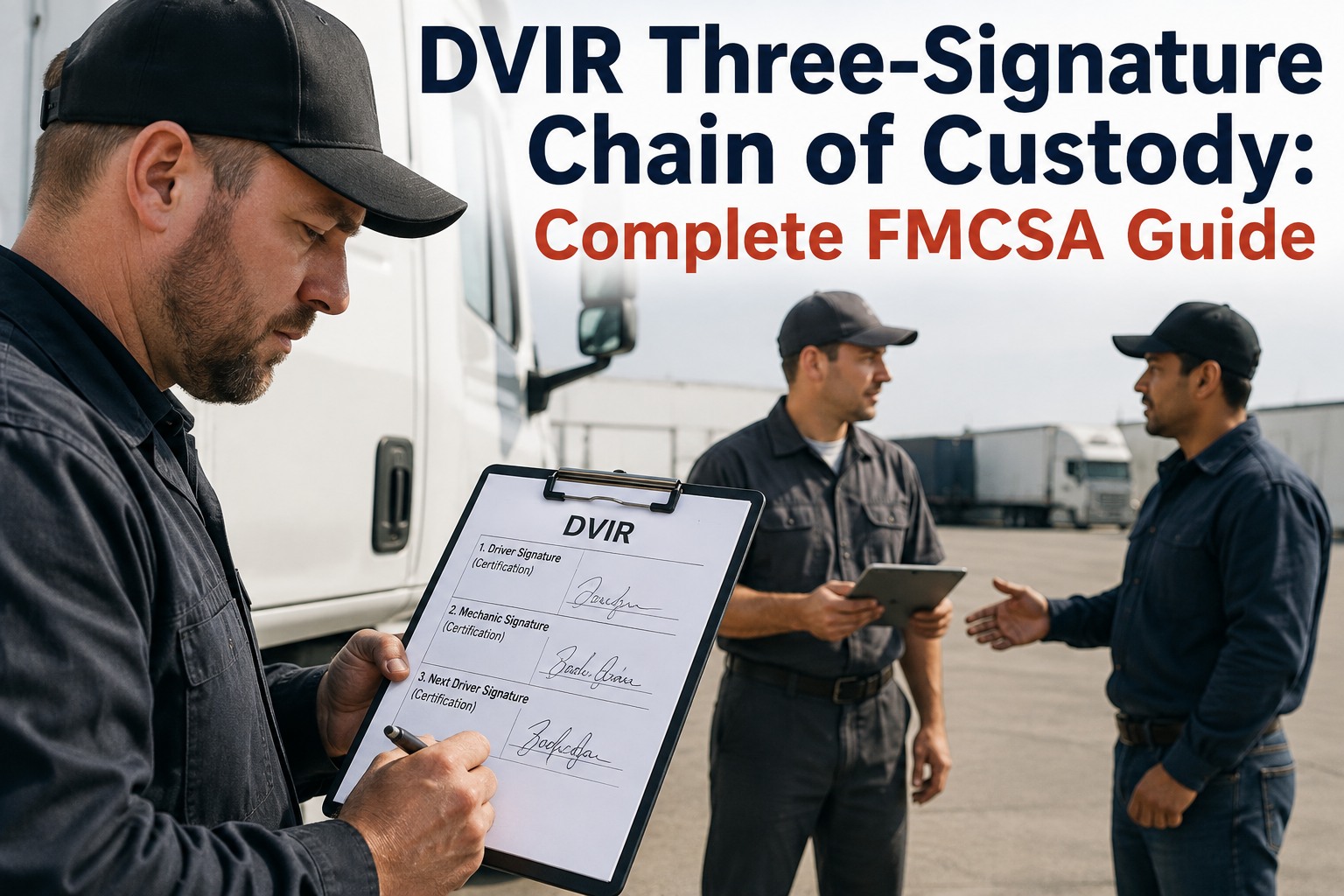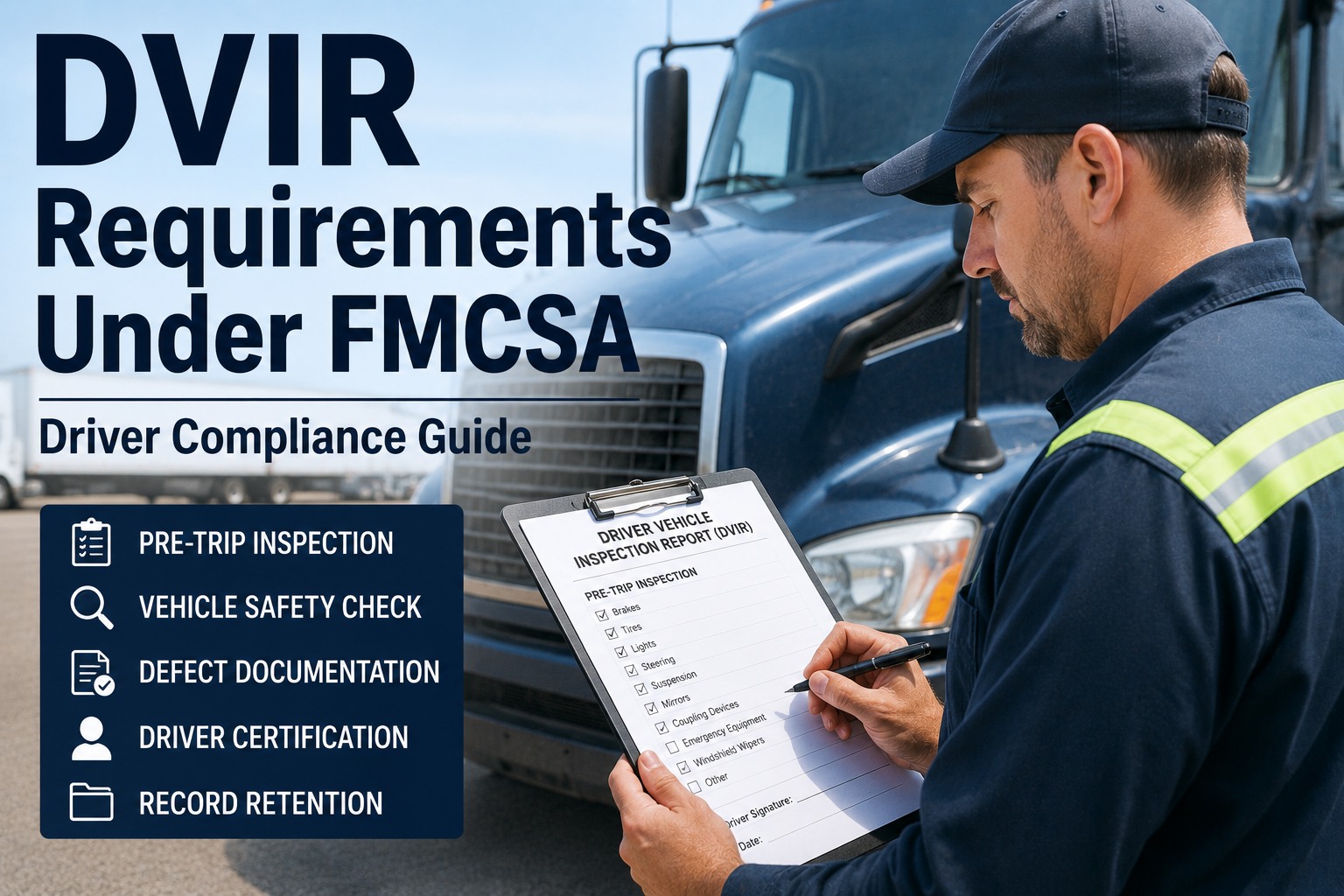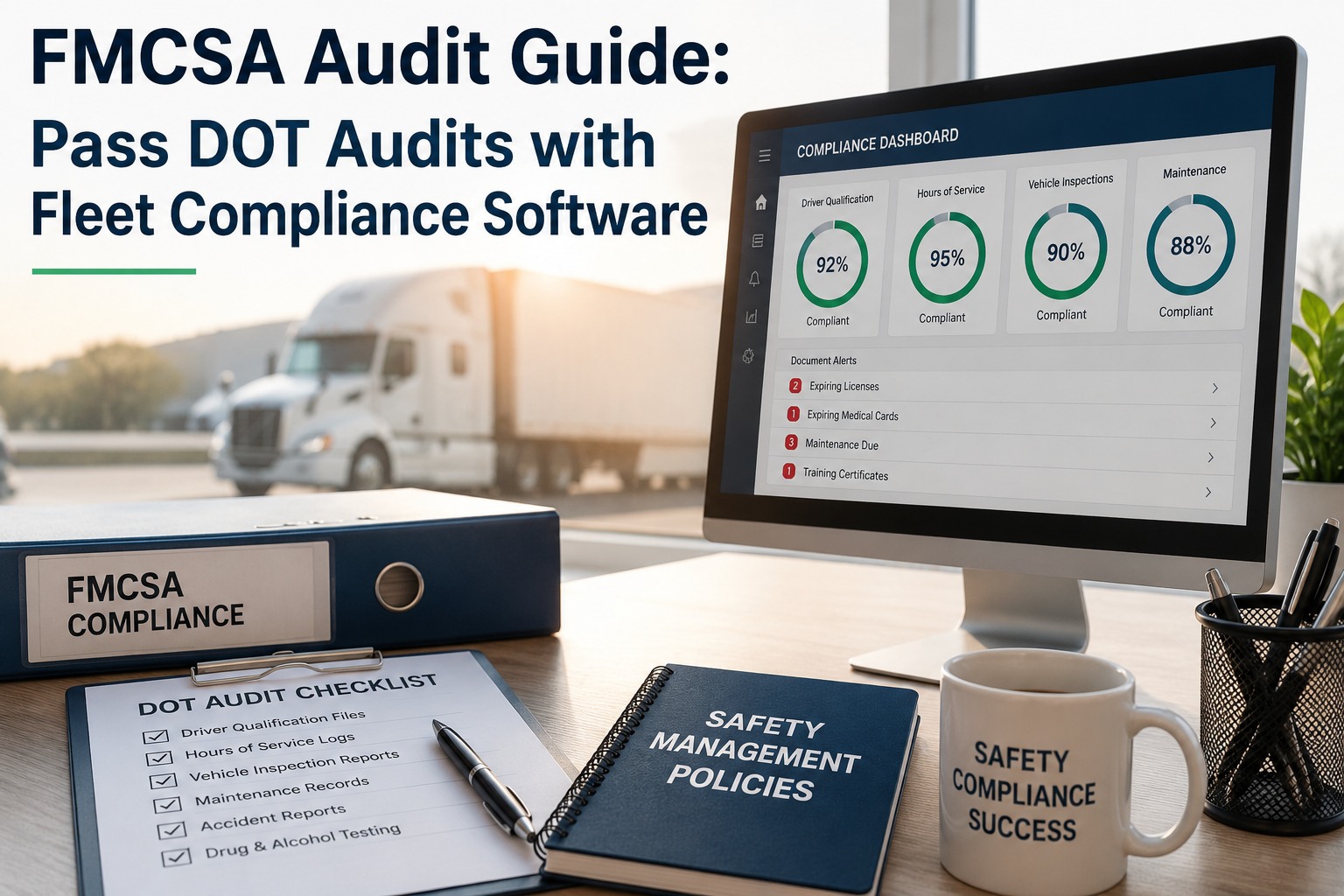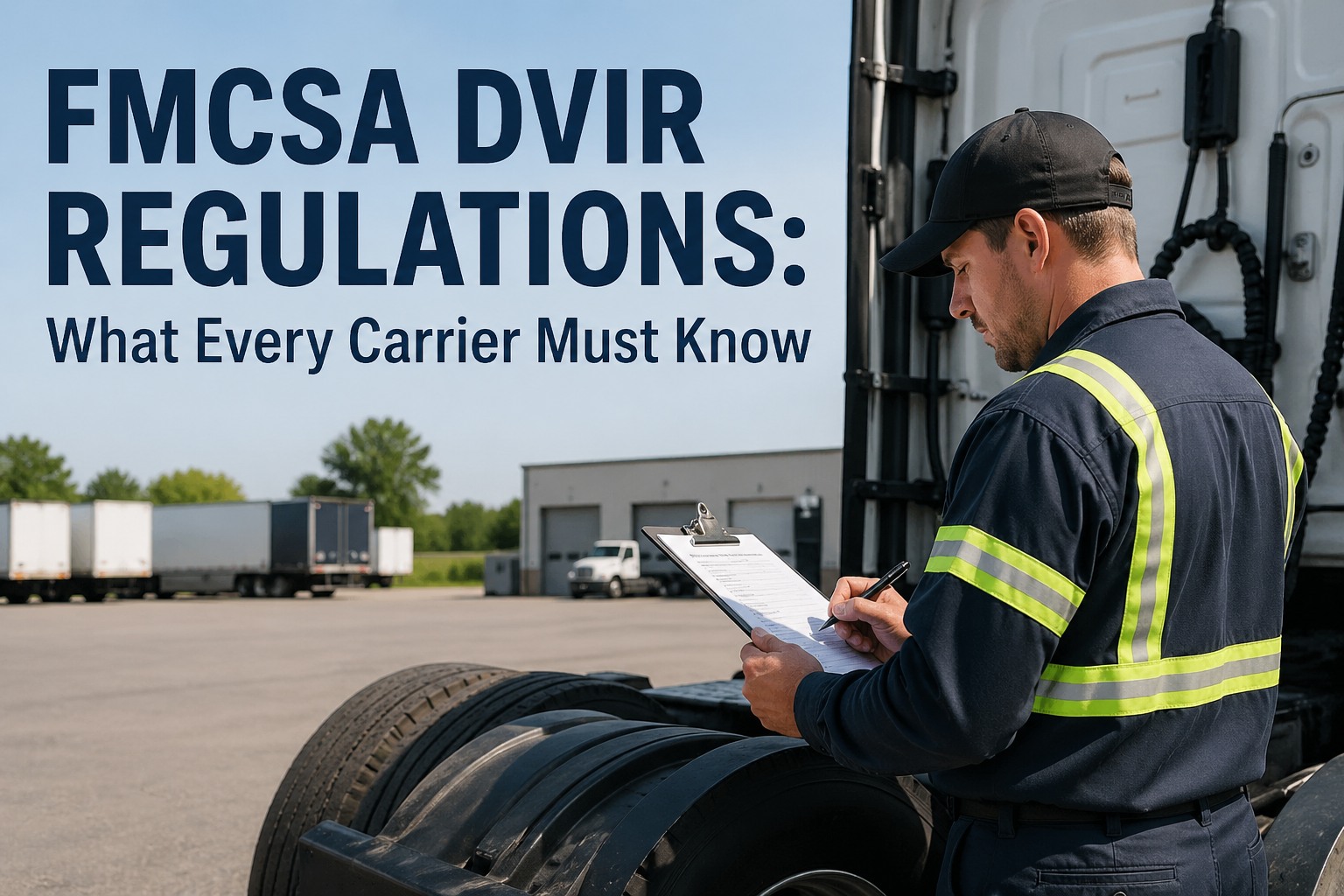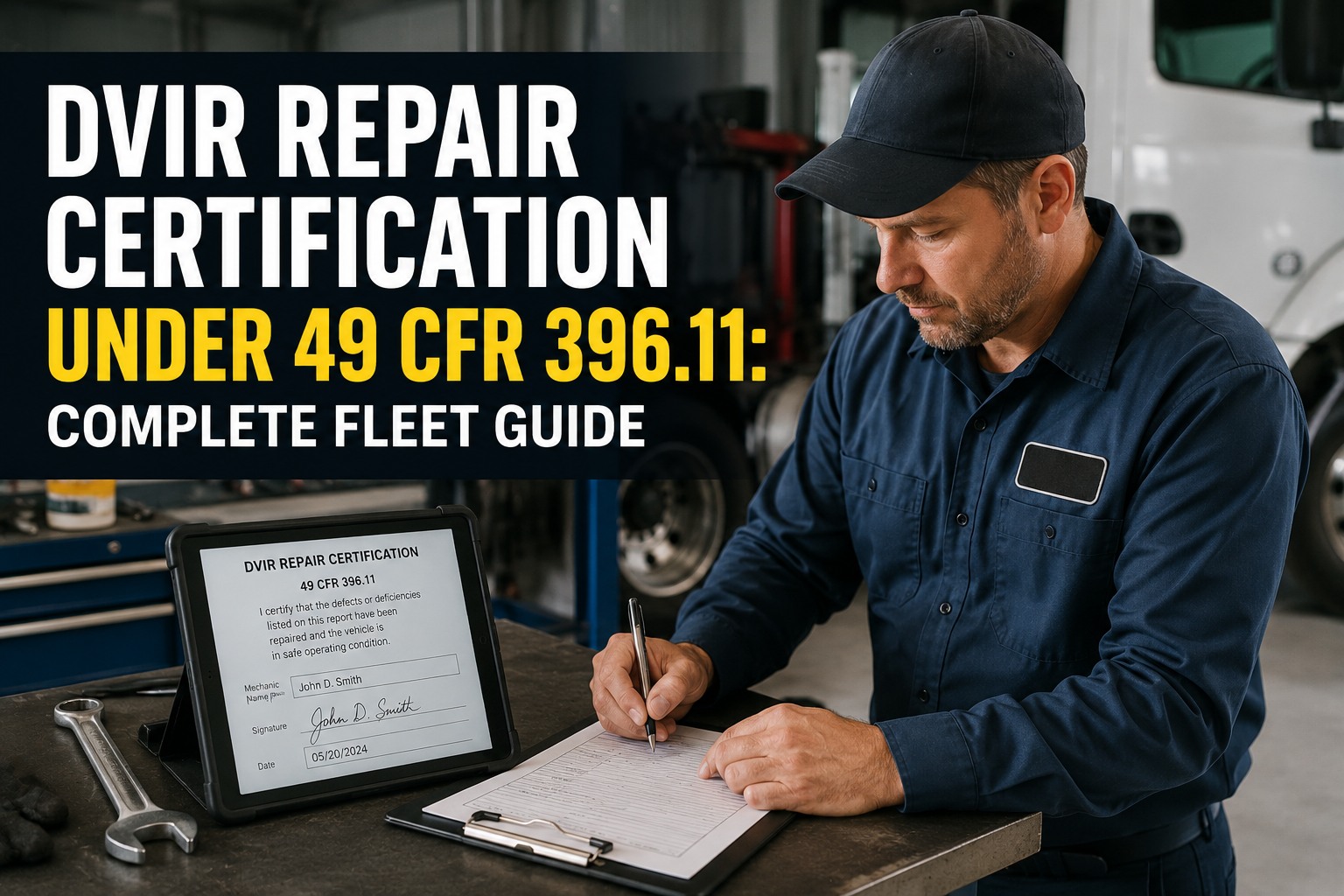
The middle signature in the DVIR chain — the mechanic's repair certification under 49 CFR §396.11(c) — is the one most fleets treat as an afterthought and most auditors treat as the linchpin. When a driver reports a defect that would affect safe operation, the truck cannot legally be dispatched until the motor carrier's mechanic or qualified official has certified in writing that either the defect has been repaired, or that repair is unnecessary. That certification is not a routing note or a shop entry. It's a legally required signature on the DVIR itself, tied to a specific defect entry, that transfers accountability from the driver who reported the problem to the carrier that owns the truck. Miss it and the FMCSA violation exists the moment the truck moves — regardless of whether the defect was actually fixed. This article walks the exact rule, what the mechanic signature legally covers, what "qualified official" means, and the workflow that keeps the certification link intact across every shift. Sign up free for Truck Inspection & Maintenance today — no credit card required to enforce the mechanic certification step automatically on every defect, or contact our team for a certification workflow review configured to your shop structure and dispatch flow.
DVIR Repair Certification Under 49 CFR 396.11: Complete Fleet Guide
The mechanic's signature isn't paperwork — it's the legal transfer of accountability from the driver who reported the defect to the carrier that owns the truck.
What §396.11(c) Actually Requires
The rule text is short, but it carries the whole weight of the repair certification obligation. Every word matters — especially "affect safe operation," "carrier," and "certifying."
The Two Valid Forms of Certification
The rule gives the carrier two ways to certify — and both are legally sufficient. Confusing them is one of the most common compliance mistakes.
Who Can Sign — "Motor Carrier or Its Agent"
The rule specifies "motor carrier or its agent" — not any mechanic. Understanding who legally qualifies as the carrier's agent for certification purposes is where fleets get caught most often.
The Certification Workflow — Defect to Signature
Every certified repair follows the same 6-step sequence. Skipping any step creates an audit finding even if the physical repair was performed correctly.
What the Certification Signature Legally Covers
The mechanic's signature is not a general endorsement of the truck's condition. It covers exactly one thing: the specific defect noted on the DVIR. Understanding the scope of the signature protects both the mechanic and the carrier.
| Coverage Element | Signature Covers | Signature Does NOT Cover |
|---|---|---|
| Specific defect entry | Yes — the exact item logged | Other defects not noted on this DVIR |
| Repair performed | Yes — the repair identified | Related conditions the mechanic didn't inspect |
| Vehicle overall safety | No — that's the driver's §396.13 review | The truck's fitness for service generally |
| Future condition | No — certification is point-in-time | Defects that develop after signature |
| Pattern of defects | No — carrier's PM program covers patterns | Systemic issues across the fleet |
| CSA scoring impact | Yes — clean certification supports Vehicle Maintenance BASIC | Roadside violations from unrelated causes |
Enforce mechanic certification on every defect — automatically
Auto-linked DVIR-to-work-order chain. Qualified signatory verification (§396.25 credential check). Two-path certification (repaired / not necessary) with reasoning capture. Truck status auto-releases only after certification signature. Complete audit trail for §396.11(c).
The 5 Ways Certification Fails an Audit
FMCSA auditors don't just check that certification signatures exist — they check that the signatures are legally valid. Five failure patterns account for the majority of §396.11(c) violations cited.
Paper Certification vs Electronic Certification
The February 2026 FMCSA final rule (Docket FMCSA-2025-0115, effective March 23, 2026) explicitly authorized electronic mechanic certification under §396.11(c). Both paper and electronic remain legal, but the audit outcomes are dramatically different.
Frequently Asked Questions
Two things, on the original DVIR itself, before the vehicle is operated again: that any defect likely to affect safe operation has been repaired, OR that repair is unnecessary for safe operation. The certification must appear on the same DVIR that lists the defect — not on a separate work order, repair invoice, or shop record. It must be signed by the motor carrier or its agent (typically a qualified shop mechanic, brake inspector, or authorized maintenance supervisor). And it must be captured before the truck is dispatched — no next-morning grace period. The certification transfers accountability from the driver who reported the defect to the carrier that owns the truck. Miss it and the FMCSA violation exists the moment the truck moves, regardless of whether the defect was actually fixed.
Only if the driver is also the sole owner-operator (single-truck carrier where the driver IS the carrier). In any multi-driver operation, the driver who reported the defect cannot legally sign as the certifying agent for their own DVIR entry — that would defeat the entire chain-of-custody structure §396.11(c) creates. The rule specifically says "motor carrier or its agent," which means someone acting on behalf of the carrier in a maintenance capacity: employed shop mechanics, fleet maintenance supervisors with delegated authority, contract mechanics under written agreement, or authorized vendors with §396.25-qualified inspectors on staff. A driver signing "repaired" on a defect they didn't personally fix (and don't have qualification to certify) is one of the top-5 audit findings under §396.11(c) — the signature is present but has no legal weight.
Both are legally valid forms of certification, but they cover different situations. "Repaired" means the physical repair was performed by a qualified mechanic — parts replaced, adjustment made, defect eliminated. Documentation includes the signed DVIR plus the associated repair record with parts, labor, and time. "Repair not necessary" means a qualified official determined the defect doesn't affect safe operation — a cosmetic dent, minor paint chip, unused equipment defect, or non-safety fitting issue. Documentation includes the signed DVIR plus written reasoning for why no repair is needed. Confusing the two, or using "not necessary" without reasoning, is a common failure mode. If an auditor later determines the defect DID affect safe operation, a "not necessary" certification becomes falsification with fines up to $16,000+. Use "not necessary" only when you can defend the judgment in writing at any point during the 3-month retention window. Try the platform free to see two-path certification with required reasoning capture.
Yes — brake repairs have a separate qualification tier under §396.25. Anyone certifying brake repair completion must meet specific standards: documented brake training, one year of hands-on experience OR equivalent apprenticeship, or successful passage of a recognized brake inspector training program. A general mechanic without brake inspector qualification can perform other repairs but cannot legally certify brake repair completion — even if they physically did the work correctly. This is one of the sharpest audit failure lines: an unqualified brake certification triggers both a §396.11(c) violation and a §396.25 violation on the same DVIR. Fleets should track brake inspector credentials the same way they track CDL medical cards — expiration dates, training records, and current qualification status. When a brake inspector credential lapses, that person cannot certify brake repairs until requalified, even for one day.
Fines start at approximately $200 per violation for individual missing certifications and escalate to $16,000+ for patterns of falsified certifications or systemic non-compliance. Multiple missing certifications found during a single audit compound quickly — a fleet with 20 trucks and one missing certification per truck per month over a 90-day sample is looking at 60 potential citations before the auditor even leaves the office. Beyond direct fines, §396.11(c) violations feed FMCSA's CSA Vehicle Maintenance BASIC scoring which affects insurance rates and customer contract eligibility for two years. The most serious outcome is a falsification finding — signature dated before repair completion, "not necessary" certification for a defect that a roadside inspector later flags as safety-critical, or unqualified signatory certifying brake repairs — any of which can trigger an operating authority review. Only 7% of motor carriers pass a compliance review without a single violation, and DVIR certification failures are among the most common findings.
Minimum 3 months (90 days) under §396.11(c) — this applies to the DVIR itself and the associated repair certification signature. Most carriers extend retention to 6-12 months for liability protection because accident litigation frequently requests certified DVIRs from months before an incident as evidence of maintenance practices. FMCSA auditors expect records to be produced within 48 hours of request, sometimes same-day, so retention alone isn't enough — retrieval speed matters just as much. Paper systems typically fail the retrieval test even when they meet the retention requirement. Digital systems solve both simultaneously: records retained indefinitely at effectively zero marginal cost, retrievable in seconds by truck, date, driver, mechanic, or defect type. Fleets that purge certifications at the 90-day minimum to save perceived cost end up in the worst position — they had the evidence, they discarded it, and now they can't produce it when litigation or audit demands it. Contact our team for a retention policy template.
Yes — explicitly and preferably. The February 19, 2026 FMCSA final rule (Docket FMCSA-2025-0115, effective March 23, 2026) added explicit electronic DVIR authorization to §396.11 and §396.13, including electronic mechanic certification under §396.11(c). Digital signatures with server timestamps and GPS carry the same legal weight as wet ink under the E-SIGN Act, and FMCSA now signals digital-first as the preferred format. Electronic certification also solves five specific failure modes that paper cannot: server-side timestamps prevent back-dating, auto-verified signatory qualification prevents unqualified signing, system-enforced defect-signature linkage prevents generic "truck OK" certifications, required reasoning capture for "not necessary" prevents unsupported determinations, and automatic truck dispatch lock until certified prevents pre-certification dispatch. Paper certification remains legal but produces materially worse audit outcomes than electronic — the choice of format explains more §396.11(c) compliance variance than any other factor.
Make every certification signature legally bulletproof — automatically
Two-path certification (repaired / not necessary) with required reasoning capture. Qualified signatory verification with §396.25 brake inspector credential check. Server-side timestamps prevent back-dating. Dispatch lock until certified. Complete §396.11(c) audit trail for the 48-hour production window.