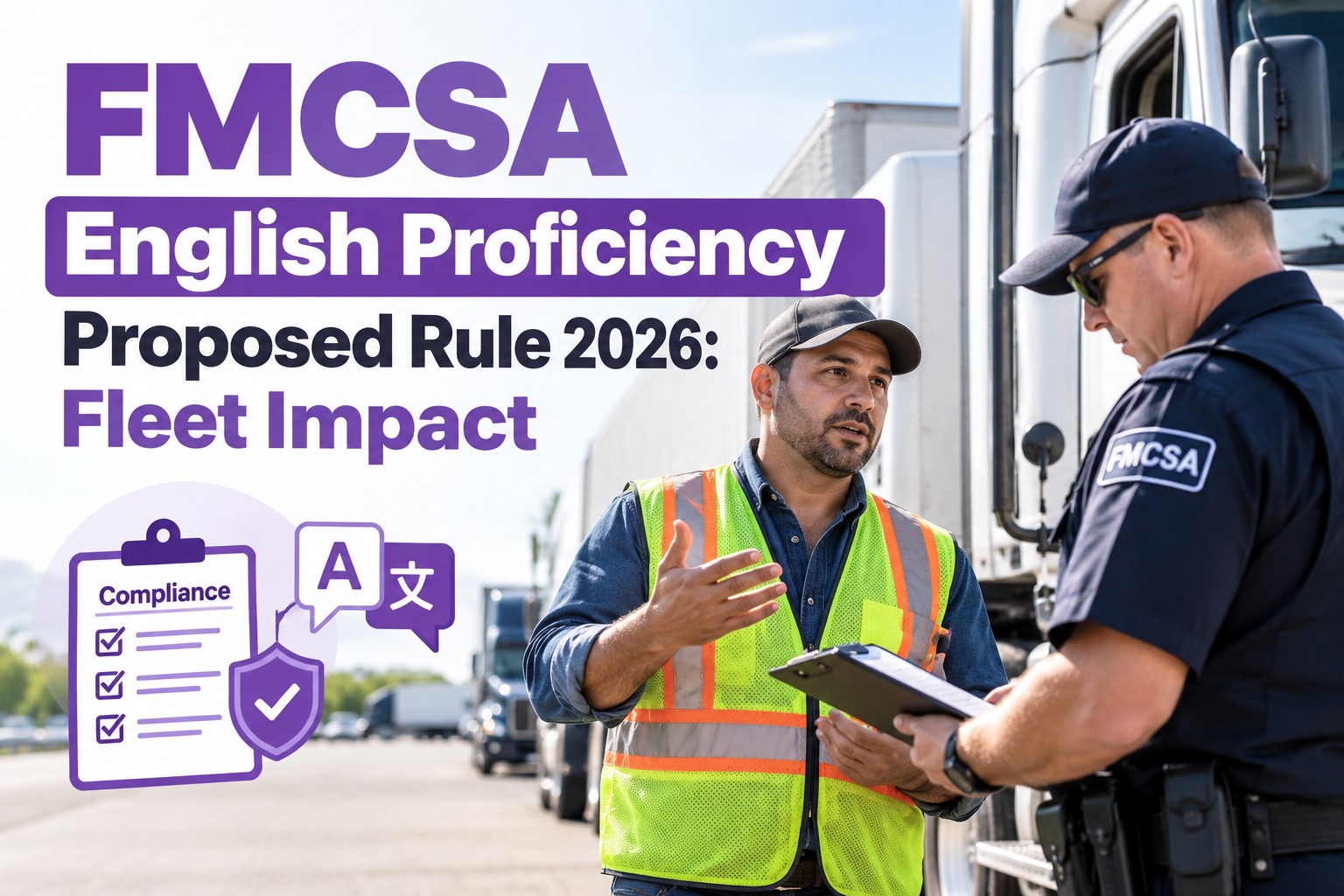
Clear up the confusion first: FMCSA is enforcing English Language Proficiency at the roadside right now — 20,000+ drivers placed out of service since June 2025 — yet in August 2026 it published a proposed rule to make it official. Why propose a rule if enforcement is already live? Because today's posture rests on an enforcement memo and a CVSA criteria update, both reversible by a future administration. The proposed rule (Docket FMCSA-2026-0826) would write the out-of-service trigger straight into the federal regulations — permanent and binding on state programs. This guide covers what the proposal changes, the comment window, and what fleets should do now — and how Truck Inspection & Maintenance Management Software (TIM) keeps the driver-qualification records readiness depends on. Start free and keep every driver-qualification file audit-ready.
The Rule Isn't Final. The Enforcement Already Is.
You want to know what the rule changes, whether to comment, and what to do before it's finalized — without waiting on a rulemaking clock while trucks get parked today. This page lays the proposal against the enforcement already in effect, and what carriers should audit now. TIM keeps that readiness documented: driver-qualification files, inspection history, and audit exports on one platform, each defect logged with a first response within 4 hours.
Policy vs. Regulation — Why a Rule When Enforcement Is Already Live
This is the heart of the story. Two things are happening at once, and they're often confused. Enforcement is operating on policy; the proposed rule would move it into regulation. The difference is durability.
- Rests on a May 2025 enforcement memo + CVSA criteria update
- Live at the roadside since June 25, 2025
- Over 20,000 ELP out-of-service orders issued
- Reversible by a future memo or administration
- Writes the OOS trigger into the federal regulations
- Binds state compliance programs to consistent requirements
- Survives changes in administration — permanent
- Still in the comment period; not yet final
What the Proposed Rule Would Actually Amend
The NPRM is specific. It targets three sections of the Federal Motor Carrier Safety Regulations, turning the current enforcement posture into black-letter rule text.
& 390.5T
Revise the definition to explicitly include violations of 49 CFR § 391.11(b)(2) — so an ELP failure is, by definition, an out-of-service order.
new (c)
Add a new paragraph (c) mandating immediate out-of-service placement for ELP violations — with a limited exception for U.S.–Mexico border commercial-zone operations.
(b)(2)
The requirement itself stays as written: read and speak English well enough to converse, read signs, answer inquiries, and make report entries.
The Rulemaking Timeline — Where the Proposal Sits Now
A proposed rule isn't the finish line; it's a step in a process. Here's where this one is, and why the comment window matters even though enforcement runs in parallel.
Enforcement begins — CVSA restores ELP to OOS criteria; roadside OOS orders start.
FMCSA revises the roadside enforcement policy (MC-SEE-2026-0002).
NPRM published in the Federal Register (Docket FMCSA-2026-0826).
Public comment period — carriers, drivers, and associations can file comments.
FMCSA reviews comments, then issues a final rule that codifies the OOS trigger.
Enforcement Doesn't Wait for the Rule to Finalize
The critical point for fleets: the comment period is about the rule, not the enforcement — drivers are being placed out of service today regardless of where the rulemaking stands. That makes readiness a right-now task, not a wait-and-see one. TIM keeps the documentation ecosystem audit-ready: driver-qualification files, inspection and DVIR history, and compliance exports searchable by driver, vehicle, or date — so when an inspector or auditor asks, the record is one search away.
What Fleets Should Do Now — Regardless of Finalization
Whether the rule is finalized next quarter or next year, the enforcement is active and the audit exposure is real. These are the concrete steps carriers should take while the comment window is open.
Review every DQ file for ELP compliance now — this is the record an auditor or inspector traces back to.
Integrate an English-proficiency assessment into your qualification and onboarding process, not after a roadside failure.
Keep a record of how you assessed each driver's ELP — documentation is the defense in a dispute or audit.
Know which units run only in U.S.–Mexico border commercial zones — the exception is trip-specific and vanishes off-zone.
The 60-day window lets carriers and associations weigh in on the proposed rule via regulations.gov.
Store DQ files, inspection history, and evaluations where they export in minutes — not a filing-cabinet scramble.
Frequently Asked Questions
The Rule May Be Proposed — but the Readiness Is Required Today
Codified or not, ELP enforcement is live and the audit exposure is real. The carrier's defense is a clean driver-qualification file and documented evaluation history — and TIM keeps that ecosystem searchable, complete, and one export away when an inspector or auditor asks.