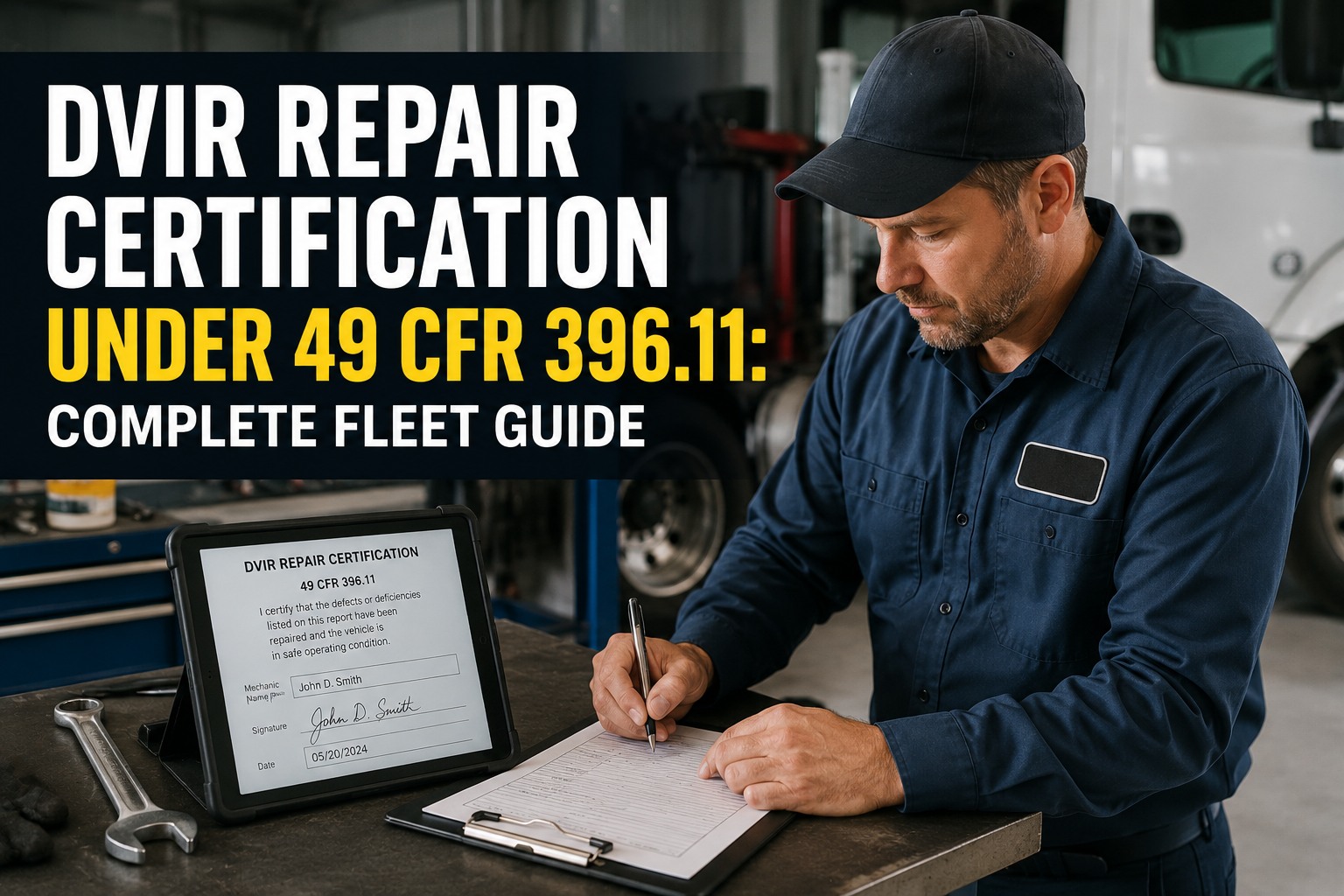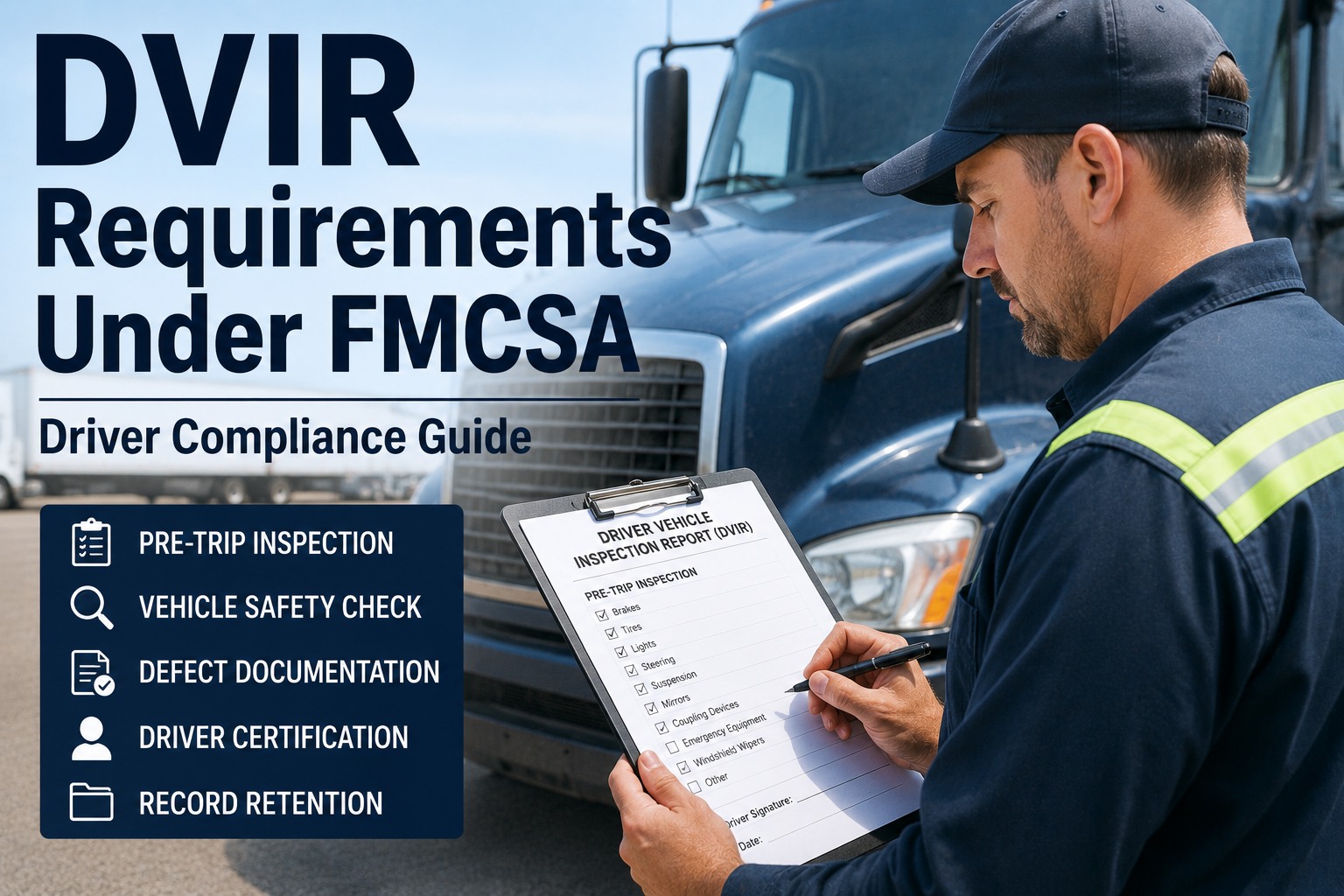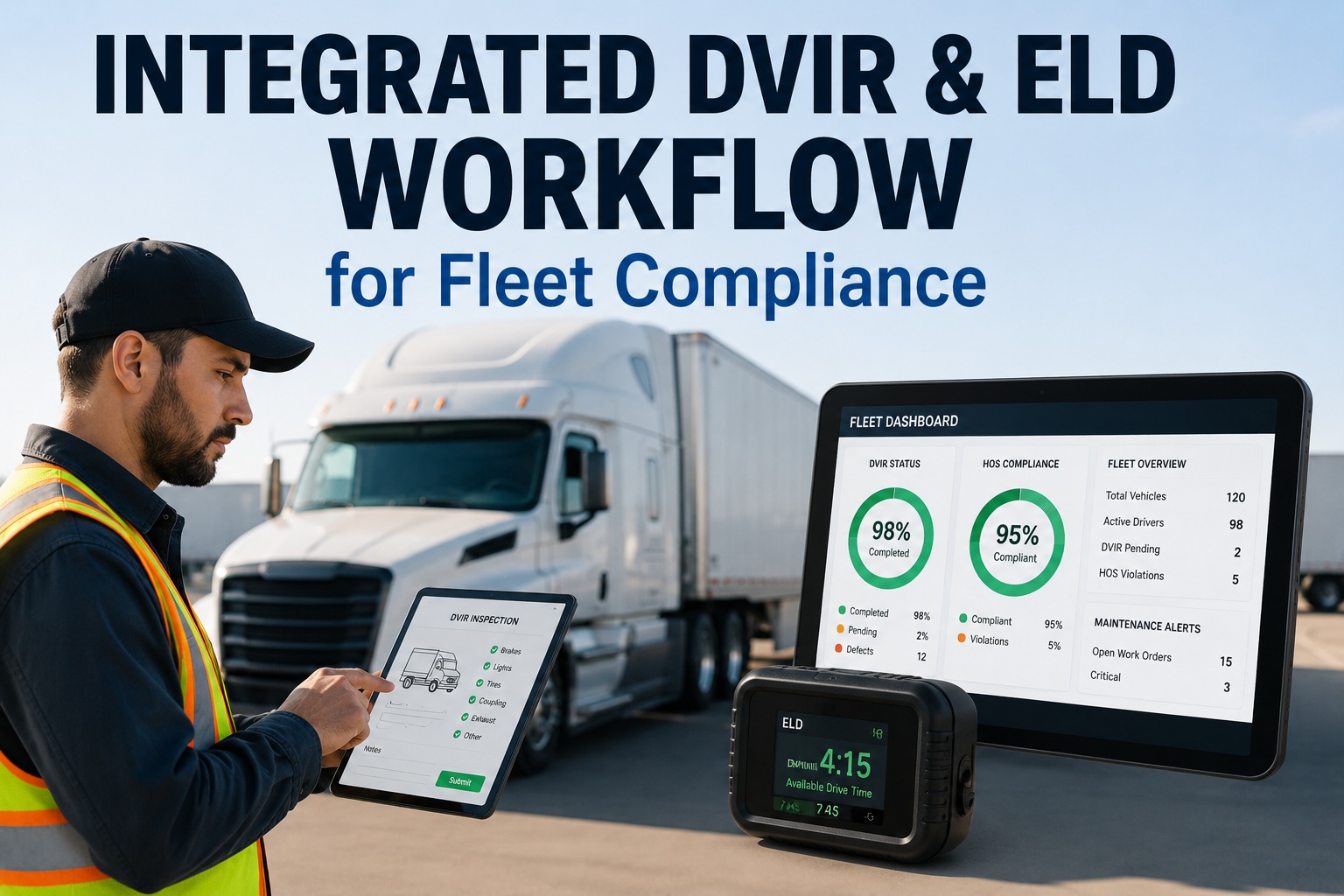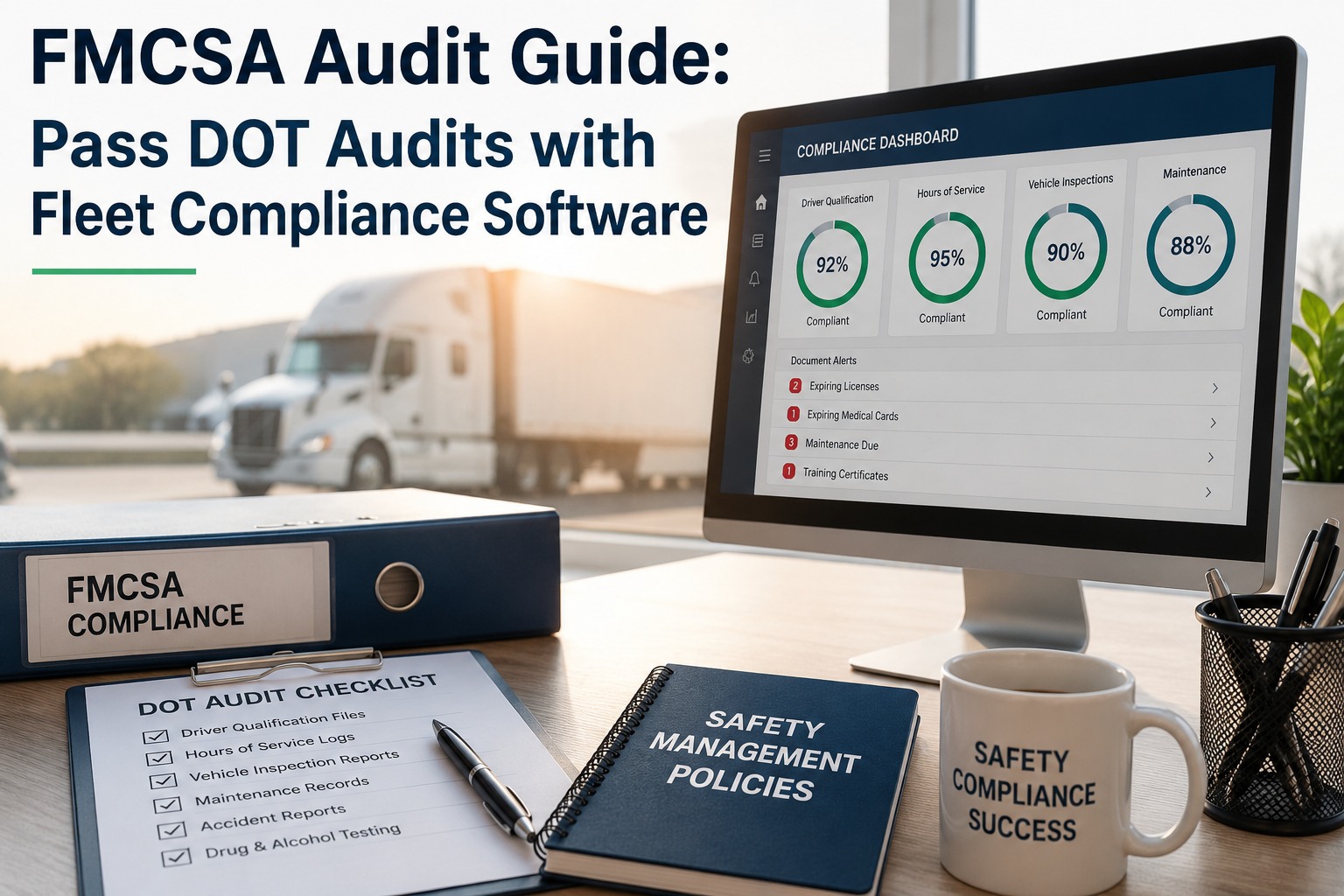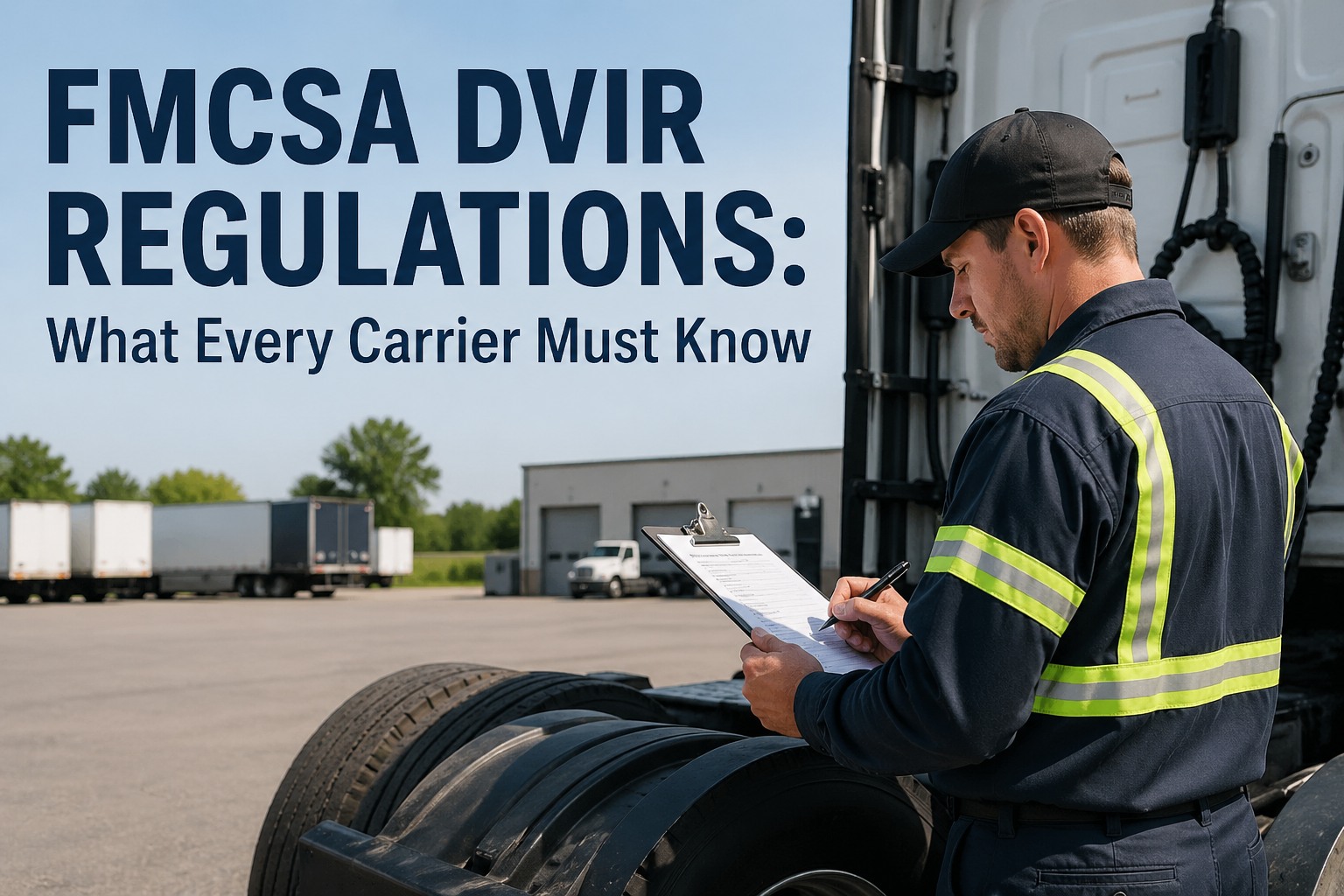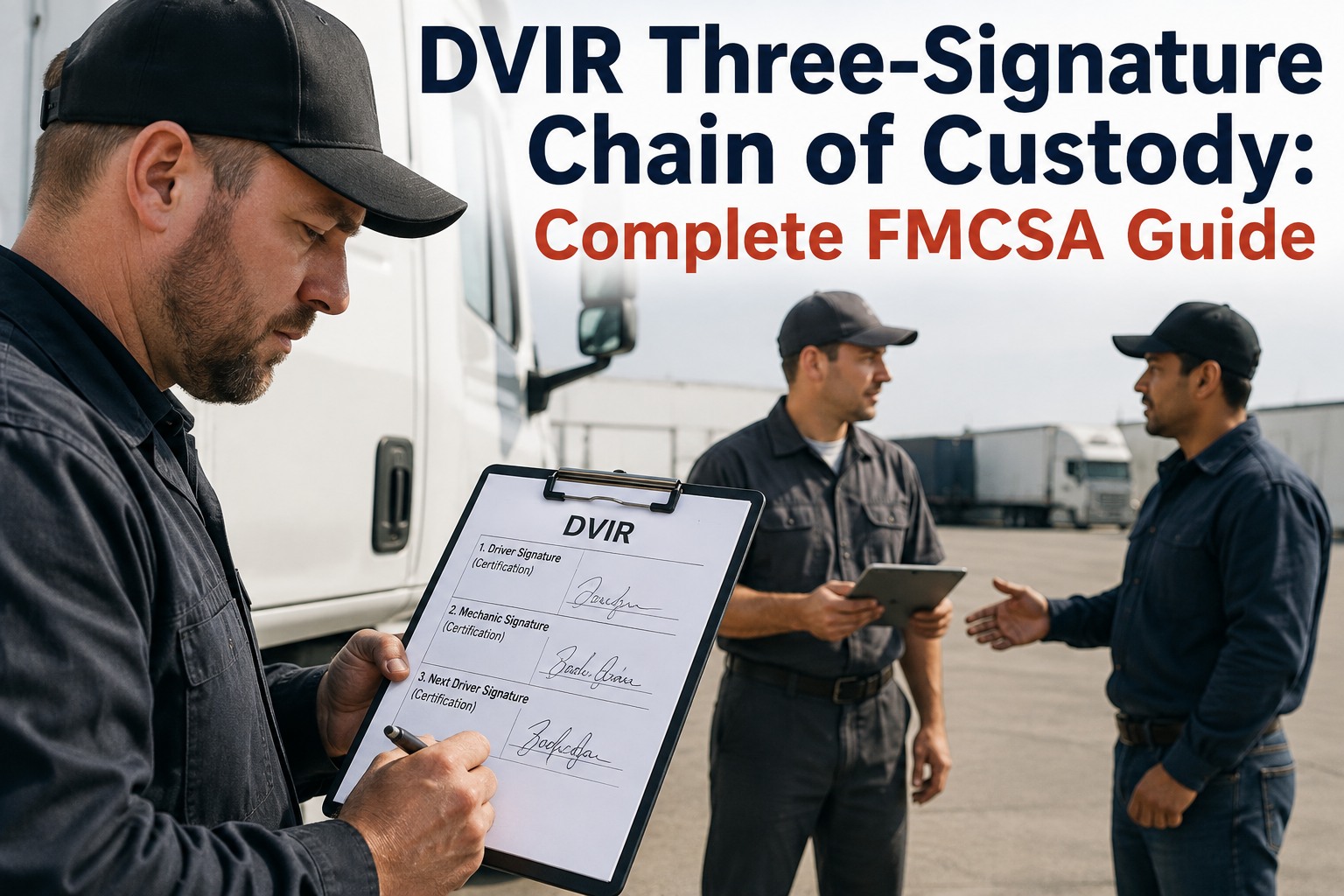
A DVIR isn't a form. It's a chain of custody — a legal document that passes through three sets of hands and requires three signatures to be considered complete under FMCSA. Miss any one of the three and the truck is technically in violation of 49 CFR §396.13 the moment it leaves the yard, even if it's mechanically flawless. The most-cited failure isn't a bad brake or a bald tire; it's a blank signature line from the driver who was supposed to acknowledge the prior DVIR before hitting the road. Auditors love this citation because it requires zero technical inspection — they just pull three months of DVIRs on a random sample of trucks and count the signature gaps. The math is brutal: FMCSA auditors expect records within 48 hours (sometimes same-day), fines start at $200 per violation and escalate to $16,000+ for a pattern of falsified inspections, and only 7% of motor carriers pass without a single violation. The chain breaks the same way in every paper fleet — Driver A signs and files, mechanic fixes and forgets to certify, Driver B grabs keys and never sees the prior DVIR. This guide walks through each of the three signatures, what they legally certify, where the chain typically breaks, and how digital systems close the loop automatically. Sign up free for Truck Inspection & Maintenance today — no credit card required to enforce the three-signature chain automatically on every truck, or contact our team for an audit-readiness review configured to your fleet size and duty cycle.
DVIR Three-Signature Chain of Custody: Complete FMCSA Guide
Three signatures make a DVIR legally complete. Miss any one and the truck is in violation the moment it rolls — even if it's mechanically flawless.
The Chain — Three Signatures, One Legal Loop
The chain is a closed loop: one driver's post-trip becomes the next driver's pre-trip acknowledgment, with the mechanic's certification bridging them in the middle. All three signatures reference the same physical (or digital) document. Break any link and the whole framework breaks.
The 5 Ways the Chain Actually Breaks
Every broken chain looks the same in the DVIR file — a blank line. But the reason it went blank varies. These are the five specific failure modes, ranked by how often they show up in audit findings.
The Audit Scenario — How Investigators Actually Find Broken Chains
Every FMCSA compliance investigation follows the same DVIR-review pattern. Understanding what the auditor sees is the fastest way to spot the gaps in your own records before they do.
Truck #27, February compliance review: Driver A logged "loud grinding when applying service brakes" on Feb 3 and signed. Mechanic replaced brake pads Feb 4 and signed the repair certification. Truck #27 dispatched to Driver C on Feb 5 — but Driver C's acknowledgment signature is blank.
Auditor's finding: §396.13 violation. The loop was never closed. It doesn't matter that the brake was fixed, that Driver A was diligent, or that the mechanic did clean work. Driver C should not have moved the vehicle without reviewing and signing the prior DVIR. Cited the moment paper leaves a driver's hand and lands in a folder no one revisits.
Block dispatch until every signature is captured — automatically
System-enforced 3-signature chain. Driver → Mechanic → Next Driver, timestamped and audit-ready. Truck can't be dispatched with an incomplete DVIR — the chain holds because the system won't let it break.
Paper vs Digital — The Chain Enforcement Difference
The chain doesn't break because people don't care. It breaks because paper doesn't enforce anything. A digital system with dispatch integration turns three optional signatures into three required ones.
The 48-Hour Retention Test
Retention isn't just about keeping records. It's about producing them fast when asked. FMCSA auditors expect DVIR records within 48 hours — sometimes same-day. This is where paper fleets fail even when they had every signature captured originally.
Frequently Asked Questions
The FMCSA three-signature chain works as a legal loop under 49 CFR §396.11 and §396.13. First, the driver who completed the driving day (Driver A) signs the DVIR at end of shift, certifying the inspection was performed and any defects were reported. Second, the motor carrier's mechanic or qualified official signs the same DVIR after either repairing the reported defect or determining that the defect doesn't affect safe operation — before the truck can be dispatched again. Third, the next driver (Driver B) reviews the most recent DVIR before operating the vehicle and signs to acknowledge they've seen the report and the repair status. This third signature is the most commonly missed because keys change hands at shift changes or terminal transfers without the DVIR file following, and it's the citation FMCSA auditors find most often on compliance reviews.
§396.11 governs the post-trip DVIR itself — what must be inspected, what must be documented, and how the driver and mechanic sign off. It defines the report that gets created at end of day. §396.13 governs the pre-trip review — the incoming driver's obligation to look at the most recent DVIR before operating the vehicle, confirm defect repairs were certified, and sign acknowledging the vehicle is safe to operate. The two regulations are the front and back of the same compliance loop: §396.11 creates the record, §396.13 requires the next driver to consume it. A fleet can be fully compliant with §396.11 (all drivers submit DVIRs) and still violate §396.13 if the incoming drivers never acknowledge the prior reports. The chain isn't complete until both regulations are satisfied on the same document.
Signature #3 — the incoming driver's pre-trip acknowledgment under §396.13. It's the most-missed for a structural reason: it depends on the DVIR file physically following the truck across a shift change or driver handoff, which paper systems rarely enforce. The typical failure pattern: Driver A completes a clean post-trip and signs, files the DVIR at the terminal, hangs up the keys. Truck sits overnight. Next morning, Driver B grabs the keys, does their own walk-around, but never sees the prior DVIR — which is still in the terminal's paperwork bin from the night before. Truck leaves. Signature #3 blank. Violation exists the moment the wheels turn. This is why digital DVIR systems that block dispatch until the incoming driver has reviewed and signed the prior report produce dramatically better audit outcomes than paper systems where the same signature depends on human memory. Try the platform free to see chain enforcement in action.
Fines start at approximately $200 per violation for individual missing signatures or incomplete records, and escalate to $16,000+ for patterns of falsified inspections or systemic non-compliance across a fleet. Multiple broken chains found during a single audit compound quickly — a fleet with 20 trucks and one missing signature per truck per month over a 90-day sample is looking at 60 potential citations before the auditor even leaves the office. Beyond the direct fines, DVIR violations feed the CSA Vehicle Maintenance BASIC scoring, which affects insurance rates and customer contract eligibility for two years. The worst outcome is a pattern finding that triggers an operating authority review — the fine ceiling is not the ceiling of the risk. Only 7% of motor carriers pass a compliance review without a single violation, and most of the failures are DVIR-related recordkeeping issues, not mechanical defects.
Yes — fully and explicitly. Electronic records and signatures have been permitted since 2018 under 49 CFR §390.32, and FMCSA published a final rule (Docket FMCSA-2025-0115) on February 19, 2026, effective March 23, 2026, that added explicit eDVIR authorization directly into §396.11 and §396.13. Digital signatures are E-SIGN Act–compliant and carry the same legal weight as wet ink. All three chain signatures can be captured electronically with timestamps, GPS verification, and photo documentation of any defects. Digital systems also produce a stronger audit trail than paper: server-side timestamps make back-dating impossible, GPS coordinates verify where the signature was captured, and searchable archives satisfy the 48-hour production requirement instantly. Digital is now the FMCSA-preferred format for compliance recordkeeping — the February 2026 rule was clarifying, not permitting, and the enforcement direction is toward electronic-first.
Federal minimum is 90 days from the report date under 49 CFR §396.11(c) — this applies to the DVIR itself and the associated repair certifications. Most carriers extend retention to 6-12 months for liability protection because accident litigation frequently requests DVIRs from months before an incident as evidence of maintenance practices. FMCSA auditors expect records to be produced within 48 hours of request (sometimes same-day), so retention alone isn't enough — retrieval speed matters just as much. This is where paper systems fail: DVIRs may exist in a filing cabinet at a terminal 300 miles away, meeting the retention requirement but not the retrieval one. Digital systems solve both simultaneously — records retained indefinitely at zero marginal cost, retrievable in seconds by truck, date, driver, or defect type. Contact our team for an audit-readiness review of your current retention setup.
That's falsification — the most serious DVIR violation FMCSA can cite. A driver who signs "no defects" while a marker light is clearly out, a tire is visibly bald, or an air leak is audible has certified a false statement on a federally required record. Falsification carries fines up to $16,000+ per instance and, in patterns, triggers Compliance, Safety, Accountability (CSA) violations that follow the fleet for two years. Under the 2026 CSA scoring updates, the "Driver Observed" category directly scores violations that drivers should catch during walkarounds — meaning defects the driver missed or ignored contribute to both the fleet's Vehicle Maintenance BASIC and the driver's individual PSP record. The compliance defense is systematic: real inspections, honest reporting, three-part defect sentences on anything found, and photo evidence via digital DVIR. Fleets that shortcut this to save 5 minutes per shift are gambling with penalties that can end operating authority.
Enforce the three-signature chain automatically on every truck
System-blocked dispatch on missing signatures. GPS-verified timestamps. Instant retrieval for 48-hour auditor requests. Indefinite retention at zero marginal cost. Built for fleets tired of losing audits on paperwork, not on trucks.