A thermal runaway event doesn't behave like an ordinary vehicle fire — it's a self-sustaining chemical reaction that burns on the energy already stored inside the battery, which means it can reignite hours or even days after it looks extinguished. Depots built for diesel fleets were never designed around that risk, and retrofitting the thinking matters more than retrofitting the concrete. Start free and log every battery and charging inspection your depot safety program needs.
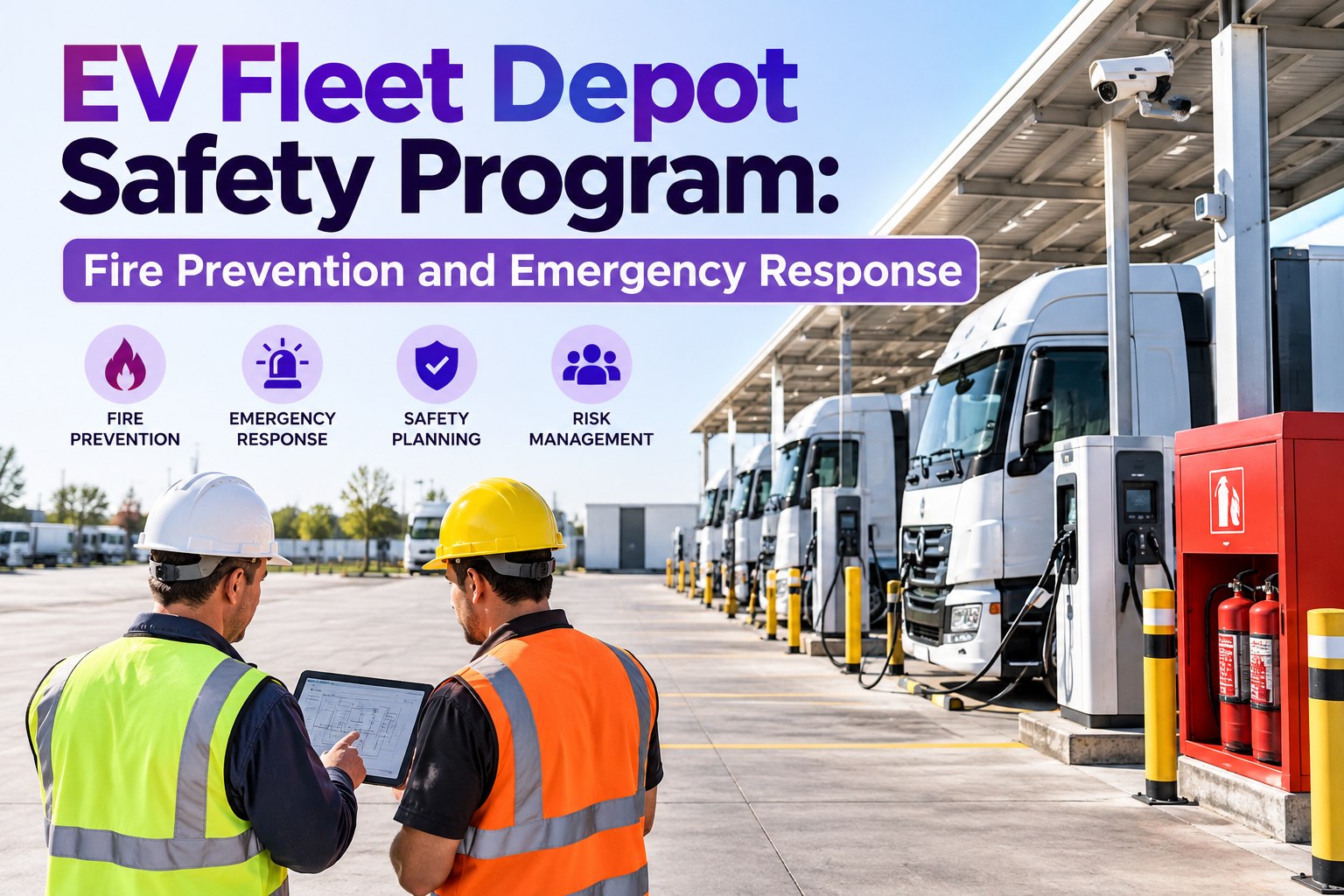
EV Fleet Depot Safety Program: Fire Prevention and Emergency Response
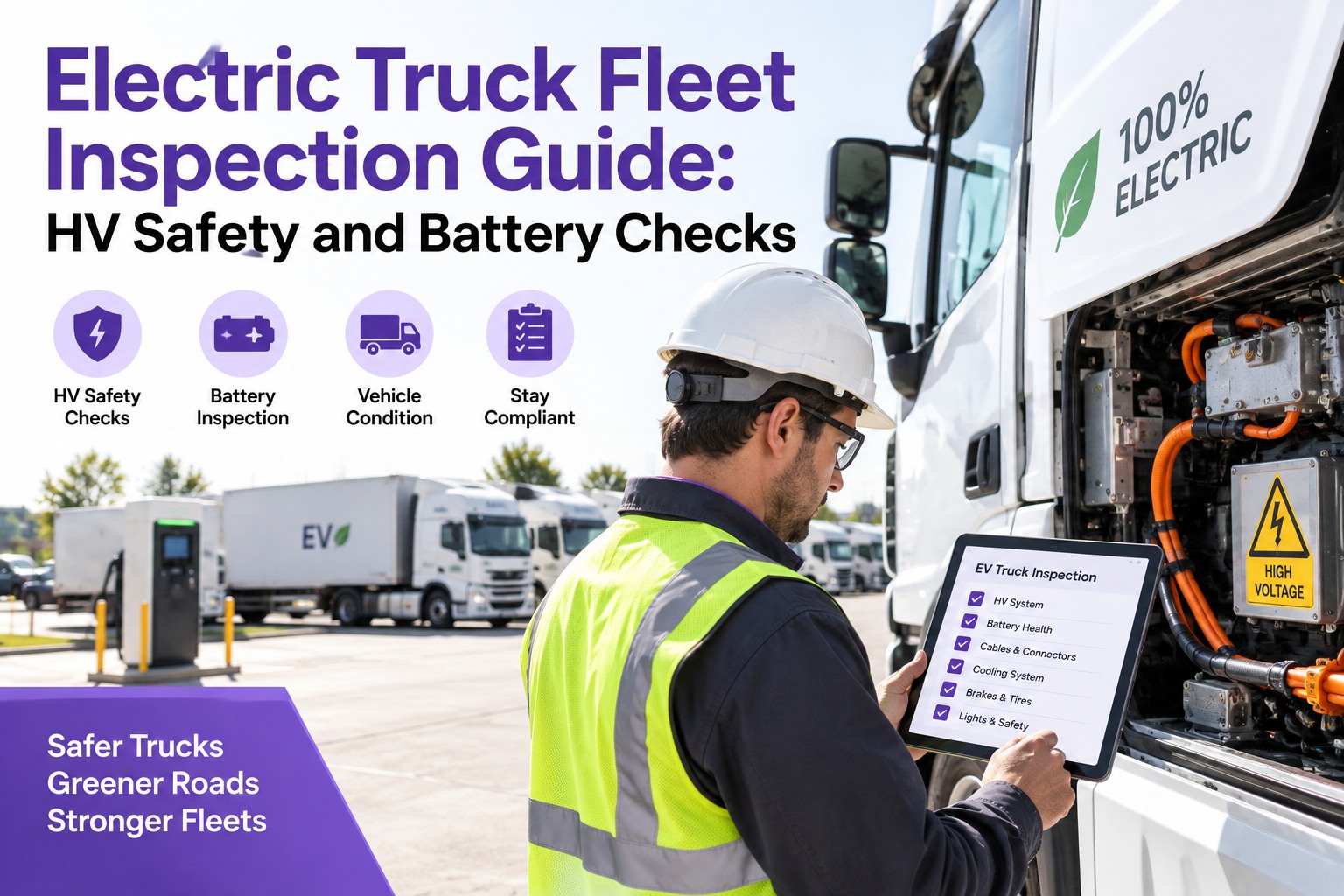
A battery fire can self-sustain without outside fuel and reignite long after it looks extinguished — which means prevention and early detection matter more at an EV depot than at any diesel yard. Truck Inspection & Maintenance Management Software keeps every thermal check, charging inspection, and battery warning sign logged and time-stamped, so a depot safety program is backed by a real record instead of a binder nobody's opened since the walkthrough.
Why Thermal Runaway Changes the Playbook
A damaged or defective cell can short-circuit internally, and the heat that generates spreads to neighboring cells in a self-sustaining chain reaction. Sprinklers and foam can help control the fire, but they can't stop the chemical reaction itself the way they would smother an ordinary combustible fire. For a depot, that has two practical consequences: prevention and early detection matter more than they do with conventional fleet fires, and emergency plans need an explicit reignition watch, not just a response and a clear scene.
Early Warning Signs — What to Train Drivers & Technicians to Recognize
Three Pillars of a Working Depot Safety Program
- BMS-monitored charging rates & cell balancing
- Thermal imaging checks on charging infrastructure
- Any damaged or faulty battery isolated immediately
- Fire and gas detection covering parking & charging areas
- Documented thermal-event indicators for staff to watch for
- Regular inspection logs, not one-time commissioning checks
- Clearly marked emergency shutoffs near every charger
- Site access planned for fire department vehicles & water supply
- Reignition watch protocol after any suppression event
Site Design Checklist — What a Depot Walkthrough Should Confirm
A Safety Program Backed by a Real Record
Our Truck Inspection & Maintenance Management Software logs every charging infrastructure check, battery inspection, and thermal concern with a timestamp and a photo — so when a fire marshal or insurer asks what your depot's safety program actually does day to day, you have an answer that isn't a dusty binder.
Frequently Asked Questions
Build an EV Depot Safety Program You Can Actually Prove
Our Truck Inspection & Maintenance Management Software logs every charging infrastructure check, thermal inspection, and battery concern across your depot, giving your safety program a documented trail instead of a policy that only exists on paper.