It is 5:10 AM at the yard. The driver notices a soft spot on a steer tire, glances at the clock, and decides it can wait until tonight. By mile 200 it is a roadside inspection, a violation and a lost day. A good pre-trip and post-trip routine catches that moment early and puts it in writing. This guide gives you a printable-style checklist for both inspections, explains what the FMCSA rules actually require, and shows how Truck Inspection & Maintenance Management Software turns every defect into an assigned repair. Start free and run digital inspections.
Pre-Trip · Post-Trip · Defect · Work Order
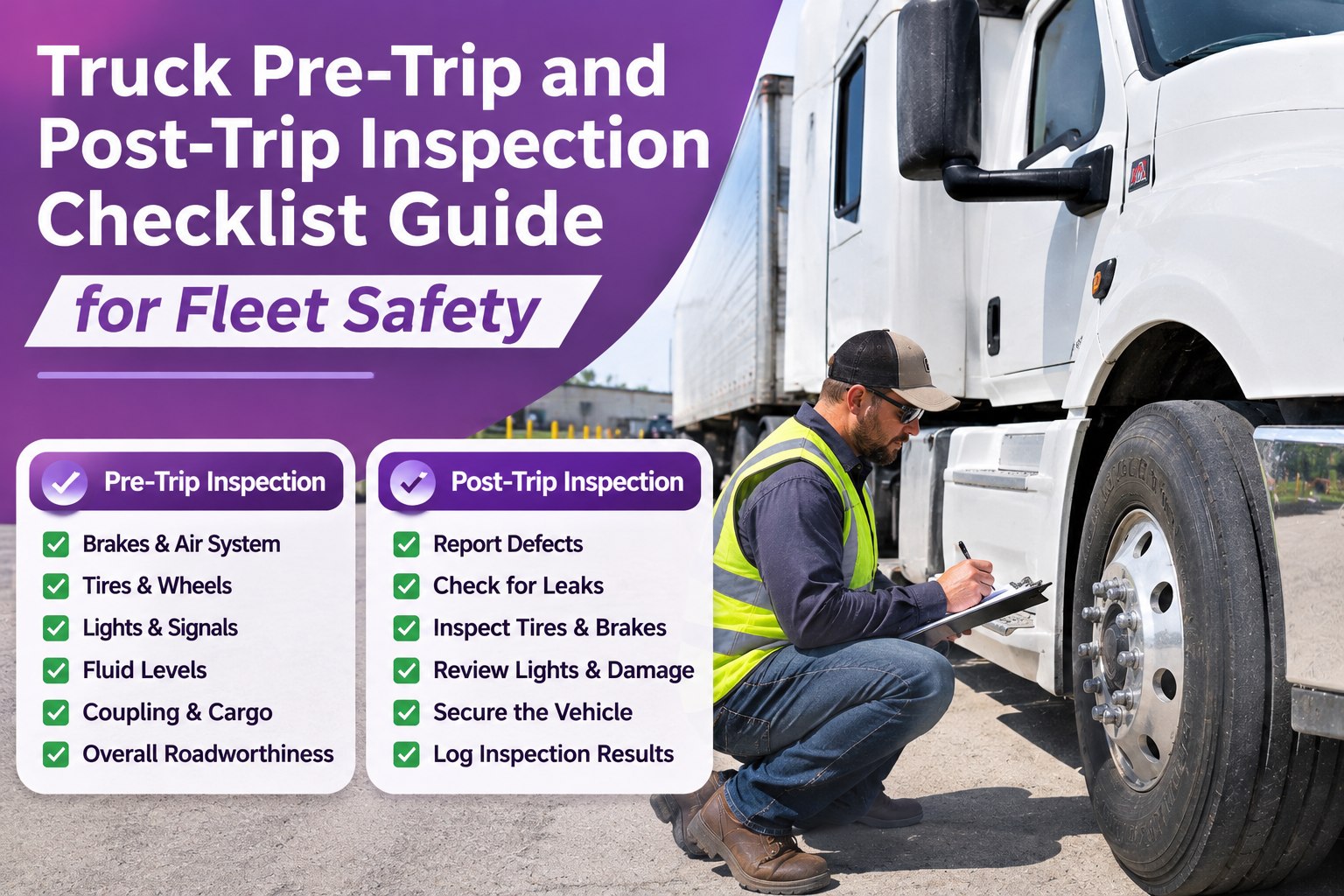
Truck Pre-Trip and Post-Trip Inspection Checklist Guide for Fleet Safety
A defect that is noticed but never reported is the one that finds you on the road. With Truck Inspection & Maintenance Management Software, drivers complete pre-trip and post-trip inspections on a phone, and every logged defect gets a guaranteed 4-hour first response: acknowledged, graded and assigned. The repair then closes on that truck's record.
No credit card required. Free for up to 3 trucks.
1InspectDriver walks the truck and logs what is found.
2Defect loggedPhoto and notes attach to the unit.
34-hour responseAcknowledged, graded and assigned.
4Repair certifiedWork order closes on the truck's record.
Pre-Trip vs. Post-Trip: What Each One Is For
They cover the same truck, but they do different jobs. The pre-trip protects the next trip. The post-trip hands the truck's condition to the shop.
Pre-tripPost-trip (DVIR)
WhenBefore the truck rollsEnd of the driving day
PurposeDriver confirms the truck is safe to operateDriver reports any defects found or noted
FMCSA rule49 CFR 392.7, plus review of the last report under 396.1349 CFR 396.11
Written reportNot required federally; carriers may add oneRequired when a defect is found
Carrier dutyDo not dispatch known safety defectsRepair or certify, and keep records for 3 months
Summary for guidance only. Check current rules with FMCSA, including exceptions for certain operations.
The Pre-Trip Walk-Around: Four Zones
Walk the truck the same way every time so nothing gets skipped. Tap each box to tick items off as you go.
Zone 2 · Front and engine
Zone 3 · Sides and wheels
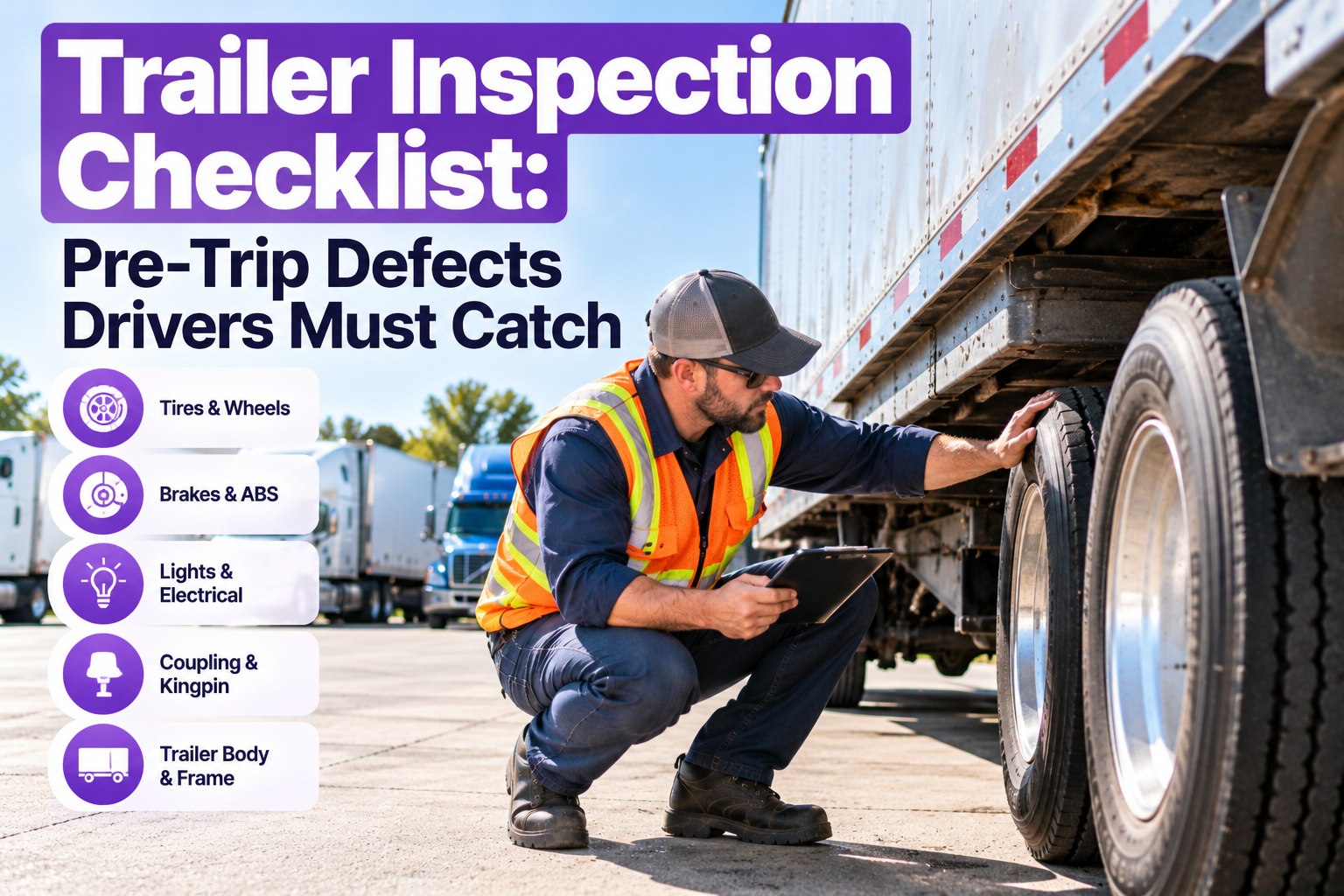
Zone 4 · Rear and coupling
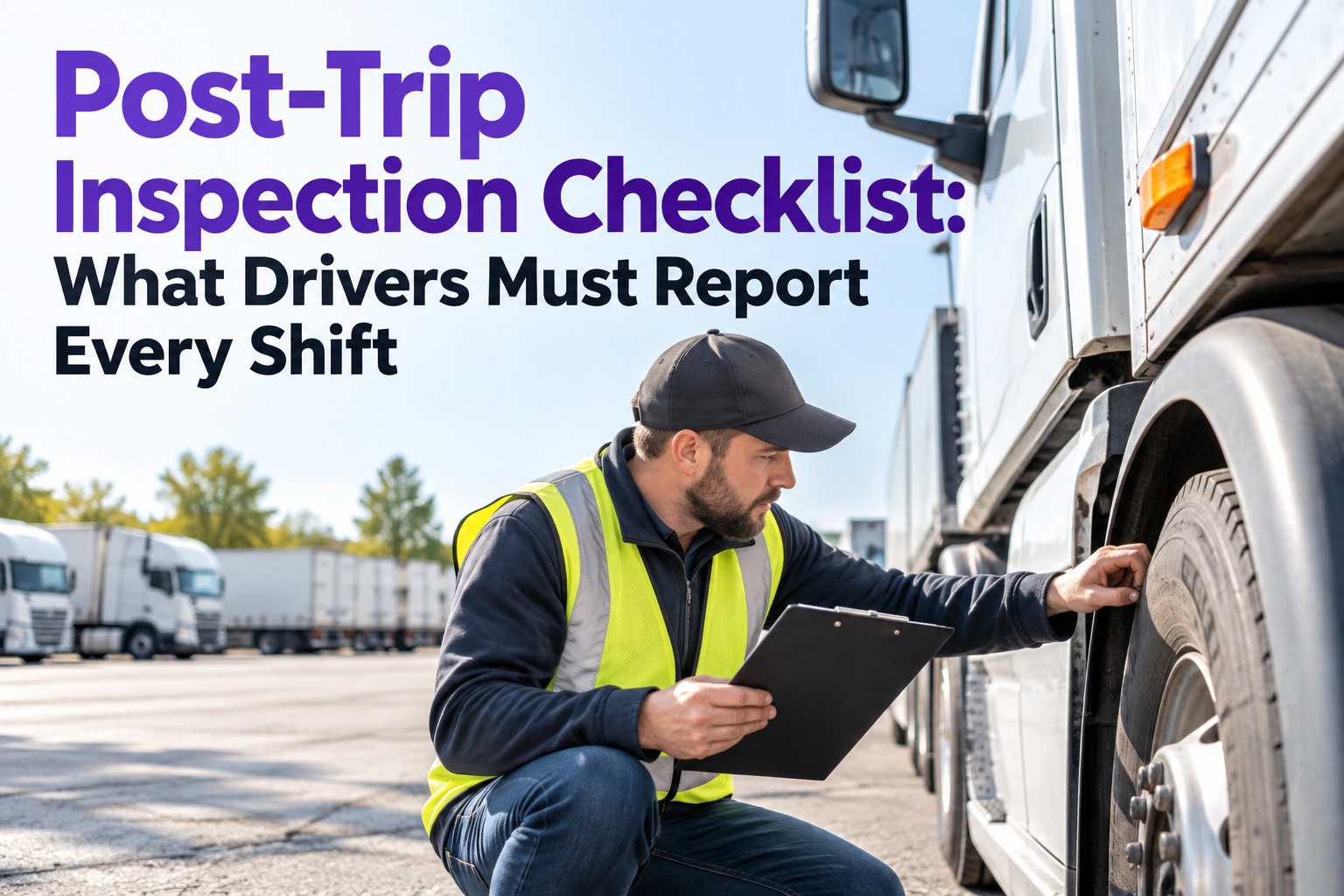
The Post-Trip Close-Out
1
Walk around once moreLook for new damage, leaks, tire problems and lights out after the day's miles.
2
Record every defectNote the unit, the component and what you saw. Add a photo when you can.
3
Submit and sign the reportElectronic DVIRs are permitted under FMCSA rules, so the report can go straight from the phone.
4
Shop acts and certifiesThe carrier repairs the defect or certifies no repair is needed, and the next driver reviews it before rolling.
The 11 Parts and Accessories the DVIR Covers
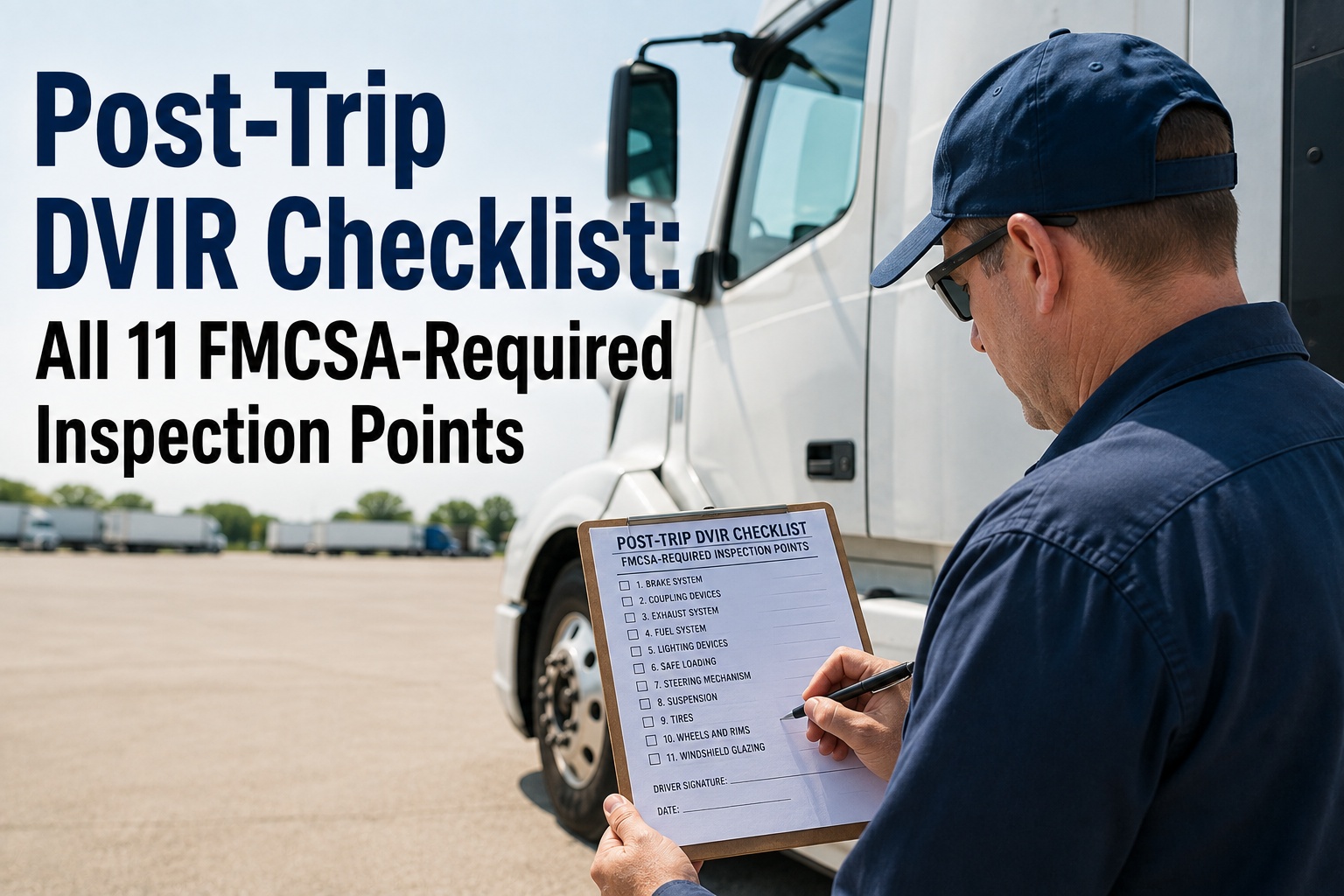
Service brakes and trailer brake connectionsParking brakeSteering mechanismLighting and reflectorsTiresHornWindshield wipersRear vision mirrorsCoupling devicesWheels and rimsEmergency equipment
Where Roadside Inspectors Look First
The same three systems keep showing up in out-of-service data, so give them extra attention on every walk-around.
Share of vehicle out-of-service violations, 2025 CVSA Roadcheck
Stop-use: park the truck
- Brake defects, including one-fifth of the brake system defective
- Steer tire tread below 4/32 inch
- Drive tire tread below 2/32 inch
- Tire inflation below half of the maximum sidewall pressure
Report and schedule
- Worn wipers or a cracked mirror trim
- A marker lamp out on a trailer
- Minor leaks with no level loss
- Cosmetic body or interior damage
⚠️
When in doubt, do not driveIf a defect could affect safe operation, report it and keep the truck out of service until it is repaired or a qualified person certifies it is safe.
Turn Every Inspection Into a Repair That Gets Done
Digital pre-trips and post-trips, photos, a 4-hour first response on every defect, and repair records kept by truck. Start with up to 3 trucks free.
How the Software Runs the Inspection Loop
Mobile inspectionsDrivers complete the checklist on a phone and attach photos.
4-hour first responseEvery defect is acknowledged, graded and assigned.
Work ordersDefects become tracked repair jobs with parts and labor.
Records by truckReports and repair certifications stay searchable for audits.
Frequently Asked Questions
Is a written pre-trip inspection report required?
Not federally. The pre-trip under 49 CFR 392.7 is a physical check. The written report is the post-trip DVIR under 396.11, required when a defect is found, though carriers may require more.
Start free and set up your inspection forms.
How long must DVIRs be kept?
Carriers must keep the original report, the repair certification and the driver's review certification for three months from the report date.
Can inspections be done electronically?
Yes. FMCSA rules allow electronic DVIRs, which makes photos, signatures and searchable records easier to manage.
What happens after a driver reports a defect?
Inspect · Report · Repair · Prove It
Make Every Inspection Count
Run pre-trips and post-trips digitally, get a 4-hour first response on every defect and keep a clean record for each truck.
No credit card required. Free for up to 3 trucks.