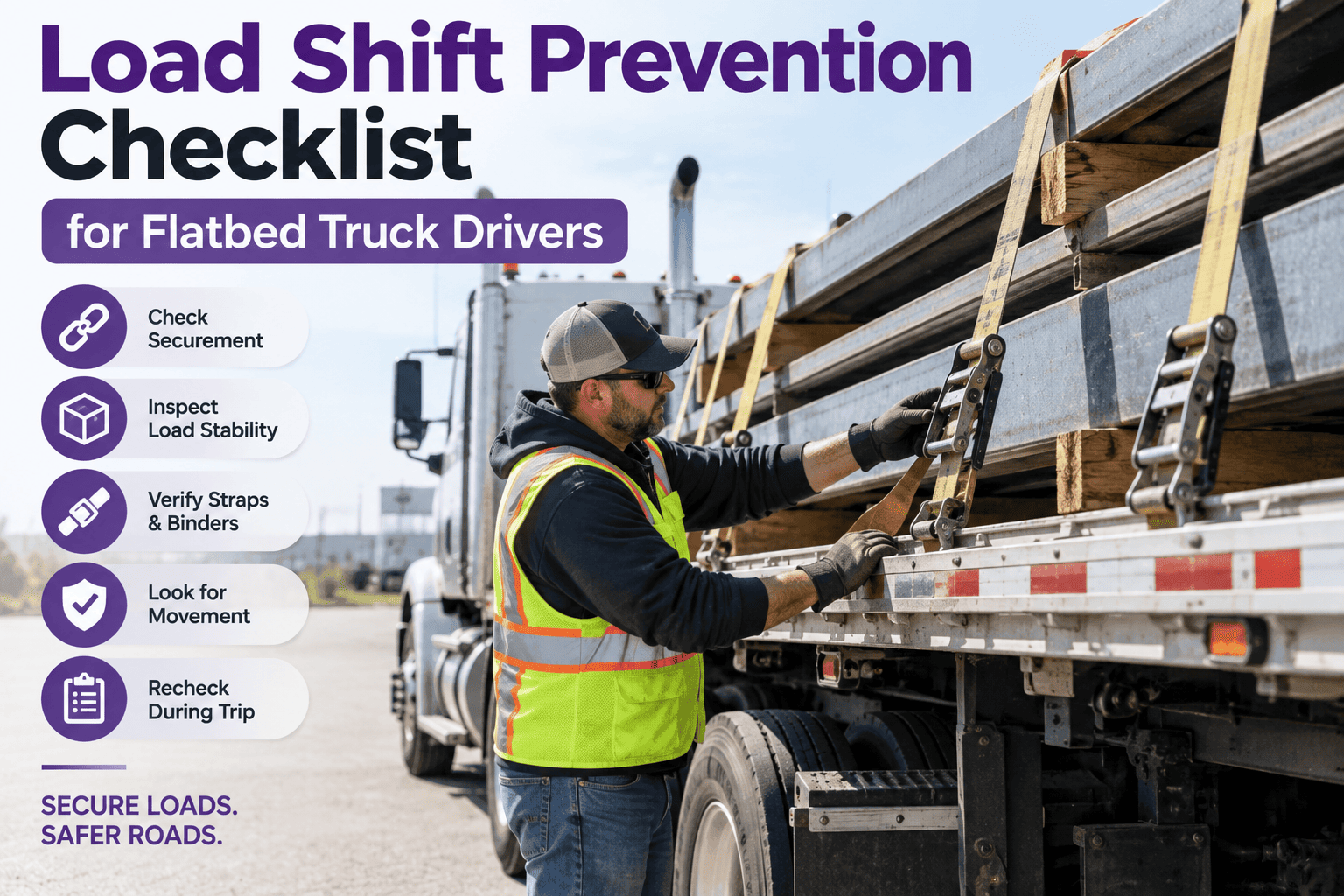
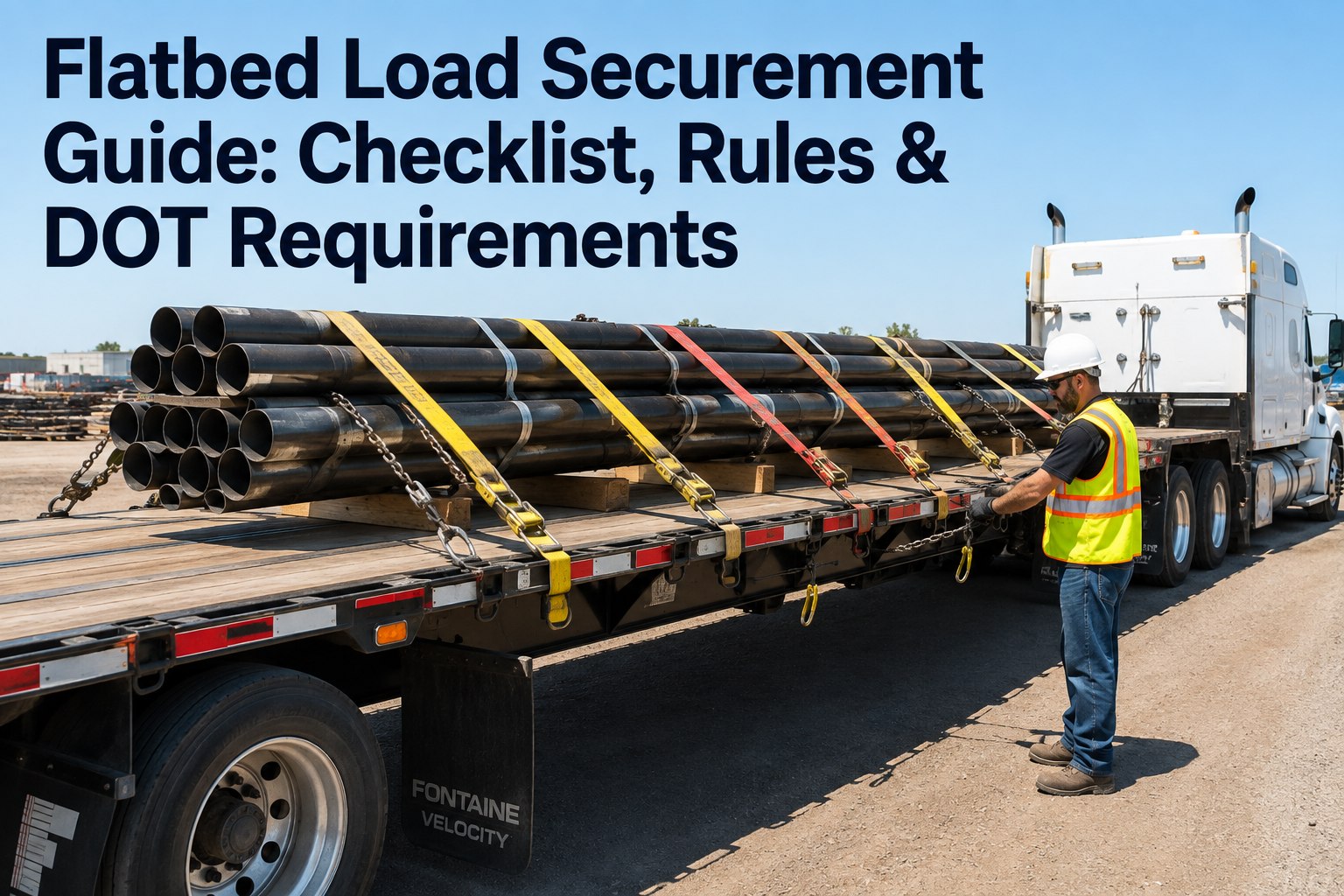
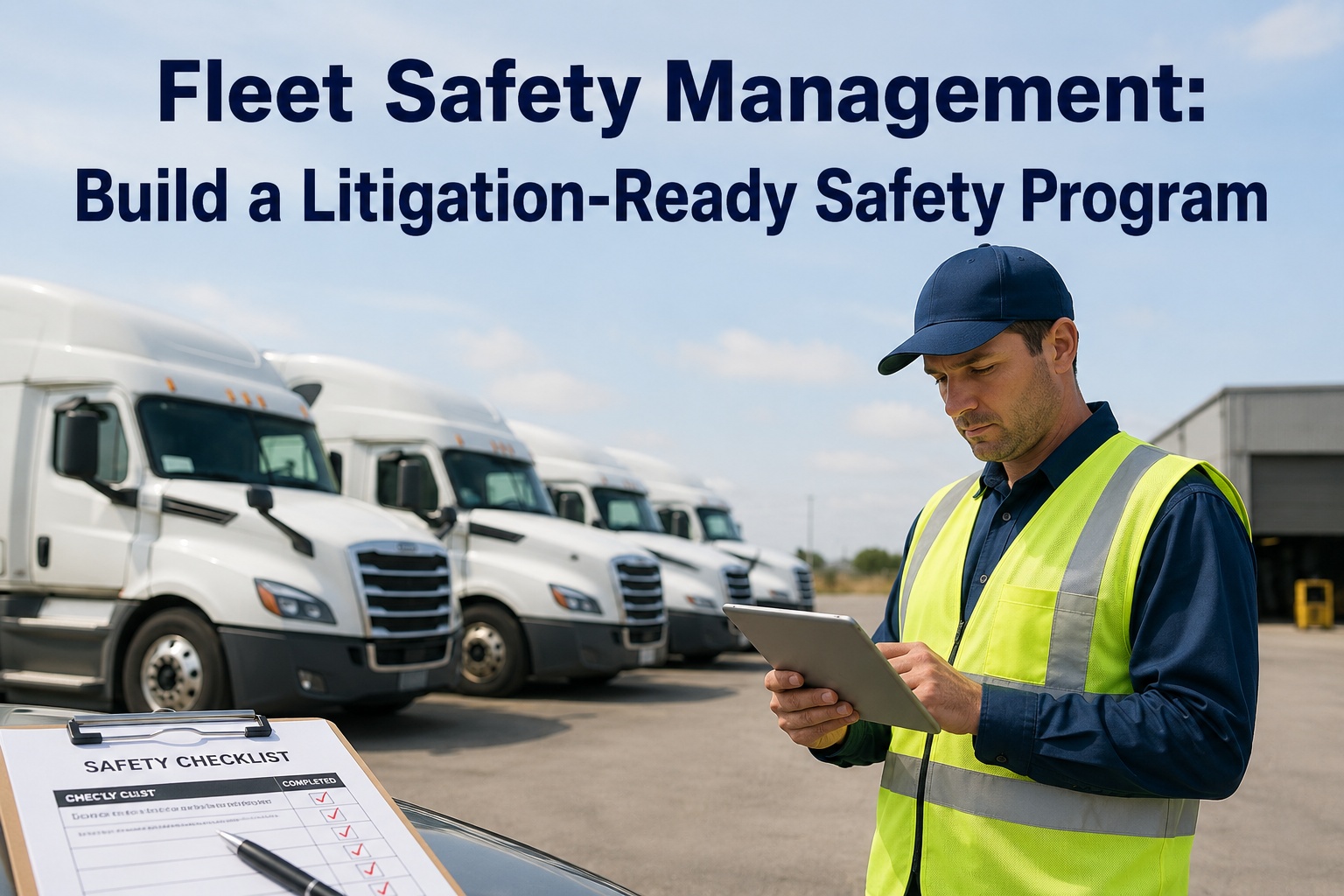
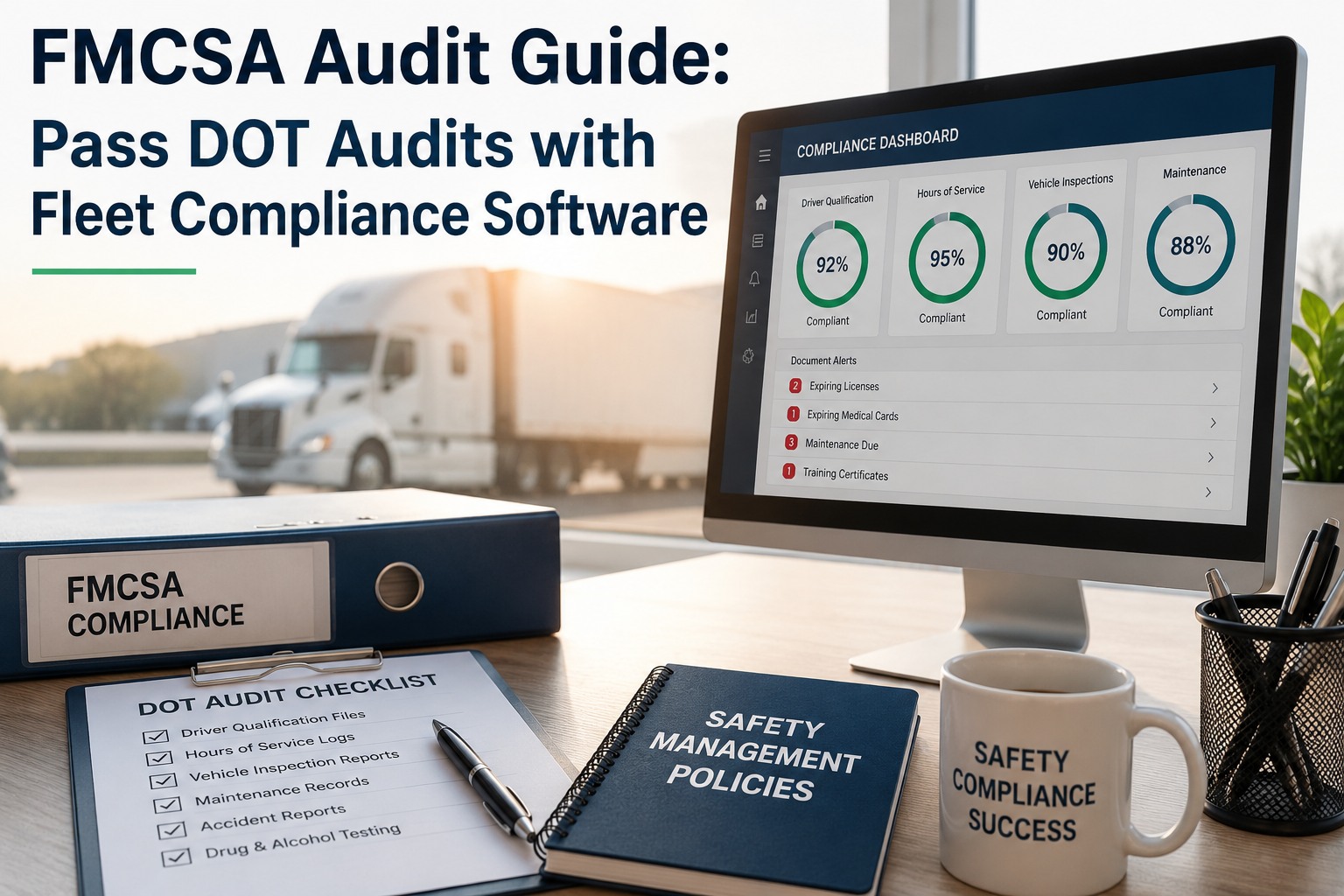
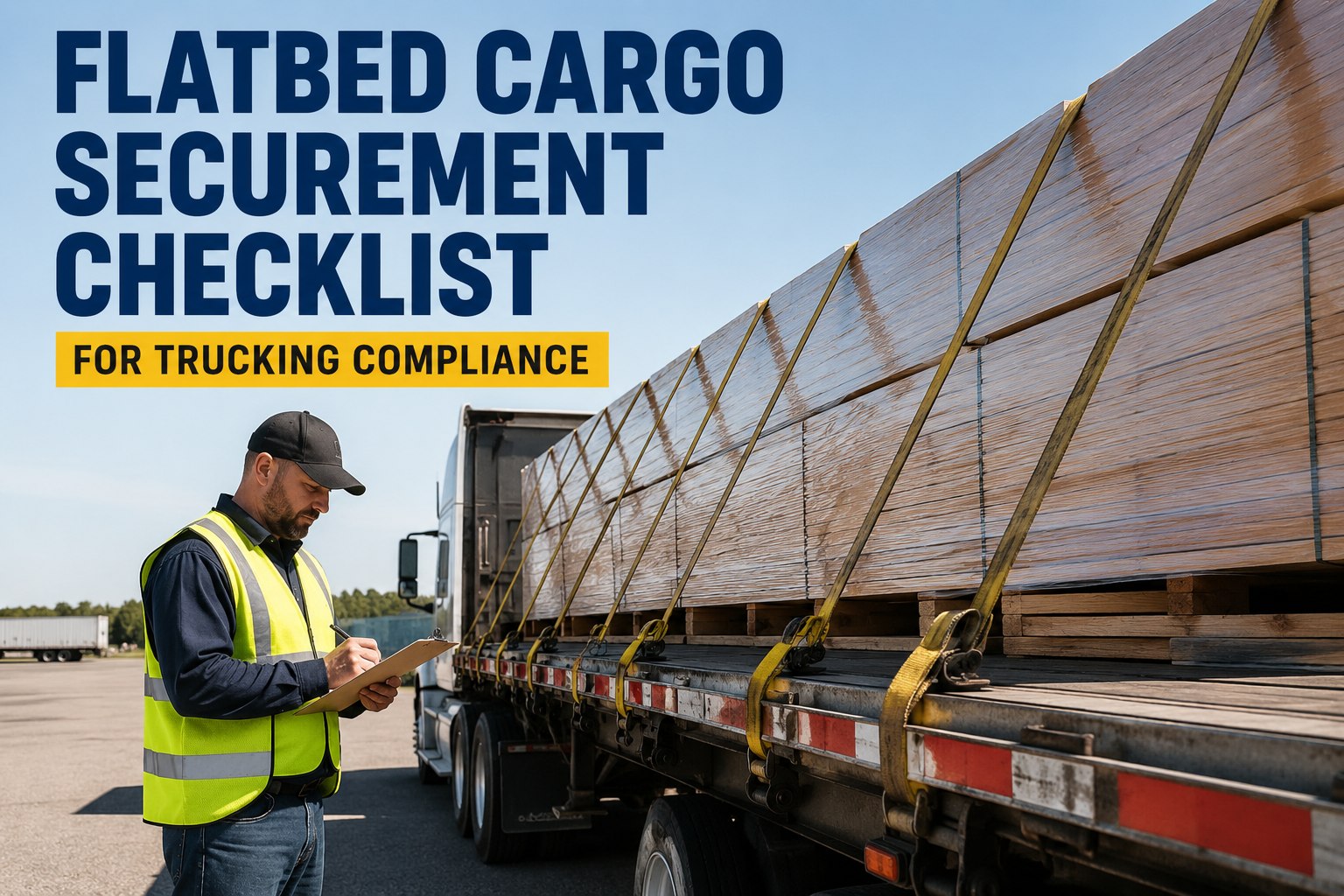
Flatbed fleets don't get to share the same compliance margin as box trucks. Every load is exposed, every tie-down is visible to every roadside inspector, and 49 CFR Part 393 Subpart I governs every chain, strap, and edge protector on the trailer. The federal baseline is unforgiving: minimum 4 tie-downs per load, each with a Working Load Limit of at least 5,000 lbs, securement that withstands 0.8g forward deceleration, 0.5g lateral, and 0.2g vertical lift. Drivers must inspect cargo pre-trip, within the first 50 miles, after every change of duty status, and every 3 hours or 150 miles thereafter. A single out-of-service order averages $1,800 in lost productivity and detention. Three violations in 12 months puts the carrier on FMCSA's compliance review radar — and potentially in line for authority revocation. Truck Inspection & Maintenance turns Part 393 from a memorized rulebook into an enforced digital workflow: every tie-down logged, every inspection timestamped, every commodity rule built into the checklist. Start your free trial and stop leaving compliance to memory.
Flatbed Fleet Management Software
For cargo securement, DOT compliance, and roadside-ready inspections that hold up to Part 393 scrutiny.
The 4 Forces Your Cargo Must Withstand — Per Federal Law
FMCSA doesn't measure cargo securement by gut feel — it specifies exact deceleration and lateral force thresholds the entire system has to survive without the load shifting. Truck Inspection & Maintenance builds these into the pre-trip checklist so drivers verify, not assume:
Forward
Hard braking deceleration. The biggest force, simulating an emergency stop at highway speed.
Rearward
Hard acceleration or upgrade pull. Less than braking but still significant on a loaded flatbed.
Lateral
Sharp turn or evasive maneuver. Often the most common cause of off-load shifts on highway curves.
Vertical Lift
Bouncing on rough roads or expansion joints. Smallest force, but the easiest to overlook in tie-down planning.
Minimum Tie-Down Requirements — Federal Baseline
The federal floor on tie-downs is non-negotiable. Length, weight, commodity type, and securement method (direct vs indirect) all change the math — but minimum thresholds apply regardless of calculation. Truck Inspection & Maintenance enforces the right minimums per load type:
Minimum Count
At least 4 independent tie-downs required for any heavy equipment over 5,000 lbs — regardless of what the WLL math says.
WLL per Tie-Down
Each individual tie-down must be rated at minimum 5,000 lbs Working Load Limit. The weakest link rule applies.
Aggregate WLL Rule
Total securement system WLL must equal at least 50% of cargo weight. Lumber, steel, machinery — same rule applies.
Weakest Link
A 6,600-lb chain on a 4,000-lb binder = 4,000-lb effective WLL. Inspector measures by the weakest component, not the strongest.
Edge Protectors
Required wherever chain, rope, or webbing crosses sharp edges. Missing edge protectors are a citable violation in roadside inspections.
Length Rule
Number of tie-downs scales with cargo length: 1 tie-down per 10 ft of cargo, with a minimum of 2 (and 4 for heavy equipment).
The Mandatory Inspection Schedule — Every 150 Miles
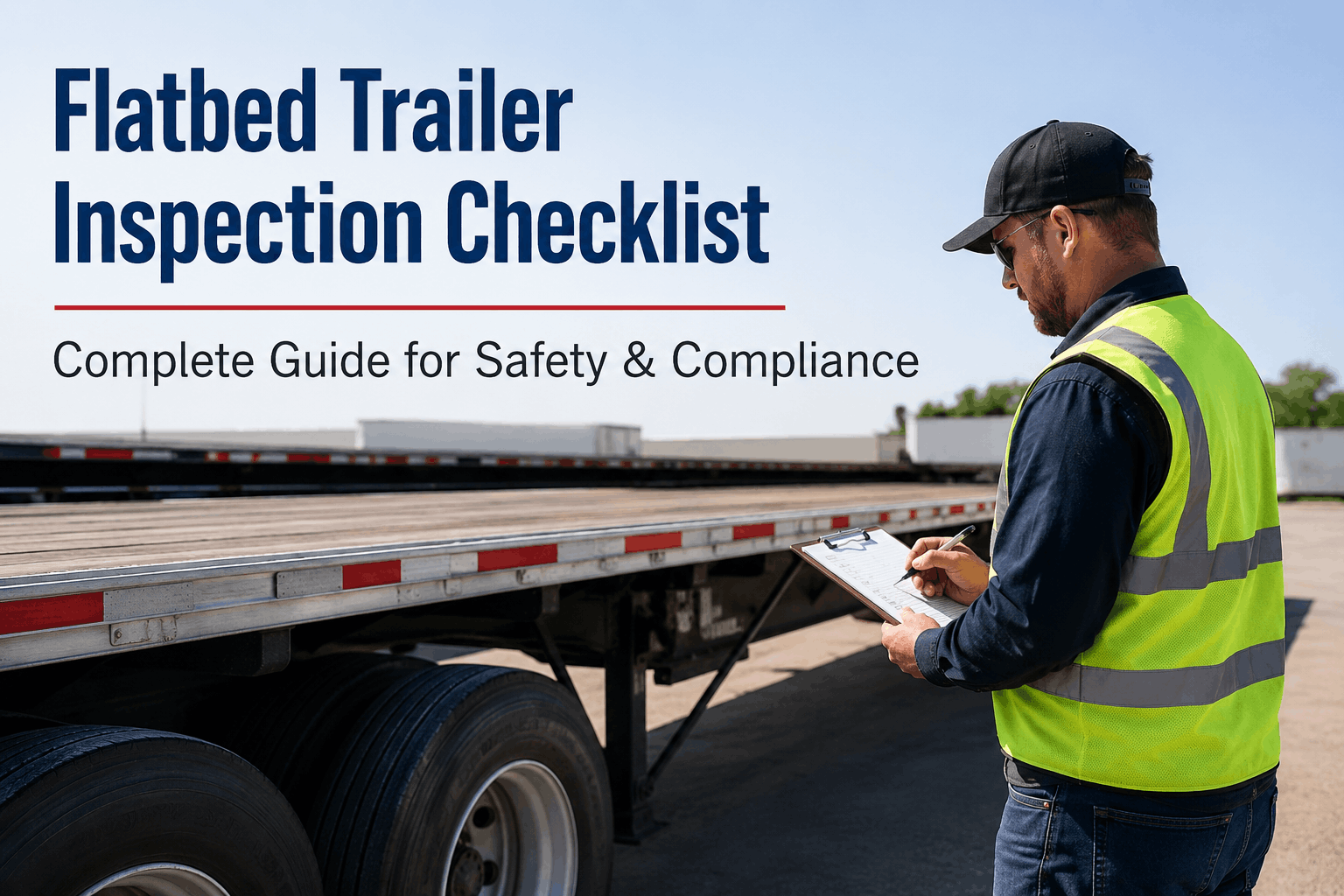
FMCSA does not consider one pre-trip inspection sufficient. Drivers are required to re-verify cargo at four separate checkpoints during the trip. Truck Inspection & Maintenance prompts the driver at each interval — and timestamps every check for audit:
Pre-Trip
Before any movement. Full visual inspection of all tie-downs, blocking, dunnage, edge protectors, and cargo condition.
Within 50 Miles
First settling check after departure. Tie-downs commonly loosen on the first highway miles as straps stretch and chains seat.
Change of Duty Status
Anytime driver goes off-duty or changes loads. Document any tightening or adjustment performed at this stop.
Every 3 Hours OR 150 Miles
Whichever comes first. Repeating throughout the trip. Skipped checks are visible to inspectors via HOS records and ELD timestamps.
Turn Part 393 into a timestamped digital workflow.
Truck Inspection & Maintenance prompts drivers at every inspection checkpoint, enforces commodity-specific tie-down rules, and creates audit-ready records the inspector can't argue with. Free for up to 3 vehicles. Contact support to plan your rollout.
The 11 Commodity-Specific Securement Rules
FMCSA has adopted detailed securement requirements for 11 specific commodities that have caused historical incidents on the road. Each carries its own rules that override general standards. Truck Inspection & Maintenance loads the right checklist by commodity:
Logs
Stake/bunk/wrapper requirements, peak height limits, friction mats required.
Dressed Lumber
Indirect tie-down typical. Length rule plus 50% WLL aggregate. Minimum 4 straps.
Metal Coils
Eye-to-sky, eye-to-side, and suicide configurations each have specific rules.
Paper Rolls
Rolling orientation, blocking and bracing, side-roll prevention required.
Concrete Pipe
Wedges or chocks plus tie-downs. Round commodity = roll prevention is critical.
Intermodal Containers
Twist locks or chassis pins. Cannot be secured with chains alone.
Autos / Light Trucks / Vans
Wheel chocks, ramps secured, e-brake set. Each unit individually secured.
Heavy Equipment
Direct tie-down. Minimum 4 chains regardless of WLL math. Attachments separately secured.
Flattened / Crushed Vehicles
Containment device required. Fluid drainage documented before transport.
Roll-on / Roll-off
Front-stop or chock plus 2 tie-downs. Container-specific requirements apply.
Large Boulders
Single-boulder loads need physical containment, not just tie-downs.
Custom Commodities
Anything else falls under 393.100 general performance standard. Driver must articulate the strategy to inspector.
Top 6 Out-of-Service Violations on Flatbed Inspections
Roadside inspectors find the same violations on flatbed inspections over and over. Each one carries a fixed cost — $1,800 average in detention and delay — plus CSA points that erode safety rating. Truck Inspection & Maintenance prevents each one by enforcing it on the pre-trip:
Insufficient Tie-Downs
Most-cited violation. Driver used 3 straps where 4 were required by length rule, or used 4 instead of 5 for heavy equipment.
Missing Edge Protection
Chain or strap directly contacting sharp metal edge without protector. Easy fix, frequent miss.
Damaged Tie-Downs
Cuts, knots, abrasion, corrosion on chains. Inspector visually examines every tie-down on the load.
WLL Inadequate
Total aggregate WLL of securement system below 50% of cargo weight. Math, not opinion — inspector calculates on-scene.
Blocking / Bracing Failure
Cargo can shift fore/aft because no headboard, dunnage, or blocking is present where it's required.
Driver Can't Articulate Strategy
Inspector asks: "Why did you choose this tie-down pattern?" Inability to explain invites deeper inspection and citations.
The Flatbed Compliance ROI — What 20 Trucks Save in Year 1
Flatbed compliance software ROI is uniquely measurable because every avoided violation has a fixed cost and every prevented OOS protects HOS, customer relationships, and CSA score. Realistic Year 1 numbers for a 20-truck flatbed fleet:
Frequently Asked Questions
What's the minimum tie-down requirement under FMCSA rules?
At least 4 independent tie-downs for any heavy equipment over 5,000 lbs, regardless of WLL math. For lighter cargo, the count scales with length — 1 tie-down per 10 ft of cargo, minimum 2. Each tie-down must have a minimum 5,000-lb Working Load Limit, and the aggregate system WLL must equal at least 50% of the cargo weight.
How often must cargo be re-inspected during a trip?
Four mandatory checkpoints: pre-trip, within the first 50 miles, after every change of duty status, and every 3 hours or 150 miles thereafter (whichever comes first). Truck Inspection & Maintenance prompts the driver at each interval and timestamps the verification. Sign up free to put the inspection schedule on autopilot.
What happens after a cargo securement out-of-service order?
The vehicle cannot move until violations are corrected and re-inspected. Average cost is $1,800 in lost productivity and detention. A second OOS within 12 months puts the carrier on FMCSA's monitoring radar, and three violations triggers a compliance review with potential authority revocation risk. CSA points accrue with every violation.
How does the platform handle commodity-specific rules?
The driver selects the commodity type when starting the inspection — logs, dressed lumber, metal coils, paper rolls, concrete pipe, intermodal, autos, heavy equipment, crushed vehicles, roll-on/roll-off, or boulders. The checklist auto-loads the FMCSA rules for that commodity, including required blocking, bracing, edge protection, and tie-down patterns.
What's the weakest link rule?
A securement system is only as strong as its weakest component. A 6,600-lb chain on a 4,000-lb binder = 4,000-lb effective WLL. Inspectors calculate effective WLL by the weakest link, not the strongest part of the chain. Every component — chain, binder, hook, anchor point — must independently meet the minimum.
Is digital inspection legally accepted for cargo securement?
Yes — FMCSA's February 2026 final rule explicitly authorized electronic DVIRs. Digital checks with timestamps, GPS, photos, and driver signatures are fully compliant and often preferred by inspectors because the documentation chain is more reliable than paper. Talk to our team for a flatbed-specific implementation walkthrough.
Stop leaving compliance to memory.
Truck Inspection & Maintenance prompts drivers at every required checkpoint, enforces commodity-specific tie-down rules, logs WLL calculations, and builds audit-ready records that hold up to roadside inspection. Free for up to 3 vehicles. No hardware. No contracts.