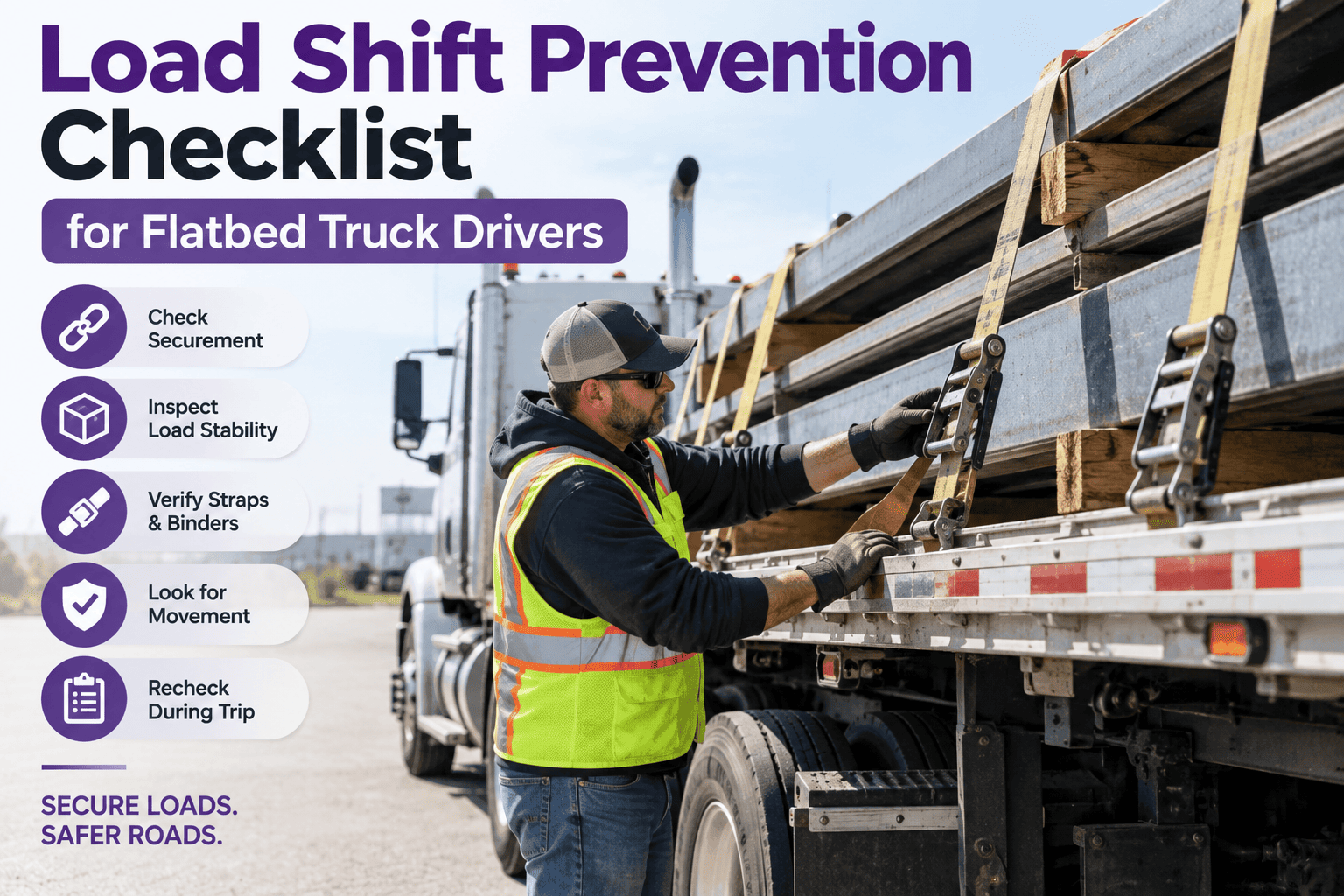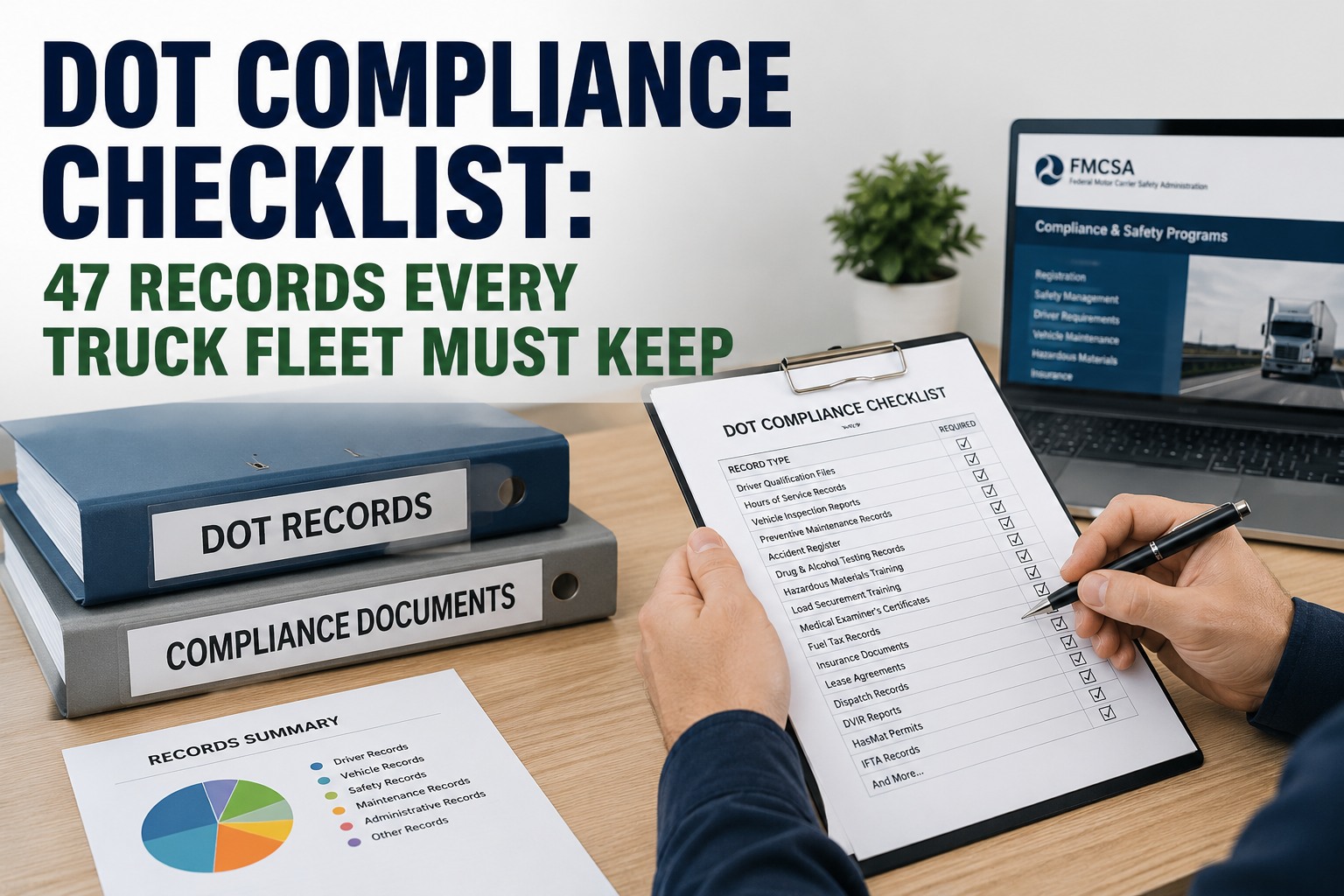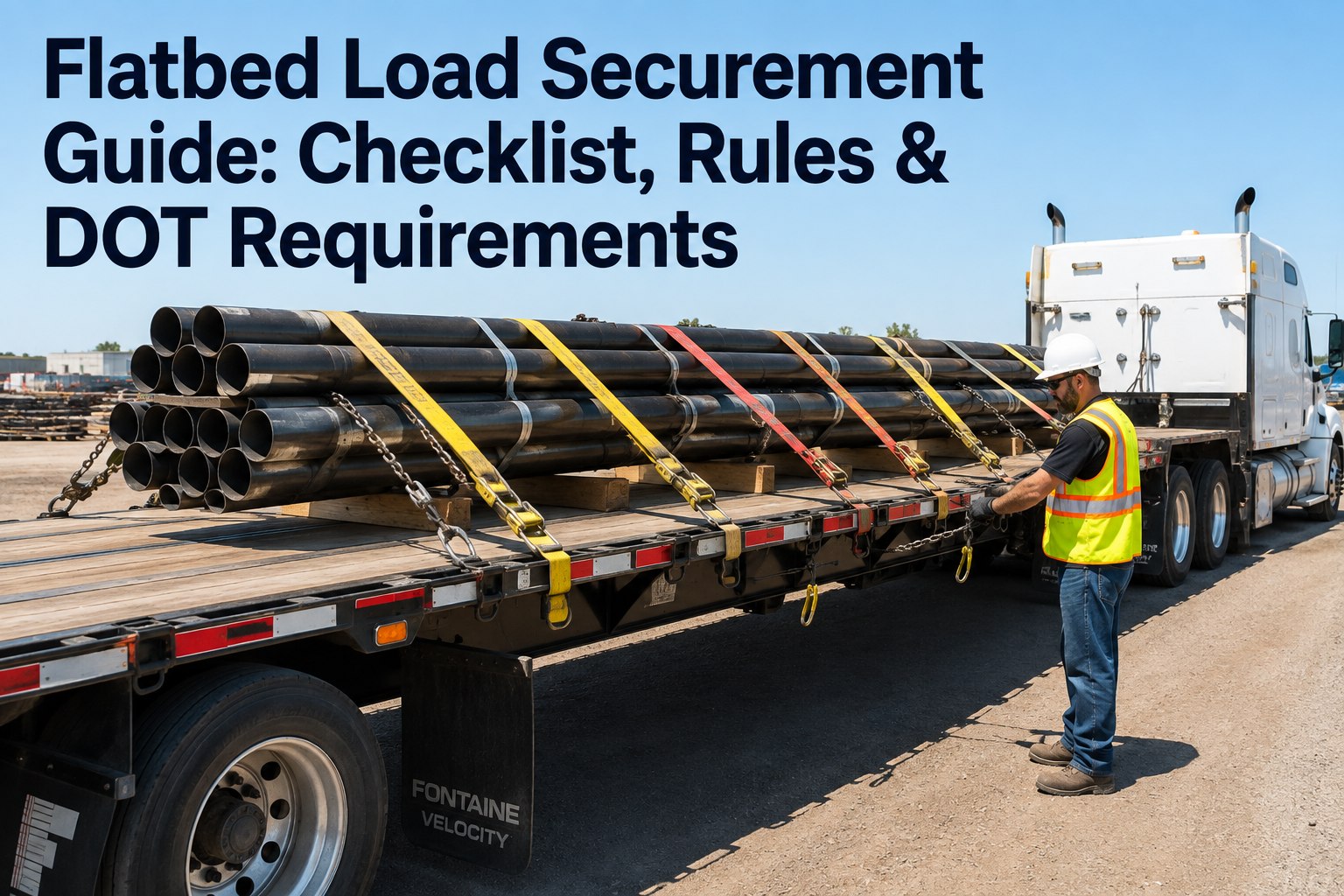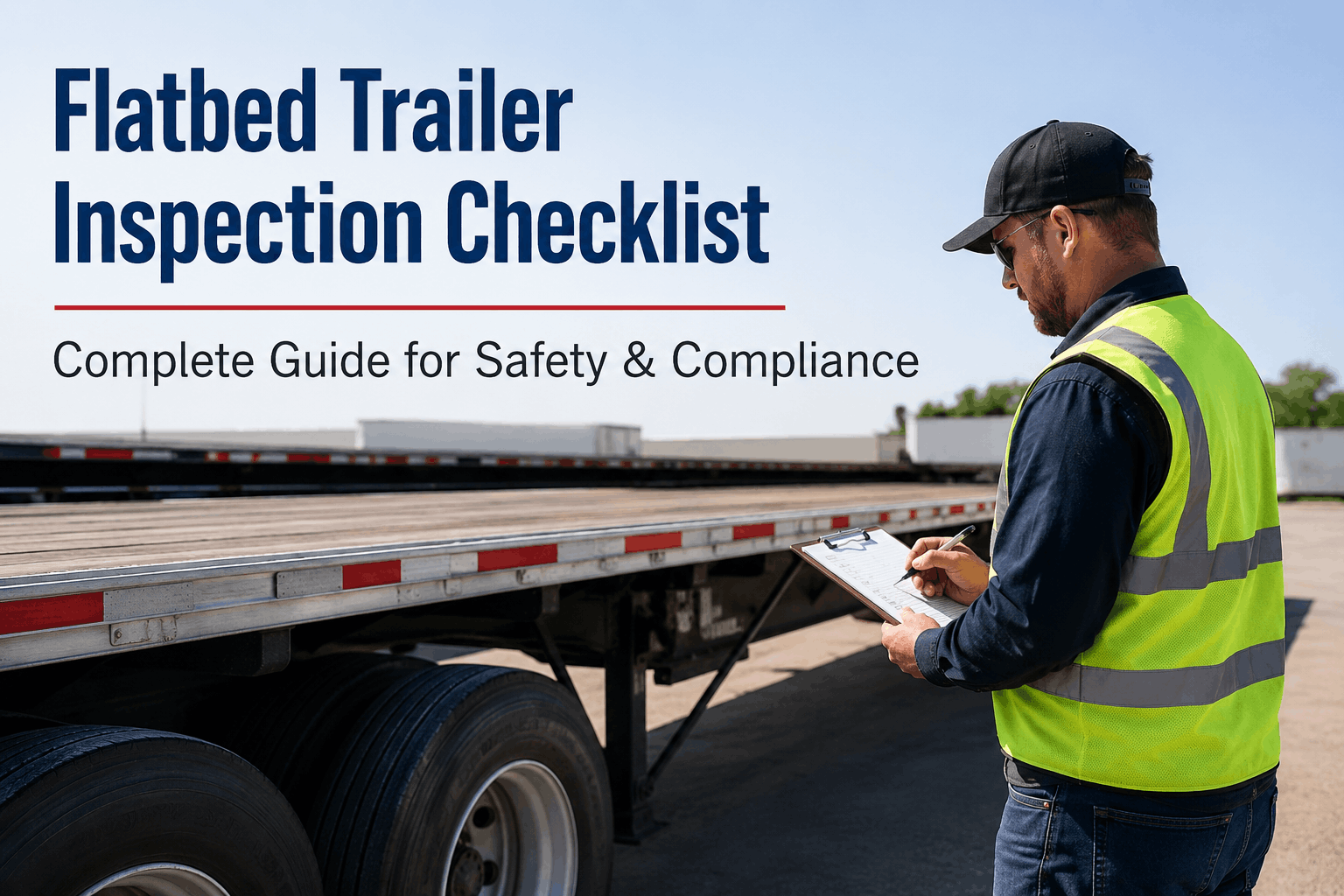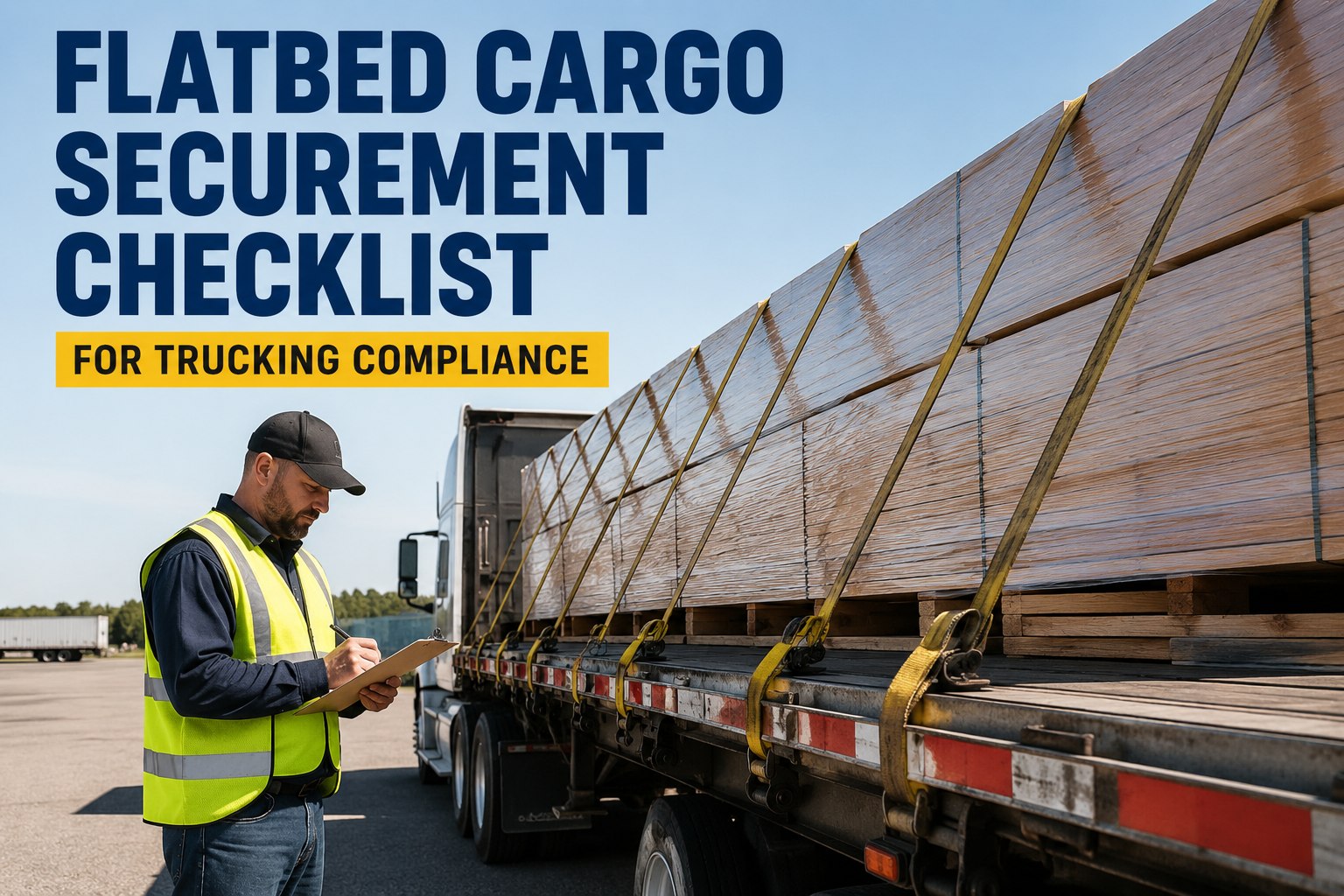
On a flatbed, the load is exposed — and so is every securement mistake. A shifted or fallen flatbed load isn't just an out-of-service order; it's a highway projectile that causes crashes, fatalities, and the kind of liability that ends careers and companies. Cargo securement is federal law under 49 CFR Part 393, Subpart I, and the rules are unforgiving arithmetic: the aggregate working load limit of your tie-downs must equal at least half the cargo's weight, you need the right number of tie-downs for the load's length, every device must be in serviceable condition, and you must re-check it all within the first 50 miles. Combined state and federal fines for securement failures often exceed $8,000 per incident, and inspectors place violators out of service on the spot. This checklist walks the securement system end to end — the WLL math, tie-down counts, device condition, edge protection, commodity-specific rules, and the en-route re-checks — so tie-downs and edge protection are verified every single load. Truck Inspection & Maintenance builds securement checks into the flatbed pre-trip. Talk to our team to deploy it.
Flatbed Cargo Securement Checklist
The WLL math, the counts, the condition checks — verified every load.
The WLL Math — Get This Right First
Everything starts with the working load limit calculation, and it's non-negotiable: under 49 CFR 393.106, the aggregate WLL of all tie-downs must be at least 50% of the cargo's weight. Miss it and you're in violation before you've added a single other factor. Three rules govern the math. Start a free account to put a WLL calculator in every driver's pre-trip.
The Tie-Down Count Rules
Aggregate WLL is one test — the count is a separate one, and you must satisfy both. The minimum number of tie-downs depends on the article's length and weight, unless it's blocked against forward movement. Reach our team to build length-based count prompts into your checklist.
≤ 5 ft & ≤ 1,100 lb
One tie-down minimum for a short, light article not otherwise blocked.
≤ 5 ft & > 1,100 lb, or 5–10 ft
Two tie-downs — short-but-heavy, or any article 5 to 10 feet long regardless of weight.
Over 10 ft
Two tie-downs for the first 10 feet, plus one more for each additional 10 feet or fraction thereof.
Part 1 — The Device Condition Check
A correctly counted, correctly rated tie-down still fails inspection if it's damaged. Under 49 CFR 393.104, devices in these conditions must be removed from service — check every one before departure. Open a free account to capture device condition with photos.
Webbing Straps
- No cut/tear affecting >10% of width
- No knots anywhere in the webbing
- No acid/alkali, heat, or UV damage
- WLL markings legible
Chains & Binders
- Grade 70 minimum, embossed "7"/"70"
- No cracks, gouges, or stretched links
- Binders sound, no deformation
- No corrosion reducing WLL
Hardware & Hooks
- Hooks not cracked, broken, or bent
- Ratchets function & hold tension
- No deformed or worn components
- Attached so it can't loosen in transit
Anchor Points & Deck
- Rub rails, stake pockets & rings sound
- No corrosion or cracks at anchors
- Deck strong enough for the load
- Headerboard/bulkhead intact
Verify securement on every single load
Truck Inspection & Maintenance builds the WLL math, tie-down count, device condition, and edge-protection checks into the flatbed pre-trip — with photo evidence, a 50-mile re-check reminder tied to the active load, and audit-ready records. No hardware, no contracts. Sign up free and make securement provable.
Edge Protection & Commodity Rules
Two things trip up even experienced flatbedders: missing edge protection, and the commodity-specific rules that override the general standard. Both are frequent OOS findings. Talk to our team about commodity-specific securement templates.
Edge protection
Required wherever a strap or chain passes over a sharp edge (under a half-inch radius). Steel coil edges can sever a synthetic strap in seconds under hard braking — protectors at every contact point.
Steel coils (393.120)
Eye-vertical coils need blocking/bracing both sides plus longitudinal restraint — effectively doubling the WLL requirement. Eyes-crosswise and lengthwise have their own rules.
Lumber & building products
Bundles over 5 ft need at least two tie-downs over each top bundle. Dressed lumber in a sided vehicle follows the general rules.
Logs, pipe & machinery
Logs, concrete pipe, and heavy equipment each carry dedicated rules under 393.116–393.136 that take precedence over the general standard.
Part 2 — The En-Route Re-Check
Securement isn't "set it and forget it." Road vibration and cargo settling loosen tie-downs, so federal rules under 393.100 mandate a re-inspection schedule — and the first check is the most important. Start free to log every re-check automatically.
Frequently Asked Questions
What's the basic working load limit rule?
Under 49 CFR 393.106, the aggregate working load limit of all tie-downs securing an article must be at least 50% of that article's weight — the minimum, not the recommendation. For a 40,000 lb machine you need at least 20,000 lbs of combined WLL. Always use the WLL of the weakest component in each assembly (strap, hook, binder, or anchor) and remember an indirect tie-down counts only half its WLL. Start a free account to calculate it before every trip.
How many tie-downs do I need?
It depends on length and weight, and you satisfy this in addition to the WLL rule. One tie-down for an article 5 feet or less and 1,100 lbs or less; two tie-downs for a short article over 1,100 lbs or for any article 5–10 feet long; and for articles over 10 feet, two for the first 10 feet plus one for each additional 10 feet or fraction. Commodity-specific rules can require more. Talk to our team about count prompts.
When must I remove a strap or chain from service?
Under 49 CFR 393.104, remove any webbing strap with a cut, abrasion, or tear affecting more than 10% of its width, a knot anywhere, acid/alkali or heat damage, or missing WLL markings. For chains, the minimum is Grade 70 transport chain — using Grade 43 underrates each chain by roughly 25–30% — and any cracked, gouged, stretched, or corroded component is out. Damaged hooks, binders, and anchor points are equally disqualifying. Sign up free to standardize condition checks.
When is edge protection required?
Whenever a tie-down passes over an edge sharp enough to cut or abrade it — generally an edge with less than a half-inch radius. It's mandatory, not optional, and a frequent roadside violation that can trigger an out-of-service order. It matters most with metal cargo: a steel coil's edge can slice through a synthetic strap in seconds during hard braking, so use steel or polymer protectors at every strap-to-cargo contact point. Contact us about edge-protection checks.
How often do I re-check the load?
Federal rules require a re-inspection within the first 50 miles — the single most important check, because cargo settling and strap relaxation are greatest right after departure — then again at every change of duty status and every 150 miles or 3 hours, whichever comes first. Each re-inspection should be documented. Failing to demonstrate the 50-mile check can earn a violation even when the cargo is properly secured at inspection. Start free to log re-checks.
Do commodity-specific rules override the general ones?
Yes. Sections 393.116 through 393.136 cover logs, lumber, metal coils, concrete pipe, intermodal containers, automobiles, heavy machinery, and more — and where a commodity-specific rule gives additional requirements, it takes precedence over the general standard. Steel coils (393.120) are the classic example, with blocking and bracing rules that effectively double the WLL requirement for eye-vertical loads. Know the rule for what you're hauling. Contact us for commodity templates.
Make securement provable on every load.
Truck Inspection & Maintenance builds the WLL math, tie-down count, device-condition, and edge-protection checks into the flatbed pre-trip — with photo evidence, a 50-mile re-check reminder tied to the active load, and audit-ready records that prove compliance. Free for up to 3 vehicles, no hardware, no contracts.