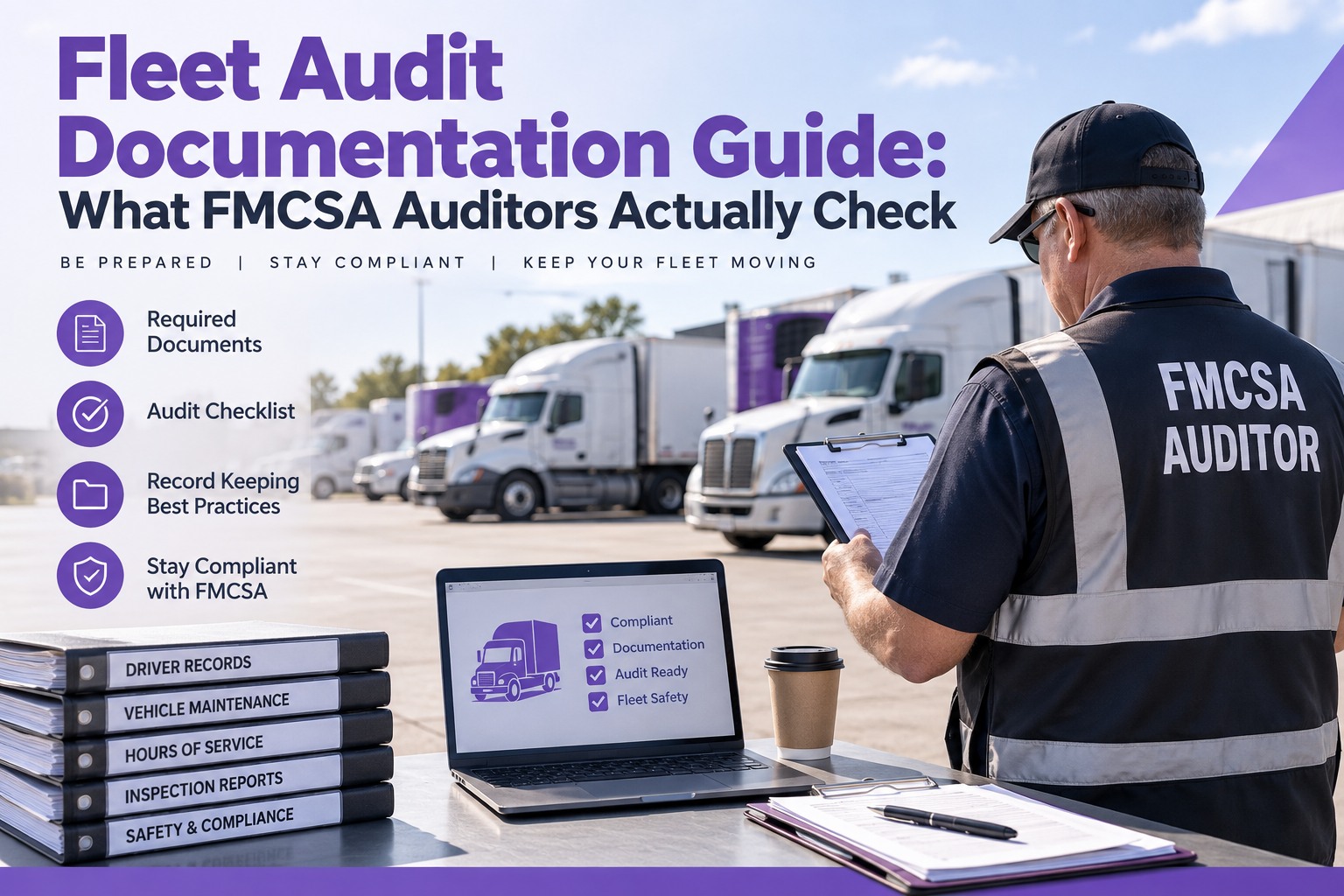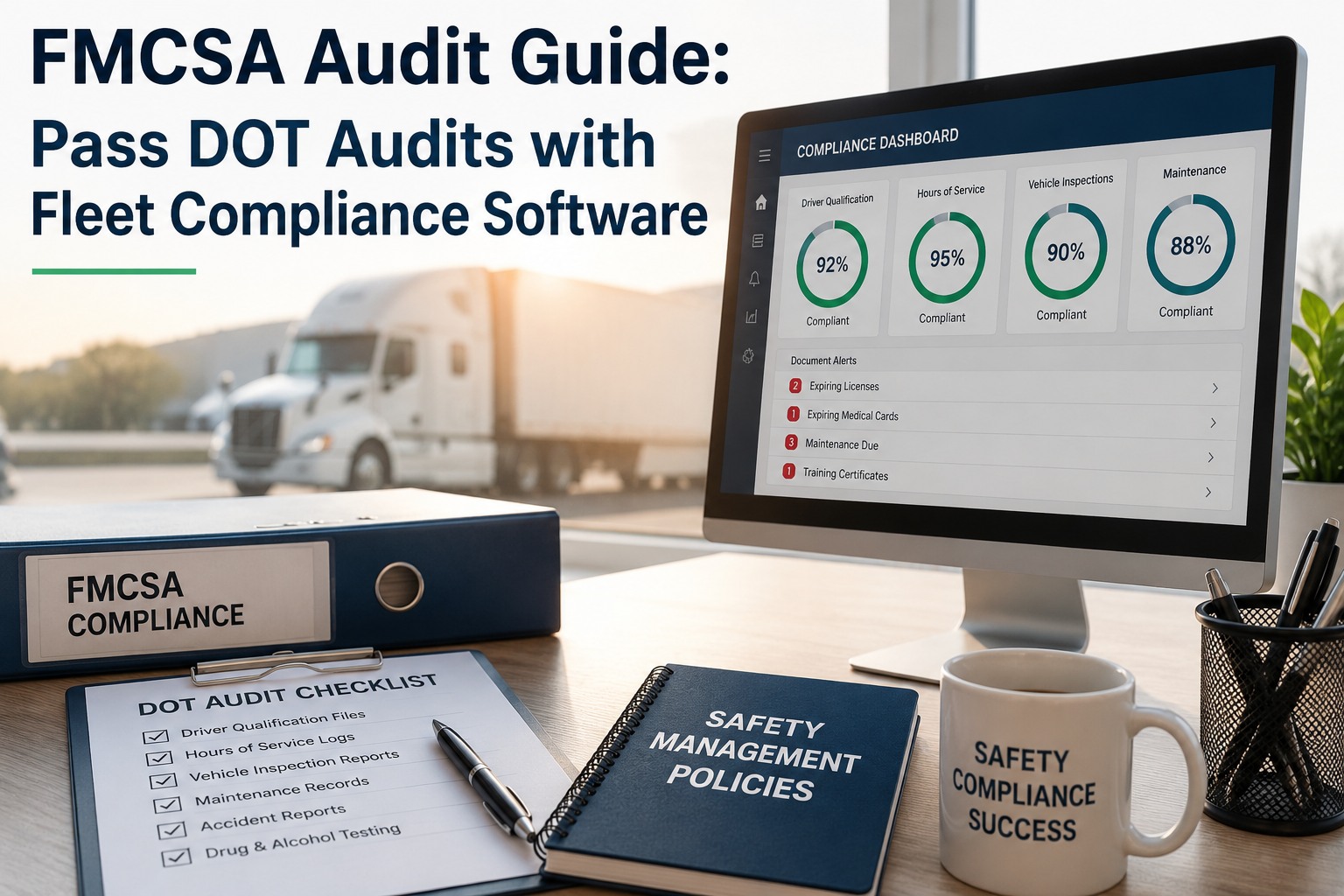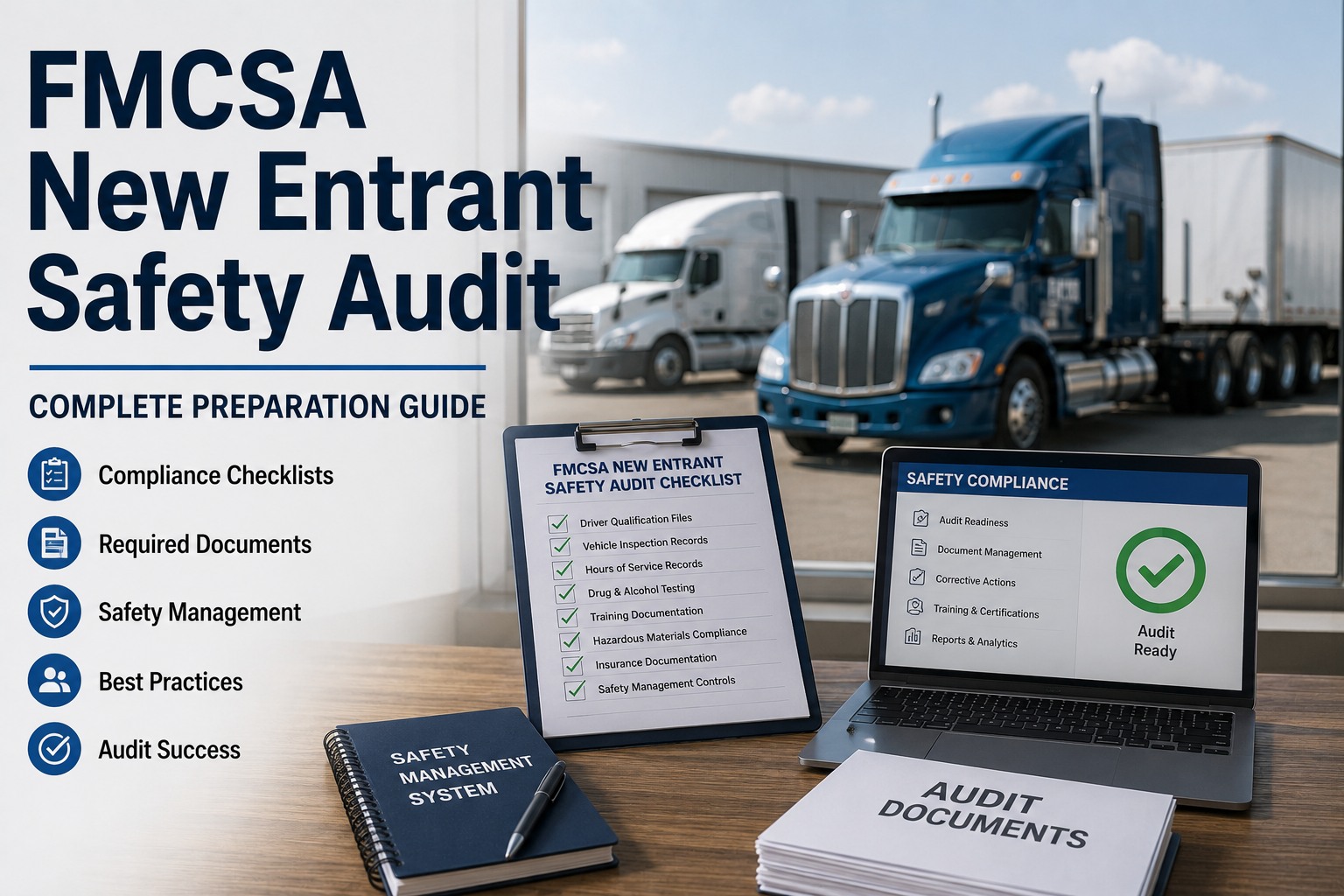
Here's the most useful thing to understand about the FMCSA New Entrant Safety Audit: most carriers who fail it aren't unsafe — they're disorganized. It's a document inspection, not a road test. An auditor isn't watching you drive; they're asking whether you can produce a complete driver qualification file, a month of logs that reconciles with your fuel receipts and bills of lading, proof of a drug and alcohol testing program, and an accident register that exists even if you've never had an accident. Every carrier that activates a USDOT number for interstate operation gets this audit within its first 12 months, and it sits inside an 18-month monitoring period that decides whether your operating authority becomes permanent. There are also sixteen specific violations that fail you outright, no matter how good everything else looks. This guide covers the timeline, the six evaluation factors, the automatic-failure list, what changed in 2026, and how fleet compliance software keeps the records an auditor asks for ready before they ask.
Compliance Guide · FMCSA New Entrant Audit · 2026
FMCSA New Entrant Safety Audit: Complete Preparation Guide
The one-time audit every new carrier faces — the six factors auditors evaluate, the violations that fail you automatically, and how to be ready before the letter arrives.
12 months
Window for the audit after authority activates
18 months
Monitoring period before permanent registration
6 factors
Compliance areas the auditor evaluates
16
Regulations that trigger automatic failure
What the Audit Actually Is
Governed by 49 CFR Part 385, the New Entrant Safety Audit is a one-time review confirming you have basic safety management controls in place — and that they're genuinely being used, not just written down. It's educational in intent, but the consequences are real:
A records review, not a road test
Auditors sample documents, walk through your processes, and ask clarifying questions. Your paperwork is the evidence — nothing else substitutes for it.
On-site or remote
The audit may happen at your place of business or as a document submission you upload. Either way, expect the same scrutiny of the same records.
Your authority is what's at stake
Pass and your operating authority continues toward permanent registration. Fail without correcting the deficiencies, and FMCSA can revoke your USDOT registration.
Don't ignore the letter: FMCSA typically contacts you by mail with instructions to schedule. Failing to respond can itself put you out of service for refusal of audit or no contact — one of the easiest and most avoidable ways to lose your authority.
The Timeline
The audit isn't an isolated event — it's a checkpoint inside a longer probationary period. Knowing where you are in the sequence tells you how much runway you have:
Authority activates
Your USDOT number goes live and the clock starts. You enter new entrant status immediately.
Audit within 12 months
Property carriers are audited within 12 months of receiving their USDOT number, often around months 9-12. Passenger carriers face a much shorter 120-day window.
Written result within about 45 days
FMCSA sends a pass or fail notice. A failure notice lists the specific violations found.
Corrective Action Plan if failed
You submit a CAP showing the deficiencies are fixed. An accepted plan lets you keep operating; a rejected or missing one risks revocation.
18-month monitoring ends
Throughout, FMCSA watches your roadside inspections and safety data. Clear the period and your registration becomes permanent.
The Six Evaluation Factors
Auditors assess whether you maintain operational control across six areas. Each maps to a part of the federal regulations, and each needs its own organized record set:
Driver qualification files
A complete DQF for every driver — including owner-operators under your authority — with application, MVRs, road test, medical certificate, and annual review. Must be producible within 48 hours of request.
Drug & alcohol testing
A compliant testing program with pre-employment tests, an active random pool, Clearinghouse queries, supervisor training, and written policy distributed to drivers.
Hours of service & ELD
Driver logs with supporting documents that reconcile — bills of lading, fuel receipts, dispatch records. Auditors typically test a full month.
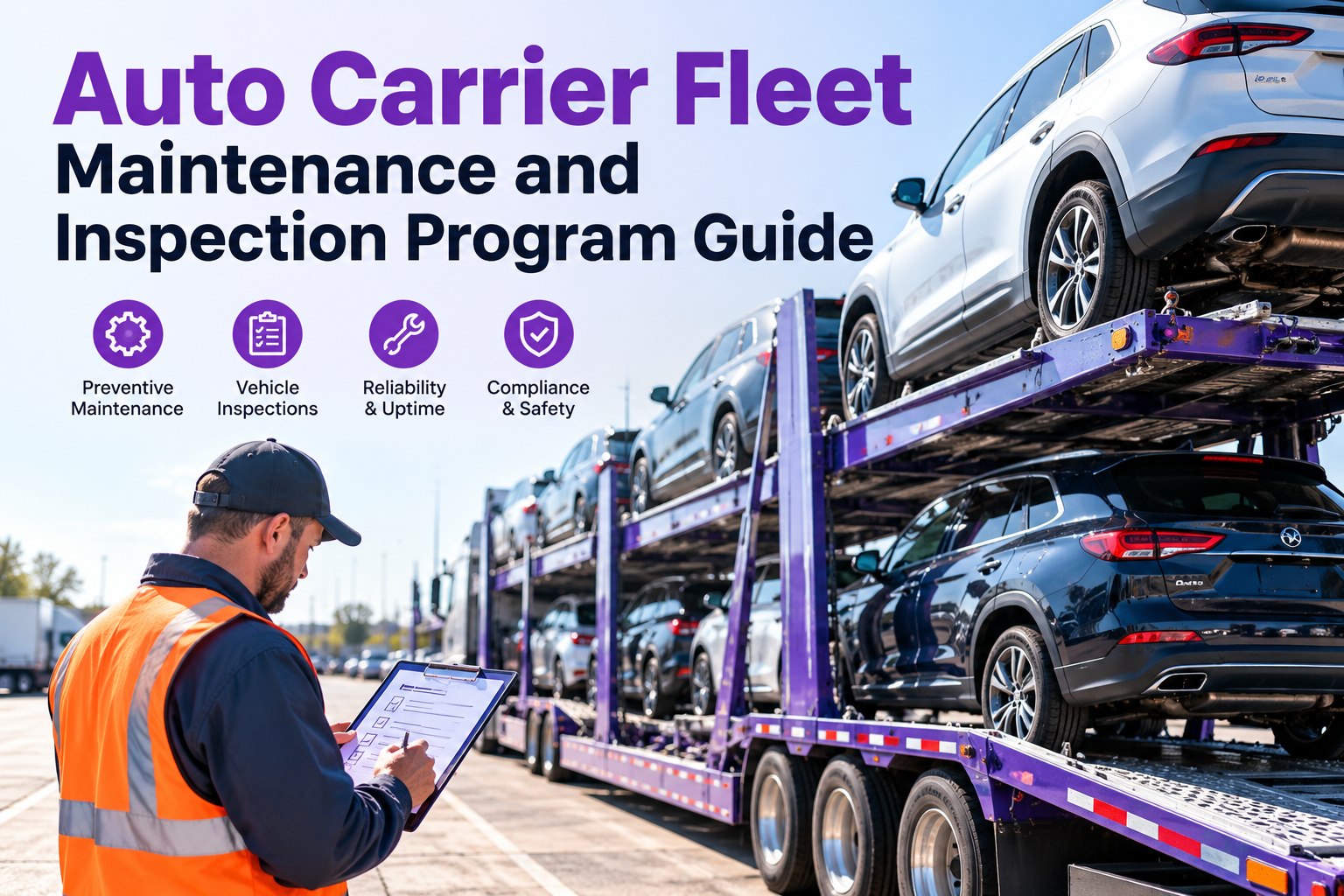
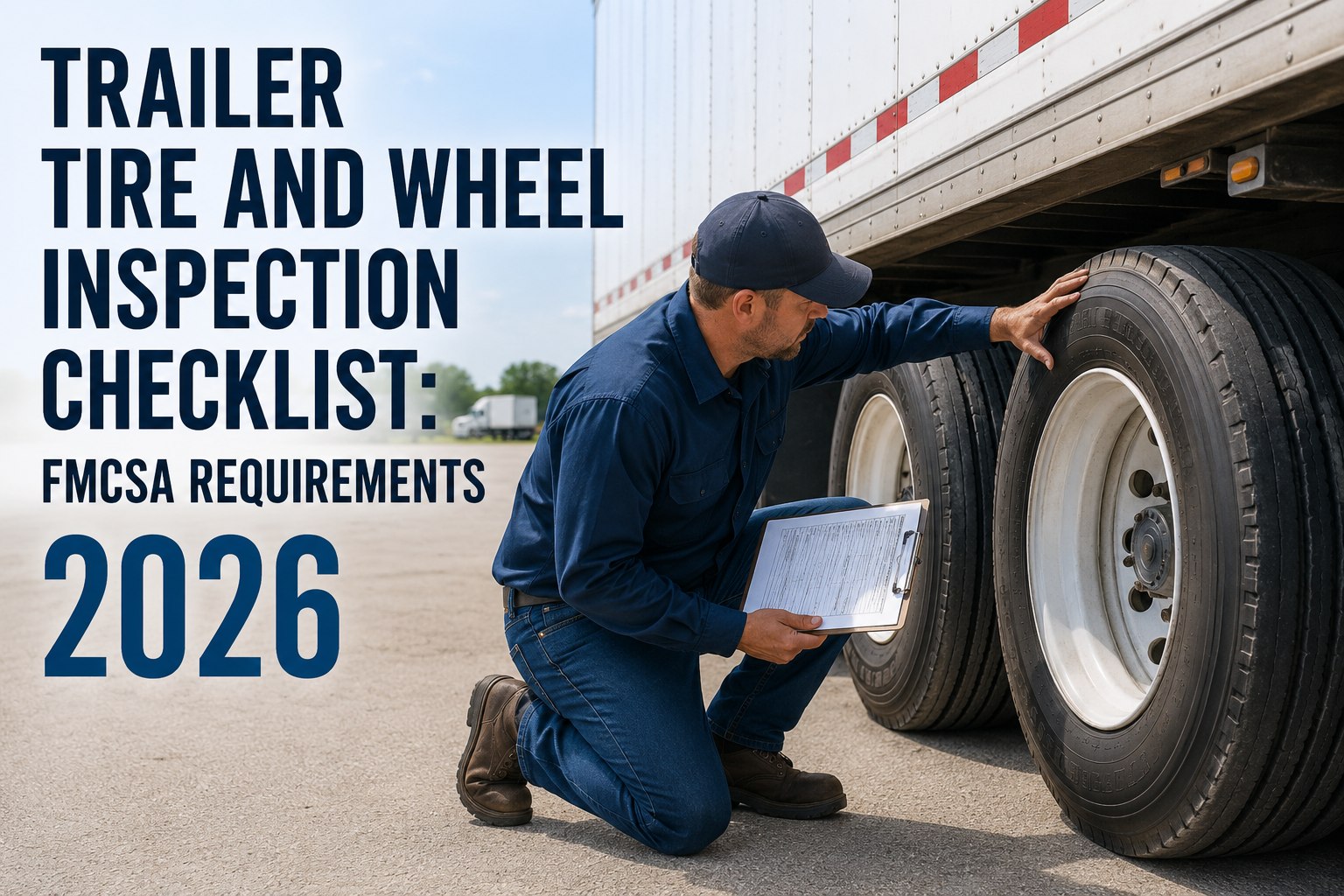
Vehicle inspection & maintenance
A written maintenance program, annual periodic inspection reports, DVIRs with documented repairs, and maintenance files for every vehicle.
Insurance & financial responsibility
Active insurance filings at the required coverage levels for your operation. If the filings aren't current, the audit cannot be passed.
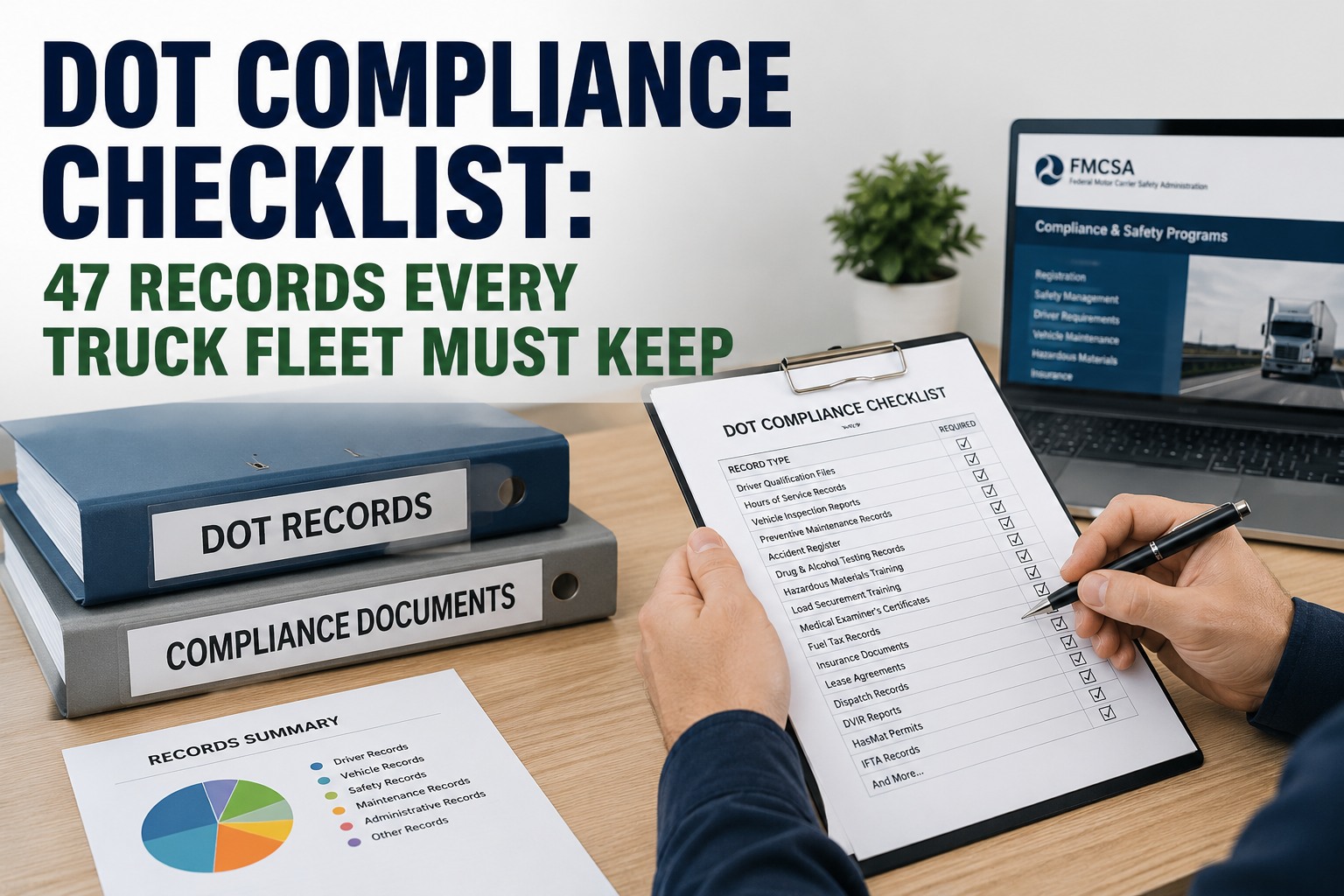
Accident register
A register covering the required period — which must exist and read "none" even if you've had zero recordable accidents. Its absence is a classic failure.
Automatic failure: sixteen violations that end the audit
FMCSA designates specific regulations where a single violation fails the audit regardless of how strong your performance is everywhere else. Build your program so these can never occur.
Drug & alcohol program failures
Having no testing program at all, using a driver before a pre-employment test, failing to conduct random testing, using a driver who refused a test or tested at 0.04 BAC or above, or not training supervisors.
Unqualified or disqualified drivers
Knowingly using a driver who is disqualified, medically unqualified, or holding a suspended, revoked, or otherwise improper CDL.
Operating without required insurance
Running without the financial responsibility coverage your authority requires — an immediate and unambiguous failure.
No hours-of-service records
Failing to require drivers to keep records of duty status, or accepting false logs, defeats the entire HOS control framework.
Out-of-service and DVIR defects
Operating a vehicle under an unresolved out-of-service order, or with a DVIR defect that was never repaired and certified.
No periodic inspections
Running vehicles that haven't received the required annual periodic inspection, or being unable to produce the inspection reports.
The vehicle factor adds separate exposure: under Part 385's appendix, if you've had at least three roadside inspections in the preceding 12 months and your vehicle out-of-service rate is 34% or higher, an adverse point is assessed against your audit. Roadside performance during your new entrant period is part of the evaluation, not separate from it.
Why New Carriers Actually Fail
The failures are remarkably consistent, and almost all are documentation gaps rather than genuine safety problems. These four account for most of them:
Incomplete driver qualification files
Missing MVRs, no road test certificate, an expired medical card, or no annual review. DQF violations make up a large share of all FMCSA citations.
No written maintenance program
Having your trucks serviced isn't enough — auditors want a documented program, inspection records, DVIRs, and proof that defects were actually repaired.
No accident register
Carriers with zero crashes routinely assume they don't need one. You do — it must exist and show "none" for the required period.
Logs that don't reconcile
If you can't produce a full month of logs matched to supporting documents like bills of lading, fuel receipts, and dispatch records, the audit usually fails.
Free · Up to 3 Vehicles
Have the records ready before the letter arrives
Fleet compliance software keeps inspection reports, DVIRs with documented repairs, maintenance history, and vehicle files organized per asset and retrievable in seconds — exactly the Part 396 evidence auditors ask for, and the area new carriers most often fail. No scrambling to reconstruct a maintenance program the week before your audit. Sign up free for up to 3 vehicles and build the paper trail from day one.
Two 2026 Changes to Know
Audit exposure isn't static. Two developments this year create scrutiny that didn't exist in prior audit cycles:
Non-domiciled CDL scrutiny
Following a March 2026 final rule on non-domiciled CDL eligibility, auditors are actively checking employment authorization documentation for drivers whose CDLs were issued under non-compliant programs. Verify any driver holding a non-domiciled CDL before your audit — this is new exposure.
Revoked ELD devices
As of May 2026, running a device that appears on FMCSA's revoked ELD list is treated as operating with no ELD at all — which carries automatic-failure exposure. Check your device against the current list rather than assuming it remains compliant.
If You Fail: The Corrective Action Plan
A failed audit isn't automatically the end of your authority — but the response window is short and the burden is on you:
Read the violation list
The written notice specifies exactly which regulations were violated. That list defines the scope of what you must fix.
Fix and document
Correct each deficiency and gather evidence — new policies, completed files, testing enrollment, inspection records — proving the fix is real and in use.
Submit the CAP on time
File your Corrective Action Plan within the deadline stated in your notice. Some automatic-failure violations carry shorter timelines than the general window.
Acceptance or revocation
An accepted CAP lets you continue under the new entrant program to the end of monitoring. Rejection or non-submission can mean revoked authority and an out-of-service order.
Frequently Asked Questions
What is the FMCSA New Entrant Safety Audit?
It's a one-time compliance review under 49 CFR Part 385 that every new interstate motor carrier must complete after activating a USDOT number. It verifies you have basic safety management controls — driver qualification files, drug and alcohol testing, hours of service records, vehicle maintenance, insurance, and an accident register — genuinely in place and in use. It's a document inspection rather than a road test.
When does the audit happen?
Property carriers are audited within 12 months of receiving their USDOT number, commonly around months 9 to 12, though state backlogs can push it later. Passenger carriers face a much shorter 120-day window. The audit sits inside an 18-month monitoring period during which FMCSA also evaluates your roadside inspection and safety data before granting permanent registration. Contact our team about audit-ready recordkeeping.
What causes an automatic failure?
FMCSA identifies sixteen regulations where one violation fails the audit regardless of everything else. The main categories are drug and alcohol program failures (no program, no pre-employment test, no random testing, using a driver who refused or tested at 0.04 BAC or higher, untrained supervisors), knowingly using a disqualified or improperly licensed driver, operating without required insurance, failing to require hours-of-service records, and operating with unresolved out-of-service orders, uncorrected DVIR defects, or no periodic inspections.
Do I need an accident register with no accidents?
Yes — and this is one of the most common avoidable failures. The accident register must exist for the required period and affirmatively show "none" if you've had no recordable accidents. Auditors treat a missing register as a compliance gap regardless of your crash history, so create and maintain it from the day your authority activates.
What happens if I fail?
You'll receive a written notice, typically within about 45 days, listing the specific violations. You then submit a Corrective Action Plan demonstrating you've fixed each deficiency, within the deadline stated in the notice — some automatic-failure violations carry shorter timelines. If FMCSA accepts your CAP, you continue operating through the monitoring period. If it's rejected or never submitted, FMCSA can revoke your operating authority.
How should I prepare?
Build the six record sets from day one rather than the month before. Keep a complete DQF per driver retrievable within 48 hours, enroll in a compliant testing program with an active random pool, maintain logs with matching supporting documents, run a written maintenance program with inspection reports and DVIRs, keep insurance filings current, and start the accident register immediately. Organized, consistently applied records turn the audit into a confirmation rather than a scramble. Sign up free to keep your maintenance evidence audit-ready.
Pass on the First Attempt
Make your audit a confirmation, not a reconstruction.
Fleet compliance software keeps periodic inspections, DVIRs, documented repairs, and full maintenance history organized per vehicle and instantly retrievable — the Part 396 evidence that trips up more new carriers than any other factor. Build the record from day one and walk into your audit with nothing to reconstruct. Free for up to 3 vehicles. Works with your existing fleet, no contracts.