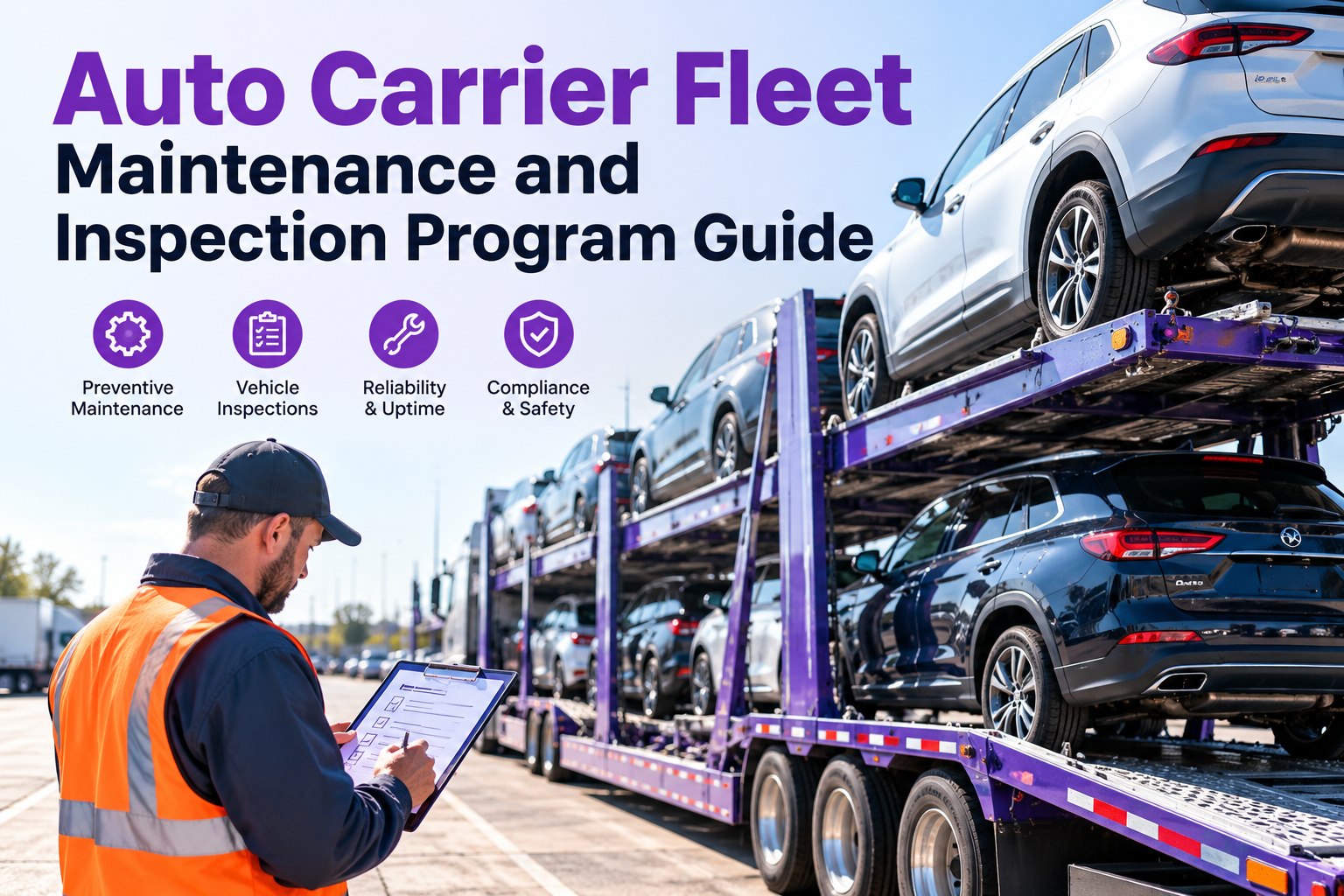
A generic tractor-trailer walkaround checks lights, brakes, tires, and coupling and calls it done. Run that same checklist on a loaded nine-car hauler and it misses almost everything that actually fails on this equipment: a deck lift cylinder seizing, a ramp locking pin that doesn't fully engage, a wheel strap worn past its rated capacity carrying a $40,000 vehicle three decks up. Auto hauling is its own inspection discipline, not a tractor-trailer checklist with extra steps. Start free and run an inspection built for hydraulic decks and vehicle securement.
Hydraulic Decks · Ramps · Wheel Straps · Cargo Securement
A Standard Pre-Trip Checklist Was Never Built for a Hydraulic Deck
The failures that actually ground a car hauler — a seizing deck cylinder, a ramp that drifts under load, a strap worn past its rated capacity — live outside a generic tractor-trailer walkaround entirely. Truck Inspection & Maintenance Management Software runs a purpose-built auto hauler inspection covering deck, ramp, hydraulic, and securement checks, then prompts the required cargo re-check within the first miles of the load.
Eight Hotspots a Generic Inspection Walks Right Past
These are the points on a loaded multi-level hauler where failures actually originate — the ones a tractor-trailer checklist was never designed to look for.
Deck Lift CylindersRust streaking at the cylinder ends often signals a seizing pin before the deck itself shows any sign of trouble
Deck & Ramp Hinge PinsExcessive wear or play here is the early warning of a structural failure point under load
Ramp Drift CheckRaise the ramps and confirm no visible downward drift — a slow drift under its own weight is a hydraulic seal problem waiting to happen
Ramp Locking PinsMust fully engage and hold for travel — a pin that seats only partially can release under road vibration
Wheel Straps & ChainsChecked for fraying, chemical damage, and fit in the anchor slot without play — not just "present"
Multi-Deck ClearanceVerified with a height stick on every load — vehicle-to-deck contact is a damage claim waiting to be filed
Hydraulic Lines & ReservoirLeaks here affect every deck the system actuates, not just one isolated point
Carrier Deck & FrameCracks or rust streaks on the deck structure itself, checked on every pre-trip, not just at annual inspection
The Hydraulic System Is the Most Expensive Thing on the Rig
A multi-level open hauler can carry independent hydraulic cylinders for each deck level, a shared pump and reservoir, and hydraulic lines running the length of the frame — all of it mechanically complex, all of it under constant load, and all of it far more expensive to replace than it is to maintain on schedule.
Structural weld inspection matters too Frame and deck weld inspection is typically an annual item, and it's one of the few checks on a car hauler where the repair cost difference between catching it early and not is dramatic — a routine weld inspection costs a few hundred dollars; a structural failure in service costs orders of magnitude more, before any cargo damage is even factored in.
Cargo Securement — The Math and the Re-Check Rule
Vehicle securement on a car hauler isn't "strap it down and go." It's governed by working load limit math per vehicle weight, and the inspection doesn't end when the truck leaves the lot.
WLL calculated per vehicleWheel strap and chain working load limits must meet or exceed what the cargo weight actually requires
Tie-down count confirmedCarrier policy and vehicle weight determine the number of tie-downs required per vehicle — commonly four
Re-check within the first milesSecurement is re-inspected early in the trip, since straps settle and shift once the load is actually moving
Photo-verified at loadingA documented record protects the fleet from both a roadside securement violation and a damage claim dispute
Built for Decks, Ramps, and Securement — Not Just Lights and Brakes
Our Truck Inspection & Maintenance Management Software runs the full auto hauler checklist — hydraulic systems, deck and ramp hardware, wheel strap condition, and cargo securement math — and routes every defect straight into a tracked work order before the rig leaves the yard.
Frequently Asked Questions
How often should cargo securement actually be re-checked after loading?
A common standard is to re-examine securement within the first 50 miles of a trip, since straps and chains can settle, loosen, or shift once a load starts moving — then periodically through the rest of the haul. A securement check done only at the loading dock isn't the full requirement.
Start free and build the 50-mile re-check into your driver's workflow.
How many tie-downs does each vehicle actually need?
It depends on the vehicle's weight and applicable regulation, but many carrier policies require four tie-down points per vehicle as a baseline, with heavier vehicles over 10,001 lbs subject to additional federal cargo securement requirements beyond the standard count.
What's the most commonly missed hydraulic system defect on a car hauler?
Rust streaking at the deck lift cylinder ends is a frequently overlooked early warning sign — it often indicates a seizing pin well before the deck itself shows any visible functional problem, which is exactly why it needs to be checked specifically rather than assumed fine because "the deck still moves."
Do wheel straps wear out even if they look fine?
Deck · Ramp · Hydraulic · Securement — All Inspected, Every Load
Give Your Auto Carrier Fleet the Inspection It Actually Needs
Our Truck Inspection & Maintenance Management Software covers all eight car-hauler-specific hotspots on every pre-trip, tracks hydraulic and deck maintenance separately from standard tractor-trailer PM, and keeps cargo securement documentation ready for both a roadside check and a damage claim dispute.
No credit card required. Free for up to 3 trucks.