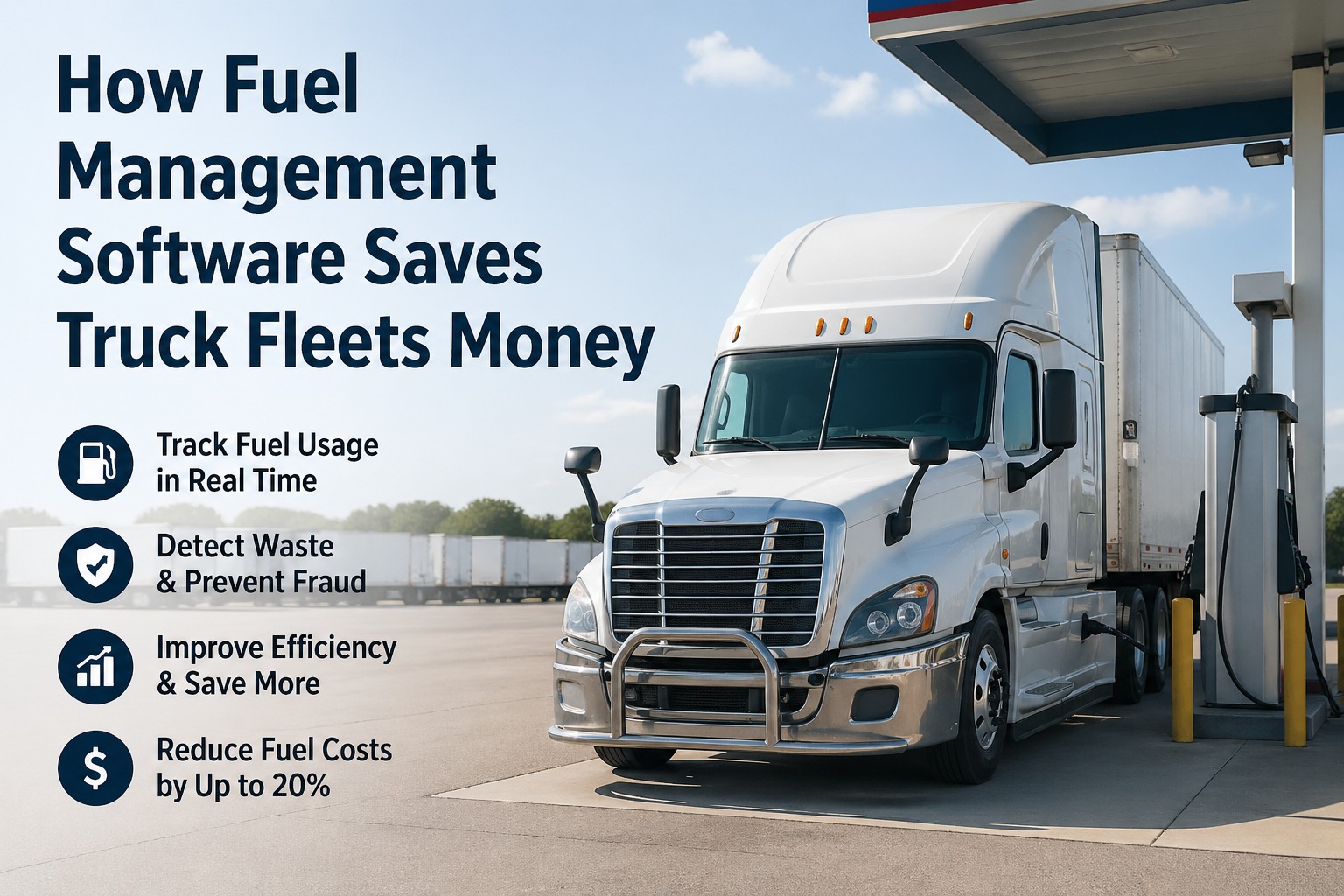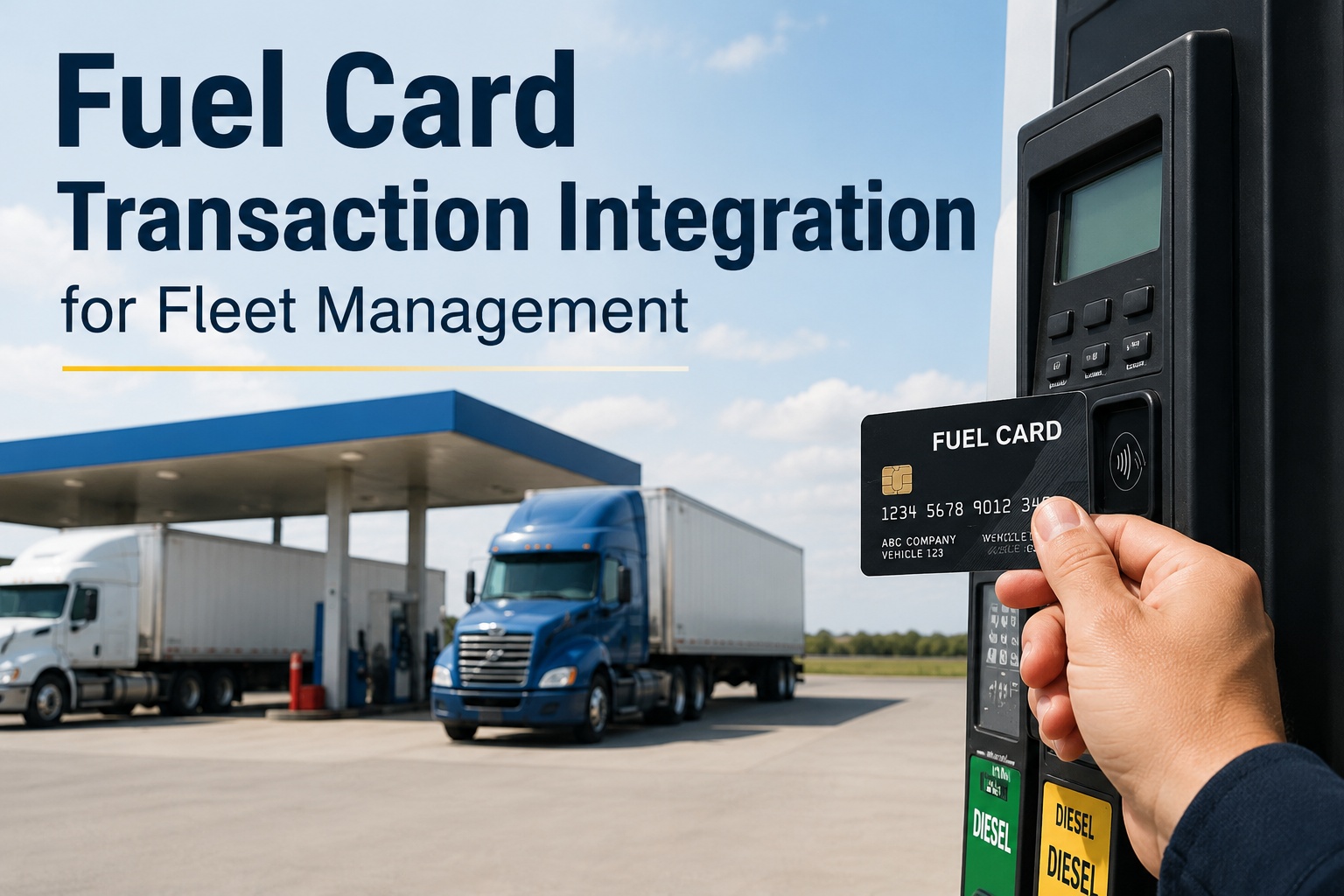
Fuel is the largest line item most fleets have — often 30 to 60 percent of total operating cost — and it's the one they see the least clearly. A driver swipes a card at the pump, the transaction lands on a statement three days later, and by the time anyone reviews it the fraud, the waste, or the mechanical warning sign it contained is long gone. Industry data puts fuel fraud and misuse at 19 to 22 percent of fleet fuel spend, most of it never detected without the right data. Sync your fuel cards free. Integrating fuel card transactions with Truck Inspection & Maintenance closes that visibility gap: every swipe flows in within minutes, auto-matched to the right vehicle, cross-checked against GPS and tank capacity to catch fraud, and turned into per-vehicle MPG that flags a failing engine before a breakdown does. This guide breaks down what the integration syncs, the fraud checks it runs, and how fuel data becomes a maintenance signal.
Fuel Card Transaction Integration for Fleet Management
Turn every pump swipe into visibility. Sync fuel card transactions into Truck Inspection & Maintenance — auto-matched to each vehicle, GPS-validated against fraud, and converted into MPG and cost-per-mile analytics that catch waste and mechanical trouble early.
Your Biggest Cost Is Your Biggest Blind Spot
Without integration, fuel data lives on a statement — retrospective, unmatched, and impossible to act on in time. The numbers show exactly what that blindness costs, and what closing it recovers.
From Pump to Dashboard
The whole transaction lifecycle runs automatically — no receipts, no CSV uploads, no manual reconciliation. Here's what happens the moment a driver swipes.
The Fraud Checks on Every Transaction
The single most effective defense is matching each purchase against where the vehicle actually was and what it could actually hold. Beyond GPS proximity, the integration runs a full battery of checks on every swipe — before the anomaly ever reaches a monthly statement.
Was the vehicle actually at that station when the card was swiped? A location mismatch flags instantly.
Gallons purchased exceed the vehicle's tank capacity — a classic sign of fueling a second, personal vehicle.
A swipe outside the vehicle's approved operating window gets surfaced for review.
Multiple transactions in an impossibly short window point to card sharing or skimming.
A diesel card swiped for gasoline — or vice versa — signals a purchase that doesn't belong to the asset.
Duplicate swipes and purchases far off the planned route are caught and flagged automatically.
Fuel Economy Is a Maintenance Signal
Here's the connection most fleets miss: a truck's MPG is one of the earliest tells of a mechanical problem. When fuel data and odometer readings meet, every fill-up becomes a health check — and a sustained drop points straight at the shop.
The platform tracks each vehicle's rolling 30-day, 90-day, and 12-month MPG average. When a unit's economy drops 10 to 15 percent below its own baseline, an alert fires — surfacing a dragging brake, a clogged filter, low tire pressure, or a failing injector before it becomes a roadside failure or an expensive repair. The same data ranks drivers by efficiency, exposing the idling and hard-acceleration habits that quietly burn fuel.
What the Integration Syncs
Every fuel card transaction carries a rich set of fields, and each one drives a different part of the operation once it lands in the maintenance platform.
Gallons, price per gallon, fuel type, driver ID, station, and timestamp — captured on every swipe automatically.
The odometer captured at the pump feeds meter-tracked maintenance and keeps PM service reminders accurate.
Station location powers GPS fraud validation and maps gallons to jurisdictions for automated IFTA reporting.
Fuel spend tied to real mileage builds cost-per-mile and total-cost-of-ownership analytics per vehicle.
Per-card limits and geographic restrictions enforce policy, while every purchase reconciles without manual entry.
Every card, every vehicle, every gallon — consolidated into a single view of your largest expense.
Start free →Stop Chasing Receipts. Start Seeing Fuel.
Truck Inspection & Maintenance syncs every fuel card transaction in real time, matches it to the right vehicle, runs it through GPS and tank-capacity fraud checks, and turns it into MPG, cost-per-mile, and IFTA-ready data — saving 10 to 15 admin hours a week and recovering the fuel spend that quietly leaks away.
Works With Your Fuel Card Program
The integration connects to the major commercial fuel card providers through secure API or data-sharing feeds — your existing card program stays exactly as it is, with the tracking and control layer added on top.
Why Fleets Sync Their Fuel Cards
A fuel card alone records the spend; connected, it becomes a tool that catches theft, prevents breakdowns, and automates compliance. Bridging it to maintenance removes the manual gap where money leaks.
GPS and tank-capacity checks flag suspect swipes in seconds — recovering the 19–22% most fleets lose.
MPG variance alerts surface mechanical issues weeks before they'd appear on a monthly report.
Transactions match to vehicles automatically — no receipts, saving 10–15 admin hours every week.
Gallons map to jurisdictions by location, turning quarterly fuel-tax filing into a one-click export.
Frequently Asked Questions
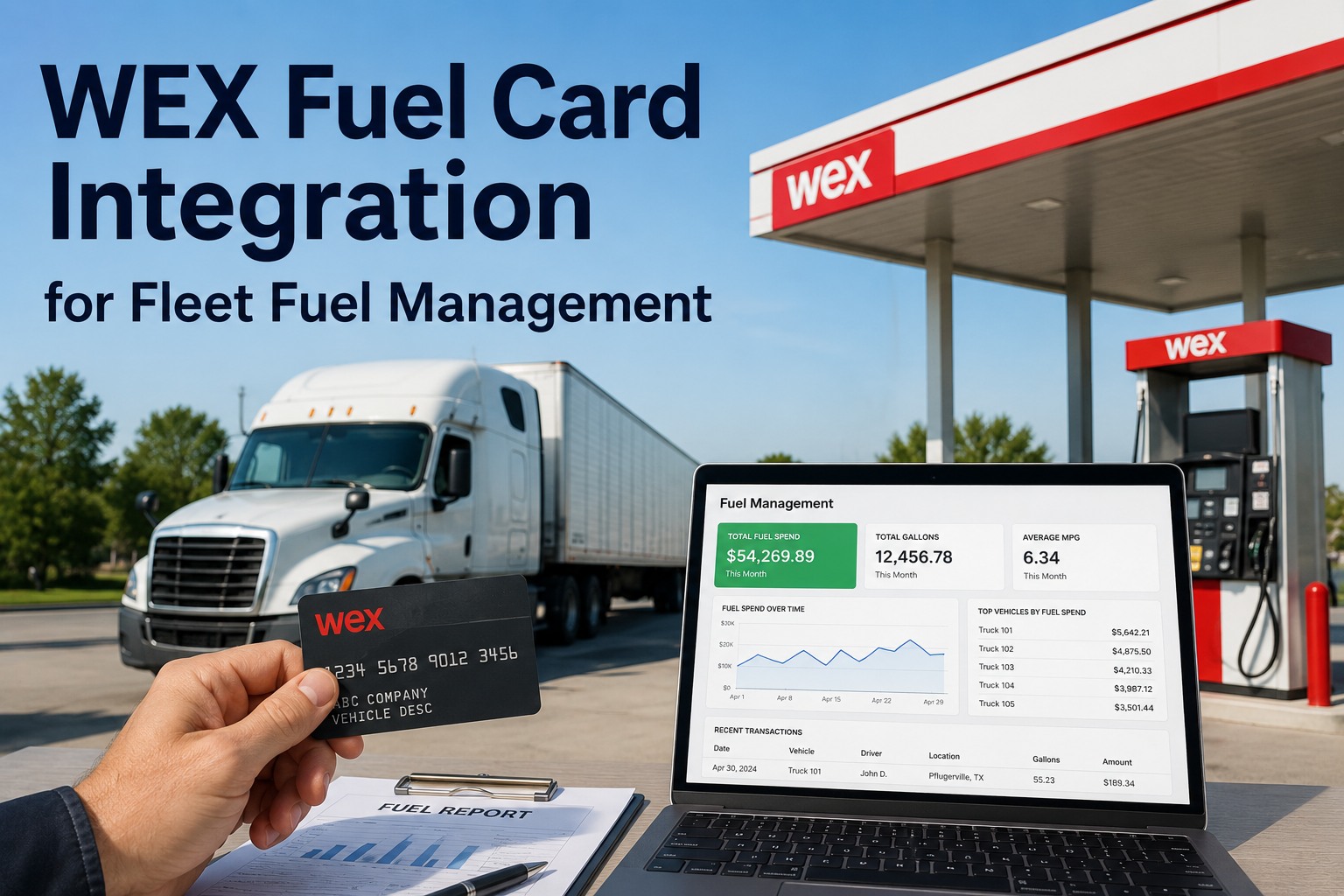
The integration connects with nine-plus major providers, including WEX, Comdata, FleetCor, EFS, AtoB, Coast, Car IQ Pay, Intevacon, and RoadFlex — spanning universal acceptance cards, cardlock networks, and branded fuel programs. It imports transactions from all connected cards and consolidates them into a single dashboard. Your existing card program stays in place; the integration adds the tracking, fraud, and analytics layer on top through a secure API or data-sharing feed, so there's no need to switch cards. Start a free trial to connect your cards.
It runs multiple checks on every transaction in real time. The most powerful is GPS validation — cross-referencing the station's location against the vehicle's actual position when the card was swiped; if the truck wasn't there, the transaction flags instantly. Beyond that, it checks for over-tank volume (gallons exceeding tank capacity), off-hours purchases, velocity (multiple swipes in a short window), fuel-type mismatch, route deviation, and duplicates. Because these run within seconds instead of on a monthly statement, you catch personal fueling, card sharing, and slippage as they happen. GPS-validated transactions cut fraud by roughly 80 percent. See fraud detection in action.
Fuel economy is an early warning system for mechanical trouble. The platform calculates MPG for each vehicle — the change in odometer divided by gallons purchased — and tracks a rolling baseline over 30, 90, and 365 days. When a unit's economy drops 10 to 15 percent below its own baseline, an alert fires, because a sustained MPG decline often signals a dragging brake, a clogged air filter, under-inflated tires, or a failing injector. Catching that in the fuel data surfaces the problem before it becomes a breakdown or a major repair, and it typically saves $400 to $1,500 per vehicle each year. Start free and track MPG per vehicle.
With a real API connection, transactions appear within minutes of the pump swipe — not the 24-to-72-hour delay of batch file uploads. That speed is what makes the fraud prevention valuable: catching an anomaly the same day means you can disable a compromised card before the losses compound, rather than discovering it weeks later on a statement. Each transaction flows in with full detail — gallons, price per gallon, fuel grade, driver ID, and station location — and is matched to the correct vehicle automatically, with no manual imports or CSV files.
Yes. IFTA reporting is one of the most time-consuming compliance tasks for interstate carriers, and fuel card integration eliminates the manual data entry behind it by automatically matching each purchase to a jurisdiction based on location. Combined with mileage data, the system reconciles gallons purchased per state against miles driven per state, so a quarterly report that used to take many hours becomes a one-click export. That turns fuel-tax filing from a recurring administrative burden into a routine, audit-ready task. Start free and automate IFTA.
Take Control of Your Largest Expense
Truck Inspection & Maintenance syncs every fuel card transaction in real time — matched to the vehicle, validated against GPS and tank capacity, and turned into MPG, cost-per-mile, and IFTA-ready analytics. Catch the fraud, predict the repair, automate the reporting, and stop letting your biggest cost be your biggest blind spot.