Geotab built its whole reputation on one idea: your fleet data belongs to you. While closed telematics systems lock your GPS, diagnostics, and engine data inside their own walls, Geotab's open platform — MyGeotab, its API, SDK, and Marketplace — is designed to send that data wherever it's useful. The catch is that an open door only helps if something walks through it. Rich engine-health data streaming off the GO device does nothing for your shop if it never reaches your maintenance system, where a diagnostic trouble code should become a work order and real odometer readings should drive the PM schedule. This guide covers how a Geotab telematics integration works, exactly what data flows, and how Truck fleet management software turns your Geotab feed into automated maintenance, inspections, and compliance from one connected platform.
Integration Guide · Fleet Telematics · 2026
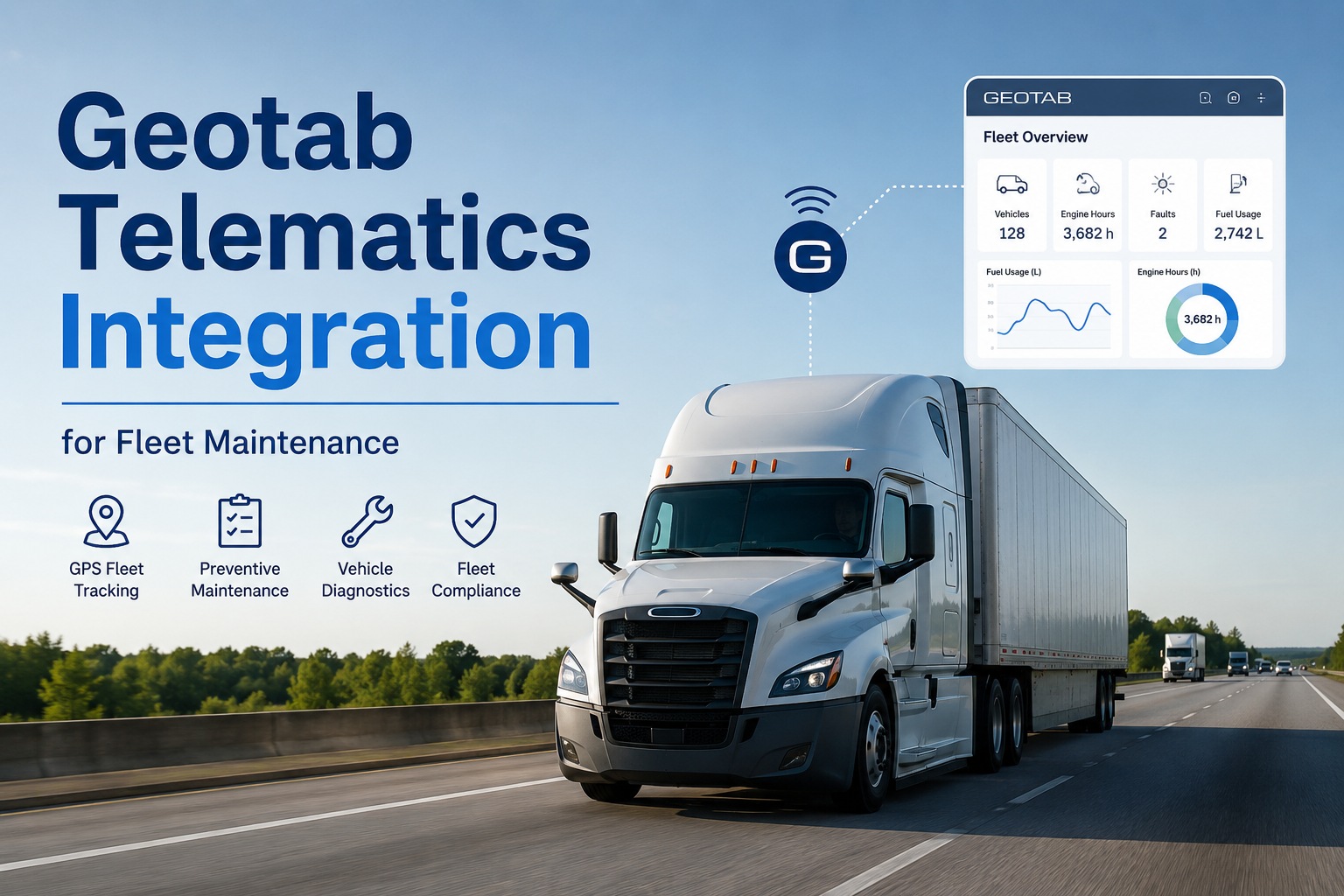
Geotab Telematics Integration for Fleet Maintenance
Connect your Geotab GO devices to one maintenance platform — turning engine diagnostics, DVIRs, odometer data, and HOS into automated scheduling, work orders, and compliance.
Open
API, SDK & Marketplace — your data, your systems
15 sec
GO device tracking refresh rate
DTC
Fault codes flow straight to maintenance
70%
Of fleets rank oil & tire service as top needs
Open Platform, One Condition
The advantage of Geotab is also the thing most fleets underuse. An open platform means your data isn't trapped — but it still has to be connected to a system that acts on it. Left alone in MyGeotab, engine-health signals are reports you have to read; piped into a maintenance platform, they become work that gets done automatically.
Data that just reports
DTC alerts noticed only if someone checks
Odometer copied into the PM sheet by hand
DVIR defects live in a separate app
Telematics and maintenance never meet
Data that drives action
Fault codes auto-create work orders
PM triggers off real usage, no re-entry
Defects flow into the maintenance queue
One connected platform, one record
What Data the GO Device Sends
The Geotab GO device captures far more than dots on a map. Through the MyGeotab API, this rich vehicle data flows into your maintenance platform — each stream feeding a specific workflow:
Engine diagnostics & DTCs
Diagnostic trouble codes and engine-health data flag maintenance the moment a fault triggers.
Odometer & engine hours
Accurate usage meters that drive PM scheduling by real wear, not a fixed calendar.
DVIR & inspections
Geotab Drive pre- and post-trip inspection results and reported defects flow into your queue.
HOS & compliance
Hours-of-service and duty-status data kept beside your ELD, DVIR, and IFTA records.
GPS & location
Live location on a 15-second refresh, tied to each asset's maintenance profile.
Fuel & idle data
Fuel usage and idle time to pinpoint cost leaks and behavior that accelerates wear.
How it moves: Geotab acts as middleware — data flows from the cloud, not the device, through the MyGeotab API's data-feed method. A secure token polls for new and updated records, so your maintenance platform stays in sync automatically without touching the hardware.
How the Integration Connects
Geotab's open architecture gives you more than one way in. Which path fits depends on how deep you need the connection to go — but all three keep your data flowing into maintenance without ripping anything out:
MyGeotab API & Data Feed
The core route. A token-based feed syncs vehicle, diagnostic, and inspection data into your maintenance platform on a polling interval — language-agnostic and built for automation.
Marketplace & Add-Ins
Pre-built integrations and Add-Ins that drop into the MyGeotab interface, so a maintenance solution can appear right inside the platform your team already uses.
OEM & mixed hardware
Geotab ingests factory-fitted OEM telematics and third-party devices too — so a mixed fleet feeds one maintenance view, no rewiring or duplicate installs.
Free · Up to 3 Vehicles
Put your Geotab data to work
Truck fleet management software pulls your Geotab diagnostics, DVIRs, odometer readings, and HOS through the MyGeotab API — auto-creating work orders from fault codes, scheduling PM by real usage, and keeping inspection and compliance records in one place. Sign up free for up to 3 vehicles and connect your GO devices today.
What the Integration Automates
Once the feed is live, four maintenance workflows that used to eat manual hours start running on their own. This is where an open platform earns its keep:
Fault-code work orders
A DTC from the GO device auto-generates a maintenance flag, so an engine issue gets triaged in the shop before it strands a truck on the road.
Usage-based PM scheduling
PM triggers off real odometer and engine-hour data, aligning oil changes, tire rotations, and service intervals with how each truck is actually driven.
Defect-to-repair routing
DVIR defects from Geotab Drive become work orders with no manual handoff, keeping inspection findings from slipping through the cracks.
Unified compliance records
HOS, DVIR, and inspection data sit alongside maintenance history, so audit week is a search — not a scramble across two systems.
The Payoff of Connecting the Two
An open telematics platform and a maintenance platform are stronger together than either alone. Joining them delivers gains across uptime, cost, and compliance at once:
Less downtime
Catching a fault code the moment it triggers — instead of at the next breakdown — turns a roadside failure into a scheduled shop visit, protecting uptime and appointments.
Lower cost
Usage-based PM avoids both over-servicing and missed intervals, while fuel and idle data expose the behavior quietly driving up wear and spend.
Cleaner compliance
DVIRs, HOS, and maintenance records in one place produce audit-ready documentation on demand — the visibility a closed, siloed setup can't match.
Frequently Asked Questions
What does a Geotab telematics integration do?
It moves the data your Geotab GO device collects — engine diagnostics, DTCs, odometer, engine hours, DVIRs, HOS, GPS, and fuel data — into your maintenance platform automatically through the MyGeotab API. Instead of that data living only in MyGeotab, it triggers work orders, drives PM scheduling by real usage, and keeps compliance records centralized, eliminating double entry between two systems.
How does the data actually get from Geotab to my maintenance system?
Geotab acts as middleware — the data lives in the Geotab cloud, not on the device. Your maintenance platform uses the MyGeotab API's data-feed method, where a secure token polls at intervals to pull new and updated records. It's language-agnostic and built for automation, so the sync runs continuously without any interaction with the GO hardware. Contact our team to see the connection in action.
Do I need new hardware to integrate?
Usually not. If your trucks already run Geotab GO devices, the integration works through the existing platform. Geotab also ingests factory-fitted OEM telematics on many newer trucks and supports third-party devices, so even a mixed fleet can feed one maintenance view without new installs or rewiring.
How do fault codes improve maintenance?
Geotab reports diagnostic trouble codes in real time. When those flow into a maintenance platform, a DTC can automatically create a work order or maintenance flag the moment it triggers — so a developing engine problem is triaged in the shop before it becomes a roadside breakdown, protecting both uptime and delivery windows.
Can I keep using MyGeotab for compliance?
Yes. The integration complements Geotab, it doesn't replace it. Geotab Drive remains your tool for HOS logging and DVIR inspections under FMCSA rules, while the maintenance platform centralizes PM scheduling, work orders, and repair history. You keep the telematics and compliance tools you rely on and add the maintenance depth to act on the data.
Why connect Geotab to a separate maintenance platform at all?
Because Geotab's strength is open data, not deep maintenance management. Pairing its rich telematics feed with a purpose-built maintenance platform gives you automated work orders, usage-based PM, and unified compliance that a telematics tool alone isn't built to deliver — and the open platform makes that connection straightforward. Sign up free to link the two.
One Connected Platform
Turn Geotab data into maintenance that runs itself.
Truck fleet management software connects your Geotab GO devices to automate maintenance scheduling, inspections, and DVIR workflows — with fault-code work orders, usage-based PM, and unified compliance records pulled straight from the MyGeotab API. Free for up to 3 vehicles. Connect through the open platform, no new hardware, no contracts.