Commercial vehicle accidents cost U.S. employers $72 billion annually and remain the leading cause of workplace fatalities. The brutal reality: 80% of equipment failures that cause these crashes show detectable warning signs 30-90 days before the breakdown. The accidents aren't random — they're predictable patterns that structured inspection programs catch before tragedy strikes. The FMCSA estimates that proper DVIRs prevent approximately 14,000 accidents every year through early defect identification. Yet only 7% of motor carriers pass focused compliance reviews without a single DVIR-related citation. That gap is where preventable accidents happen — and where six- and seven-figure liability awards originate. The average trucking verdict between 2020-2023 reached $27.5 million, with "nuclear verdicts" of $10M+ becoming routine. Truck Inspection & Maintenance is built around the exact safety controls that prevent these incidents: digital DVIR enforcement, photo-verified defect documentation, GPS-tagged inspection records, auto-routed defect-to-repair workflows, and CSA score protection that flips fleets from high-risk to preferred-risk classification. Industry data shows fleets running structured safety programs achieve 35-40% aggregate crash reduction. This guide walks through exactly how inspections reduce accidents and what controls actually matter. Talk to our team for a fleet safety assessment.
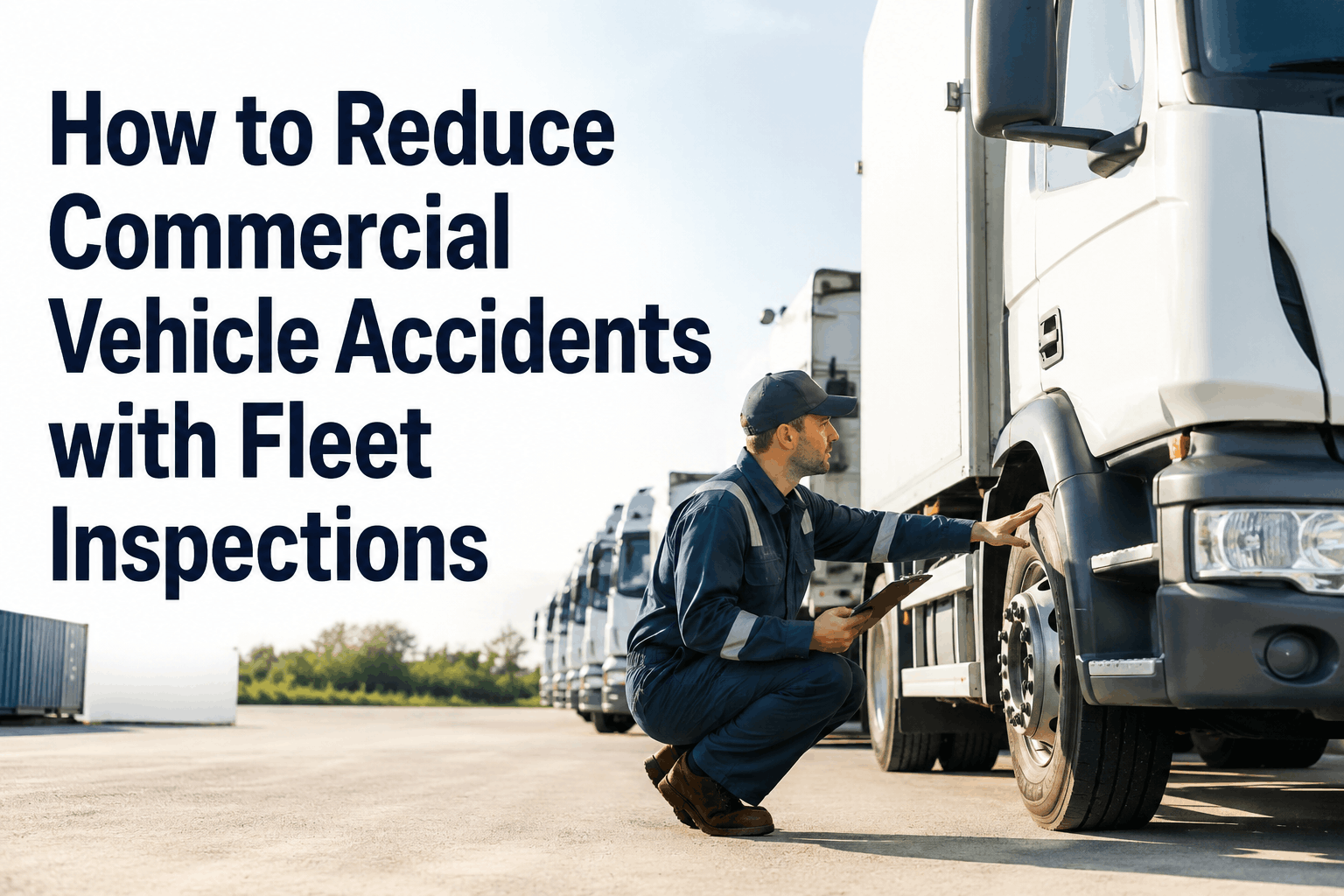
How to Reduce Commercial Vehicle Accidents with Fleet Inspections
14,000 accidents prevented annually. Truck Inspection & Maintenance delivers the controls.
The 5 Mechanical Failures That Cause Most Accidents
Commercial vehicle accidents from mechanical failures aren't mysterious — they cluster around five specific components. Truck Inspection & Maintenance is built around catching every one of these before they cause crashes:
Brake System Failures
29% of all truck accidents involve brake issues. Worn pads, air leaks, slack adjuster problems, contaminated lines. Our pre-trip DVIRs catch 80%+ of brake defects before departure with photo-verified evidence.
Tire Failures
53.5% of roadside breakdowns per TMC data. Underinflation, tread wear, sidewall damage, retread separation. Pressure and tread checks at every DVIR — caught at the yard, not at 70 mph.
Lights & Visibility
Headlights, brake lights, marker lamps, reflective tape, mirrors. Critical for nighttime and adverse-weather operations. CSA "Driver Observed" methodology specifically penalizes missed light defects.
Coupling & Steering
Fifth wheel disconnects, kingpin wear, tie rod failures, steering box issues. Catastrophic when they fail at speed. Truck Inspection & Maintenance enforces coupling verification on every pre-trip.
Suspension & Wheel Components
Worn shocks, broken springs, loose lug nuts, hub seal failures. Catastrophic wheel separations cause cross-median crashes. Torque checks and visual inspections catch these early.
The Real Cost of a Single Accident
The financial math behind accident prevention is brutal. A single serious commercial vehicle accident generates costs that can bankrupt small fleets. Truck Inspection & Maintenance documentation is your only protection at every level:
The avoidance math: Avoiding a single serious accident typically offsets the annual cost of structured safety technology investment across an entire 50-truck fleet — multiple times over. Truck Inspection & Maintenance pays for itself the first time it prevents one preventable defect from becoming an incident.
The 6 Inspection Controls That Reduce Accidents
Not every "inspection" prevents accidents. The controls below are what separates safety theater from actual risk reduction. Truck Inspection & Maintenance enforces each one:
Mandatory Pre-Trip DVIRs
49 CFR 396.13 requires drivers to review previous DVIR and verify repairs BEFORE operating. Our platform blocks dispatch when previous DVIR is unsigned — physical compliance enforcement, not policy reliance.
Photo-Verified Defect Documentation
"Driver said the light was fine" doesn't survive litigation. Photo evidence with timestamp and GPS does. Truck Inspection & Maintenance requires photos for every flagged defect — embedded in the work order.
GPS-Tagged Inspection Records
Pencil-whipping — completing DVIRs away from the vehicle — is the #1 audit risk. GPS coordinates lock the inspection to the actual location. CSA "Driver Observed" methodology specifically requires location proof.
Auto-Routed Defect-to-Repair
The DVIR is only as good as what happens after the defect is flagged. Truck Inspection & Maintenance auto-creates work orders, routes by severity, and tracks repair certification on the original record.
3-Signature Compliance Chain
49 CFR 396.11(a)(3) requires the chain: driver pre-trip, then mechanic certification, then next driver acknowledgment. Most apps capture one signature. Our platform enforces all three before dispatch.
Trend Analytics Across Fleet
One brake defect = one repair. Same brake defect across 5 trucks = systemic problem (vendor, route, or driver pattern). Truck Inspection & Maintenance surfaces patterns before they cause crashes.
The Driver Training Connection
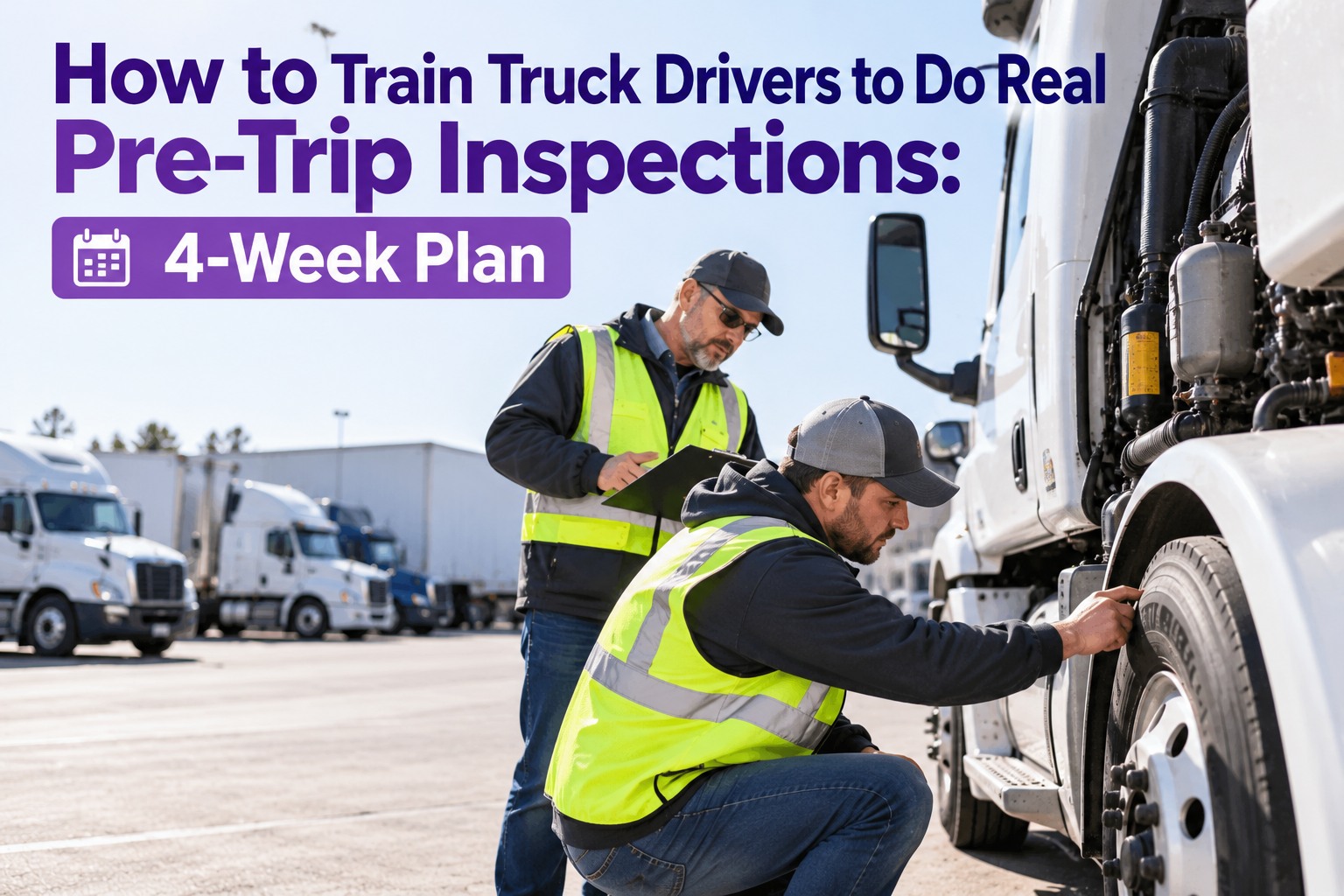
Even the best inspection platform fails if drivers don't know how to inspect. The training gap is the single biggest factor in DVIR effectiveness. Truck Inspection & Maintenance provides the structural support that makes training stick:
Stop preventable accidents before they happen
Truck Inspection & Maintenance enforces every safety control: pre-trip DVIRs, photo evidence, GPS tagging, auto-routed repairs, 3-signature compliance, fleet trend analytics. Sign up free on your first 3 vehicles to deploy accident-prevention controls today.
The CSA "Driver Observed" Methodology (2026)
FMCSA's 2026 CSA update split the Vehicle Maintenance BASIC into "Standard" and "Driver Observed" sub-categories. Items drivers should catch during walk-around (lights, tires, coupling, reflective tape) are scored separately — making driver-level inspection thoroughness directly visible to insurance underwriters:
The Legal Liability Angle
Beyond regulatory and insurance impact, inspection records are your legal armor — or your biggest vulnerability. Plaintiff attorneys follow a predictable playbook when a truck accident causes injuries:
The 35-40% Crash Reduction Math
Industry data from fleets that deployed comprehensive safety programs through Truck Inspection & Maintenance shows consistent results. The reduction comes from compounding effects:
Building a Safety Culture, Not Just a Compliance Program
The fleets with the lowest accident rates don't just have inspection programs — they have safety cultures. Truck Inspection & Maintenance provides the structural foundation that makes culture stick:
Frequently Asked Questions
FMCSA estimates that proper DVIRs prevent approximately 14,000 commercial vehicle accidents every year through early defect identification. Yet only 7% of motor carriers pass focused compliance reviews without a single DVIR-related citation — meaning most fleets are operating without the controls that prevent those 14,000 accidents. Truck Inspection & Maintenance closes the gap by enforcing the 3-signature chain structurally. Contact our specialists for an accident-prevention assessment.
Industry data: brake issues factor into 29% of truck accidents, tire failures into 53.5% of roadside breakdowns. These aren't random — they cluster around 5 specific component categories (brakes, tires, lights, coupling/steering, suspension). Truck Inspection & Maintenance is built around catching every one of these before they cause crashes — with photo-verified DVIRs and auto-routed defect-to-repair workflows.
Costs cascade across six levels: OOS violations ($1,270-$32,208), CSA score damage (15-40% insurance hike), civil litigation ($500K-$10M), nuclear verdicts ($10M-$1B+ — average trucking verdict 2020-2023 was $27.5M), insurance cancellation, and operational shutdown. Avoiding a single serious accident typically offsets the annual cost of Truck Inspection & Maintenance across an entire 50-truck fleet many times over. Sign up free to deploy accident-prevention controls today.
Yes. Industry data from fleets implementing comprehensive safety programs through purpose-built CMMS platforms shows 35-40% aggregate crash reduction. The mechanism: catching the 18% of vehicles that would fail roadside inspection, surfacing the 30-90 day warning signs on 80% of equipment failures, and compressing defect-to-repair cycle times from 3 days to 4 hours. Truck Inspection & Maintenance delivers all three controls in one platform.
FMCSA's 2026 update split Vehicle Maintenance BASIC into "Standard" and "Driver Observed" sub-categories. Items drivers should catch during walk-around (lights, tires, coupling, reflective tape, visible leaks) are scored separately — making driver-level inspection thoroughness directly visible to underwriters and load brokers. Truck Inspection & Maintenance is pre-mapped to the new methodology with per-driver defect pattern tracking for coaching.
The complete chain: pre-trip DVIR with photo evidence + GPS coordinates + timestamp, work order showing repair, mechanic certification on original DVIR, next driver acknowledgment. Plaintiff attorneys specifically target gaps in this chain. Truck Inspection & Maintenance generates the unbroken chain by design — making missing records structurally impossible. Talk to our team for a legal-readiness review.
14,000 preventable accidents per year. Truck Inspection & Maintenance turns "preventable" into "prevented."
Pre-trip DVIRs. Photo-verified defects. GPS-tagged records. Auto-routed work orders. 3-signature compliance. Per-driver analytics. Free for up to 3 vehicles. 35-40% crash reduction benchmark across deployed fleets.