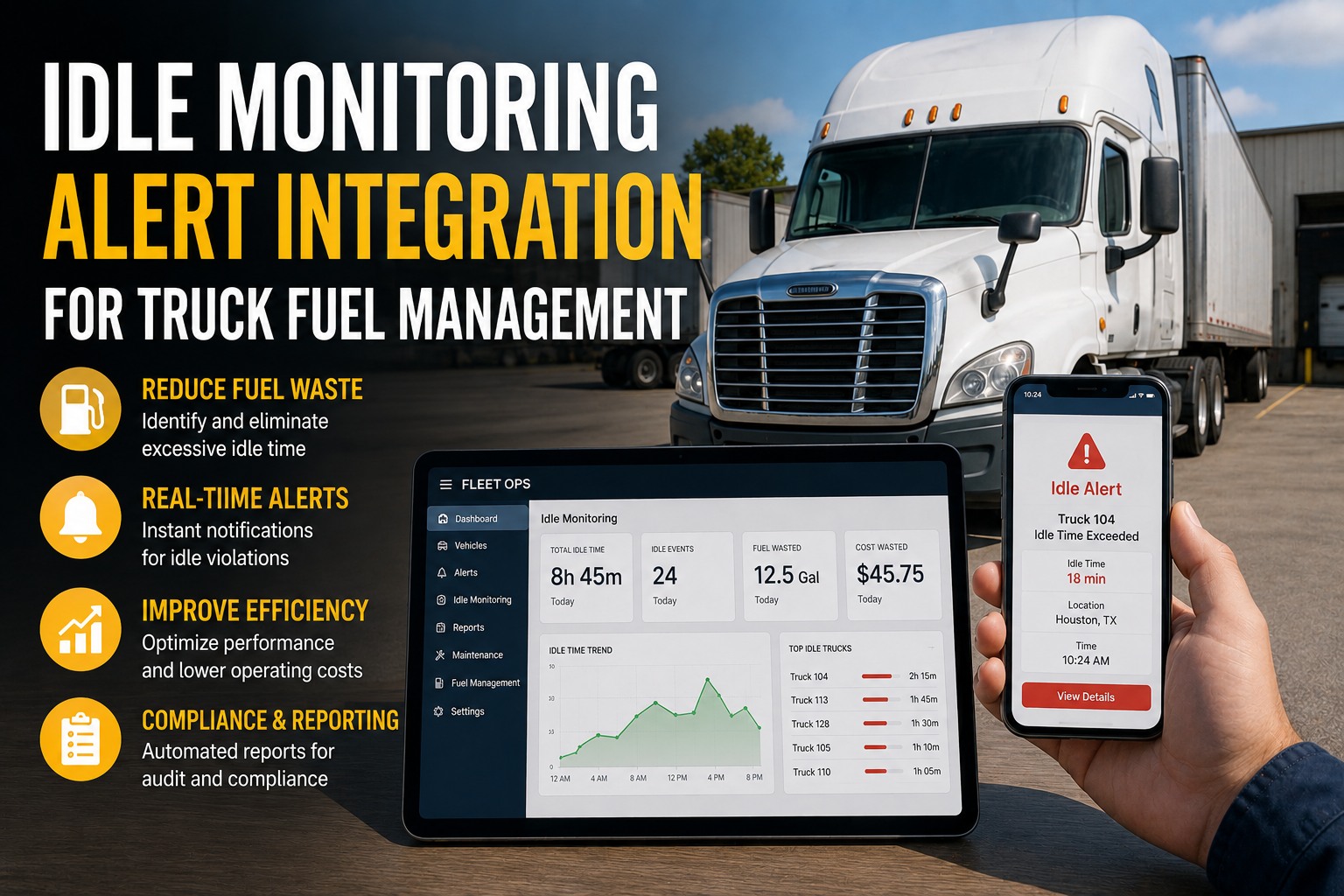
There's a meter running on every truck in your fleet that never shows up on a report. It ticks over while a driver takes a call in the cab, while a truck waits at a dock with the AC on, while an engine warms up for twenty minutes on a cold morning. It burns roughly 0.8 gallons of diesel an hour and produces zero miles — which is exactly why you never see it. Your fuel reports measure gallons per mile, so idle waste hides inside a perfectly normal-looking MPG number, quietly costing $4,000 to $6,000 per truck a year in overnight idling alone. Idle monitoring alert integration drags that hidden meter into the light: it separates idle hours from drive hours for every vehicle, flags the avoidable idling in real time, and turns a five-minute policy into something that actually gets followed. This guide covers how it works, the true triple cost of idling, and how truck fleet management software connects idle data to fuel, maintenance, and compliance in one place.
Fuel Management Guide · Idle Monitoring · 2026
Idle Monitoring Alert Integration for Truck Fuel Management
Expose the meter that never stops. Separate idle from drive time, flag avoidable idling as it happens, and stop paying for fuel that moves nothing.
0.8 gal
Diesel burned per hour of idling — for zero miles
1,800+
Hours a long-haul truck idles per year
$4-6K
Wasted per truck yearly from overnight idling
31+
US states enforcing anti-idling laws
Why Idle Waste Stays Invisible
Idling doesn't announce itself. Unlike a blown tire or a missed delivery, it generates no incident report and trips no alarm — and it hides inside the one number everyone trusts. That's the whole problem:
Why a fleet-wide number isn't enough: idle burn varies widely by vehicle class, load, and what accessories are running — a loaded delivery truck can burn 1.1 gallons an hour while a light one burns 0.44. A single averaged figure tells you almost nothing. Per-vehicle tracking is what turns "we idle too much" into "these five trucks are the problem."
The Triple Cost of Idling
Idling isn't just a fuel problem — it hits your bottom line through three separate channels at once. Understanding all three is what makes the ROI on monitoring obvious:
Fuel burned
0.8-1.5 gallons an hour producing no miles. Across a 100-truck fleet at 30% idle, that runs into six figures of pure waste every year.
Accelerated wear
Every idle hour adds engine wear and runs the engine outside its optimal thermal range — cutting oil-change intervals 25-38% and stressing the DPF.
Regulatory fines
Over 31 states enforce anti-idling laws with fines reaching $1,000 per violation — plus rising exposure through CSA scoring and insurance underwriting.
The Real Cost, Counted Up
The reason idling gets ignored is that no single instance feels expensive. But the meter compounds relentlessly — here's how one hour a day scales across a fleet and a year:
The compounding part: those figures are fuel alone. Add the $400-700 per vehicle in extra maintenance from shortened oil intervals and DPF stress, and the true number climbs higher. This is why structured idle programs pay back in 3 to 6 months — the waste was always there, just never measured.
Free · Up to 3 Vehicles
See your fleet's real idle number
Truck fleet management software logs idle time separately from drive time for every vehicle, converts it straight into a dollar figure, and alerts you the moment a truck idles past your policy threshold — with the context to tell a reefer unit from an engine left running for comfort. It runs on the telematics you already have. Sign up free for up to 3 vehicles and uncover the meter that's been running all along.
Necessary vs. Avoidable Idle
Here's what separates a useful alert from an annoying one: not all idling is waste. A blunt system that flags every idle minute gets muted within a week. The real skill is telling the two apart — and a good integration tags each idle event by why it happened:
Necessary idle
Reefer units keeping a load cold
Lift gates and PTO-driven equipment
Traffic and unavoidable congestion
DPF regeneration cycles in progress
Safety — extreme cold or heat
Avoidable idle
Engine left running during a break
Warm-ups far longer than needed
Cab comfort with the main engine on
Waiting at a dock, engine running
Overnight idling where shore power exists
Why the distinction is the whole game: a fleet-wide idle total that lumps a reefer unit in with a driver's warm-up is worse than useless — it burns trust in the alerts. Tagging each event by cause is what lets you target the truly avoidable hours without nagging drivers about the idling they can't help.
How Idle Alerts Actually Work
Once the telematics feed is connected, idle monitoring runs as a simple, continuous loop — measure, flag, coach — that turns a written policy into daily behavior:
Set the threshold
Define your policy — commonly a five-minute maximum — with exceptions for weather and safety. The system holds every vehicle to it automatically.
Detect in real time
Engine-on with zero movement past the threshold triggers an idle event, tagged with location, duration, driver, and likely cause.
Alert & surface offenders
A notification flags sustained avoidable idling as it happens, and per-vehicle reports rank the worst offenders instead of a vague fleet average.
Coach & track
The data drives targeted driver coaching — and structured programs consistently cut idle time 22-35%, with the trend visible week over week.
The Maintenance Connection
The strongest reason to put idle data in your maintenance platform, not a standalone fuel app, is that idle hours quietly drive your service costs. Tracking them together is where the savings compound:
Smarter oil intervals
High idle time degrades oil faster and can cut change intervals 25-38%. Tracking idle alongside engine hours means service is scheduled on real wear, not just miles.
Less DPF stress
Idling causes soot buildup that forces DPF regeneration cycles — each burning fuel for up to two hours. Cutting idle reduces aftertreatment maintenance 30-40%.
Extended asset life
Fewer hours running outside optimal thermal range means less cylinder glazing and premature wear — directly extending the service life of the engine.
Compliance on record
Idle and emissions data logged automatically supports anti-idling compliance and the CSA and insurance reporting that increasingly affects contract eligibility.
Frequently Asked Questions
How much does idling actually cost?
More than most fleets realize. A commercial truck burns roughly 0.8 gallons of diesel per hour at idle — some as much as 1.5 depending on class and load — producing zero miles. That's about $1,200 per truck a year at just one hour of idle a day, and $4,000-6,000 per truck from overnight idling alone. Across a 100-truck fleet, avoidable idling routinely runs into six figures annually in fuel, before maintenance and fines.
Why doesn't idle waste show up in my fuel reports?
Because standard fuel reports measure gallons per mile, and idling produces no miles. The fuel burned sitting still gets averaged into your overall MPG, so it hides inside a number that looks perfectly normal. The only way to see it is to log idle time separately from drive time, per vehicle — which is exactly what idle monitoring does. Contact our team to see your fleet's hidden idle cost.
Does idling really damage the engine?
Yes, on both fuel and mechanical fronts. Idling runs the engine outside its optimal thermal range, causing incomplete combustion, cylinder glazing, and faster oil degradation — enough to cut oil-change intervals by 25-38% and add $400-700 per vehicle a year in maintenance. It also builds soot in the DPF, triggering fuel-burning regeneration cycles. Every idle hour also adds meaningful engine wear for no productive work.
Won't idle alerts just annoy my drivers?
Only if the system is blunt. Not all idling is avoidable — reefer units, lift gates, traffic, DPF regens, and extreme-weather safety all require it. A good integration tags each idle event by cause so alerts target genuinely avoidable idling, not the idling drivers can't help. Pairing that with a clear written policy actually reduces friction, and structured programs cut idle time 22-35%.
Do I need new hardware to monitor idling?
Usually not. Idle monitoring runs on the same engine and GPS data your telematics devices already produce — engine-on status plus zero movement is all it takes to detect an idle event. If your trucks have tracking, integration connects to that existing feed, so most fleets can start measuring idle immediately without installing anything new.
How fast do the savings show up?
Quickly. Because the waste is already happening, simply making it visible drives behavior change fast — most fleets see measurable fuel savings within the first 30 to 90 days, and telematics-based idle monitoring typically pays back in 3 to 6 months. A written five-minute idle policy paired with monitoring delivers around 12% better compliance than a verbal guideline alone. Sign up free to start measuring today.
Stop Paying for Zero Miles
Turn the invisible idle meter into a number you control.
Truck fleet management software separates idle from drive time for every vehicle, converts it to real dollars, alerts on avoidable idling in real time, and ties idle hours to oil intervals, DPF health, and compliance reporting — all in one platform. Free for up to 3 vehicles. Runs on your existing telematics, no hardware, no contracts.