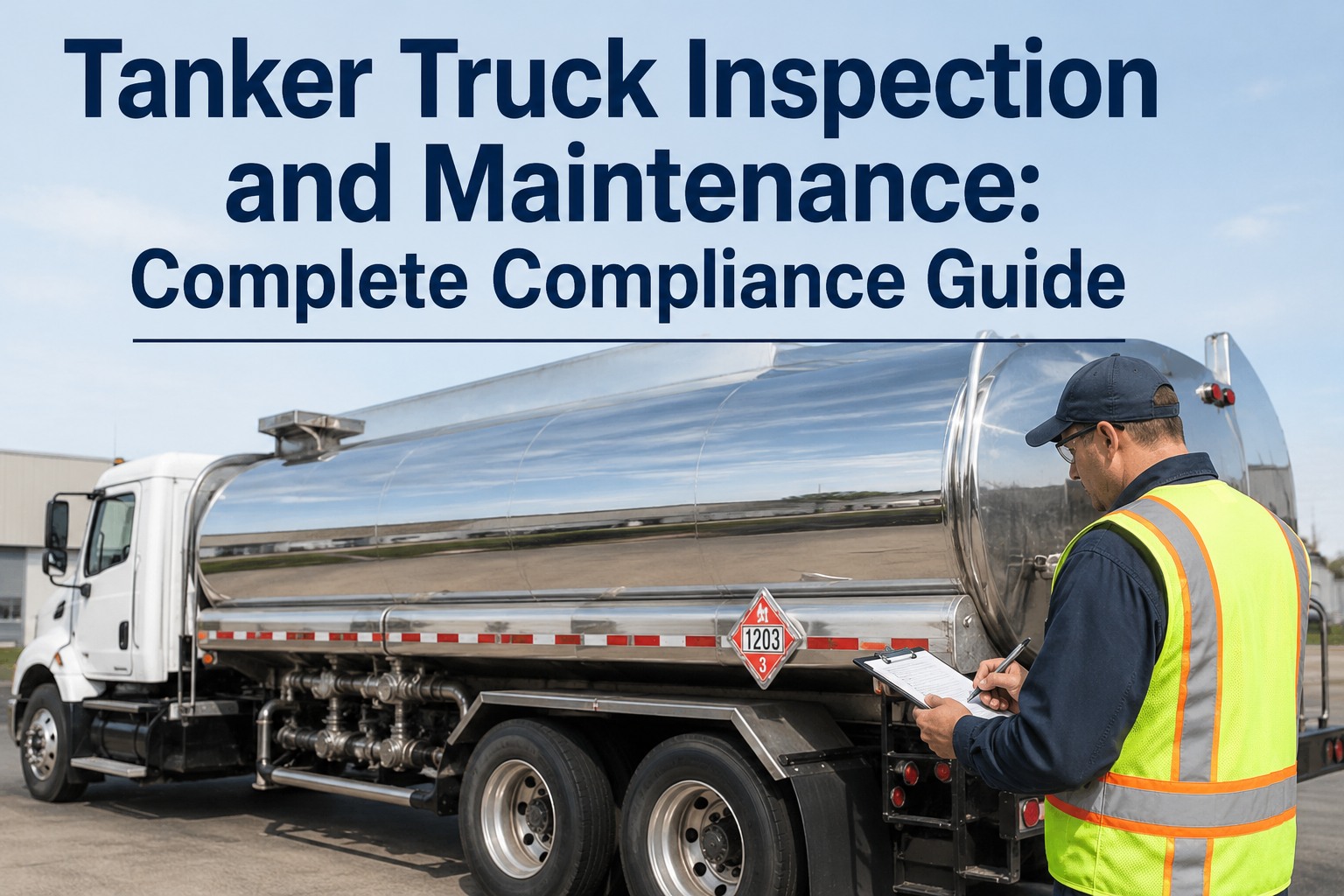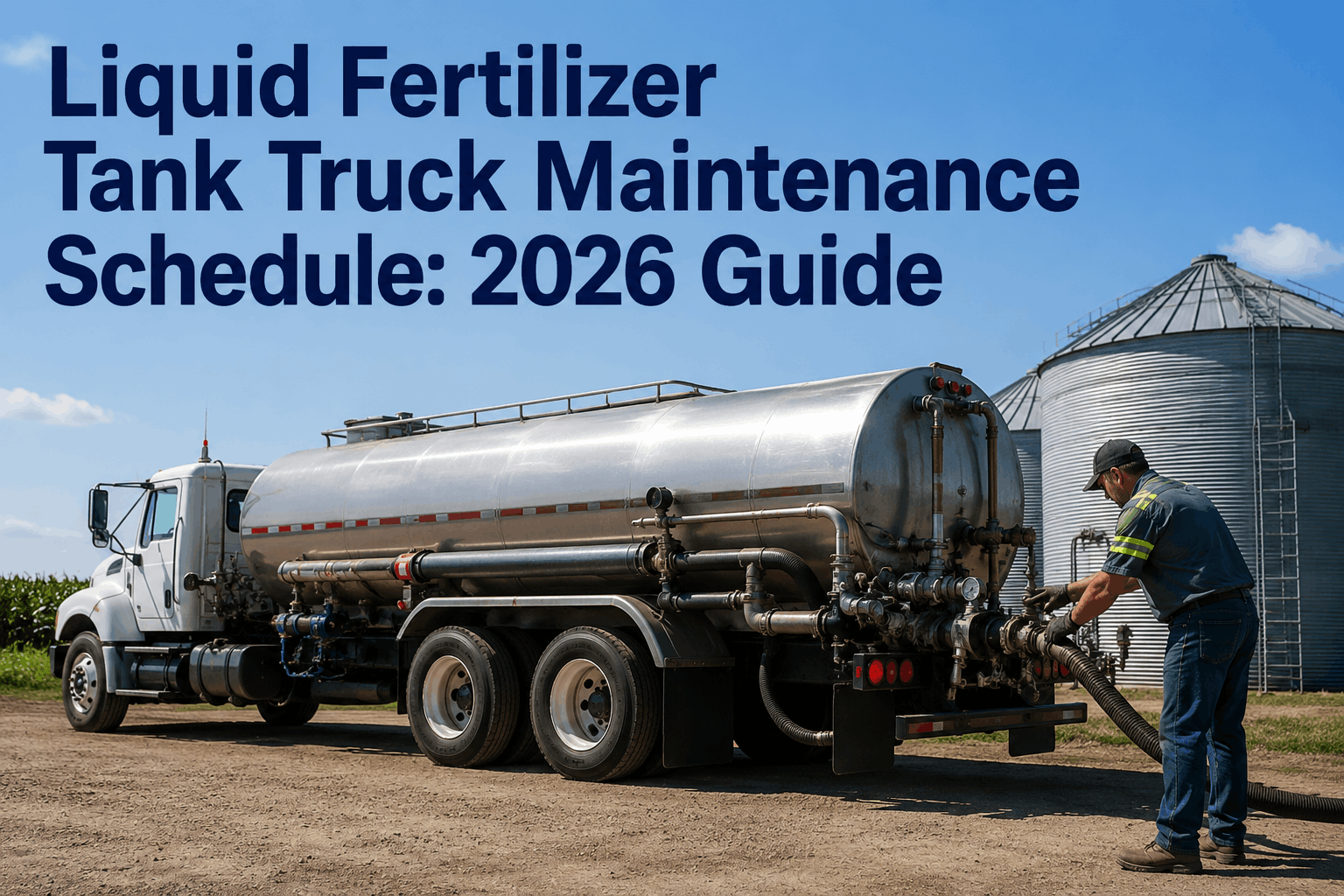
A liquid fertilizer tank truck carries one of the most punishing payloads in agriculture — UAN, anhydrous ammonia, and other ag chemicals that corrode metal, eat seals, and turn a small valve leak into a serious hazard. Anhydrous ammonia alone is a caustic alkali that can cause severe burns blindness, and respiratory injury, and most incidents happen during transfer when a faulty valve, worn hose, or equipment failure lets it escape. The defense is a disciplined preventive maintenance schedule built around the wet end — pumps, valves, hoses, and the tank itself — not just the chassis. This guide gives you a ready-to-use PM template organized by interval, from daily hose checks to the federally driven 5-year valve inspections, so your ag chemical deliveries stay on schedule and your crew stays safe. Truck Inspection & Maintenance turns it into automatic reminders and audit-ready records. Talk to our team to load it onto your fleet.
Liquid Fertilizer Tank Truck Maintenance Schedule
Pump, valve, hose & tank intervals to keep chemical delivery safe and on time.
Why Ag Tank Trucks Need a Specialized Schedule
A standard truck PM plan stops at the chassis — but on a fertilizer hauler, the chassis is the easy part. The real risk lives in the wet system, where corrosive chemistry attacks the very components that contain it. Most uncontrolled releases trace back to three causes: improper procedures, untrained workers, or faulty equipment. A maintenance schedule can't fix the first two, but it eliminates the third. Three failure modes drive nearly every serious incident, and the schedule is built to stop each one.
Corrosion & stress cracking
Ammonia and acidic blends attack carbon steel, causing stress corrosion cracking and pitting. Keeping tanks painted and pipes corrosion-free is core to tank longevity.
Valve & seal failure
Relief, excess-flow, and shutoff valves are the last line against a runaway release. Internal corrosion and thread wear make them the most safety-critical service items.
Hose deterioration
Abrasion, blistering, kinks, and coupling slippage turn a hose into a rupture risk. This is why hoses get inspected daily and pulled at the first sign of damage.
The PM Schedule by Interval
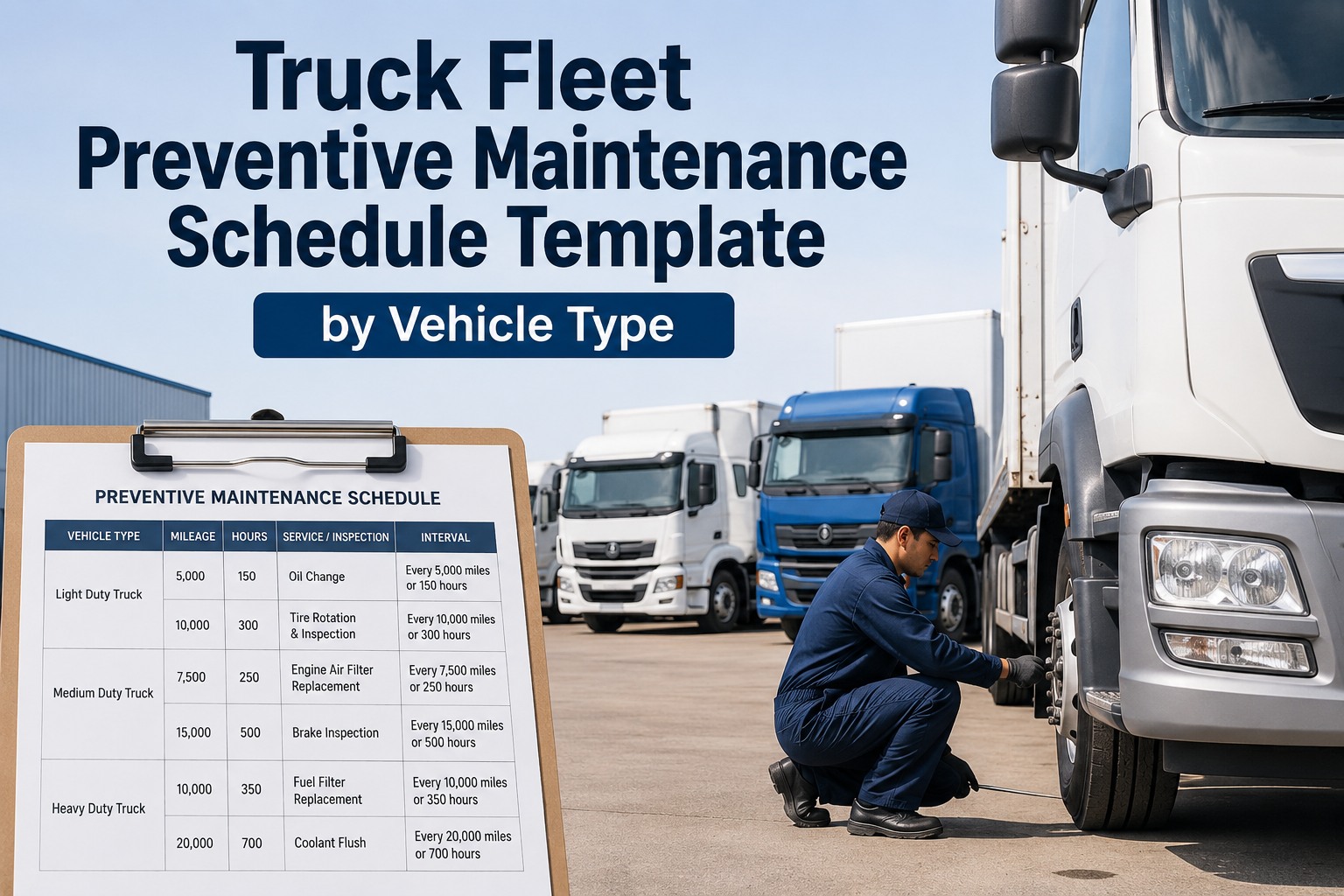
This is the template. Some intervals are best practice; others — like the 5-year valve inspection — are federally mandated for pressurized hazmat vessels. Work each tier in order, and treat the daily hose-and-valve check as non-negotiable before any load moves. Start a free account to turn these intervals into automatic reminders for every truck.
- Inspect hose for abrasion, blisters, kinks & cuts
- Check couplings for slippage, cracks, or corrosion
- Verify all valves open & shut off fully — no leaks
- Confirm 5 gallons of clean emergency water aboard
- Check tank gauge & fill level — avoid overfilling
- Inspect PPE: gloves & chemical-resistant goggles
- Inspect pump seals & fittings for weeping or wear
- Check tank exterior for new corrosion or paint loss
- Test relief valve rain cap is in place & intact
- Inspect running gear, hitch, chains & breakaway
- Lubricate pump & moving valve linkages
- Pressure-test pump output & flow rate
- External visual tank inspection for pitting
- Verify ASME data plate legible & secure
- Inspect excess-flow valve plunger movement
- Service brakes, tires & chassis fluids
- Remove each valve; inspect internal corrosion & threads
- Replace relief valve (nonmetallic seats) or test (metallic)
- Repairs only by VR-certified pressure-vessel shop
- Full tank integrity & pressure-vessel inspection
- Document all work for DOT & ASME compliance
Never miss a safety-critical interval
Truck Inspection & Maintenance triggers daily hose checks, seasonal tank inspections, and 5-year valve service automatically — with photo capture, auto out-of-service tagging, and audit-ready hazmat records. No hardware, no contracts. Sign up free and load your PM template in minutes.
The Hose Pull-From-Service Rules
Hoses carry the chemical at pressure, which makes them the highest-frequency failure point and the easiest to get wrong. Industry standards are unambiguous: any of these conditions means the hose comes out of service immediately — no "finish the season" exceptions. Train every operator on this bright line.
Note: a uniformly pricked hose cover is normal and necessary for performance — it's not a defect.
The Valve Service Hierarchy
Not all valves carry equal risk. Understanding which valve does what — and how often each needs attention — tells you where to focus inspection time. The relief and excess-flow valves are your automatic safety net; the shutoff valves are your manual control. All of them face the same corrosive environment. Reach our team to track valve service dates across your fleet.
| Valve | Function | Service Interval | Failure Risk |
|---|---|---|---|
| Safety relief valve | Vents at 250–265 psi overpressure | Replace / test every 5 yrs | Tank rupture if stuck |
| Excess-flow valve | Shuts flow on hose rupture | Check plunger monthly | Uncontrolled release |
| Liquid / vapor shutoff | Manual flow control | Verify daily, inspect 5 yrs | Leak during transfer |
| Bleeder valve (gauge) | Indicates tank level | Check daily | Overfill, false reading |
Any leak detected in a valve is cause for immediate repair or replacement — never deferred. Confirm all intervals against current DOT, ASME, and state requirements.
Frequently Asked Questions
How often should fertilizer truck hoses be inspected?
Daily — before any load moves. Hoses carry chemical under pressure and are the highest-frequency failure point. Pull a hose from service immediately at the first sign of reinforcement damage, blistering, bulges, kinks, or coupling slippage. There's no "finish the season" with a compromised hose; a rupture during transfer is exactly when serious injuries happen. Start a free account to log daily hose checks per truck.
What's the 5-year valve rule?
For pressurized hazmat vessels, each valve should be removed every five years and inspected for internal corrosion and thread deterioration. Safety relief valves with nonmetallic seats must be replaced every five years; those with metallic seats can be tested instead. Repairs to these pressure-vessel components can only be done by a shop holding a valid "VR" certificate of authorization.
How do I prevent tank corrosion?
Corrosion and stress corrosion cracking are the long-term killers of ag tanks. Keep the tank painted, keep pipes and fittings free of corrosion, inspect the exterior weekly for new pitting or paint loss, and address any rust immediately. Lower-strength carbon steel actually resists ammonia stress cracking better than high-strength steel, which is why it's the preferred tank material. Talk to our team about corrosion tracking.
What emergency equipment is legally required?
Federal regulations require every vehicle towing or transporting anhydrous ammonia to carry at least five gallons of clean water for emergency first aid, since flushing with water for 15+ minutes is the immediate treatment for exposure. Operators should also carry PPE — chemical-resistant gloves and goggles — and many workers keep 6–8 ounces of water on their person for instant access. Some states now require formal safety certification.
At what pressure does the relief valve open?
The safety relief valve opens directly to the atmosphere when tank pressure reaches roughly 250 to 265 psi, and closes once pressure drops below 250 psi. It's not adjustable and must be replaced if inoperable. Keep its rain cap in place at all times to prevent moisture and corrosion damage — a fouled relief valve is a serious hazard. Sign up free to schedule relief-valve service.
Can my operator handle the daily checks?
Yes. A trained operator can perform all daily and pre-load inspections — hoses, couplings, valve function, gauge readings, emergency water, and PPE. Valve removal, pressure-vessel inspection, and any repairs must go to qualified, VR-certified technicians. Splitting routine checks from certified work keeps trucks moving safely while ensuring the high-risk service is done right and documented for compliance.
Put your ag tank PM on autopilot.
Truck Inspection & Maintenance triggers every interval — daily hose checks to 5-year valve service — routes defects into work orders, tracks corrosion and component wear, and keeps DOT and ASME-ready records across your whole fertilizer fleet. Free for up to 3 vehicles, no hardware, no contracts.