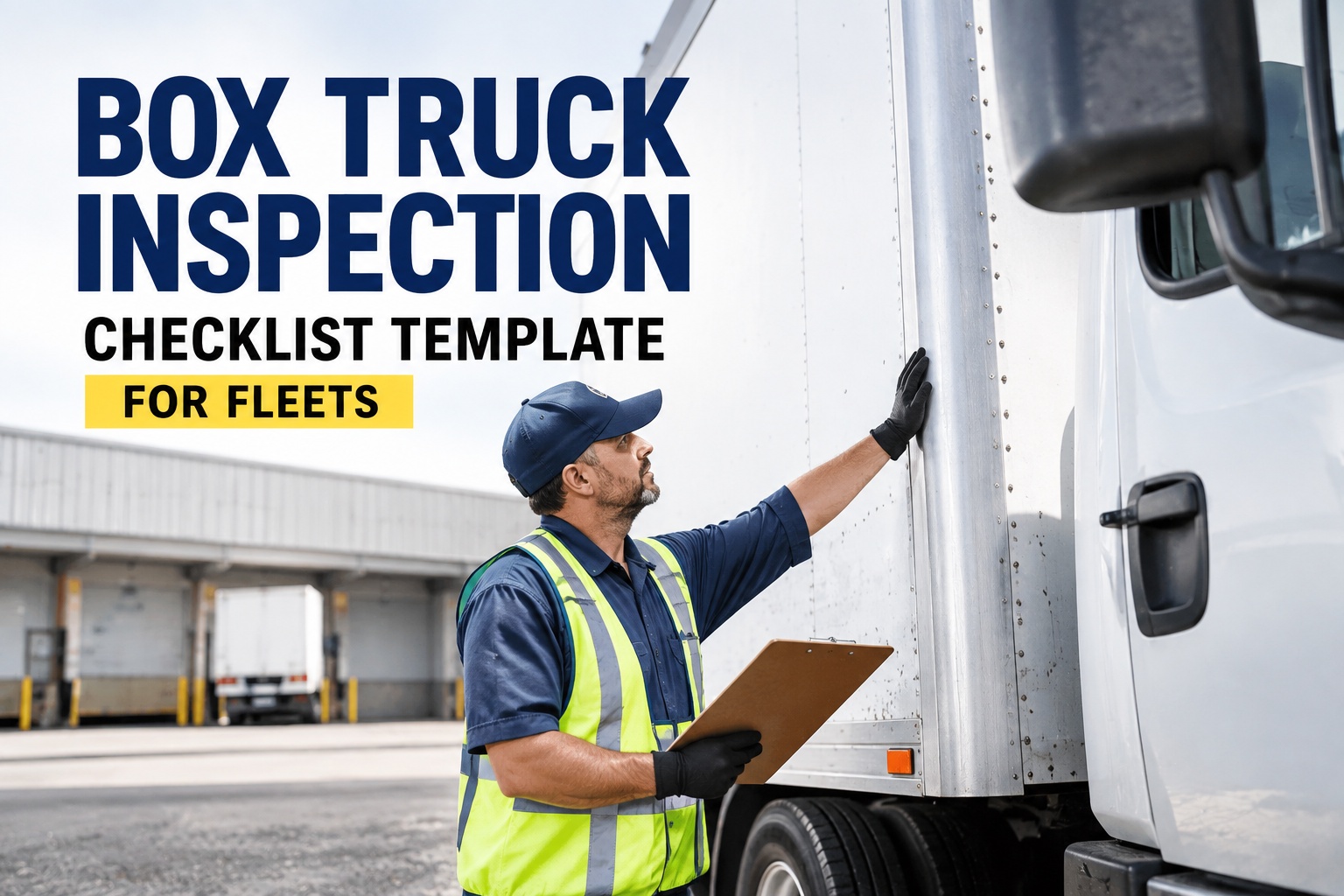
Box trucks — also called straight trucks, cube vans, or straight-body trucks — are the workhorses of last-mile delivery, local freight, and moving operations. They look simpler than tractor-trailers, and that's exactly the trap fleet managers fall into. Because there's no coupling, no fifth wheel, and no trailer to inspect separately, box truck inspections often get treated as an afterthought — a quick walkaround, a signature, done. The data tells a very different story: inadequate pre-trip inspection practices affect 85% of small fleet operators, leading to $4,000–$8,000 in additional costs annually per truck, and drivers who skip inspections miss 75% of early warning signs — resulting in major system failures costing $3,500–$5,500 each. The most frequent box truck defects are tire pressure issues (35% of inspections), brake system problems (28%), lighting malfunctions (22%), fluid leaks (18%), and cargo door mechanism issues (15%). And the cargo box itself — the walls, floor, roof, tie-down points, roll-up door, and liftgate — is where 85% of delivery delays originate but where generic DOT checklists barely scratch. This guide walks through the complete 6-zone box truck inspection covering cab, chassis, cargo box, doors and liftgate, and safety equipment, DOT compliance essentials under 49 CFR 396.11, and how Truck Inspection & Maintenance turns paper checklists into digital DVIRs with photo evidence, GPS-tagged timestamps, and automatic defect routing — free forever for up to 3 vehicles.
Box Truck Inspection Checklist Template: The Complete 2026 Guide
Every point, every zone — including the cargo box, roll-up door, and liftgate that generic checklists miss.
Where Box Truck Inspections Differ
Box trucks share the standard commercial vehicle inspection points with any DOT-regulated truck, but three areas are unique to the box configuration — and these are exactly where cargo damage, customer complaints, and roadside violations tend to originate:
Last-Mile & E-Commerce
Amazon, FedEx Ground, local courier fleets. High turnover, urban routing, constant door cycles. Cargo box interior wear leads the defect list.
Household & Commercial Moves
U-Haul, Penske, professional movers. Heavy tie-down usage, ramp cycling, and interior scuffs from furniture damage the box floor and walls.
Local Freight & LTL
Regional less-than-truckload operations. Liftgate cycles constantly, roll-up door wear from repeated openings, tie-down failures under mixed loads.
The 6 Pre-Trip Inspection Zones
Systematic walkaround in the same order every time catches what memory misses. These six zones cover every DOT-required component plus the cargo box specifics that generic checklists ignore. Under 10 minutes when you follow the flow:
Full Pre-Trip Checklist by Zone
Each zone below has the specific items DOT inspectors verify and CDL examiners test on Class B and Class A applications. Work through each in order, log every item, and photograph anything that needs shop attention:
The Cargo Box Deep-Inspection — Where Delays Actually Start
Six items in the cargo box deserve extra attention because they're where 85% of delivery delays trace back — and where customer damage claims originate. These aren't on generic DOT checklists but they should be on every box truck fleet's daily inspection:
Water Damage Check
Ceiling stains and softened floor spots signal roof leaks. One rainy delivery destroys a cargo full of electronics or fabric goods. Catch leaks early before they hit paying customers.
Floor Structural Integrity
Walk the entire length. Soft spots or unusual give indicate rot or delamination. Failed floors drop loads mid-route — moving fleets have documented $50,000+ liability from single incidents.
Tie-Down Points
Every E-track, D-ring, and load bar mount must be secure and undamaged. A pulled anchor mid-transit = shifting load, damaged cargo, potential OOS violation for improper load securement.
Interior Lighting
Working lights let drivers verify load condition in early morning or evening deliveries. Non-functional lights mean missed damage, missed pieces, missed dock stops — all delay drivers.
Roll-Up Door Function
Test full open and close before every shift. A jammed door at a delivery = customer waits, driver improvises, next stop delays. Counter-balance spring failures = $1,500 emergency repair.
Liftgate Hydraulics
Check for hose leaks, cylinder weeping, and platform level. A failed liftgate at a residential move = crew stops working, customer complaint, refund. Daily hydraulic check prevents most failures.
The Most Common Box Truck Defects
Fleet data across small and mid-size operators consistently shows the same five defects appearing on inspection reports. Recognizing the pattern tells you where to focus preventive maintenance investment:
Tire Pressure Issues
The most common defect across all box truck operations. Under-inflation kills fuel economy 3–5%, causes uneven wear, and increases blowout risk. Daily pressure check = highest-ROI 30 seconds.
Brake System Problems
Pads worn, hoses leaking, ABS warning lamps active. Second most common defect — and the most likely to trigger a CVSA out-of-service violation at a roadside stop.
Lighting Malfunctions
Burnt bulbs, damaged marker lamps, cracked lenses. Trivially easy to fix, disproportionately impactful — inoperative brake or turn signals lead to citations and accident liability.
Fluid Leaks
Oil, coolant, hydraulic, or brake fluid on the ground beneath parked trucks. Every leak signals a component failure timeline — catch it while it's a $30 hose, not a $2,000 repair.
Cargo Door Mechanism
Roll-up door binding, counter-balance spring wear, latch failure, liftgate hydraulic issues. Box-specific defects that generic checklists ignore but that kill last-mile productivity.
Early Warnings Missed
Drivers who skip proper inspection miss 75% of early warning signs. Every missed signal becomes a mid-route breakdown, a customer complaint, or a roadside OOS event.
Turn this checklist into a digital DVIR — free for up to 3 vehicles
Truck Inspection & Maintenance replaces paper box truck checklists with FMCSA-compliant digital DVIRs. Every zone, every tie-down point, every liftgate cycle documented with photo evidence, GPS location, and timestamp. Defects auto-routed to shop as priority work orders. Setup in 10 minutes. Sign up free — no hardware, no contracts.
Post-Trip Essentials for Box Trucks
Post-trip catches issues while they're fresh in the driver's memory and gives the shop overnight to schedule repair — critical for delivery fleets that need trucks rolling first thing next morning. Focus on these six areas:
Cargo Box Damage Check
New dents, scuffs, or hits from tight docks and city driving. Photograph and log immediately — insurance claims require documented same-day timing.
Door & Liftgate Cycles
Note any binding or drag that developed during the shift. Roll-up door failures often start as "a little sticky" before becoming stuck open at a bad time.
Tires & Wheels
Look for damage from curb strikes, pothole hits, or road debris. Urban delivery routes chew tires faster than long-haul operations.
Brake Performance
Note any fade, pulling, or slow response during the day. Stop-and-go delivery routes wear brakes 2–3× faster than long-haul cycles.
Fluid Leaks
Walk around and look for fresh spots on the ground. Note color separately — oil, coolant, hydraulic — for the shop to trace source quickly.
DVIR Filed
Sign and file the post-trip DVIR — even if no defects. Under 49 CFR 396.11 for defects; best practice for "no-defect" reports too. 90-day retention required.
Paper vs Digital DVIR — The Real Difference
Paper checklists still technically work, but they work against you. Digital DVIRs turn every inspection into structured, searchable, timestamped data — and the FMCSA March 2026 eDVIR final rule made electronic fully compliant. Here's the side-by-side that matters:
Traditional Method
Truck Inspection & Maintenance
Frequently Asked Questions
How long should a box truck inspection take?
A thorough daily pre-trip inspection takes 8–12 minutes using a systematic checklist. The 6-zone flow covers all DOT-required components plus box-specific items (cargo interior, tie-downs, roll-up door, liftgate). Experienced drivers often complete it in under 8 minutes; new drivers may need the full 12. Post-trip inspections are similar — 5 minutes end-of-shift while the truck is still hot and defects are fresh in the driver's memory.
Do box trucks need a CDL?
It depends on the GVWR. Box trucks under 26,001 lbs GVWR do not require a CDL — most delivery box trucks fall in this category. Above 26,001 lbs, a Class B CDL is required. Regardless of CDL requirement, all commercial box trucks over 10,000 lbs GVWR are subject to FMCSA regulations under 49 CFR 396.11 for DVIR filings and 396.13 for pre-trip inspections.
What are the box-truck-specific inspection points?
Six items deserve special attention because they're unique to box configuration and where 85% of delivery delays originate: cargo box floor integrity, wall damage, ceiling water intrusion, tie-down point condition, roll-up door counter-balance and mechanism, and liftgate hydraulics. Missing these on generic DOT checklists is where fleets lose productivity and gain customer complaints — even if the truck is technically road-legal.
How often should the liftgate hydraulic system be serviced?
Daily visual inspection (leaks, hose condition, platform integrity) plus a full hydraulic service every 500 operating cycles or 6 months — whichever comes first. Delivery fleets that cycle liftgates 50+ times per day should service every 3 months. Common failures: hydraulic hose leaks, cylinder rod seals, and platform welds. A single liftgate failure at a customer stop = missed appointment + customer complaint + emergency repair charge.
What's the biggest ROI on box truck inspections?
Catching the top 5 defect categories: tire pressure (35% of inspections), brakes (28%), lighting (22%), fluid leaks (18%), and cargo door mechanism (15%). Digital DVIR systems improve compliance accuracy to 98% compared to 75% with paper checklists, while reducing documentation time by 40%. Real-time data enables predictive maintenance scheduling, reducing emergency repairs. Talk to our team about box truck workflows.
How does Truck Inspection & Maintenance handle box truck inspections?
Truck Inspection & Maintenance delivers box-truck-specific digital DVIR templates covering all 6 zones including cargo interior, tie-down verification, roll-up door mechanism, and liftgate hydraulics. Every observation captured with photo evidence, GPS location, timestamp, and driver signature — fully FMCSA-compliant under the March 2026 eDVIR final rule. Defects auto-route to the shop as priority work orders. Free forever for up to 3 vehicles. Sign up in 10 minutes to see it live.
The cargo box, roll-up door, and liftgate that generic checklists ignore — captured on your driver's phone.
Every box-truck-specific inspection point captured with photo evidence, GPS location, and timestamp. Cargo box damage, floor integrity, tie-down condition, roll-up door mechanism, liftgate hydraulics — all documented and routed to your shop as priority work orders. 90-day retention automatic. Fully FMCSA-compliant. Free forever for up to 3 vehicles with no hardware and no contracts. Set it up in 10 minutes.