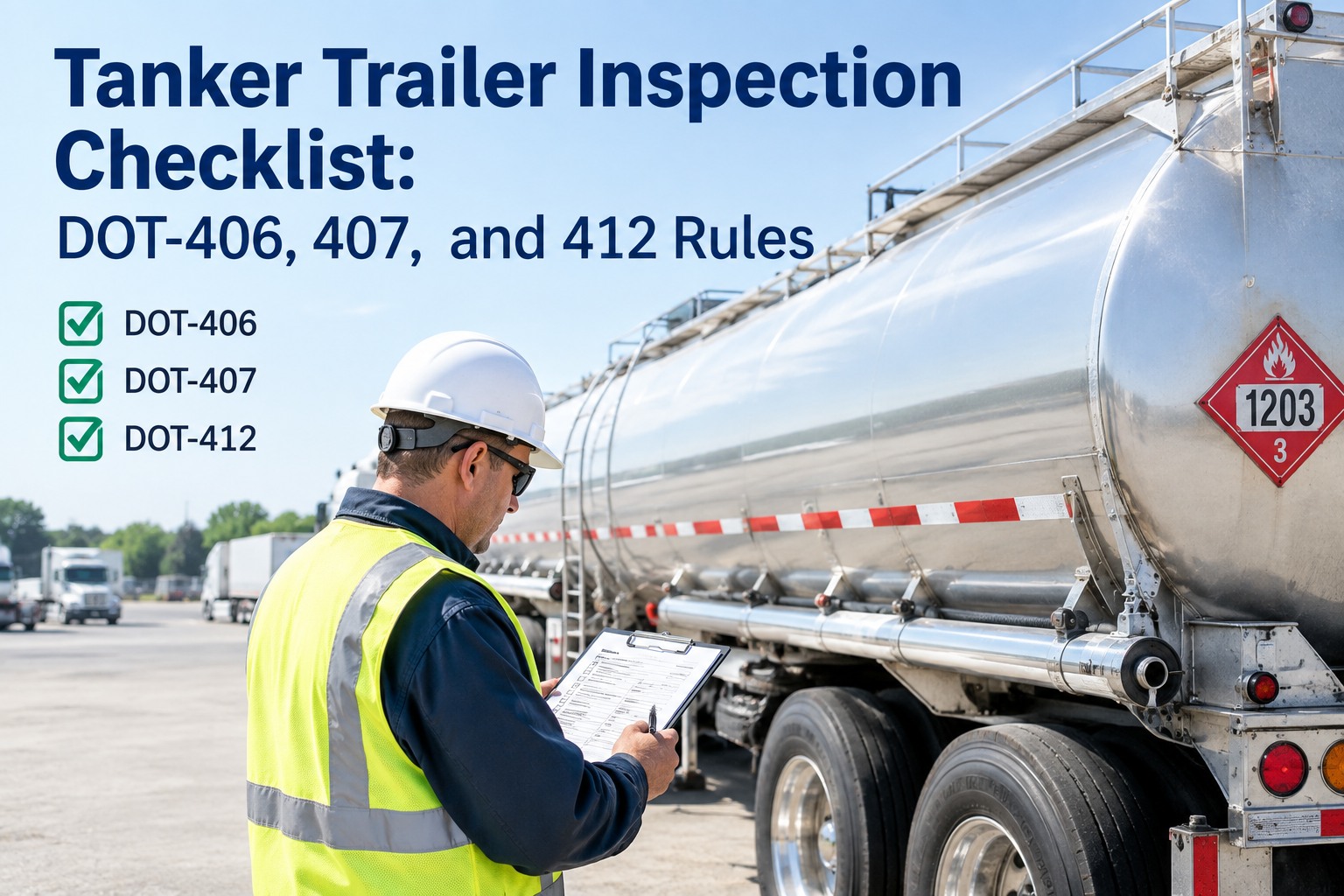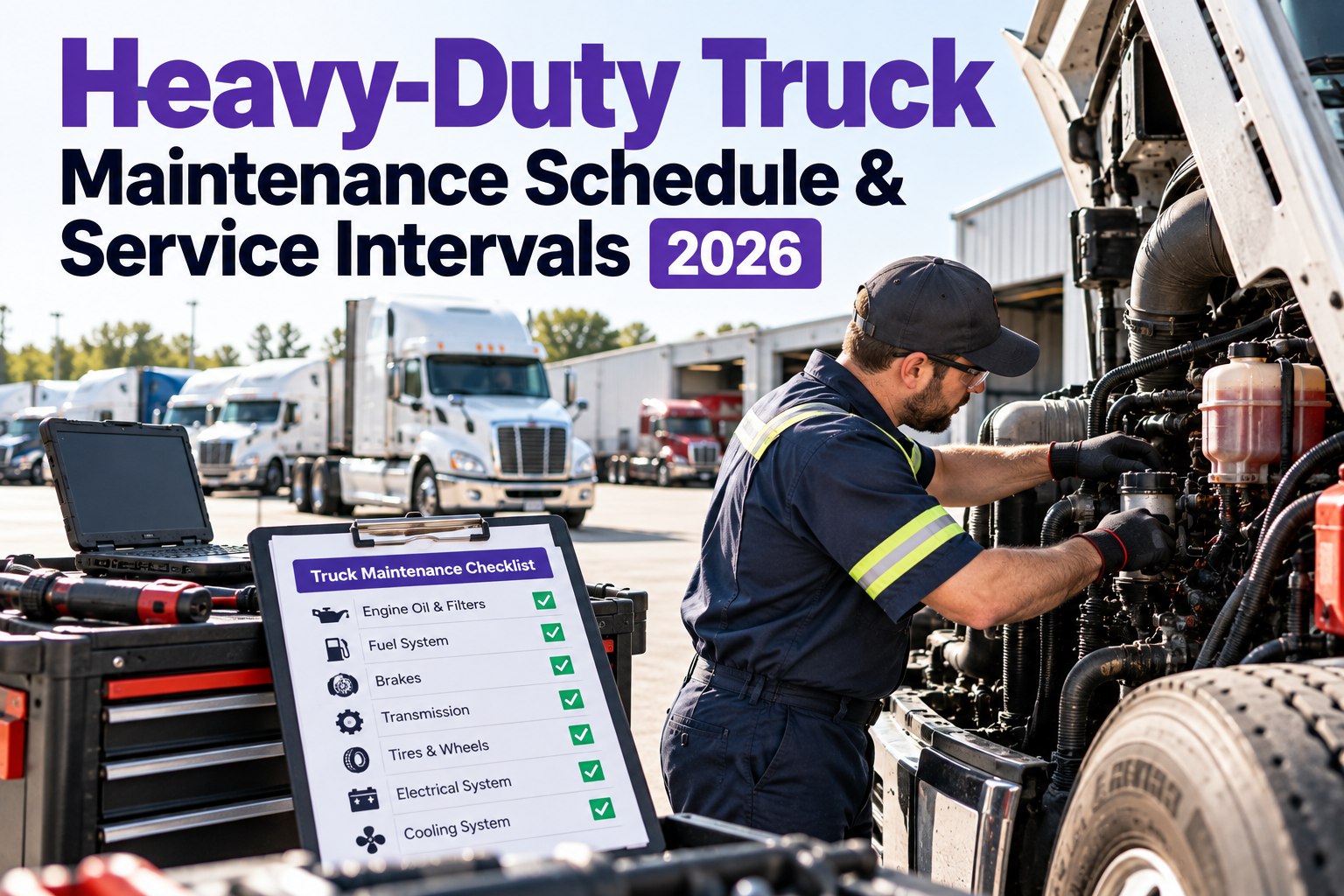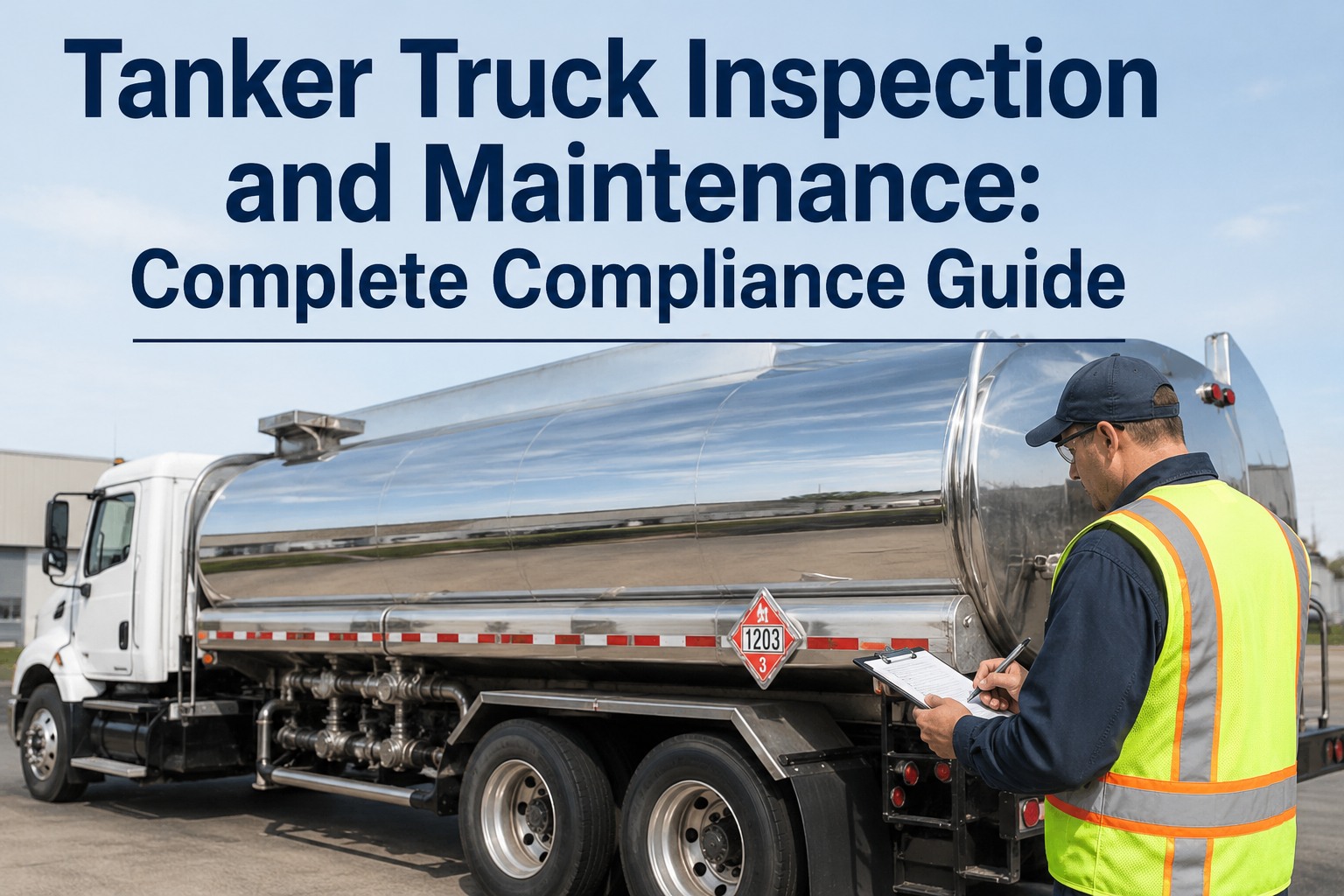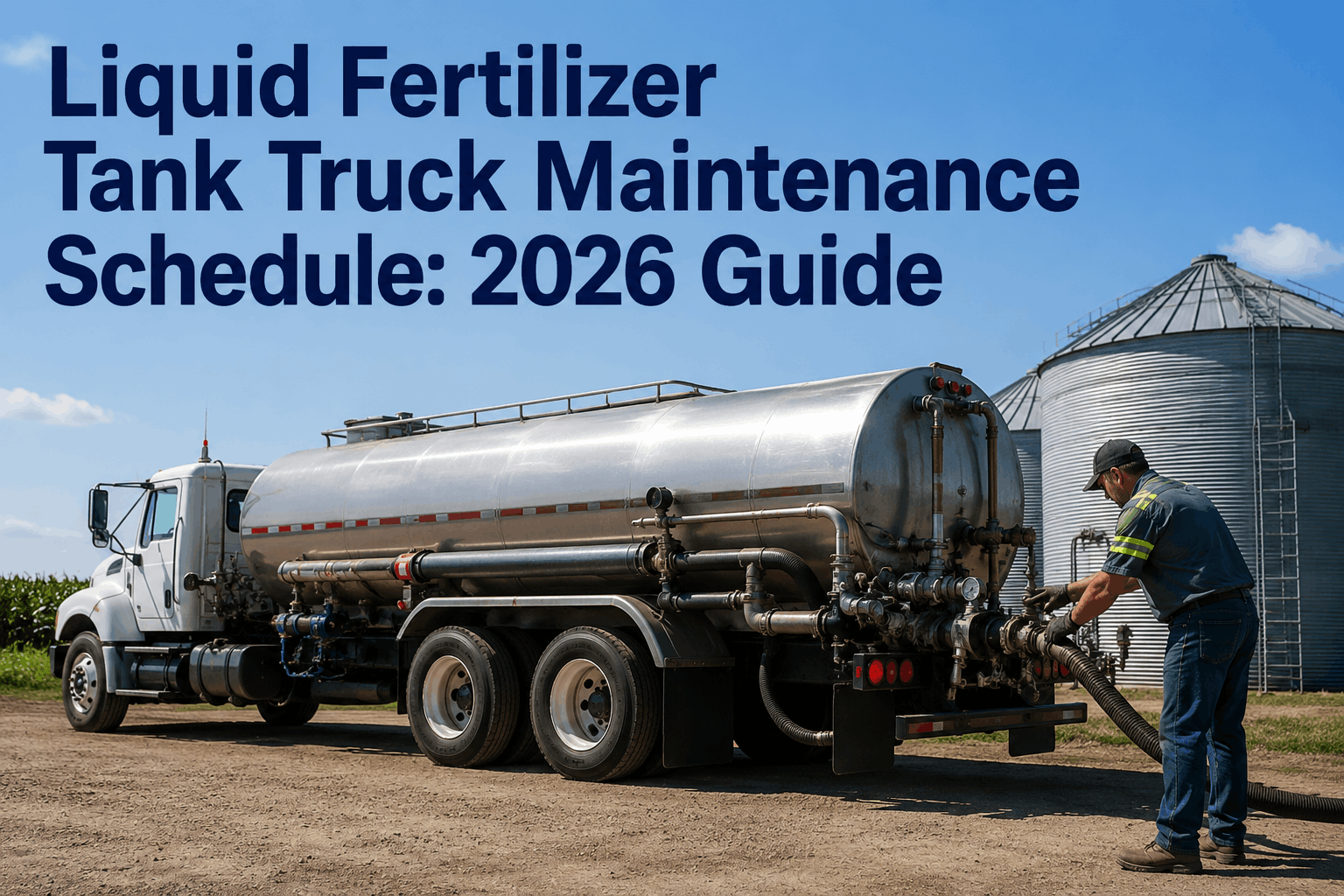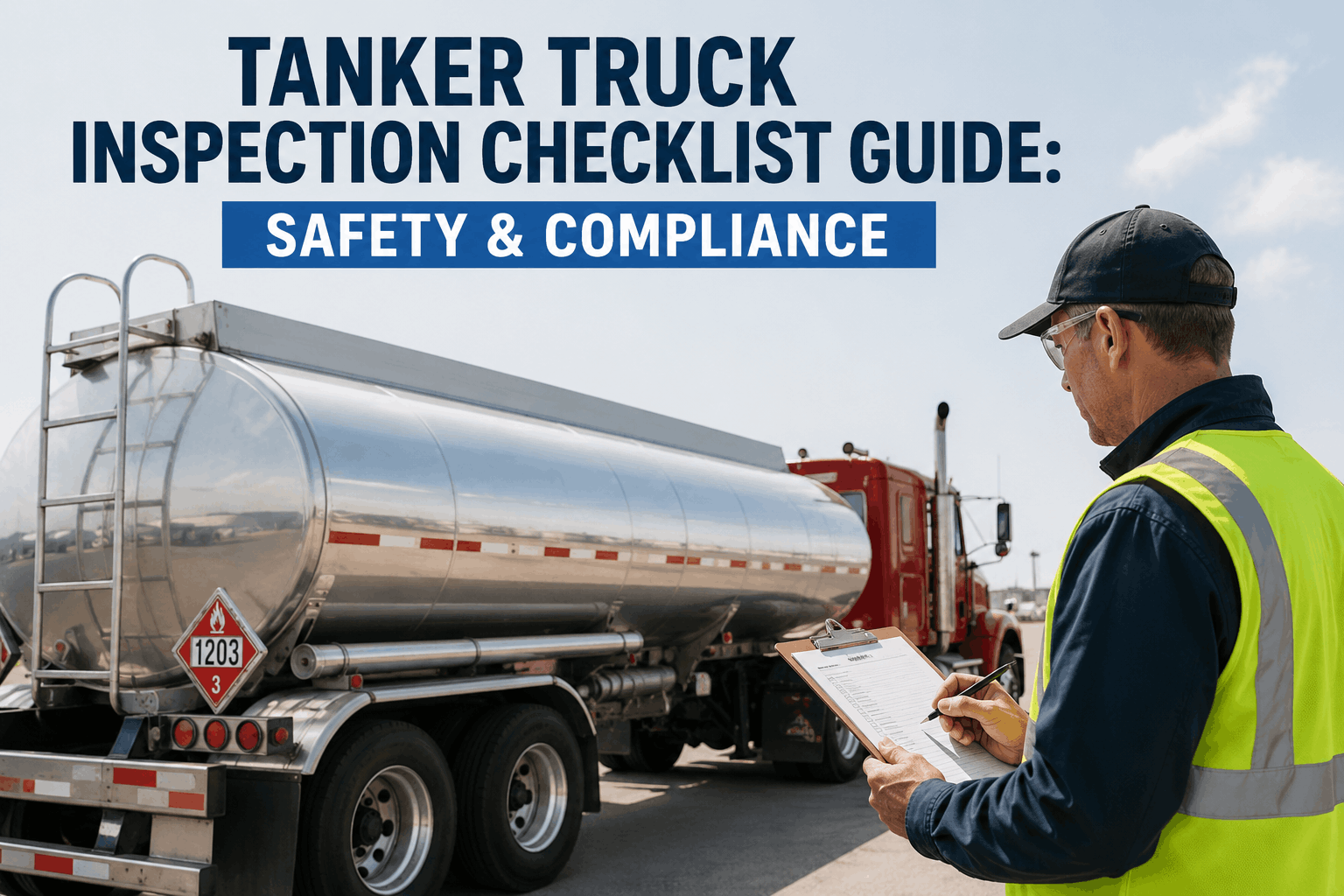
A tanker truck carries the one cargo that can turn a routine haul into a catastrophe — thousands of gallons of liquid that surges, shifts, and, when it's hazmat, ignites or poisons. That's why DOT and FMCSA scrutinize tankers harder than almost any vehicle on the road, and why the containment system — the tank, valves, vents, and fittings — is the only thing standing between your cargo and the environment. A single hairline crack at a weld, a corroded valve, or an emergency internal valve that won't close in 30 seconds is enough to produce a violation, a spill, or a rollover. This checklist gives drivers a repeatable, regulation-aligned framework: the standard vehicle systems, the tanker-specific containment checks, and the placard-and-endorsement compliance inspectors hit hardest — for fuel tankers, chemical haulers, and every cargo tank in between. Truck Inspection & Maintenance turns it into a digital DVIR your drivers finish in minutes. Talk to our team to roll it out.
Tanker Truck Inspection Checklist
Vehicle, containment & compliance — every check before the wheels turn.
Three Inspections in One
A tanker inspection stacks three checks that a dry-van pre-trip never touches. First, the standard vehicle systems. Second — and unique to tankers — the containment system that holds the cargo. Third, the hazmat compliance layer: placards, endorsements, and shipping papers. An inspector evaluates all three, and a roadworthy truck with one leaking valve or a missing placard is still out of service. Work them in this order, every time.
1 · Vehicle Systems
Brakes, tires, lights, steering, coupling — the mechanical roadworthiness every CMV pre-trip requires.
2 · Containment System
Tank shell, valves, vents, fittings, manholes, rollover protection — the cargo-specific checks inspectors hit hardest.
3 · Hazmat Compliance
Placards, endorsements, shipping papers, and emergency info — the paperwork that grounds trucks fast.
Part 1 — The Vehicle Walk-Around
A loaded tanker is heavy and handles unlike any other rig, so the basics matter even more. Work the truck in the same order every time. Start a free account to put this exact walk-around on every driver's phone.
Brakes & Air
- Air builds & holds, no leaks
- Slack adjuster travel within limits
- Parking brake holds loaded
Tires & Wheels
- Tread depth measured, no cuts
- Correct pressure under heavy load
- Lug nuts tight, no rust trails
Lights & Signals
- Stop, tail & turn signals work
- Clearance & marker lights on
- Reflective tape clean
Coupling & Frame
- Kingpin & fifth wheel secure
- Frame & cross-members sound
- Suspension & airbags intact
Part 2 — The Containment System
This is the heart of a tanker inspection and where the serious risk lives. Look meticulously for stress signs — hairline cracks or corrosion around welds and valve assemblies — because the containment system is the only barrier between your cargo and the environment. Give the emergency valves, vents, and fittings extra scrutiny. Reach our team to build cargo-specific containment checklists.
Tank Shell & Welds
- No cracks, dents, or bulges in the shell
- No corrosion or stress around welds
- No product weeping or stains
- Baffles/bulkheads sound (where fitted)
Valves & Emergency Shutoff
- Emergency internal valve closes within 30 sec
- Remote shutoff activates fully
- Bottom/outlet valves leak-free & closed
- No corrosion on valve assemblies
Vents & Pressure Relief
- Pressure-vacuum vents match cargo & MAWP
- Relief devices clear & unobstructed
- Vapor recovery connections intact
- No signs of overpressure damage
Manholes, Fittings & Rollover Guard
- Manhole/manlid covers seal & latch
- Hoses, gaskets & couplings sound
- Rollover protection guards undamaged
- Overfill/compartment interlocks verified
A digital DVIR built for tankers
Truck Inspection & Maintenance turns this whole checklist into a mobile pre-trip — photo capture of valves and welds, auto out-of-service tagging, instant work orders, and audit-ready hazmat records. No hardware, no contracts. Sign up free and digitize your tanker fleet today.
Part 3 — Hazmat Compliance Check
The truck can be flawless and still get grounded for paperwork. Tank vehicles hauling regulated cargo carry strict documentation and credential requirements — verify them before every hazmat load. Open a free account to track endorsements and expiry automatically.
The Rollover Reality — Why Fill Level Matters
One tanker-specific danger deserves its own callout: the surge. Liquid moves inside the tank, and FMCSA research identifies partial fill — typically 50–70% — as the highest rollover risk range, because the cargo moves more freely and creates greater surge forces than at full or near-empty loads. Smooth, anticipatory driving and proper baffle condition matter as much as any single inspection item.
Frequently Asked Questions
What counts as a "tank vehicle" under the rules?
Under 49 CFR 383.5, a tank vehicle is a commercial motor vehicle with tanks having an individual capacity above 119 gallons and an aggregate capacity of 1,000 gallons or more. Operating one requires a Tanker (N) endorsement, and hauling regulated cargo adds a Hazmat (H) endorsement — the combined X endorsement covers most fuel tanker operations. Know which credentials your loads require. Start a free account to track endorsements.
What's the 30-second valve rule?
Under 49 CFR 178.345-11, the emergency internal valve (a self-closing stop valve) must fully close within 30 seconds of remote closure activation — that's the regulatory acceptance criterion. Confirm it against the valve manufacturer's documentation rather than assuming compliance from the model number. This valve is what prevents uncontrolled discharge in a rollover or major impact, so it's one of the most safety-critical checks on the tanker.
How often must a cargo tank be inspected?
Beyond the driver's pre-trip before every haul, cargo tanks require periodic test and inspection under 49 CFR 180.407 — including an annual external inspection, plus pressure, leakage, thickness, and internal tests on prescribed schedules depending on tank type. Relief valves must be bench-tested to open and reseat at specified pressures. Keep documentation current; missing inspection records are among the most common violations. Talk to our team about tracking inspection dates.
Why is the containment system the priority?
Because it's the only thing keeping hazardous cargo contained. A small undetected crack, a corroded valve, or a loose fitting can escalate into a major spill or fire. Inspect meticulously for stress signs — hairline cracks and corrosion around welds and valve assemblies — and check vents, emergency valves, manholes, and rollover protection every trip. A flawless chassis with a failing tank is still a catastrophe waiting to happen. Sign up free to document containment checks with photos.
Why is a half-full tanker more dangerous?
Liquid surge. FMCSA research shows partial fill of roughly 50–70% is the highest rollover risk range, because liquid moves more freely and generates greater surge forces than a full or near-empty load — that force can push a tanker over in a turn or sudden maneuver. Drivers should anticipate surge, brake and steer smoothly, and confirm baffles and bulkheads are sound during inspection to dampen the movement.
What paperwork do inspectors check on a tanker?
Placards on all four sides matching the cargo, the driver's Tanker (N) and Hazmat (H) endorsements, accurate shipping papers within reach, accessible emergency response information, current hazmat training (within 90 days of hire, renewed every 3 years), and up-to-date cargo-tank inspection records. A perfectly maintained truck still goes out of service for a missing placard or expired credential. Contact us to keep compliance records audit-ready.
Make every trip start with a passed inspection.
Truck Inspection & Maintenance turns this tanker checklist into a digital DVIR — vehicle, containment, and compliance checks, photo capture, auto out-of-service tagging, instant work orders, and audit-ready hazmat records. Free for up to 3 vehicles, no hardware, no contracts.