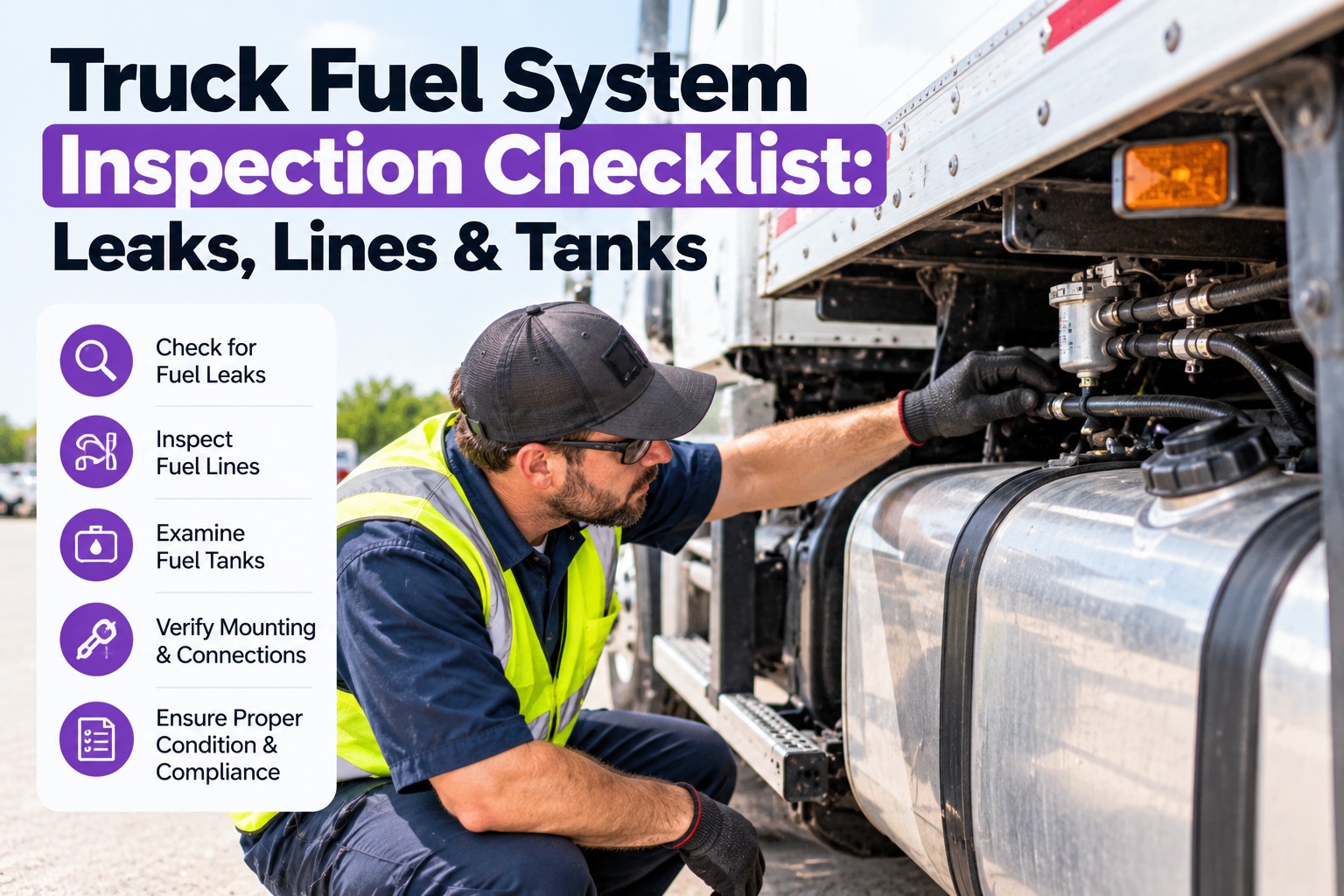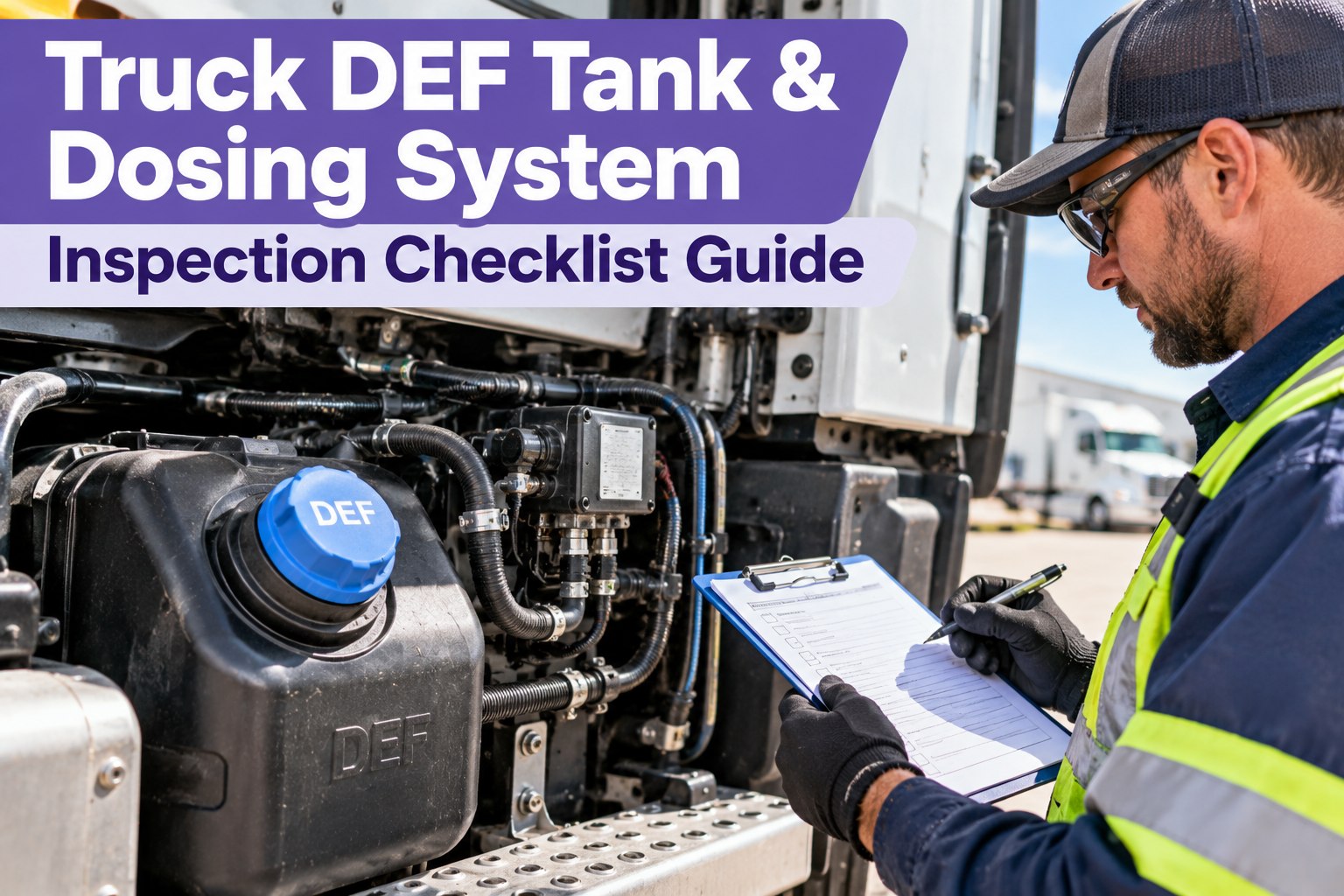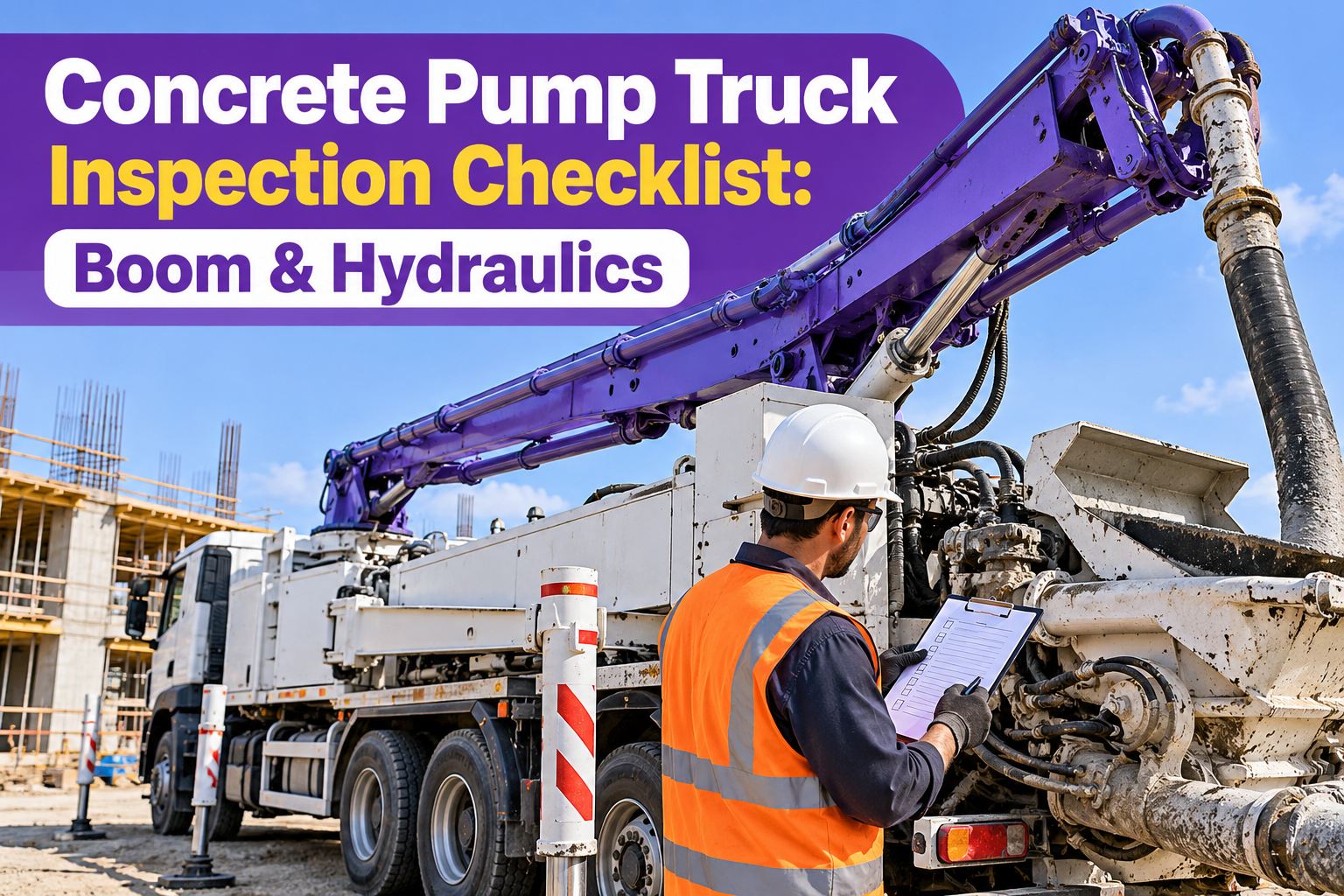
A concrete pump truck works under three kinds of stress at once: a long steel boom carrying a heavy, pressurized line, hydraulics running at high pressure, and a delivery system that's being sandblasted from the inside by wet concrete. A small defect on any of them, like a hairline crack, a weeping hose or a worn elbow, can turn into a failure in the middle of a pour. That's why a pump truck needs a consistent pre-operation checklist that covers the boom, outriggers, hydraulics, delivery line and safety devices, and a road-legal check of the truck underneath. Use the clickable checklist below, and see how Truck Inspection & Maintenance Management Software turns a failed item into a graded, assigned repair. Start free and put this checklist on every operator's phone.
Concrete Pump Truck Inspection Checklist: Boom & Hydraulics
A failure on a pump truck can stop a pour and put a crew at risk. Truck Inspection & Maintenance Management Software lets operators tick through the checklist on their phone and report any failed item with a photo. Every reported boom, hydraulic or delivery-line defect gets a guaranteed 4-hour first response: acknowledged, graded and assigned.
The Pre-Operation Checklist (Tap to Tick)
Walk the machine in the order you'd set it up: truck, outriggers, boom, hydraulics, delivery line, safety devices. Always follow the manufacturer's manual for exact limits and procedures.
Where the Delivery Line Wears Fastest
Concrete wears pipes from the inside, so the outside can look fine while the wall is thin. These areas typically wear first, so check them most often with a thickness gauge if your manufacturer specifies one.
General wear pattern. Your manufacturer's minimum wall thickness and replacement guidance always take priority.
Turn a Failed Checkbox Into an Assigned Repair
Operators report a failed item with a photo. The defect is acknowledged, graded and assigned within 4 hours, then tracked to completion on that machine's record, next to its PM schedule. Free for up to 3 trucks.
Defect → How Serious → What to Do
| What you find | Severity | Action |
|---|---|---|
| Crack in boom weld or pivot | Stop | Do not operate. Report and have it assessed |
| Leaking or bulging hydraulic hose | Stop | Do not operate, replace the hose |
| Delivery pipe worn through or dented | Stop | Replace before pumping |
| Missing or faulty emergency stop | Stop | Repair before use |
| Weeping fitting, minor seep | Soon | Log with a photo, repair this week |
| Worn outrigger pad or decal | Soon | Replace at the next service |
| Paint chips, cosmetic wear | Note | Monitor and record |
Quick End-of-Job Checklist
Frequently Asked Questions
Give Every Operator a Pump Checklist and Every Defect an Owner
Pump truck checklists on the operator's phone, photo-backed defects, a guaranteed 4-hour first response and a repair history per machine. Start free to run your first checklist, or contact us and we'll help set it up.