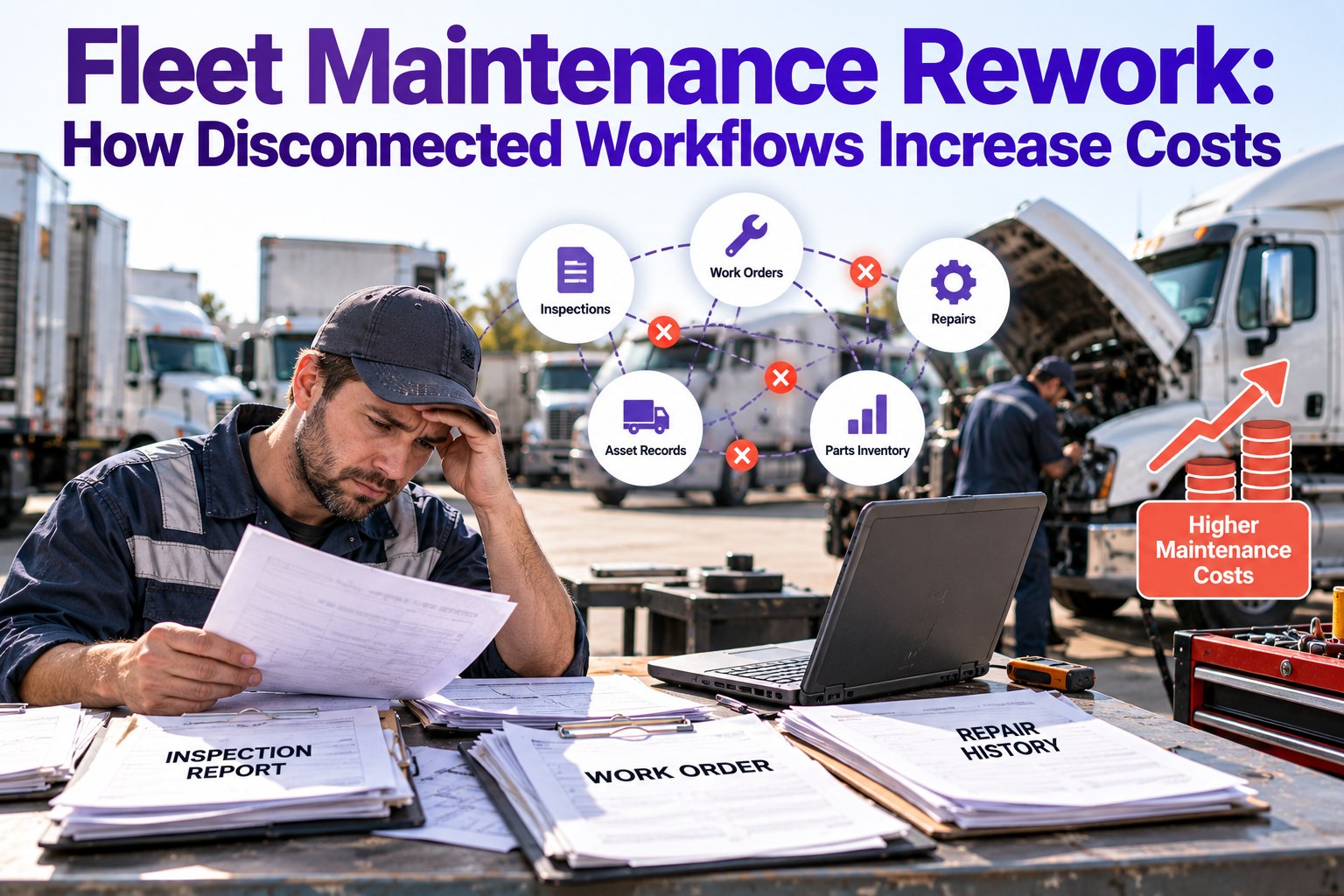
Two trucks, the same brake chamber, two different brands. One failed at 40,000 miles; the other is still going. Can you say which was which? If the answer lives in a technician's memory or a pile of paper, every OEM vs aftermarket decision is a guess. Truck Inspection & Maintenance Management Software runs the loop that makes it provable: inspection finds the defect, a work order records the repair, and the part, supplier, labor and cost stay on that truck's history. Start free and see what your parts really cost.
Inspect · Find Defects · Repair · Prove the Cost
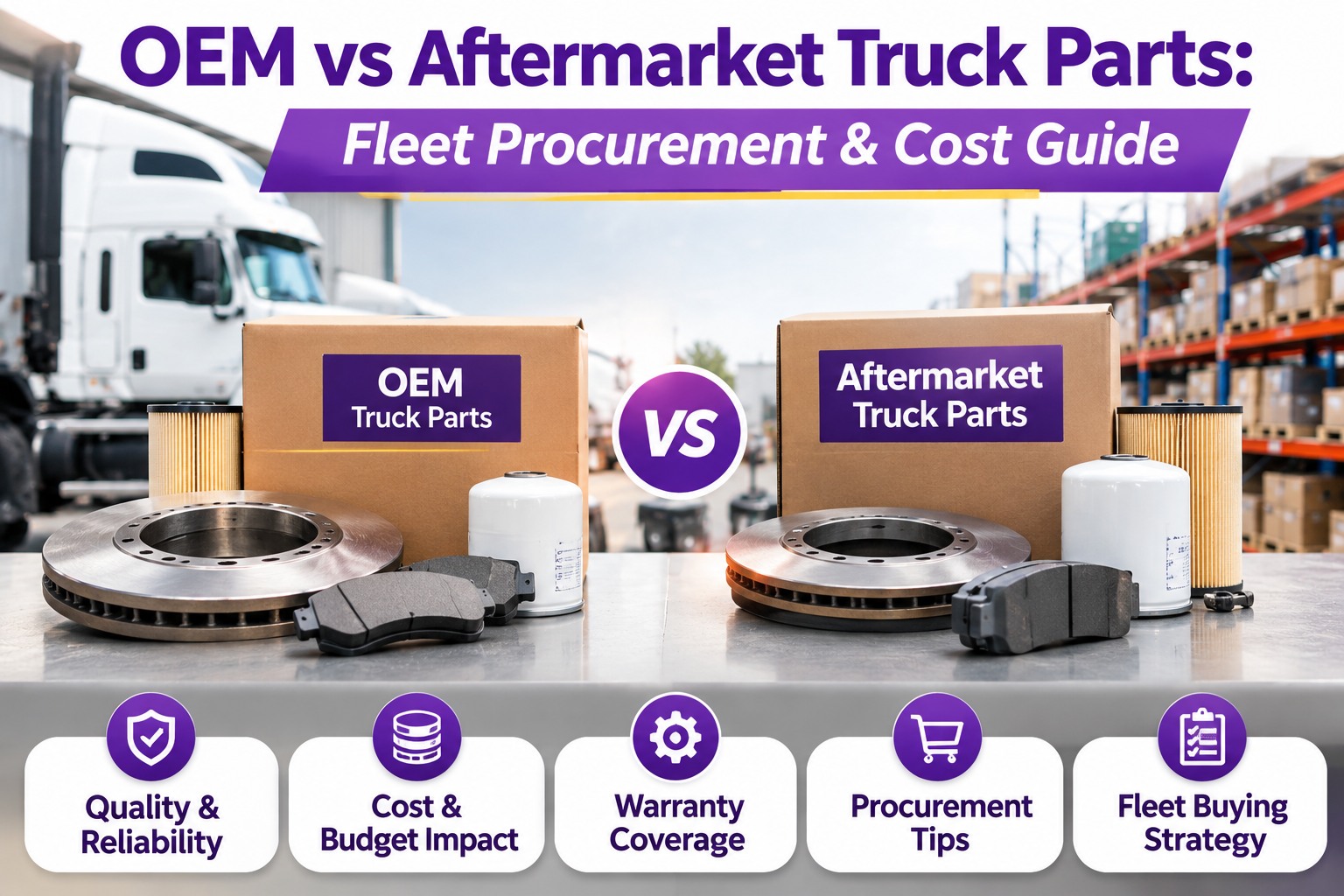
OEM vs Aftermarket Truck Parts: Fleet Procurement & Cost Guide
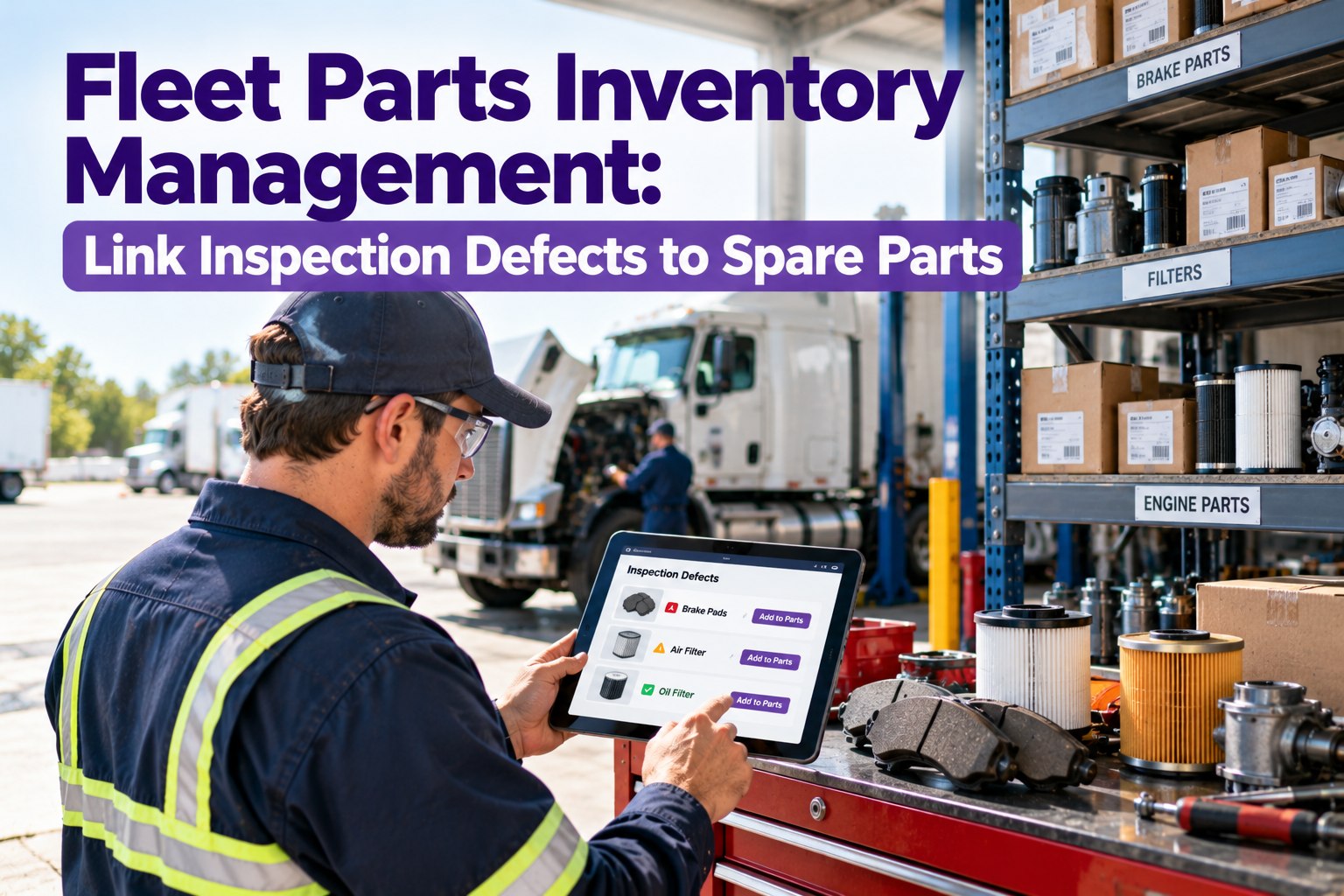
Buying parts on price and opinion costs you when a cheap part fails twice, or an expensive one never needed to be OEM. Truck Inspection & Maintenance Management Software connects every inspection finding to a work order and records the part, supplier and cost on that truck, so your next sourcing call rests on your own repair history.
No credit card required. Free for up to 3 trucks.
1InspectDVIR and inspections log defects as found.
2Defect to work orderThe finding becomes a tracked repair job.
3Repair recordedPart, brand, supplier, labor and photos are logged.
4CompareSee how each part performed on each truck, and plan PM.
OEM vs Aftermarket at a Glance
OEM parts come through the truck manufacturer's channel. Aftermarket parts are made by other companies, from budget copies to premium brands that rival factory quality. Supplier estimates put the typical price gap anywhere from about 20% to 70%, depending on the part. The label alone tells you little, so judge each part on evidence.
OEM parts
- Strength: exact fit and documented specification
- Strength: simple warranty claims on new trucks
- Strength: best for proprietary electronics and emissions parts
- Trade-off: highest price, dealer-dependent availability
VS
Aftermarket parts
- Strength: lower price, often wide choice of brands
- Strength: usually faster to source from several suppliers
- Strength: strong fit for body, lighting, wear and filter items
- Trade-off: quality varies, so suppliers must be vetted
Part-by-Part Decision Map
Instead of one fleet-wide rule, sort parts into three zones. This is a starting framework, so adjust it with your own failure data.
Green: quality aftermarket usually worksFilters, belts, lighting, mirrors, body panels, wipers, hardware, common wear items. Savings are often largest here.
Amber: verify before you buyBrake components, suspension, wheel-end parts, cooling parts, starters and alternators. Ask for certifications, warranty terms and fleet references.
Red: OEM is the defaultProprietary electronics, emissions system parts and software-coded modules. Savings are usually smallest and compatibility risk is highest.
How the software helps: every amber-zone repair becomes a work order with the brand and part number on it. After a few months, you can see which brands held up and move parts between zones with proof.
Warranty Myth vs. Fact
Myth“Using one aftermarket part voids my truck's warranty.”
FactUnder the US Magnuson-Moss Warranty Act, a manufacturer generally can't void coverage only because an aftermarket part was used. They can deny a claim if they show that part caused the failure.
General information, not legal advice. For a disputed claim, review your warranty documents and speak to a qualified professional. Rules differ outside the US.
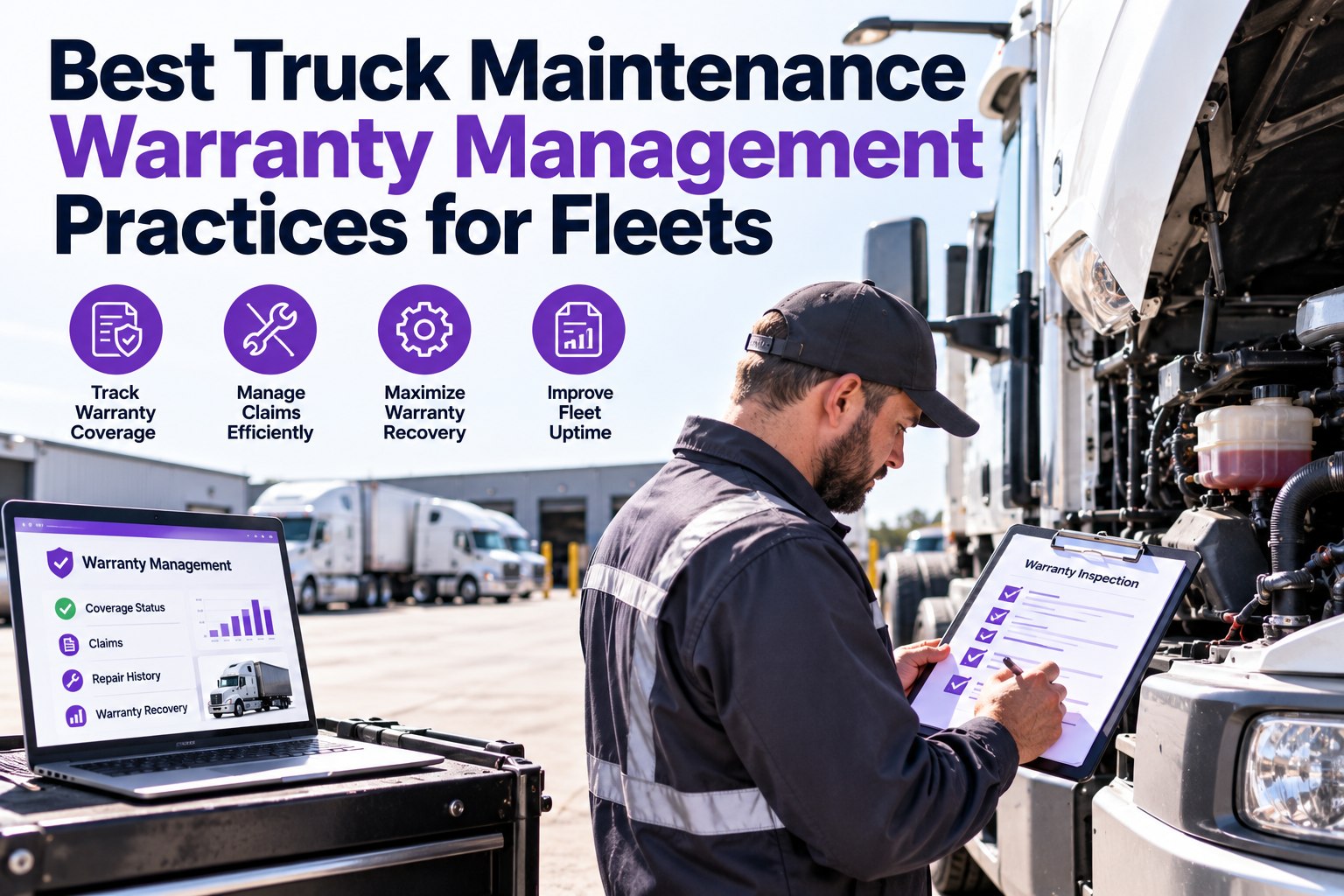
The practical takeaway is documentation. If a claim is questioned, you want the part number, supplier, install date, technician and photos in one place. That is exactly what a closed work order in Truck Inspection & Maintenance Management Software holds. Book a demo to see a repair record from defect to close-out.
What the Software Records on Every Repair
Good sourcing decisions need good data. These are the details that turn each repair into evidence you can compare later.
Part and supplierPart number, brand and where it was bought, tied to the work order.
Labor and downtimeTime spent on the repair, so installed cost is not just the part price.
PhotosBefore and after images attached to the job as proof of the defect and the fix.
Truck historyEvery repair stays on that truck's record, so repeat failures stand out.
Sticker Price vs. Total Cost of Ownership
The cheapest part is not always the cheapest repair. Total cost includes the part, labor, downtime and how many times you repeat the job. Work order history is where you find that last number.
Part price+Labor+Downtime×Number of repairs=Real cost
Illustrative example: one wear part over its service life (labor $150, downtime $450 per repair)
Budget, $180$1,560 · fails early, 2 repairs
Example numbers for illustration only. Your costs will differ, which is why tracking your own parts history matters.
Supplier Scorecard: 5 Criteria, 100 Points
Good sourcing is a supplier decision as much as a part decision. Score every vendor the same way and revisit the scores quarterly, using repair history to check the claims they make.
Quality evidence and certifications
Warranty and return terms
Availability and lead time
Support and fleet references
Bulk Buying Without the Dead Stock
Volume discounts only help if the parts get used. Before you stock up, check these four things.
1 · Usage historyBuy in bulk only parts you replace often, based on real work orders.
2 · Shelf lifeRubber, fluids and seals age. Skip big batches of them.
3 · Pilot firstTest a new brand on a few trucks and compare failure rates.
4 · Cash and spaceIdle stock ties up money. Set reorder points, not guesses.
Let Your Own Repair Data Decide
Truck Inspection & Maintenance Management Software takes you from inspection to defect to work order to a cost record on each truck. Start with three trucks free and see which parts earn their price.
Frequently Asked Questions
Are OEM truck parts always better than aftermarket parts?
No. Quality depends on the specific part, manufacturer and supplier. Premium aftermarket parts can match OEM, while poor ones can cost more in the end. Test and track results.
Start free and compare parts by truck.
Do aftermarket parts void a truck warranty?
Not automatically in the US. The Magnuson-Moss Warranty Act generally stops a manufacturer from voiding coverage solely for using an aftermarket part, though a claim can be denied if the part caused the failure.
How do I compare OEM and aftermarket cost properly?
Compare installed cost over the part's life: price, labor, downtime and repeat repairs. A cheaper part that fails twice often costs more than the OEM part.
How does maintenance software help with parts sourcing?
It turns inspections and defects into work orders and keeps the part, supplier, labor and photos on each truck's record. That gives you your own data to compare brands and suppliers.
Book a demo to see it on your fleet.
Inspect · Repair · Record · Compare
Buy Parts With Your Own Data, Not Guesswork
Run inspections, work orders and parts records in one place, and make your next OEM or aftermarket decision with proof.
No credit card required. Free for up to 3 trucks.