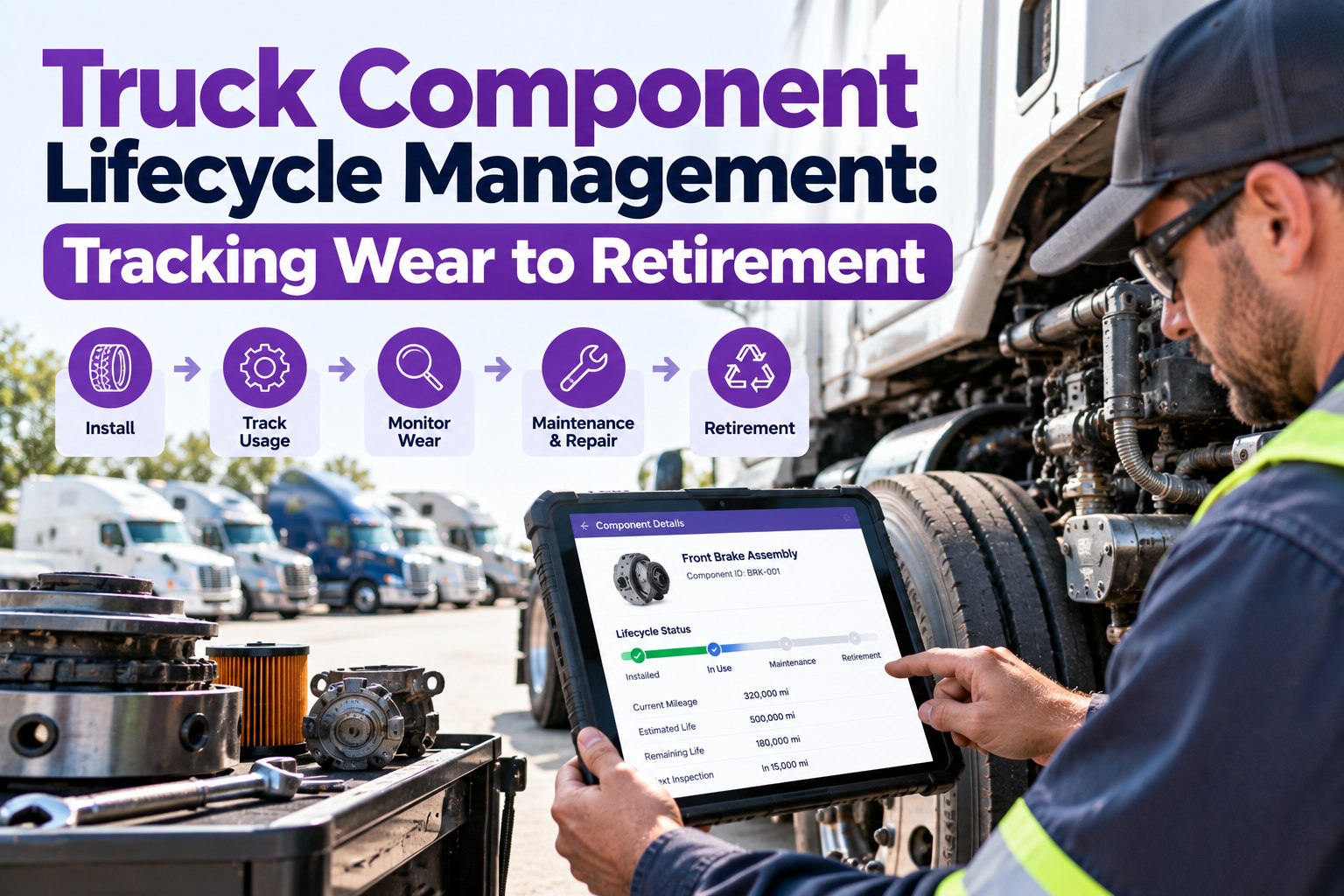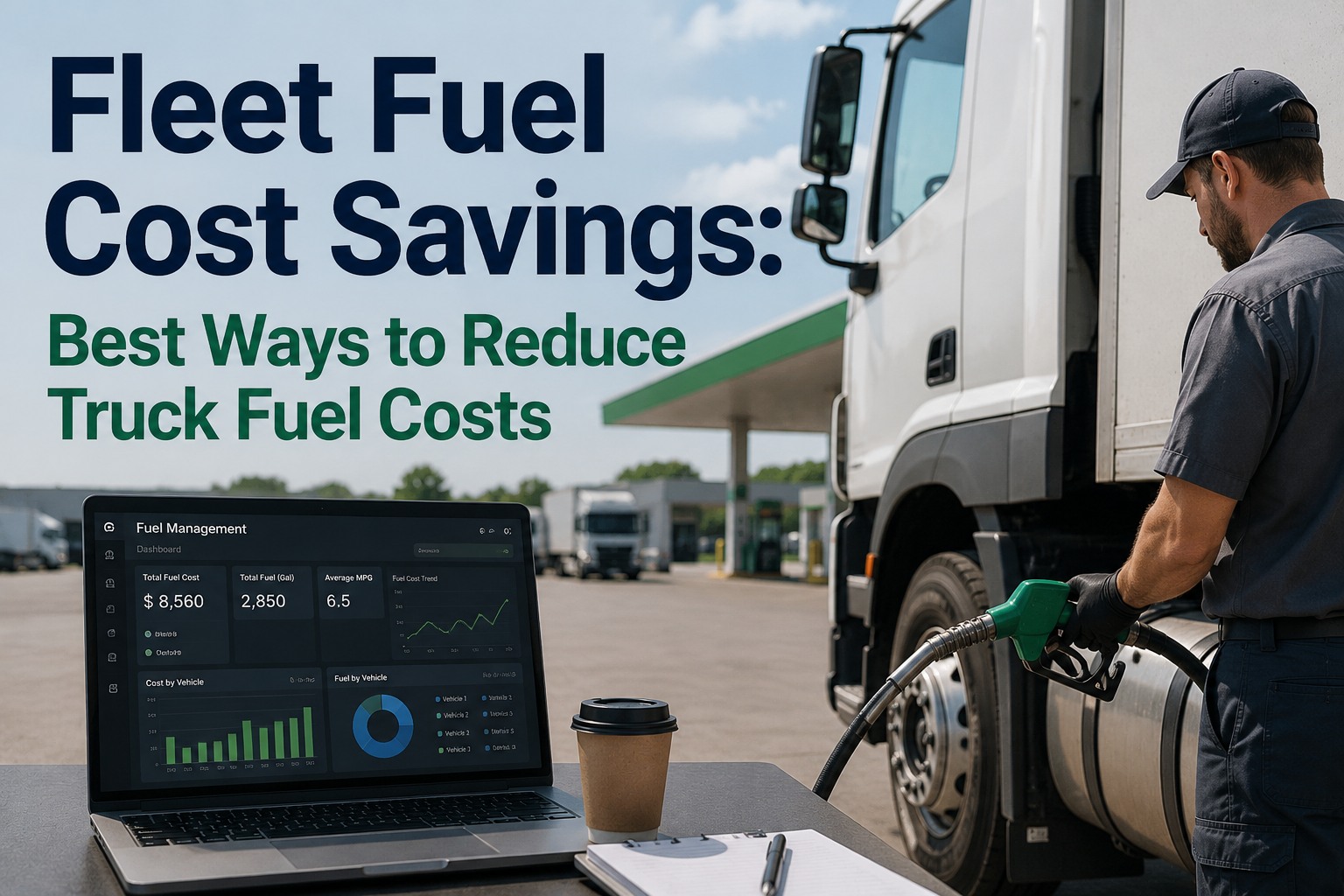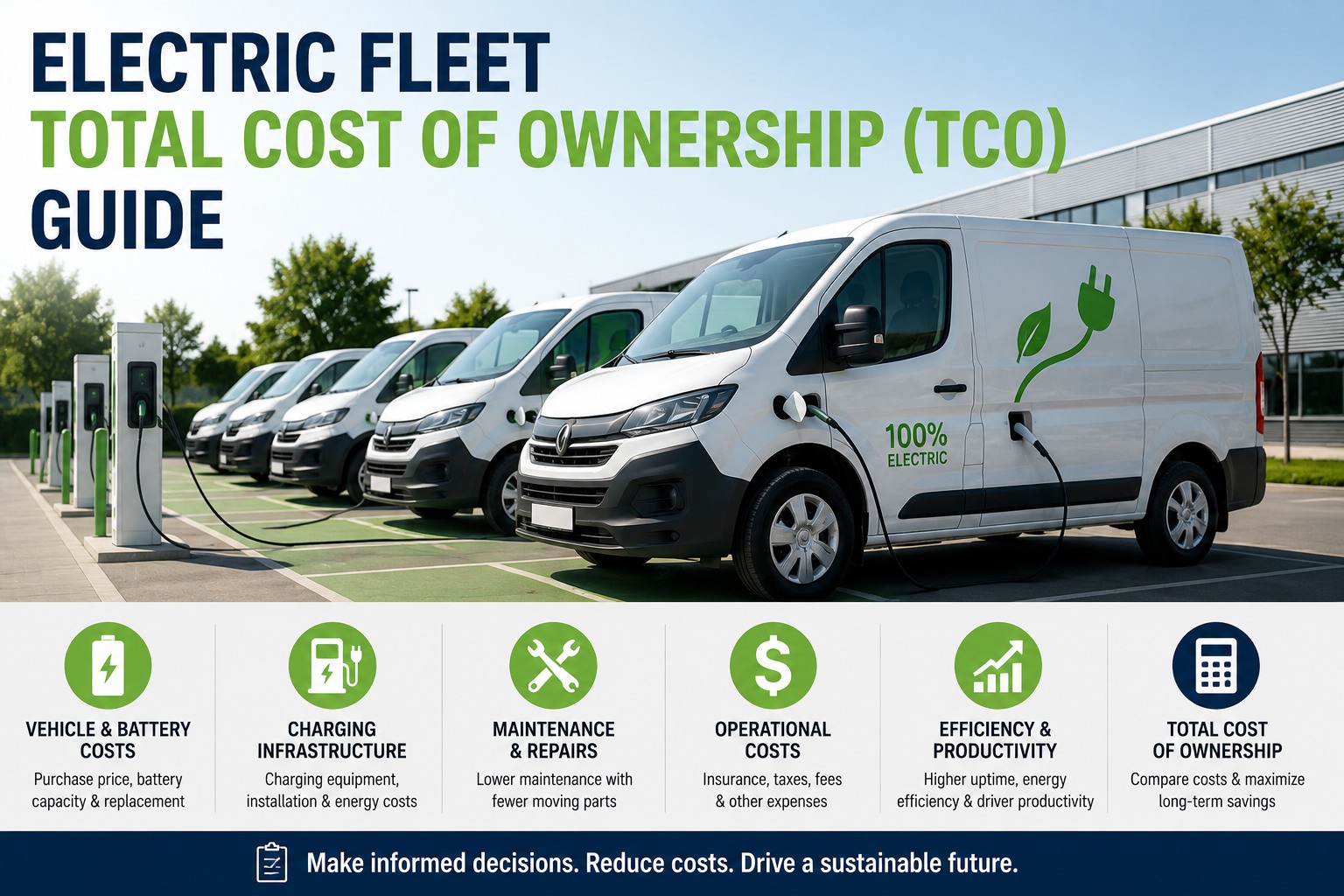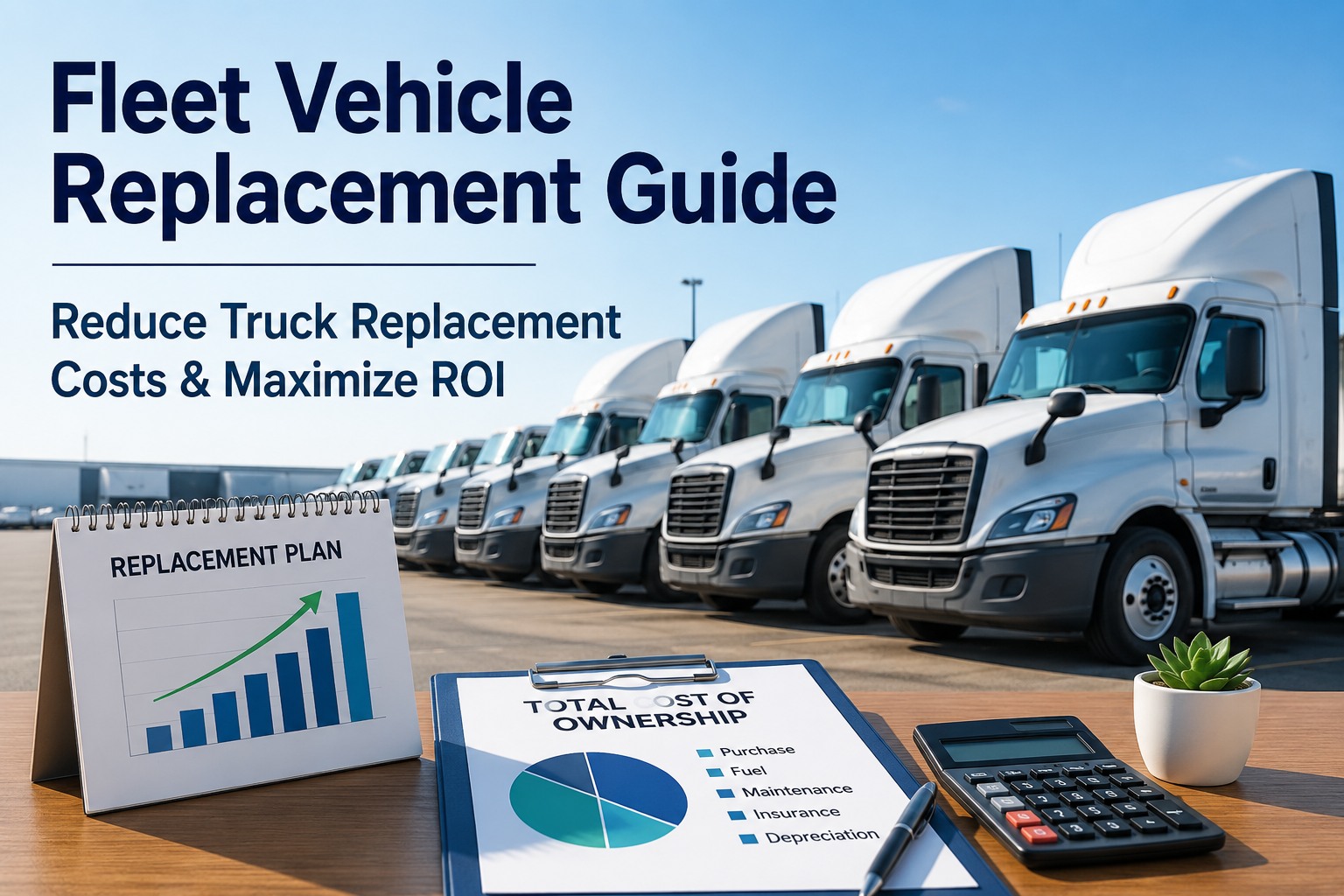
Buying a new truck isn’t just a capital expense—it’s a strategic chess move. In 2026, relying on fixed schedules or gut feelings to replace your fleet is a guaranteed way to drain your budget. Holding onto aging trucks too long destroys your ROI through runaway maintenance and downtime, while replacing them too early wastes thousands in hidden depreciation. The secret to maximizing ROI lies in Total Cost of Ownership (TCO) analysis and data-driven lifecycle management. By connecting predictive maintenance data to your replacement strategy, you can pinpoint the exact moment a truck stops making you money. Ready to optimize your capital expenditure? Talk to our team to map your fleet's lifecycle.
The Fleet Lifecycle Curve: Finding the Sweet Spot
Every truck has a financial lifecycle. In the early years, depreciation is your biggest enemy. In the later years, maintenance and downtime take over. The "sweet spot" for replacement is the exact moment your maintenance and downtime costs begin to exceed the monthly payment of a new truck. Here is how the lifecycle curve behaves:
High Depreciation, Low Maintenance
The truck loses value rapidly, but repair costs are minimal. Warranty covers major components. Keeping the truck here is expensive due to capital loss.
The Optimal Ownership Zone
Depreciation flattens out. Maintenance costs are predictable and manageable. This is where you extract maximum ROI and the truck earns its keep.
The Cost Spike Zone
Out-of-warranty major failures (engines, transmissions, DPF systems) hit. Downtime skyrockets. Every extra month you keep it drains your capital reserves.
The Total Cost of Ownership (TCO) Framework
You cannot reduce truck replacement costs without knowing what a truck actually costs you. Most fleet managers only look at fuel and repair bills. True TCO analysis requires tracking four distinct pillars throughout the commercial truck lifecycle:
Visible Expenditures
- 1Acquisition: Purchase price, financing interest, and taxes.
- 2Fuel & Tires: Fuel efficiency drops as the truck ages; tire wear increases.
- 3Maintenance: Routine PMs, parts, labor, and shop overhead.
- 4Disposal: Auction fees, detailing, and downtime while waiting for sale.
Hidden Margin Killers
- ADowntime: Lost revenue while the truck sits in the shop waiting for parts.
- BDriver Turnover: Drivers quit driving unreliable, uncomfortable old trucks.
- CDepreciation: The silent, daily loss of resale value.
- DCompliance Risk: Older trucks fail DOT inspections and trigger CSA violations.
The TCO Equation
Fleet replacement software calculates this automatically, but understanding the math is crucial. If your monthly TCO for an aging truck exceeds the monthly TCO of a new truck, it is time to replace it:
Real example: A 7-year-old tractor costs $2,800/mo in depreciation and $1,500/mo in maintenance, plus 4 days of downtime ($4,000 lost revenue). Total = $8,300/mo. A new truck payment plus lower maintenance is $3,500/mo. Replacing it saves $4,800/mo.
Stop bleeding cash on aging trucks.
Truck Inspection & Maintenance tracks your cost-per-mile and downtime metrics so you know exactly when to retire a vehicle. Free for up to 3 vehicles—no credit card required. Sign up free to start tracking your TCO today.
The 4 Data Triggers for Replacement
Instead of replacing trucks when they "look old," modern fleet managers rely on predictive data triggers. When a truck hits two or more of these thresholds in a 90-day window, the replacement process should begin:
Maintenance Cost-Per-Mile (CPM) Spike
When a truck’s maintenance CPM exceeds 15% of your fleet average for 3 consecutive months, the components are failing faster than the ROI can justify. This is the first sign of end-of-life.
Downtime Ratio Breach
If a truck sits in the shop for more than 10% of its available days in a quarter, it is no longer an asset—it is a liability. A truck must be on the road generating revenue to maintain ROI.
Fuel Efficiency Degradation
When fuel economy drops by 10% or more compared to baseline (adjusted for load and routes), the engine is wearing down. The extra fuel cost often exceeds the savings of delaying a new truck payment.
Predictive Failure Alerts
AI telematics flag a catastrophic failure (e.g., engine overhaul, transmission rebuild) within the next 6 months. Sell the truck *before* the $25,000 in-frame overhaul happens.
Frequently Asked Questions
How is Total Cost of Ownership (TCO) calculated for a truck?
TCO is calculated by adding the acquisition cost (or monthly depreciation), fuel, tires, routine maintenance, unscheduled repairs, and downtime costs, then subtracting the truck's residual/resale value. The result is divided by the miles driven to find your true cost-per-mile. Fleet TCO analysis software automates this so you don't have to use spreadsheets. Contact our specialists to see the math.
How long should I keep a commercial truck before replacing it?
There is no single mileage answer. The optimal replacement window is typically 5 to 7 years or 500,000 to 700,000 miles for heavy-duty trucks. However, the exact moment depends entirely on when your maintenance and downtime costs cross the line of a new truck's monthly payment.
How does predictive maintenance extend fleet lifecycle?
Predictive maintenance prevents catastrophic failures. By fixing minor issues before they destroy major components (like catching a low oil pressure issue before the engine seizes), you keep the truck reliable and profitable for longer. This pushes the "Cost Spike Zone" further down the timeline, maximizing ROI.
Can fleet replacement software help me buy trucks?
Yes. By tracking TCO and resale values, the software tells you the best time to trade in your current assets to maximize resale value. It also helps you spec new trucks based on which configurations have historically given your fleet the lowest operating costs. Sign up free to start tracking.
What is the biggest hidden cost of holding onto old trucks?
Downtime and driver turnover. An old truck might be paid off, but if it sits in the shop for 30 days a year, it isn't generating revenue. Furthermore, drivers hate unreliable equipment; high driver turnover costs thousands in recruiting and training, often eclipsing the cost of a new truck payment.
Should I replace my whole fleet at once or cycle vehicles?
You should always cycle vehicles. A staggered fleet replacement strategy ensures you never face a massive capital expenditure all at once. Cycling 15-20% of your fleet annually keeps your average fleet age low, maintains predictable budgets, and avoids operational disruptions.
Replace trucks based on data, not guesswork.
Truck Inspection & Maintenance tracks your TCO, cost-per-mile, and downtime triggers so you know exactly when to retire a vehicle. Starting at $3/vehicle/month. Free for up to 3 vehicles. Optimize your capital expenditure today.