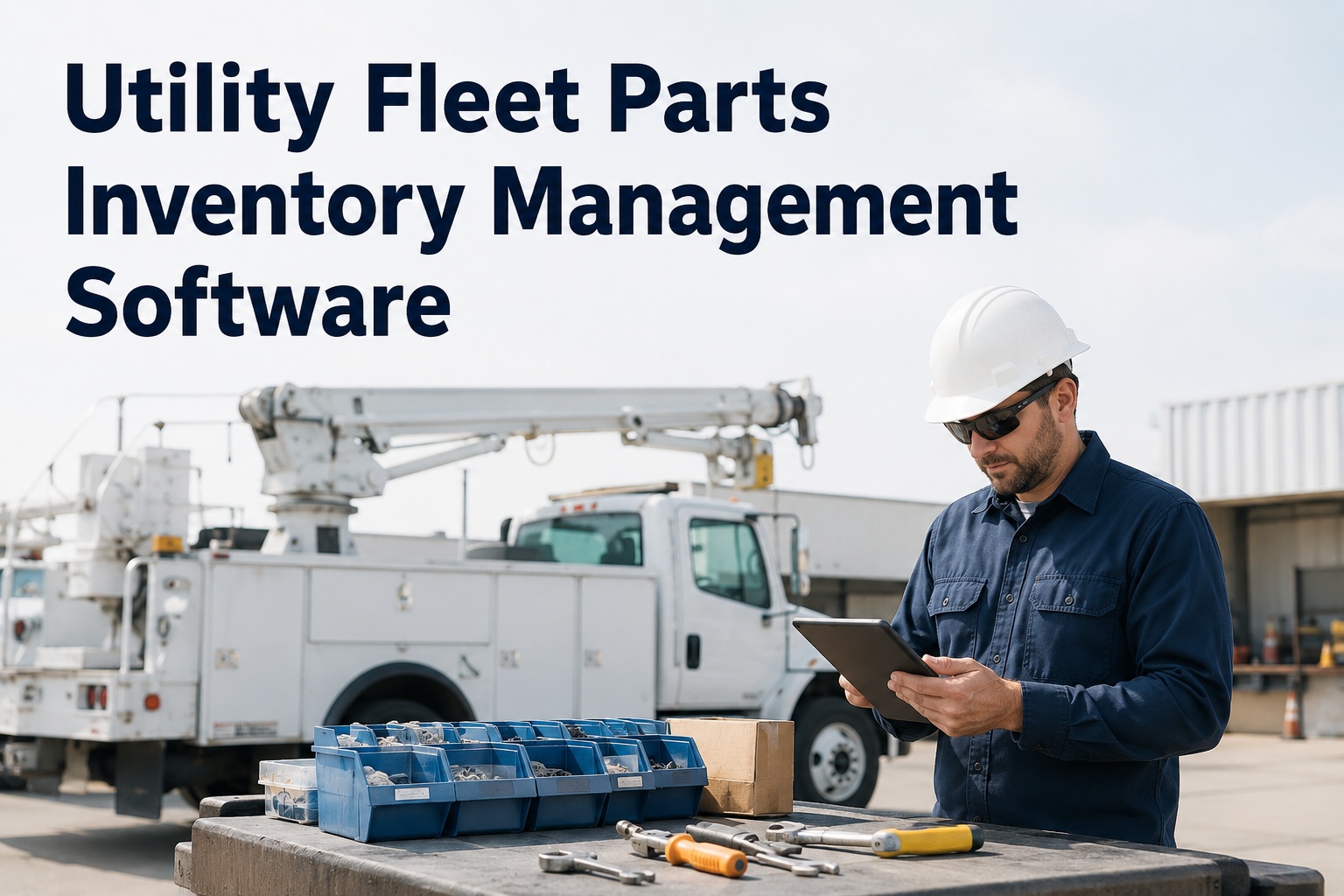
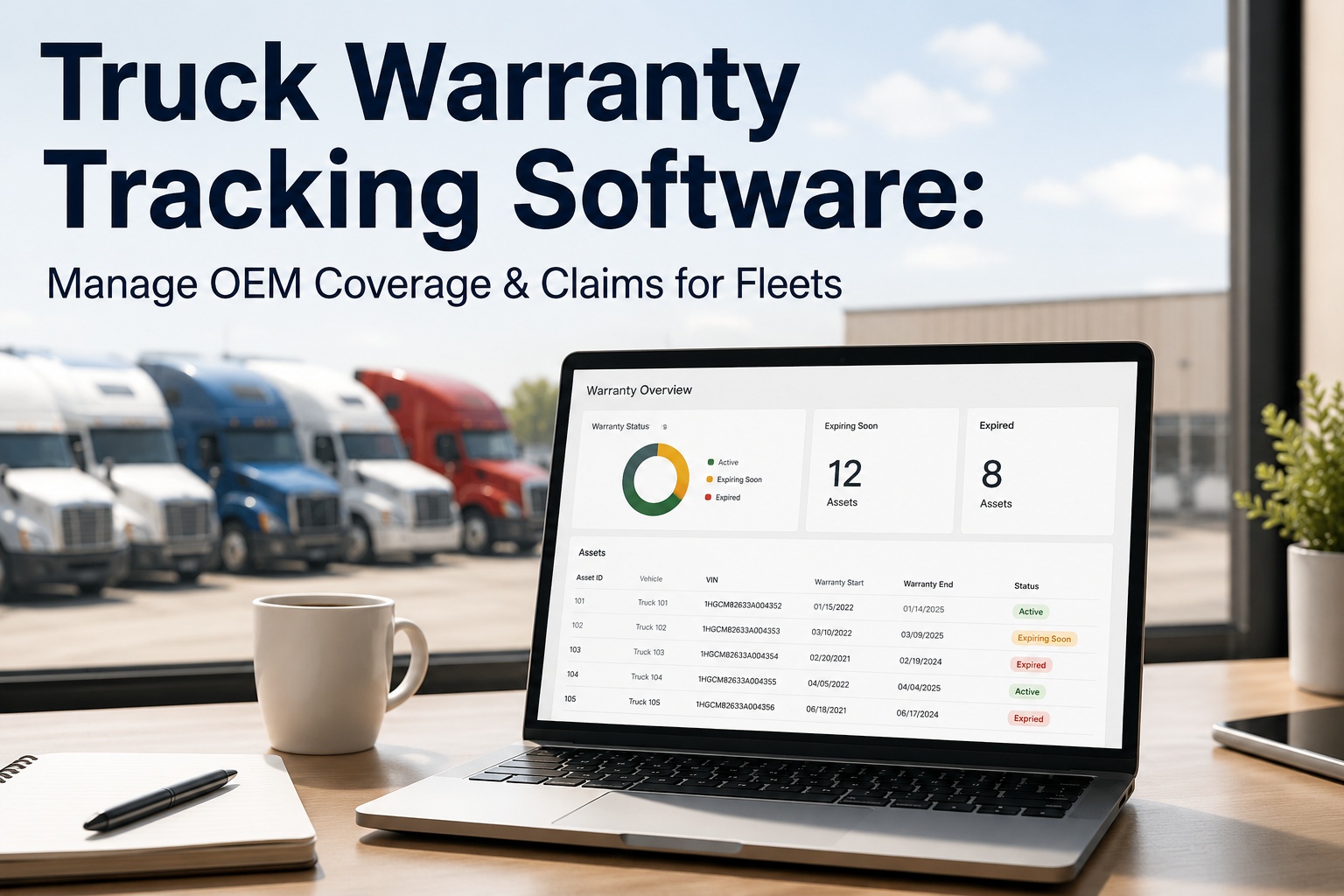
A driver flags a worn brake chamber on Monday morning. The repair itself takes two hours — but the part isn't on the shelf, so the truck sits for three days. The defect was found fast; the parts were the delay. Truck Inspection & Maintenance Management Software closes that gap by tying every inspection defect to the spare part it needs, so each finding already knows whether the fix is in stock. Start free and link every defect to a part.
Defect · Part · Stock check · Work order
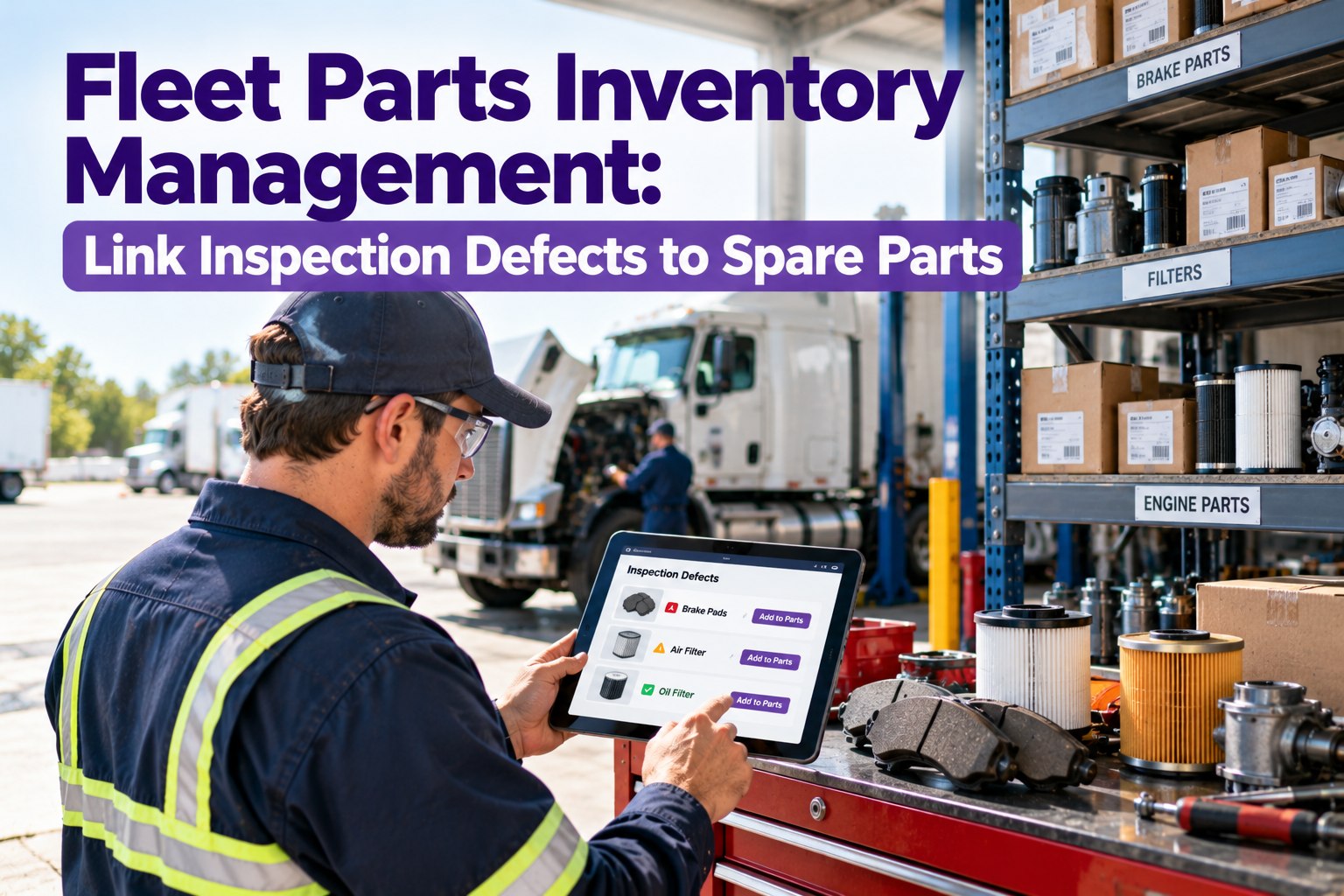
Fleet Parts Inventory Management: Link Inspection Defects to Spare Parts
Our Truck Inspection & Maintenance Management Software ties each inspection defect to the spare part it needs, checks stock the moment the defect is logged, and shows the answer on the work order — so your shop knows on day one whether the truck is repairable today or waiting.
1 Defect found
2 Part identified
3 Stock checked
4 Work order ready
$448–$760estimated cost per truck, per day parked
34%of fleet repair delays traced to parts stockouts
40–70%typical price premium on an urgent part order
The Part Is Cheap. The Wait Is What Costs You.
Fleets rarely lose money because a brake chamber is expensive. They lose it because the truck sits idle while one is found, ordered and shipped. Same truck, same fault — the only difference is whether the part was already on the shelf.
Part not in stock
Repair 2 hours + about 3 days waiting for the part
Illustrative comparison. The repair never changes — the parts wait does.
Idle truckIndustry estimates put a parked truck at $448–$760 a day in lost revenue and idle labor — and higher for heavy-duty operations.
Rush premiumAn urgent order often costs 40–70% more plus overnight freight: an $85 brake part can turn into a $145 emergency buy.
Domino effectMissed routes, overtime and shipping can push one critical stockout into the $10,000–$20,000 range.
The fix isn't a bigger storeroom. It is knowing — the moment a defect is logged — which part it needs and whether you have it. That is exactly what Truck Inspection & Maintenance Management Software does: inspections, work orders and parts live in one record, so nobody has to walk the shelf or guess. Contact our team to see how defects and parts connect in one record.
The Defect-to-Shelf Map: What to Stock for the Defects Drivers Actually Report
Your DVIR history already tells you what your shop will need next. Truck Inspection & Maintenance Management Software keeps that history against each truck, so you can see which defects keep recurring and stock the parts they consume. Here is how the common ones group by part and by how badly a stockout hurts.
DVIR defectPart to keep on the shelfTier
Brake out of adjustment or worn liningBrake shoes and pads, slack adjusters, brake chambersA
Air leak at a line or couplingAir line, fittings, gladhand sealsA
Required lamp or marker outBulbs, LED lamps, pigtails, connectorsA
Tire worn, damaged or leakingValve stems, caps, tires by size in useA
Belt cracked or frayedDrive belts, tensionersB
Fluid seep or leakHoses, clamps, gaskets, filters, fluidsB
Wiper or washer not workingWiper blades, washer pump, fusesB
Mirror or trim crackedMirror heads, brackets, trim clipsC
ATruck-stoppers. Brakes, air, lighting and tires can put a truck out of service — always hold stock.
BFast movers. Used every few weeks — run on min/max levels.
CSlow movers. Low risk — order when needed, don't tie up cash.
Min/Max Levels: The Gauge That Reorders Before the Bin Is Empty
A min/max level gives every part two numbers: a reorder point and a refill target. With our software tracking stock against each repair, a part that falls to its minimum raises a reorder alert — so you order up to the maximum and never discover a stockout by walking to an empty bin.
Brake chamber — example stock gauge
Reorder point: 4
Maximum: 12
Reorder zone
Healthy range
0412
At 4 on hand, the reorder fires: order 8 to refill to 12.
Levels set once and never revisited go stale as the fleet grows or ages. Because every closed work order records the parts it used, the software gives you real usage to reset levels against — start free and let your repair history set the levels.
The Stock Check at Defect Time: Three Outcomes, Three Next Steps
The moment a defect is logged in Truck Inspection & Maintenance Management Software, the part it needs is checked against stock. One of three things is true — and your shop sees which before the truck reaches the bay.
Defect logged → part identified → stock checked
↓
In stockReserve and repairThe part is reserved on the work order. The repair starts today, and stock counts down when the job closes.
Running lowRepair and reorderThe job proceeds, and the reorder fires so the next defect isn't blocked by this one.
Out of stockHold and orderThe work order shows it is waiting on a part, the order is raised, and the truck is planned around — not guessed at.
How Truck Inspection & Maintenance Management Software Closes the Parts Gap
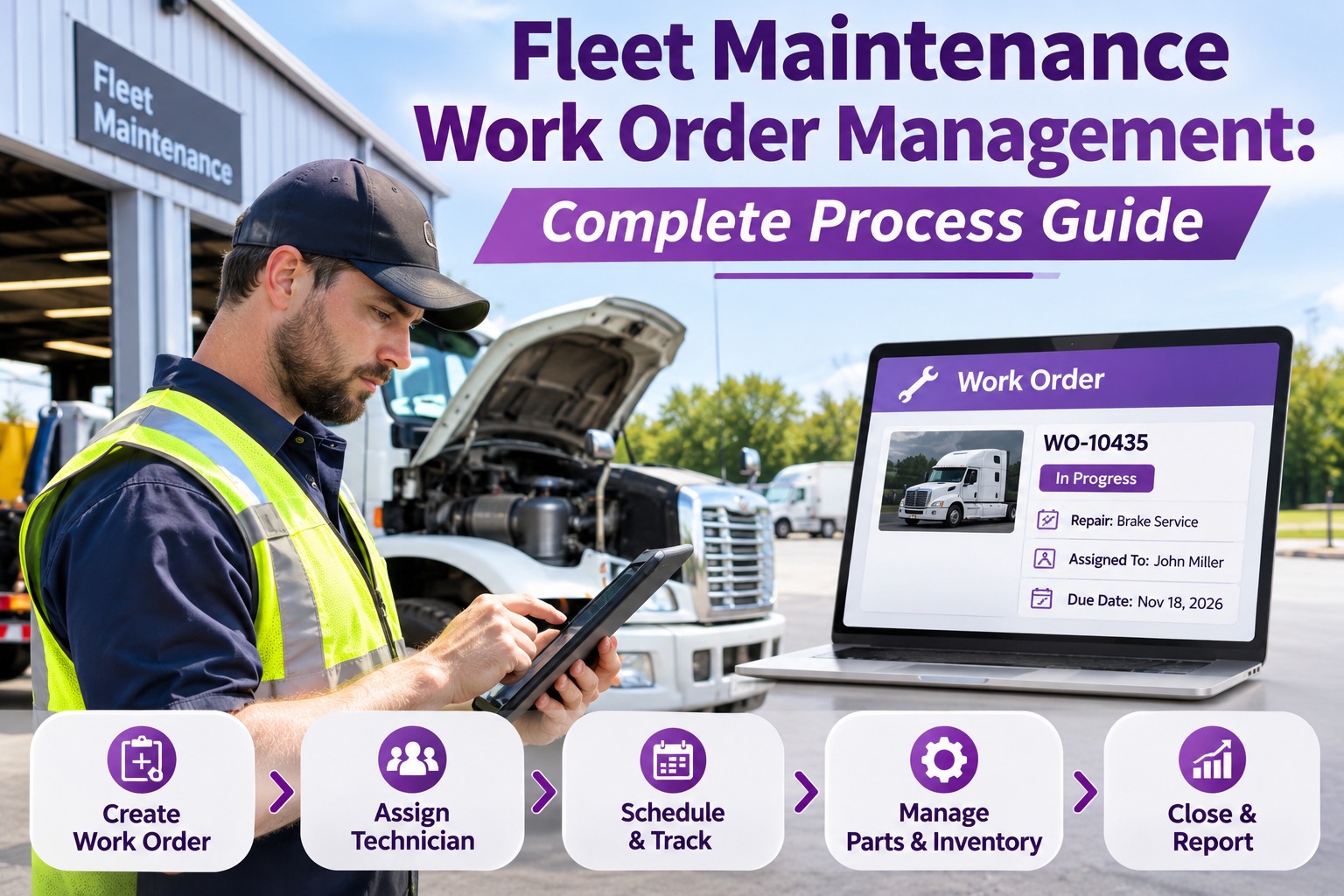
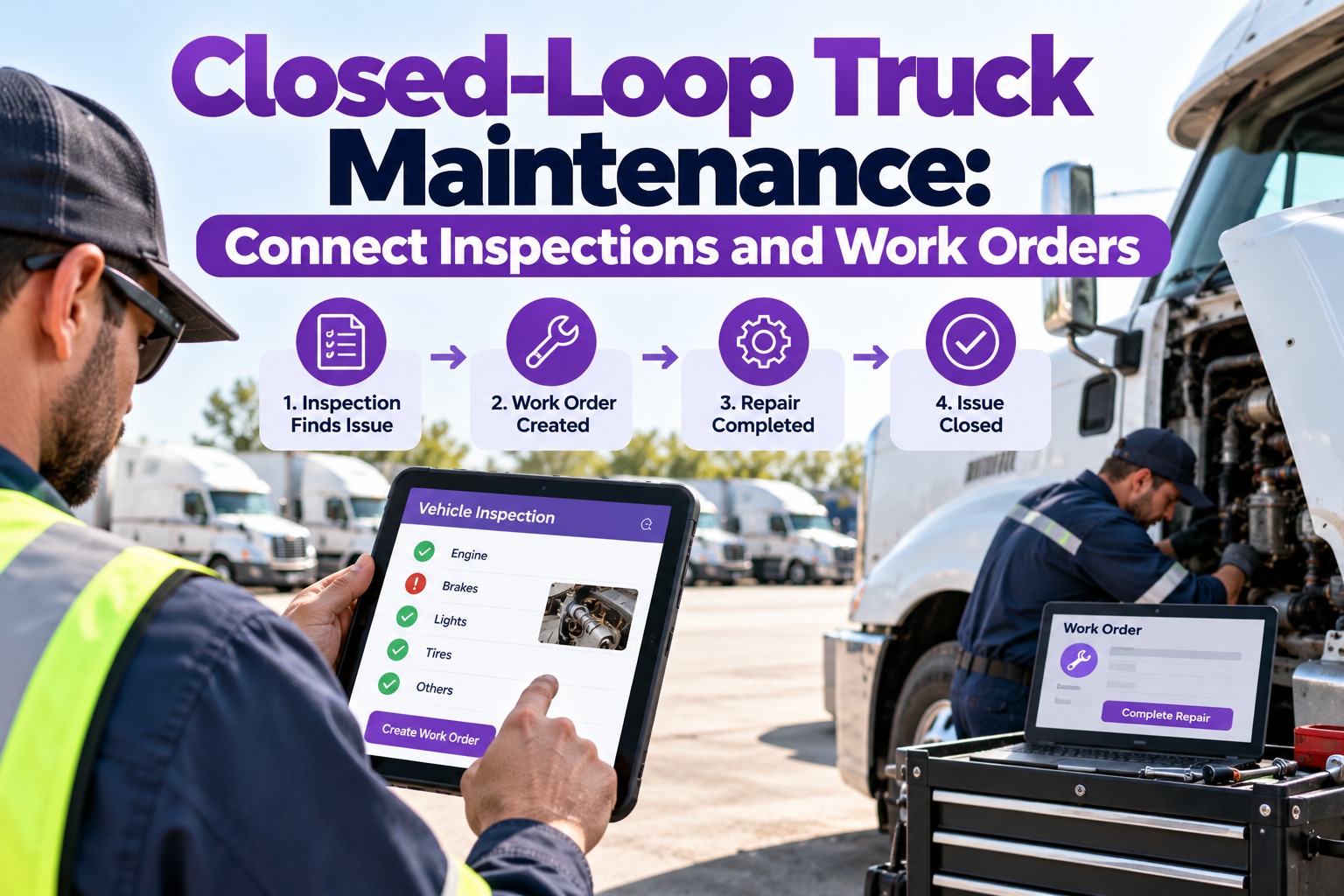
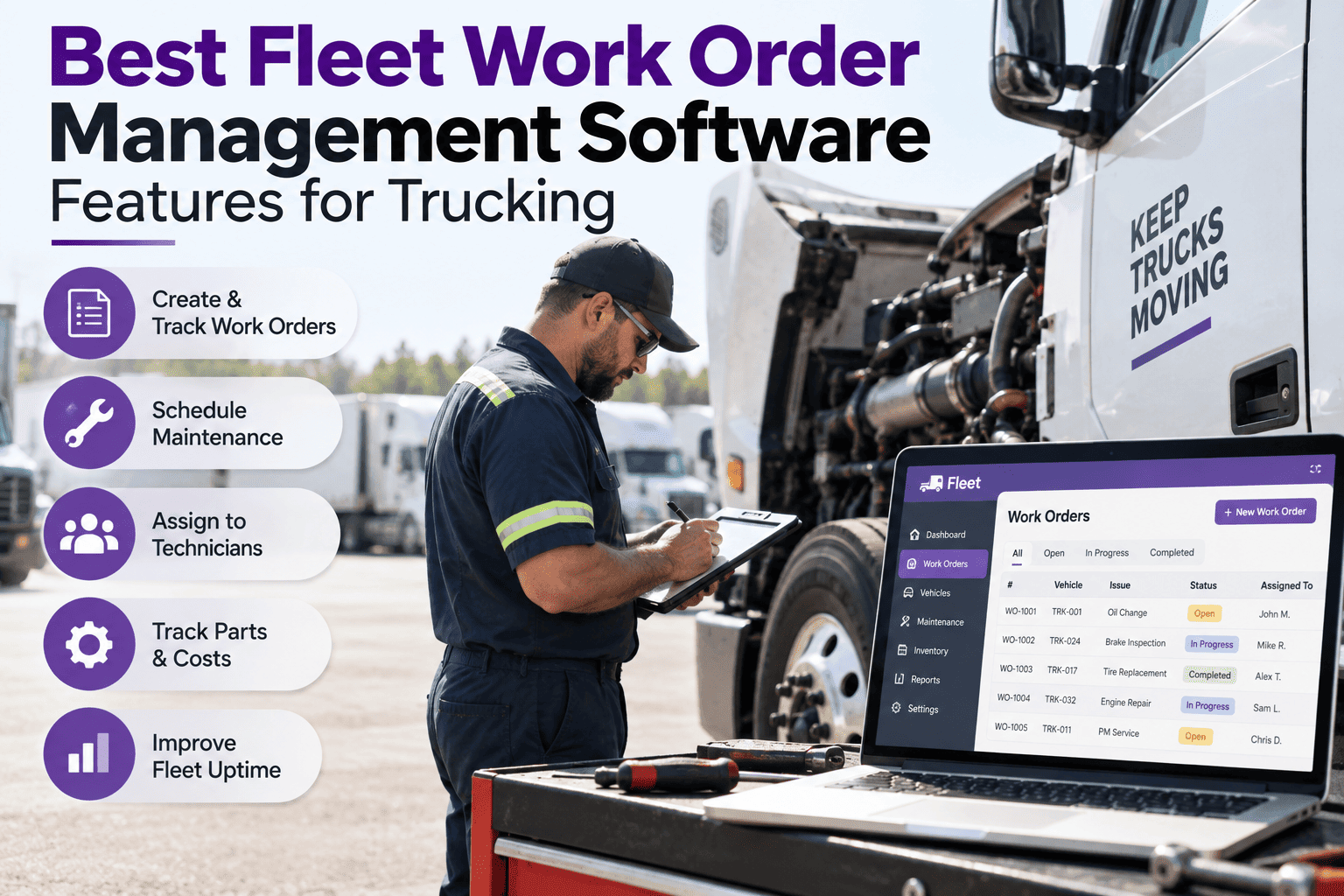
Most fleets run inspections in one place, repairs in another and parts on a spreadsheet. Our software puts all three on one record per truck, so a defect and its part are never separated.
01Defect linked to its partA defect logged on an inspection points to the part it needs, so the shop starts with the answer, not a question.
02Stock shown on the work orderIn stock, running low or out — visible on the work order the moment it opens, before the truck is in the bay.
03Reorder alerts at the minimumSet a reorder point and a maximum for each part and get alerted early, instead of finding an empty bin.
04Parts reserved per repairParts promised to one truck are held on its work order, so available stock is never overstated.
05Usage history per truckEvery closed repair records the parts it consumed, so you can see what each truck really costs to keep running.
06One record, audit-readyDefect, part and repair stay linked end to end, which keeps your DVIR and maintenance records easy to produce on demand.
Spreadsheets and Memory vs. Truck Inspection & Maintenance Management Software
Spreadsheet and memoryWith our software
Part neededThe mechanic works it out after the truck arrivesIdentified from the defect when it is logged
Stock answerSomeone walks the shelf or checks a sheetShown on the work order automatically
ReordersTriggered by an empty binTriggered by a reorder point, early
Parts historyScattered across invoices and notesKept against each truck's record
Audit trailThe defect and the repair live in separate placesDefect, part and repair stay linked end to end
Know the Answer Before the Truck Reaches the Bay
Truck Inspection & Maintenance Management Software keeps inspections, work orders and parts in one place, so every defect arrives with its part and stock status already attached. Fewer parked trucks, fewer rush orders, no surprise empty bins.
Frequently Asked Questions
How much stock should a fleet hold for each part?
It depends on how fast the part is used, how long it takes to arrive, and how badly its absence hurts. Use the reorder-point formula: average daily use times lead time, plus safety stock. Hold more of truck-stopping parts like brake components and required lamps, and less of slow movers. Truck Inspection & Maintenance Management Software then helps you adjust the levels as closed work orders show your real usage.
Start free and set levels from real repair history.
What is the difference between min/max and a reorder point?
A reorder point triggers an order at a set level, usually for a fixed quantity. Min/max also sets a ceiling: when stock falls to the minimum, you order enough to reach the maximum, so quantities vary with demand. Min/max suits parts with uneven usage, which describes most truck parts.
Why link inspection defects to parts at all?
Because the defect is the earliest signal of what you will need. With our software, the part a defect requires is checked against stock the moment it is logged, while there is still time to order. Without the link, you find out you're short only after the truck is already in the bay.
Do I need a dedicated parts room to manage inventory digitally?
No. Whether your parts sit in a full storeroom, a shop cage or a few shelves, the method is the same: track quantities, set levels, and tie usage to work orders — which is what the software handles for you. Small fleets often benefit most, because a single stockout hits a larger share of their trucks.
Contact us to plan a setup that fits your shop.
Defect · Part · Repair — one record
Stop Letting a Missing Part Park Your Truck
Truck Inspection & Maintenance Management Software links every inspection defect to the part it needs, shows stock before the truck arrives, and alerts you to reorder before the shelf is empty. Fleets use it to turn parts waits into planned repairs.
No credit card required. Free for up to 3 trucks. Built for FMCSA-compliant fleets.