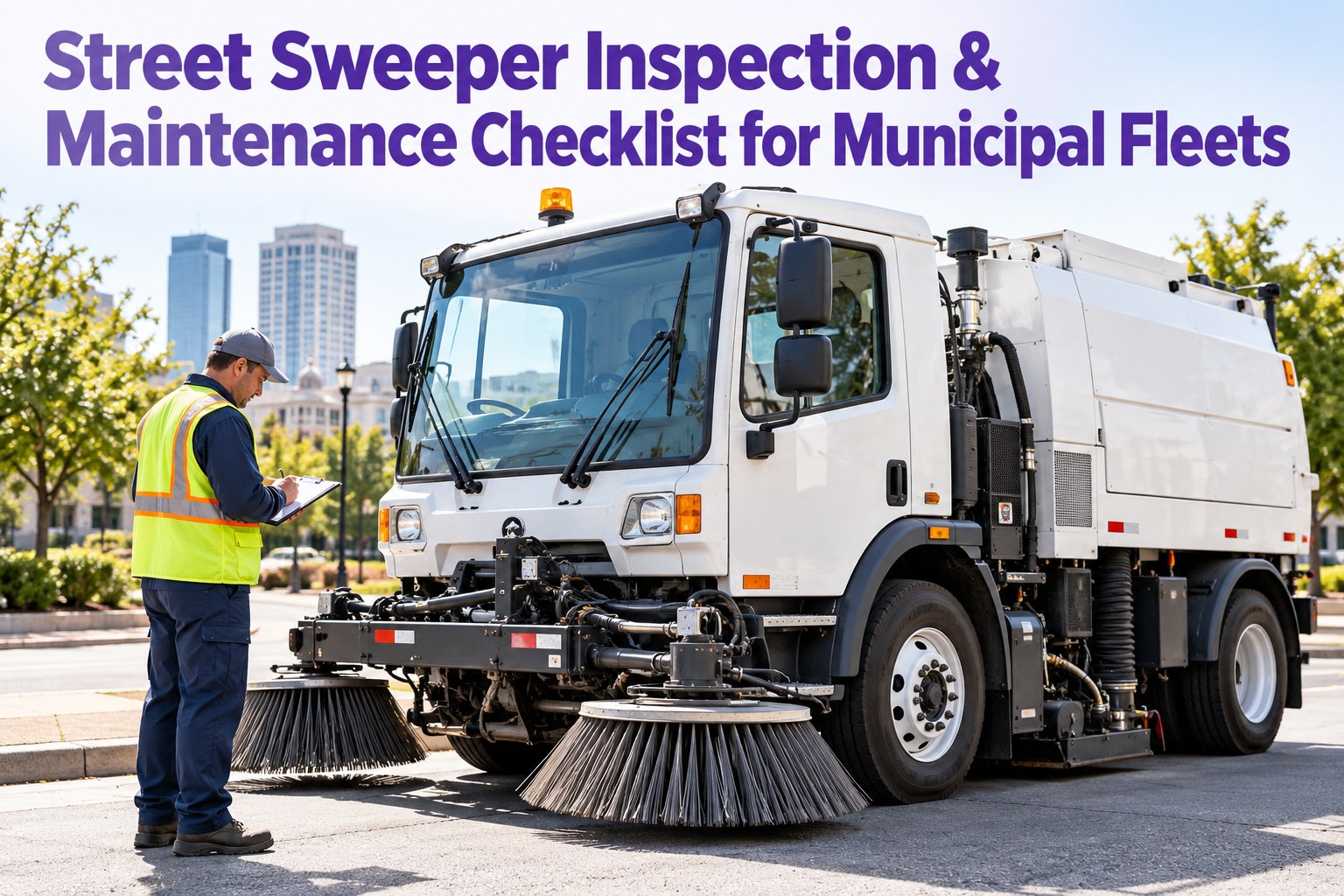
A street sweeper lives a brutal life — abrasive grit, constant water, packed debris, and brooms that wear out faster than any other part on the machine. Miss a daily check and a sweeper doesn't just break down; it finishes the route leaving the street half-clean. This checklist covers every working system — brooms, suction, water, hopper, and hydraulics — on the schedule each one actually needs. Start free and put the sweeper check on every operator's phone.
Street Sweeper PM · Brooms · Suction · Water · Hydraulics
Street Sweeper Inspection & Maintenance Checklist for Municipal Fleets
A worn broom, a choked hopper, or a clogged spray nozzle doesn't strand the sweeper — it quietly ruins the sweep, and the complaints come in the next morning. Truck Inspection & Maintenance Management Software runs the whole loop: a guided daily walkaround on the operator's phone, every finding routed to a graded work order, and preventive maintenance scheduled on real engine hours — so each sweeper rolls out cleaning at full performance and stays on route.
Every systembrooms, suction, water, hopper, hydraulics
Finding → work ordergraded and assigned the moment it's logged
PM on engine hourschassis and auxiliary engine, not a flat calendar
The Five Systems That Make a Sweeper Sweep
A street sweeper is really five machines working as one — the brooms that lift the grit, the airflow that carries it, the water that keeps the dust down, the hopper that holds it, and the hydraulics that drive all of it. A problem in any one shows up as a dirty street, so a good check walks the whole chain.
◍BroomsGutter brooms sweep the curb line, the main broom lifts debris to the pickup
→
❋Suction & FanAirflow carries the debris up into the hopper — vacuum and air sweepers
→
◉Water & DustSpray keeps debris damp so it doesn't choke the screen or escape as dust
→
▣HopperHolds the load; a packed or rusted hopper chokes airflow and performance
→
⬡HydraulicsDrives the brooms, conveyor, and hopper lift — clean fluid keeps it all moving
The Street Sweeper Inspection & Maintenance Checklist
Work the machine system by system. The chip on each row shows how often it's due — a Daily operator check, a Weekly technician task, or a Monthly service. In our software this runs as a guided sequence on the phone, and any item that fails becomes a graded work order, so start free and give every operator the full check on their phone.
Daily — operator walkaround
Weekly — technician task
Monthly — scheduled service
What Wears Out First
On a sweeper, some parts are consumables — they're meant to wear, and the trick is replacing them before they drag down the sweep. Knowing the order lets a fleet stock the right spares and check the fast-wearing items more often.
1Brooms
The fastest-wearing part on any sweeper
2Squeegees & skirts
Lose the ground seal and the vacuum drops
3Spray nozzles
Clog and wear, letting dust escape
4Air & hydraulic filters
Load up with grit and restrict flow
5Belts & bearings
Fatigue over hours of vibration and load
Why a Sweeper Stops Sweeping Well
Most performance complaints don't come from a broken machine — they come from a chain of small, checkable problems that quietly cut the sweep. Each one is a finding an operator should log, not drive through.
◱Choked airflowDebris packed in the hopper or screen chokes the air that should carry grit to the fan
❋Fan vibrationDebris at the fan throws it off balance, damaging the bearings and driveline
◎Lost vacuumWorn seals and skirts bleed off the suction that lifts the debris
◍Head out of adjustmentA misaligned or bent sweeping head drops performance sharply
◉Weak water systemClogged nozzles let debris dry out, stick to the screen, and choke airflow
⬡Hydraulic pressure lossFalling pressure slows the brooms and conveyor so they can't keep up
Schedule on hours, not dates
A sweeper idling through a slow route ages differently than one running wide-open — so engine hours track wear better than the calendar. Service the engine oil and filters around every 250 hours, and the hydraulics and driveline around every 500 to 1,000 hours, always confirmed against your model's manual. Track hours on both the chassis engine and the auxiliary sweeping engine, since they rarely run the same amount.
~250 hrsEngine oil & filter service
~500–1,000 hrsHydraulic & driveline service
2 enginesChassis & auxiliary, tracked apart
From Daily Walkaround to Scheduled Service, on One Record
A guided daily check on the operator's phone; every worn broom, clogged nozzle, or hydraulic leak turned into a graded work order the moment it's logged; preventive maintenance scheduled on real engine hours for each unit; and a clean record behind it all. That's a sweeper fleet that cleans every route and never guesses what's due.
How Our Software Runs the Sweeper Program
A checklist on paper is only as good as whether it gets done and whether the finding reaches a technician. Truck Inspection & Maintenance Management Software closes that gap — the inspection happens on the phone, the defect becomes work, and the service lands on schedule by engine hours.
01Guided daily walkaroundBrooms, suction, water, hopper, and hydraulics checked in order on the phone
02Finding → graded work orderA worn broom or clogged nozzle becomes a work order, graded and assigned
03PM on engine hoursService scheduled by chassis and auxiliary engine hours, triggered on whichever hits first
04Wear-part trackingBrooms, skirts, and filters tracked per unit so you reorder before they fail
05Photo on every defectTimestamped proof of the worn broom or torn skirt, on the record
06Audit-ready fileDaily reports, PM history, and safety checks in one searchable place
Frequently Asked Questions
What should a daily street sweeper inspection cover?
A daily operator walkaround should check engine oil, coolant, and hydraulic fluid levels; fill the water tank and confirm the spray nozzles flow evenly; inspect the main and gutter brooms for wear, wrapped wire, and broken segments; look for hydraulic leaks; and test the lights, backup alarm, camera, and beacon. After the shift, empty and rinse the hopper, clean the screens, and log any new noise or performance change.
Start free and put the daily check on the operator's phone.
What wears out fastest on a street sweeper?
Brooms are the fastest-wearing part on any sweeper — both the main broom and the gutter brooms. After brooms come squeegees and rubber skirts, spray nozzles, air and hydraulic filters, and belts and bearings. Because these are consumables, the goal is to check them often and replace them before they drag down the sweep, not after a complaint comes in.
Should street sweeper maintenance be scheduled by miles or engine hours?
Engine hours, because a sweeper spends most of its time working at low road speed — the odometer barely moves while the brooms, fan, and hydraulics rack up wear. Service the engine oil and filters around every 250 hours and the hydraulics around every 500 to 1,000 hours, confirmed against your model's manual. Track both the chassis engine and the separate sweeping engine, since they run different amounts.
Why is my street sweeper not picking up debris well?
Poor pickup usually traces to one of a few checkable causes: a hopper or screen packed with debris choking the airflow, worn seals or skirts bleeding off vacuum, a sweeping head out of adjustment, worn broom bristles, a weak water system letting debris dry and stick, or hydraulic pressure loss slowing the brooms. Each is on the checklist above, which is why a disciplined daily walkaround catches most of them early.
Why keep the water and dust system working if it's just for appearance?
It's not just appearance. Water keeps debris damp as it enters the hopper so it doesn't stick to the screen and choke the airflow the fan depends on, and it protects the fan in dusty conditions. A weak or clogged water system quietly hurts sweeping performance and raises dust emissions, so inoperable nozzles and filters should be repaired promptly.
Brooms · Suction · Water · Hopper · Hydraulics — One Program
Build a Sweeper Program That Catches the Problem Before the Complaint
Give every operator a guided daily walkaround across all five systems, turn every finding into a graded work order, schedule preventive maintenance on real engine hours, and track wear parts per unit. Cleaner routes, fewer breakdowns, and a sweeper fleet that's ready when the shift starts.
No credit card required. Service intervals are general references — always confirm against your sweeper's model manual.