Here's the uncomfortable statistic that should shape how every public-sector fleet manager thinks about audits: only about 7% of motor carriers pass a federal review without a single violation. The other 93% face fines, out-of-service orders, or a downgraded safety rating. And the ones who fail usually aren't unsafe — they're disorganized. For municipal, county, and public-works fleets, the challenge is sharper: records scattered across departments, DVIRs on paper in a yard office, and maintenance history split between a garage log and a spreadsheet. When a federal auditor sends the notice, you have days to assemble what should have been ready all along. This guide walks through exactly what auditors request, the findings that sink public fleets most often, and how to get audit-ready before anyone knocks — with Truck Inspection & Maintenance software turning your daily operation into a standing audit trail.
Compliance Guide · Public Sector Fleets · 2026
How to Pass a Federal Fleet Audit: The Complete Preparation Guide
The records auditors demand, the findings that fail public fleets, and the day-by-day prep that turns a stressful review into a clean, sub-hour export.
7%
Of carriers pass with zero violations
48 hrs
To produce records for a remote audit
#1
Vehicle Maintenance — largest finding category
$19,277
Fine for operating an out-of-service vehicle
What Triggers a Federal Fleet Audit?
Audits rarely come out of nowhere. Understanding the trigger tells you how much warning you'll get and where the auditor is already looking. In 2026, FMCSA increasingly runs focused audits — arriving already knowing your weak spots from the data:
Poor CSA scores
Percentiles above intervention thresholds in any category flag you for review.
Crash or incident
High crash rates or a high-profile accident move you up the priority list fast.
Complaints
Citizen or employee complaints can prompt a targeted look at specific practices.
New entrant & random
New USDOT holders are audited within 12-18 months; others by random selection.
The Records Auditors Will Request
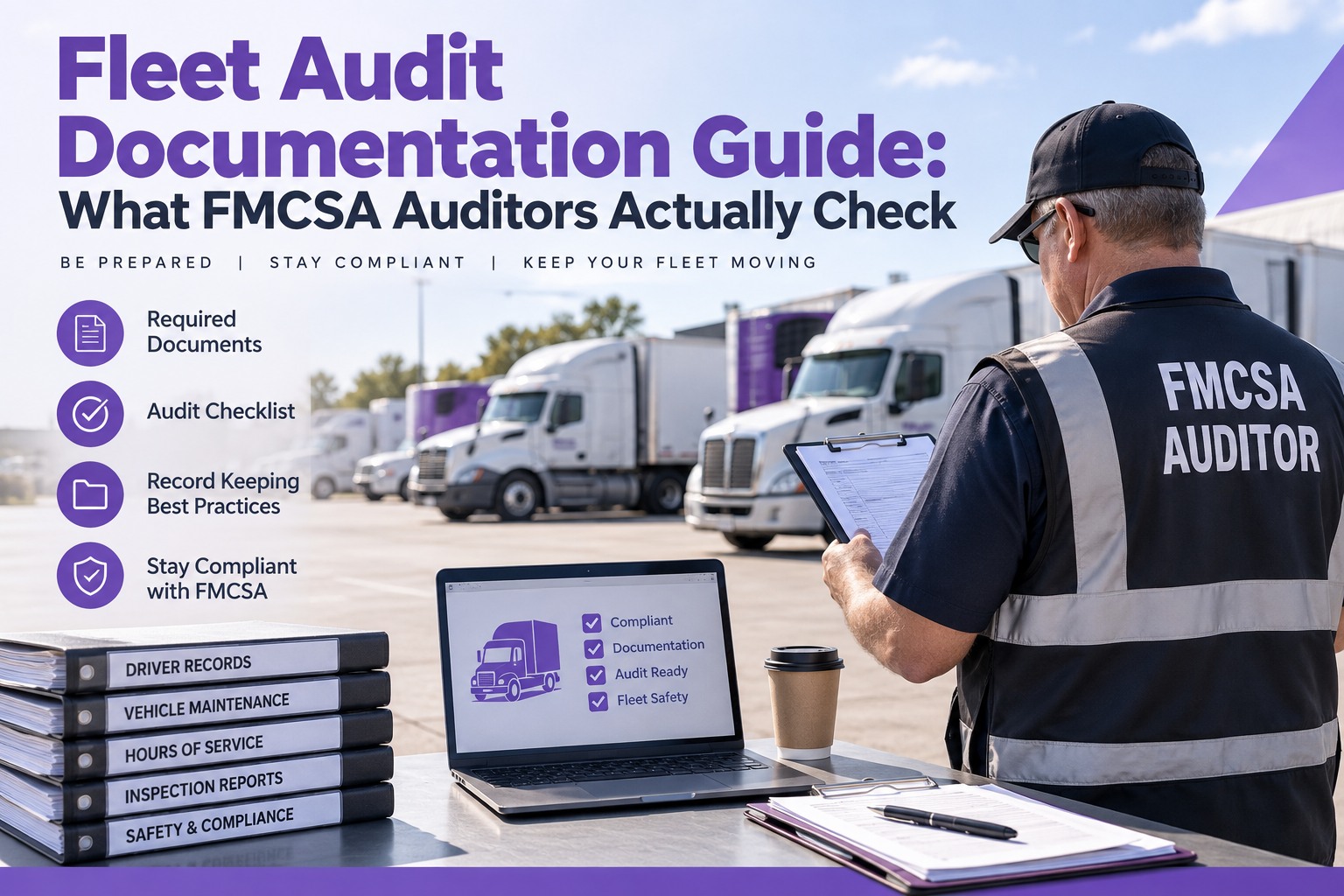
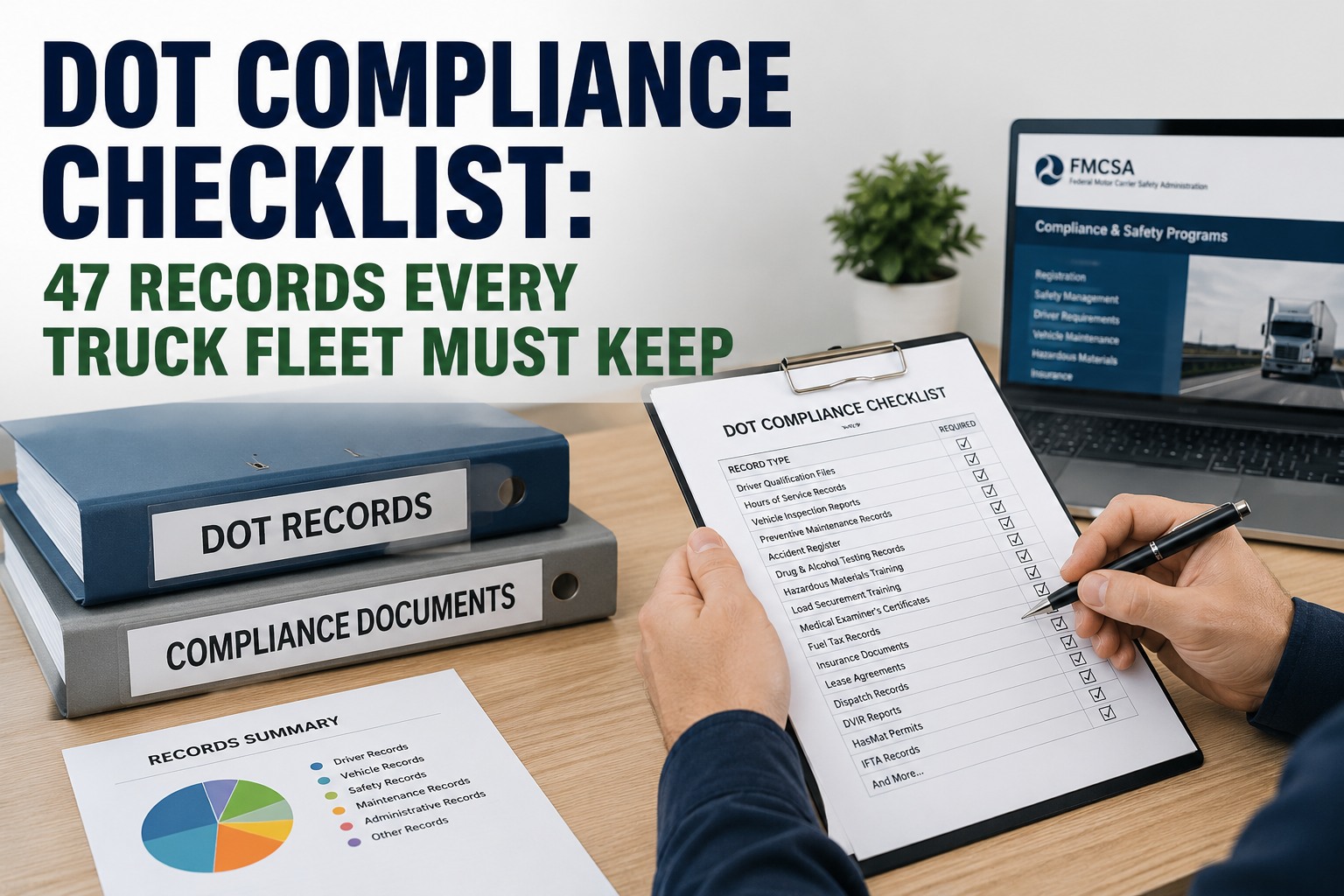
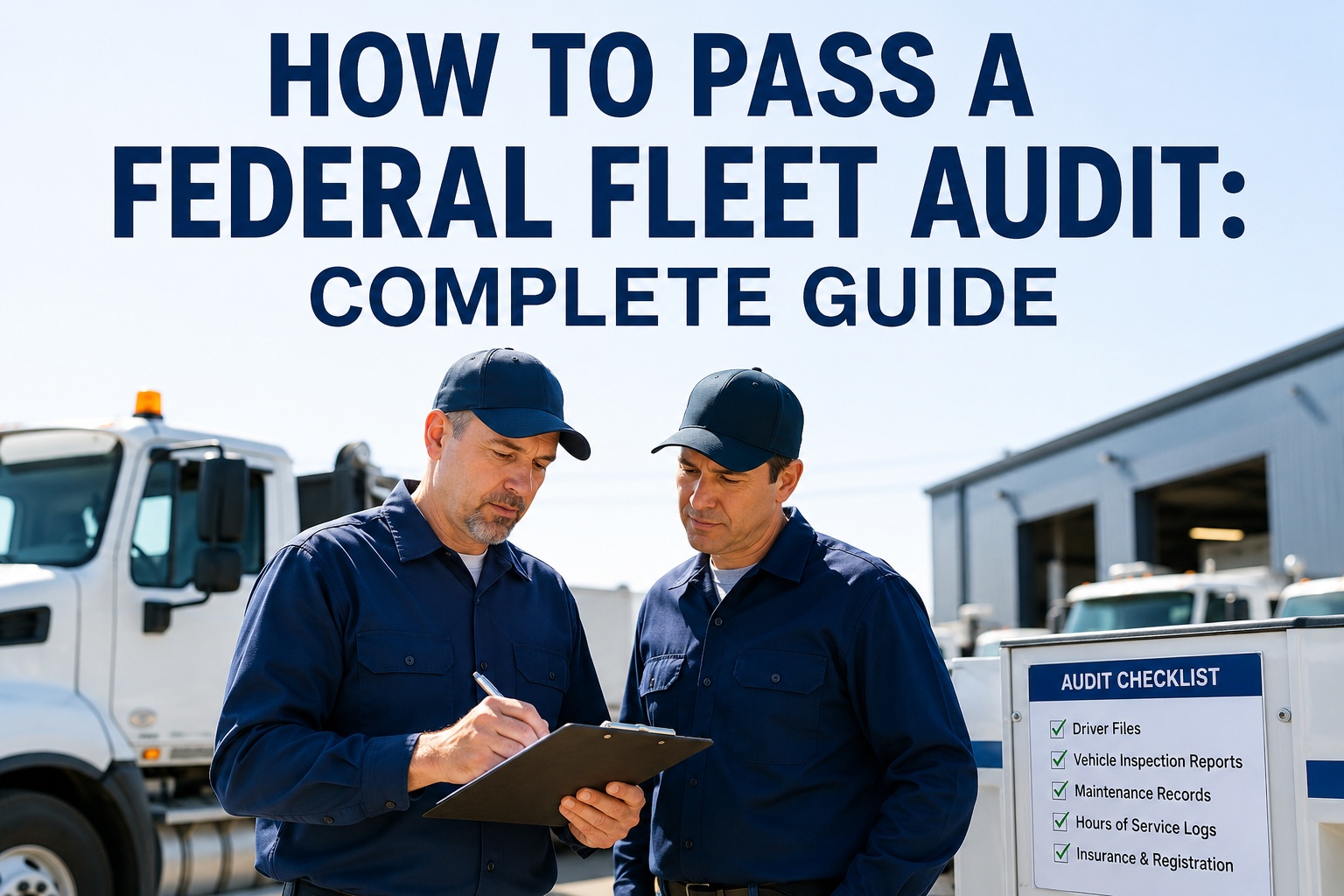
A federal review is a document inspection, not a road test. Auditors evaluate the same categories every time — and each has its own retention clock that trips up unprepared fleets. Here's what to have ready, and how long to keep it:
Vehicle Maintenance
49 CFR 396Annual inspection certificate per unit, PM schedule with proof you followed it, repair orders, and inspector qualifications.
Keep: maintenance 12 mo + 6 · annual inspection 14 mo
DVIRs
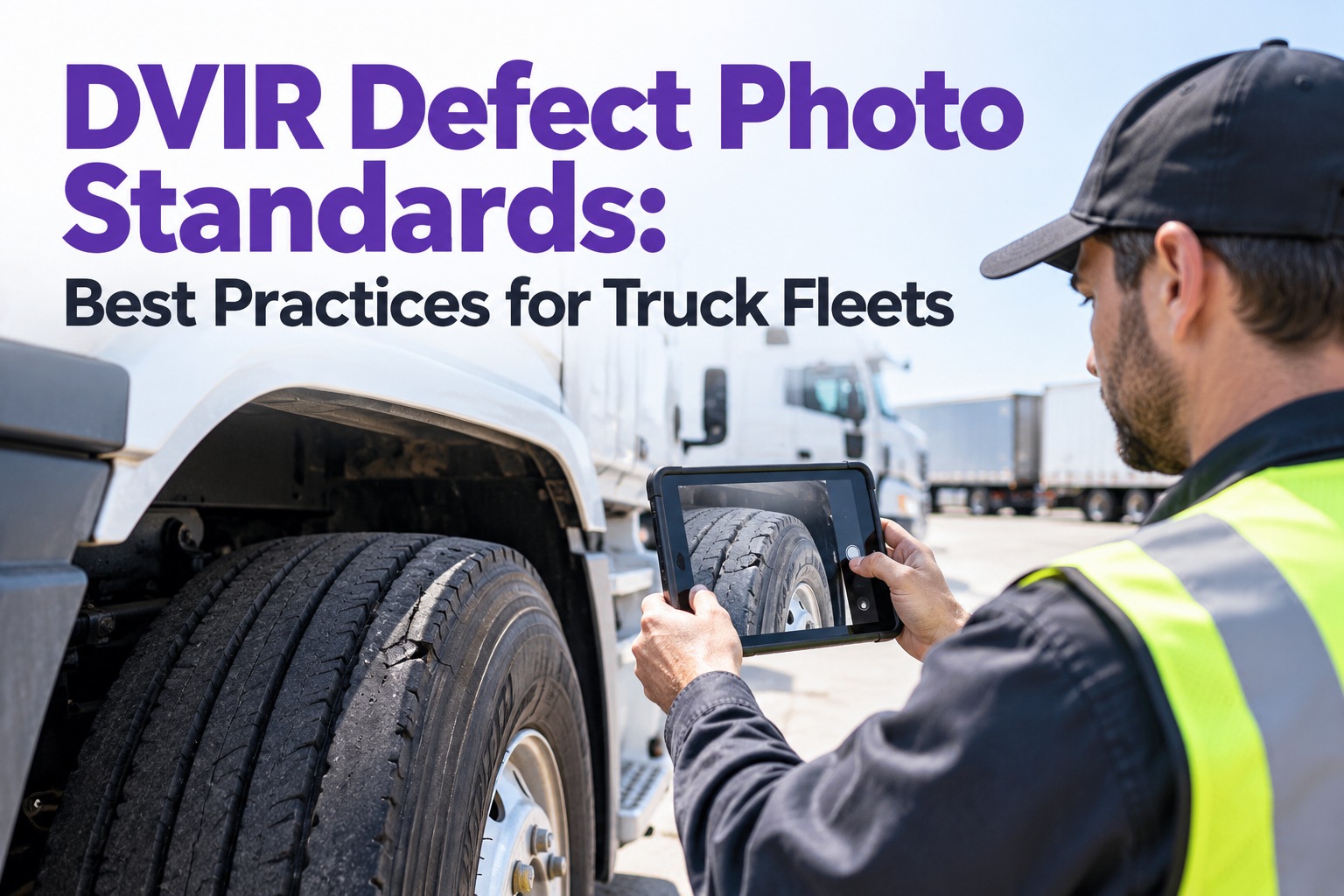
49 CFR 396.11Daily driver inspection reports, each defect matched to a repair record and the 3-signature closure showing it was fixed.
Keep: 3 mo minimum · 12 mo best practice
Hours of Service
49 CFR 395ELD/RODS logs with the four HOS clocks, plus supporting documents — fuel, tolls, trip records — that corroborate the entries.
Keep: 6 mo (logs & supporting docs)
Driver Qualification Files
49 CFR 391Application, MVRs, current medical card, CDL, Clearinghouse queries, and annual MVR review — for every driver.
Keep: employment + 3 years
Drug & Alcohol Program
49 CFR 382Written policy, pre-employment and random testing records, and Clearinghouse query documentation.
Keep: 5 yr for positives & refusals
Accident Register
49 CFR 390Every DOT-recordable accident logged with date, location, injuries, and post-accident testing records.
Keep: 3 years from event
The one rule behind all of them: every requested record must be producible within 48 hours for a remote audit. Scattered paper files across yard offices and departments make that a scramble; a single digital archive makes it a search.
The Findings That Sink Public Fleets
Vehicle Maintenance is the largest violation category by volume — and most findings in it are documentation failures, not mechanical ones. These are the five that show up again and again in public-sector reviews:
Missing annual inspection
The single most common maintenance finding — often not caught until the auditor asks to see the sticker. Prevented by due-date tracking with 60/30-day alerts.
DVIR defect with no repair record
A driver reports a defect, the garage fixes it, but no one documents the corrective action or signs it off. The gap reads as an unrepaired safety defect.
Expired medical cards & missed MVR reviews
DQFs assembled at hire and never maintained. Auditors check every driver — one expired med card is a finding.
Missed Clearinghouse queries
No pre-employment full query, or the annual limited query skipped. Documentation of every query must be retained.
HOS logs without supporting documents
ELD data alone isn't enough — gaps between logs and fuel/toll/trip records are treated as potential falsification.
Free · Up to 3 Vehicles
Turn your daily operation into a standing audit trail
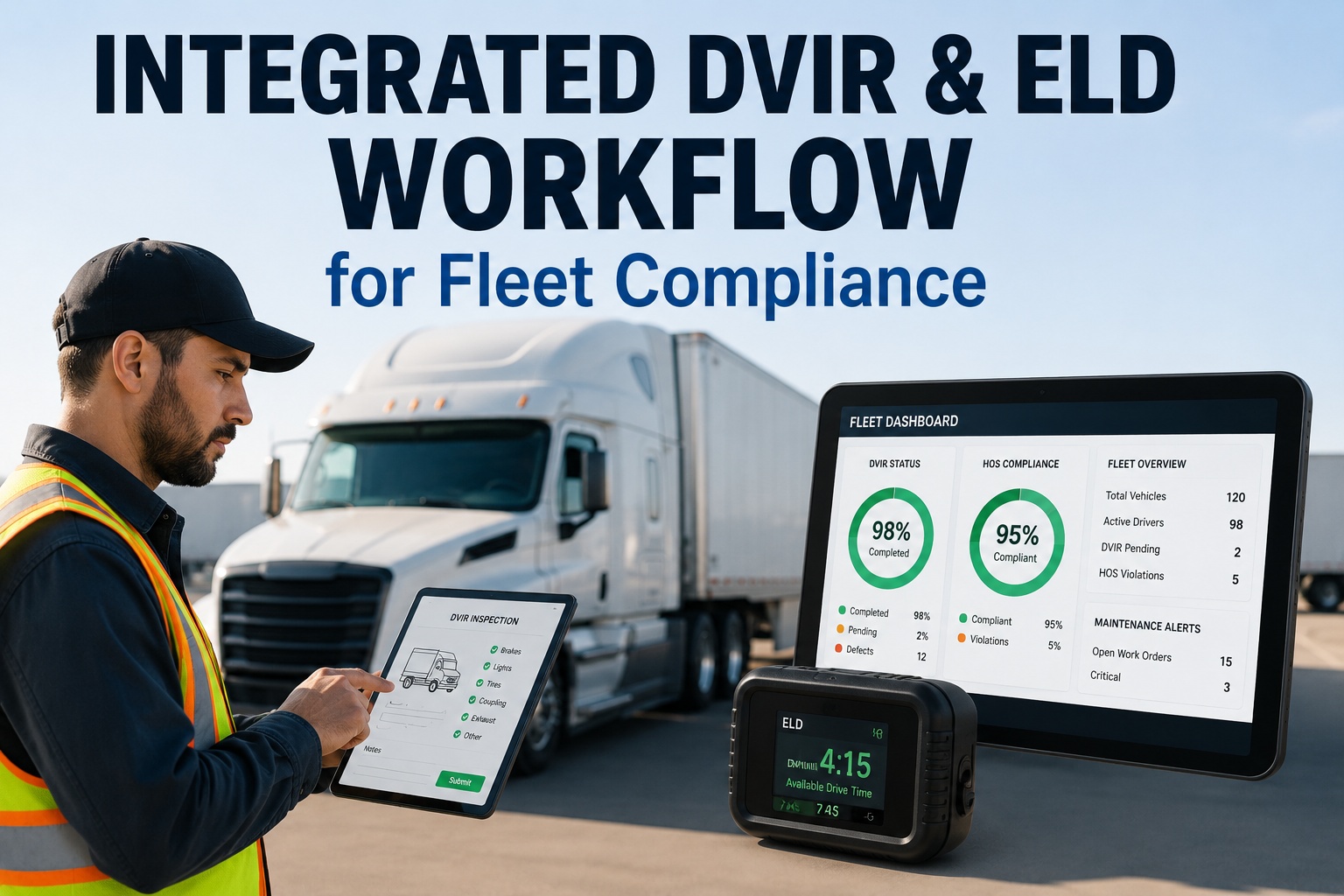
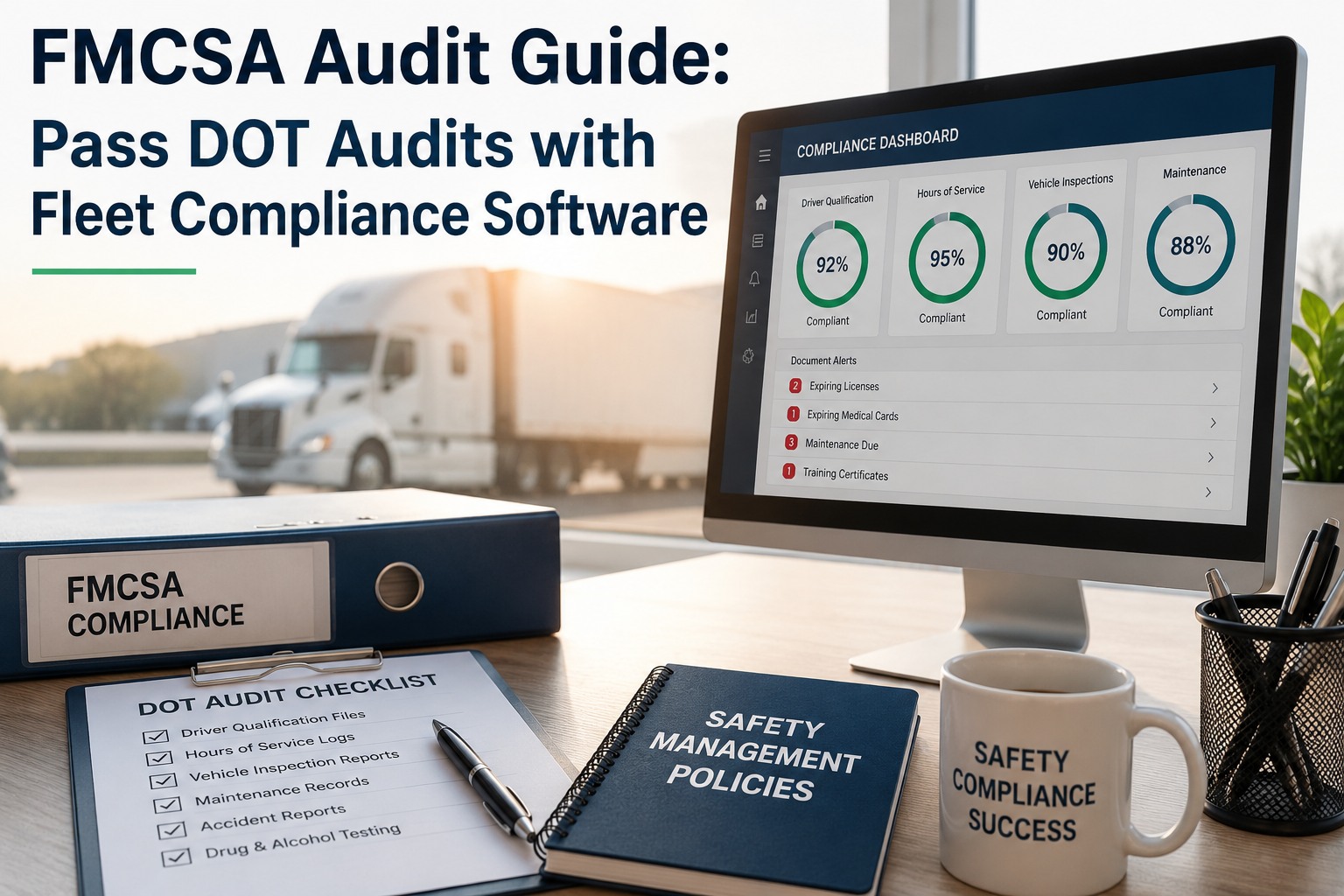
Truck Inspection & Maintenance software captures every DVIR, work order, PM completion, and inspector sign-off with timestamps — then exports an audit-ready package by vehicle and date range in minutes. Digital DVIRs enforce the repair-and-sign-off cycle that closes the most common finding automatically. Sign up free and be audit-ready in 10 minutes.
The 7-Day Audit Prep Sprint
Got a notice? Don't panic — work the categories in order. This is the proven week-long sequence that closes the gaps auditors find first:
Driver Qualification files
Run every driver against CDL and med-card validity. Confirm Clearinghouse queries and annual MVR reviews are on file. This is the #1 failure cause — fix it first.
Hours of Service
Pull a 30-day HOS sample. Look for violation patterns, unassigned driving, and uncertified logs. Match logs to supporting documents by date and driver.
Drug & alcohol program
Confirm your consortium account is current, the random pool is properly sized, and selection records are accessible.
Vehicle maintenance
Verify a current annual inspection for every unit. Confirm each DVIR defect has a matching repair record. Close open defects and add receipts to unit files.
Policies & training
Update HOS, D&A, and maintenance policies. Collect signed acknowledgments and log a short refresher meeting with attendance.
Assemble the submission kit
Build a folder tree that mirrors the request letter, name files consistently, add an index that maps each item to a path, and spot-check every PDF for legibility.
The 30-Minute Test
The best single predictor of whether you'll pass is brutally simple: time yourself retrieving each required document. If anything takes more than 30 minutes to locate, that's the gap to close before the auditor arrives — because in a real review, "I need to find that" reads as "we don't have a system."
The scramble
Paper DVIRs in a yard binder · maintenance split between a garage log and a spreadsheet · DQFs in a filing cabinet · 40-60 hours of assembly · findings for gaps that were really just lost paperwork.
The system
Every DVIR, work order, and inspection stored with audit metadata · export by vehicle and date range · a full compliance review answered in under an hour · records so complete the auditor moves on.
If You Get Findings: The Corrective Action Plan
A finding isn't the end — a weak response is. If the auditor issues deficiencies, you'll get a window to submit a Corrective Action Plan. A strong CAP fixes the system, not just the single instance:
Root cause
Explain why the deficiency happened — e.g., "no automated annual-MVR process," not "we missed one."
Corrective measure
Name the control you put in place — automated due-date alerts, calendar reminders, supervisor sign-off.
Evidence of implementation
Attach dated proof — the new policy, training records, and current examples showing it's already working.
Frequently Asked Questions
How much warning do I get before a federal fleet audit?
It varies. New entrants know a review is coming within their first 12-18 months. Focused and comprehensive audits triggered by CSA scores, crashes, or complaints usually come with a formal notice and a deadline to produce documents — often just a few weeks. The safest posture is to stay audit-ready year-round rather than scrambling on notice.
Can I use electronic records for a federal audit?
Yes. FMCSA accepts electronic records for all required documentation, provided they include the required fields, are producible on demand, and can be authenticated. As of the March 23, 2026 rule, electronic DVIRs with timestamps and photo evidence have regulatory standing equal to paper — and fleets moving to digital DVIRs report a large drop in maintenance-related findings. Contact our team to see the digital records auditors accept.
What's the most common reason fleets fail?
Incomplete documentation — not unsafe operations. The top failures are missing or incomplete driver qualification files, no current annual inspection, DVIR defects without matching repair records, and missed Clearinghouse queries. Most fleets that fail are simply disorganized, which is why a systematic records process matters more than any single fix.
How long do I have to produce records?
For a remote audit, all requested records must be retrievable within 48 hours. That single requirement is why retention windows and organization matter so much — a maintenance file that exists but takes two days to find is nearly as damaging as one that doesn't exist. Digital archives make any record a search instead of a hunt.
What happens if I fail the audit?
You'll receive a written notice of the specific deficiencies and an opportunity to submit a Corrective Action Plan. A strong CAP that addresses root causes and shows implementation typically lets you keep operating while you correct. Ignore it or submit a weak plan, and FMCSA can downgrade your rating or, for new entrants, revoke operating authority.
How does software help a public-sector fleet pass?
It converts your daily operation into the audit trail itself. Truck Inspection & Maintenance software stores every DVIR, work order, PM completion, and inspector credential with audit metadata, fires 60/30-day alerts so annual inspections never lapse, and exports a clean package by vehicle and date range in minutes. Sign up free to make your next audit a non-event.
Be Ready Before They Knock
Pass your next federal audit on the first try.
Truck Inspection & Maintenance software keeps DVIRs, maintenance records, annual inspections, and repair documentation always current and instantly exportable — closing the findings that fail public fleets before an auditor ever sees them. Free for up to 3 vehicles. Live in 10 minutes. No hardware, no contracts.