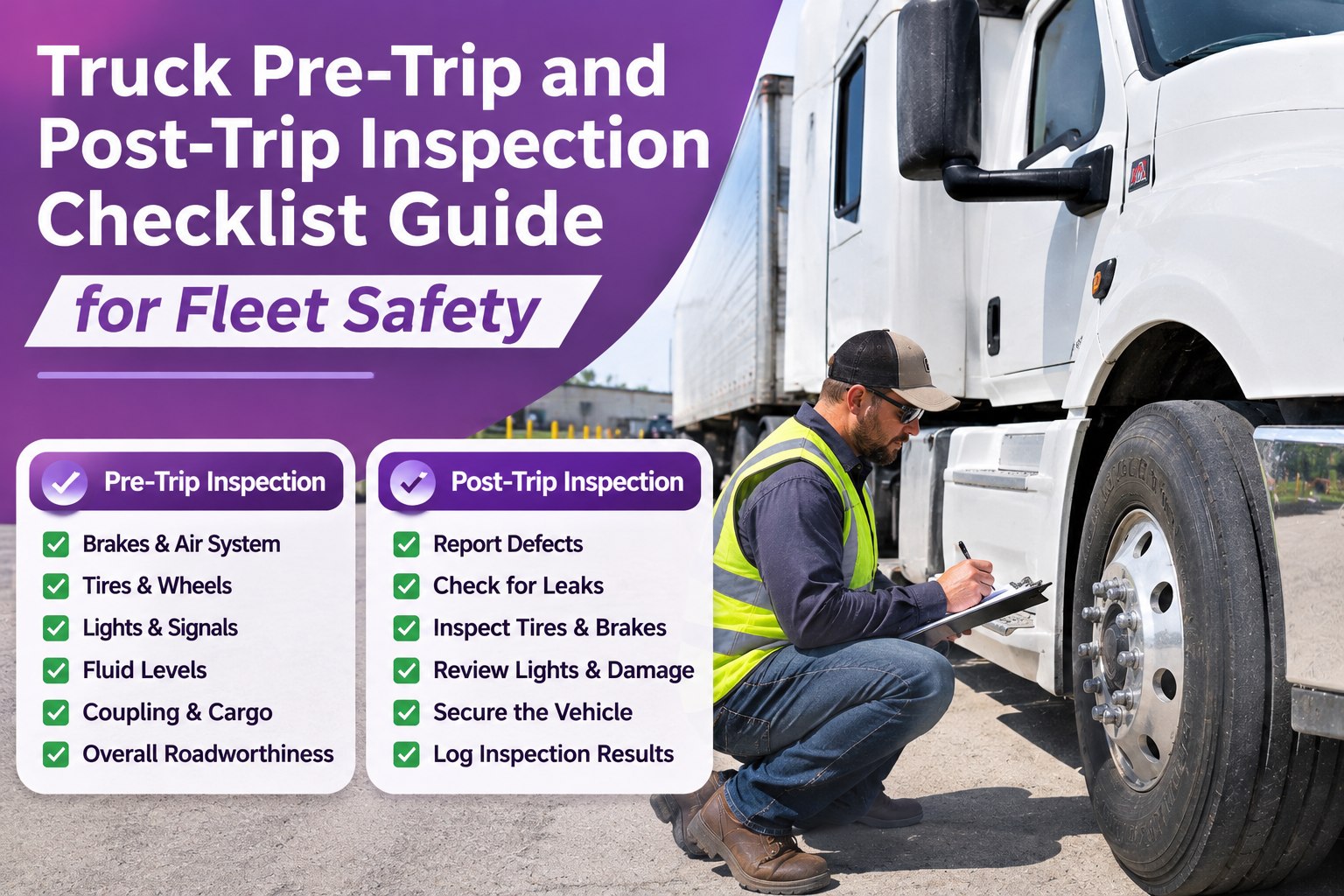
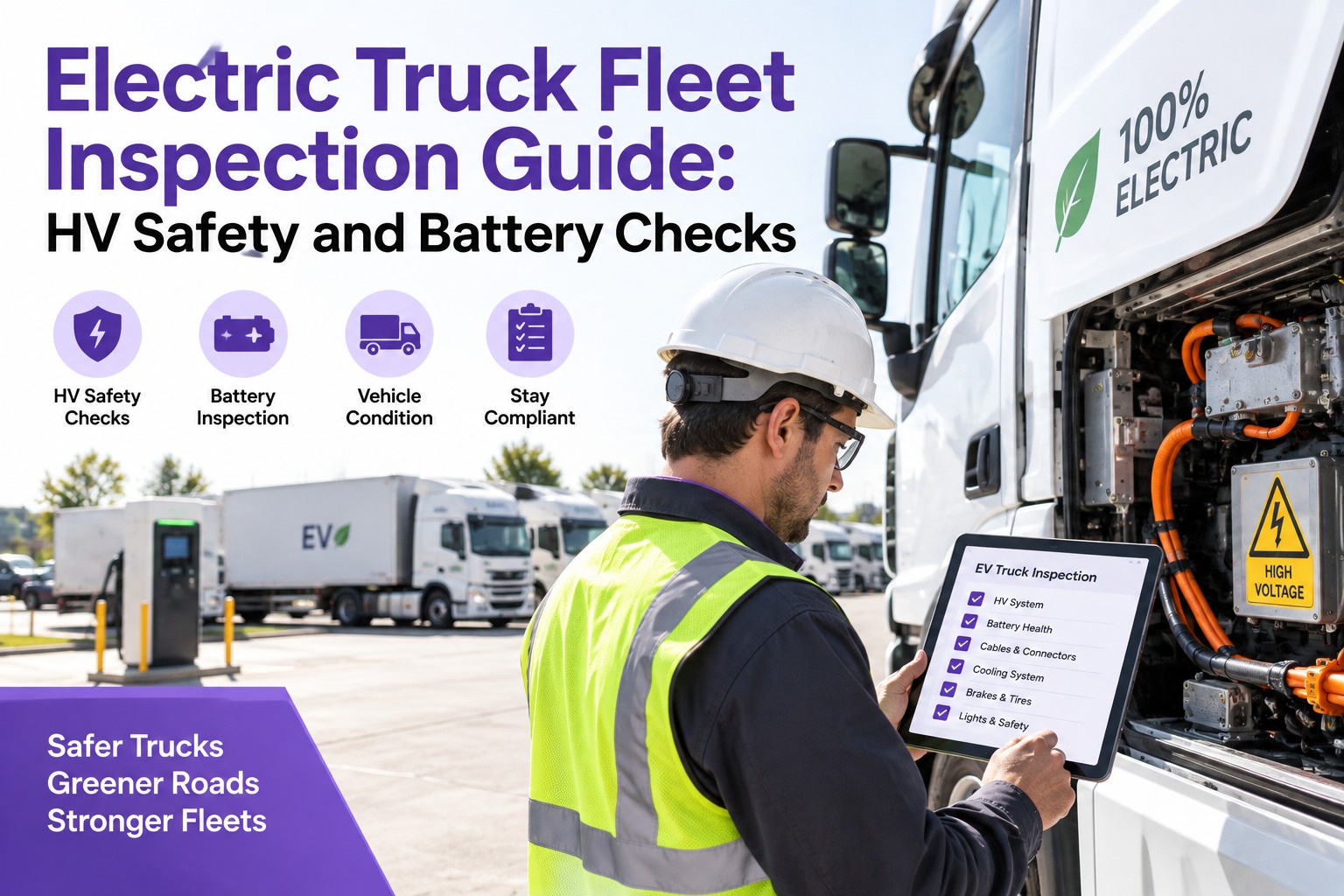
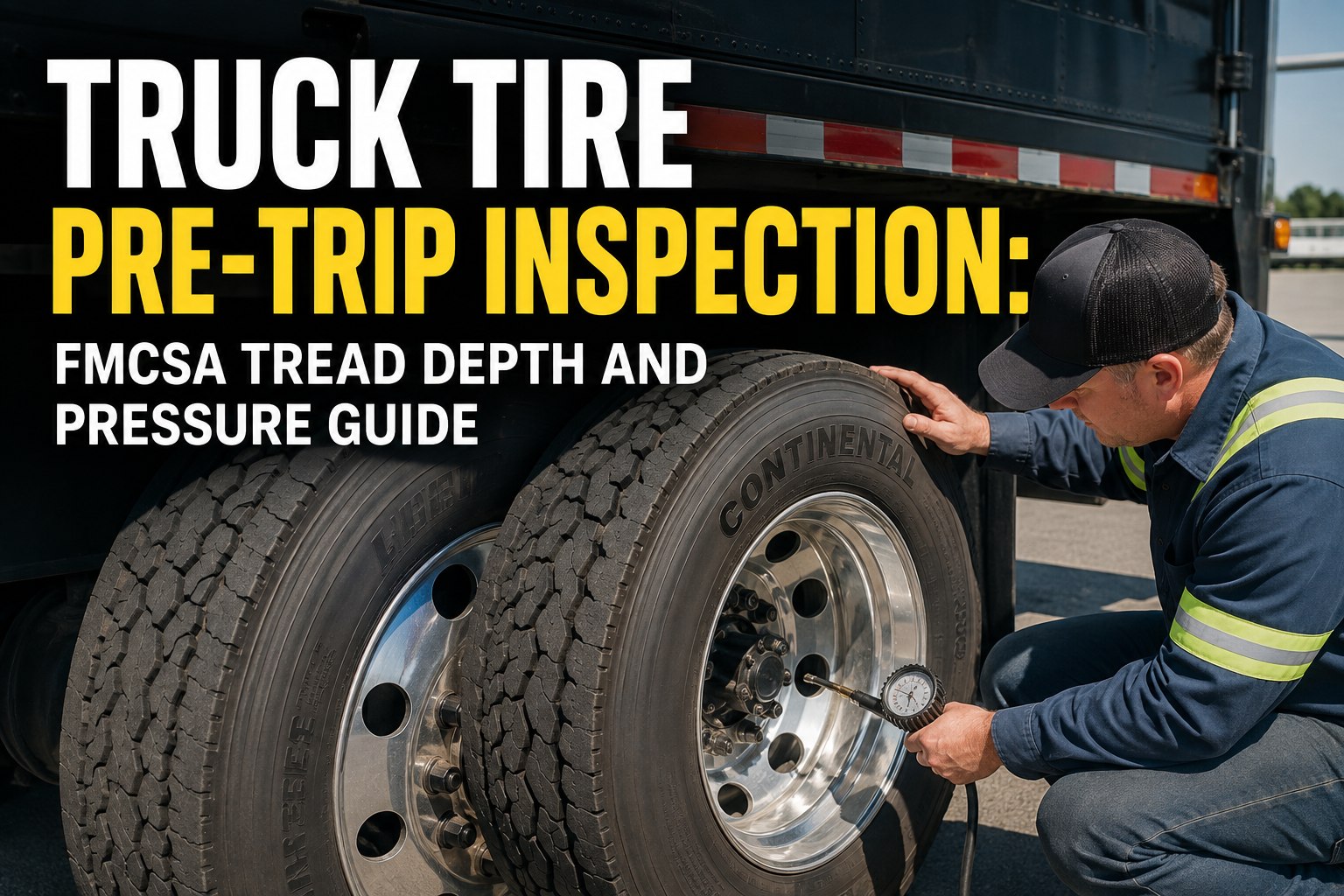
Electric trucks are not exempt from inspection rules, but the rulebook was written for diesel. The same federal requirements for driver inspections, annual inspections, and maintenance records apply to a battery-electric Class 8 truck as to any other commercial motor vehicle, yet the standard inspection lists say little about batteries, high-voltage cables, or charge ports. That gap is where fleets get caught: drivers do not know what to look for, shops do not know what to record, and nobody is sure what an inspector expects. This guide explains what electric truck inspection requirements look like today, what is still evolving, and how to build an EV pre-trip and DVIR process that keeps your fleet inspection-ready. Start free and build an EV inspection checklist for your drivers.
Electric Truck Maintenance · Compliance Guide
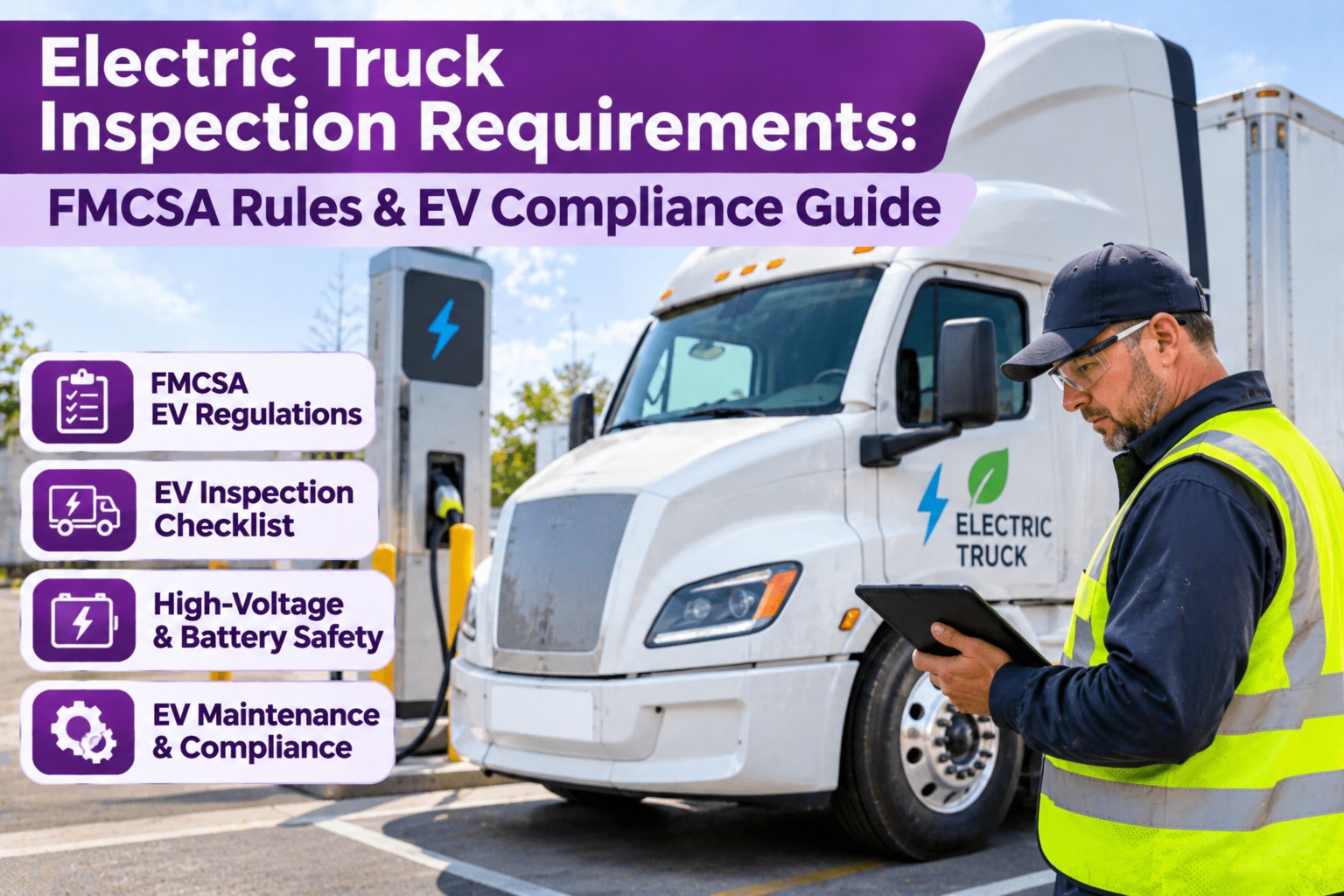
Electric Truck Inspection Requirements: FMCSA Rules & EV Compliance Guide
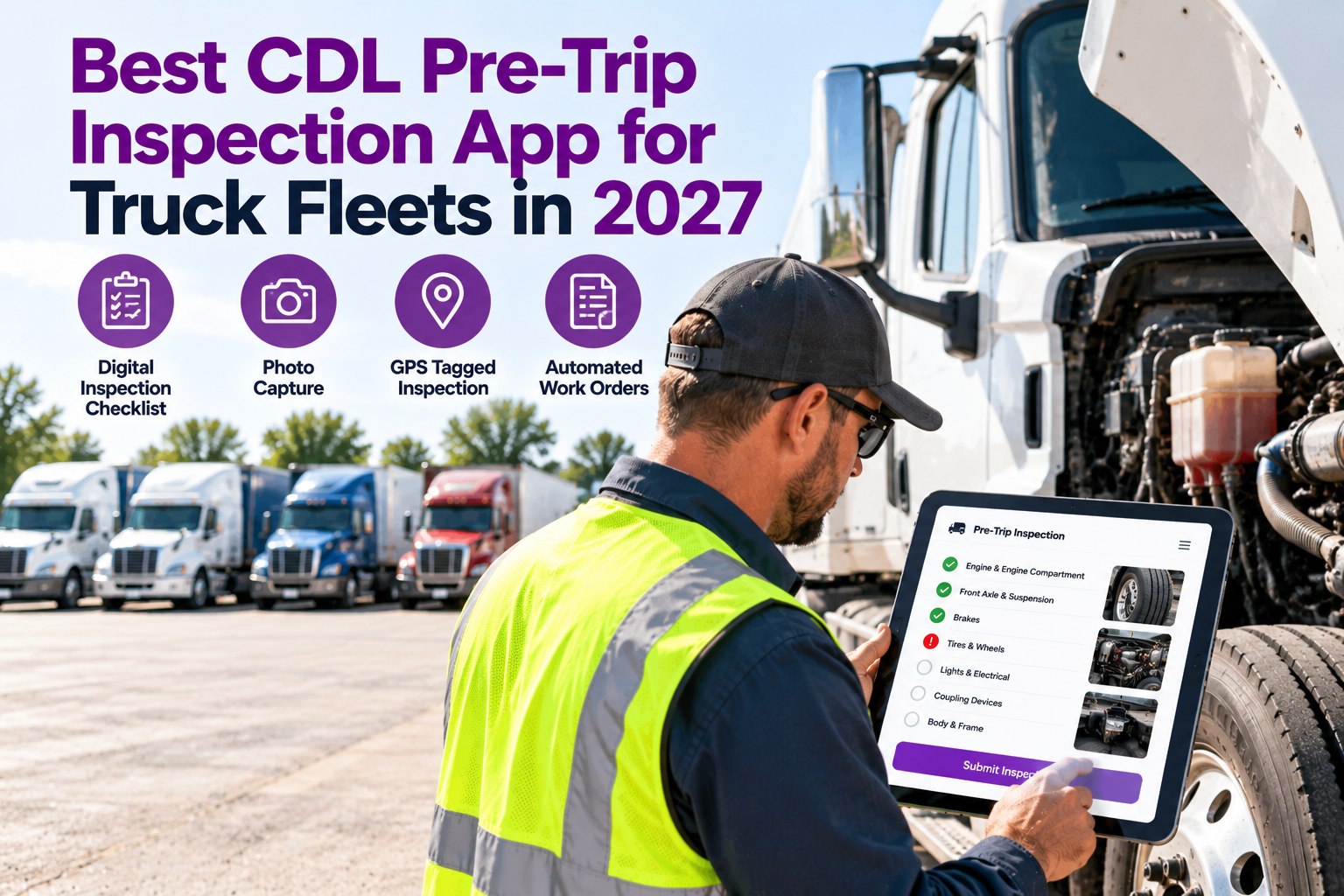
Federal inspection and record rules already apply to EVs, and the high-voltage details are left to you. Truck Inspection & Maintenance Management Software gives drivers a guided EV pre-trip and DVIR, captures photos of defects, and turns each finding into a work order with a record your team can show an inspector.
1
InspectGuided EV pre-trip and DVIR
2
ReportPhoto defects with a clear grade
3
Prove itWork orders and a record for every fix
Rules are evolving Regulations, enforcement guidance, and inspection procedures for electric commercial vehicles change over time and vary by state. Treat this guide as a framework, and confirm the current requirements with FMCSA, your state, CVSA, your insurer, and your vehicle manufacturer before you rely on any detail.
The Compliance Stack: Four Layers to Know
Think of EV compliance as layers. The bottom layer is the law, and each layer above it adds detail.
4
Your company standardYour EV checklist, training, and rules about who may touch what
3
Manufacturer proceduresInspection, service, and high-voltage safety steps from the truck maker
2
Roadside inspection practiceCVSA procedures and inspector training, including its electric-drive inspection bulletin
1
Federal and state regulationsFMCSRs on driver inspections, DVIRs, annual inspections, and maintenance records
What Applies Today vs What Is Still Evolving
Most of what an inspector or auditor will ask for is already familiar. The EV-specific details are where the guidance is still catching up.
Applies now
- Driver pre-trip inspection and DVIR requirements
- Annual inspection of the vehicle
- Systematic inspection, repair, and maintenance, with records
- Brakes, tires, steering, lights, and other standard safety items
- Out-of-service conditions for standard components
Still evolving
- Whether battery and high-voltage items appear in standard driver inspection lists
- Minimum condition standards for battery packs and HV parts
- Roadside procedures and out-of-service criteria for EVs
- Vehicle safety standards for electric powertrains, some still proposed
FMCSA-funded research has recommended adding battery and high-voltage items to inspection lists and standards. Check the current status before assuming any change has taken effect.
A Sample EV Pre-Trip Card
Because the federal list does not spell out the EV items, many fleets add their own. Here is a simple starting point that keeps drivers on the safe side of the line: look, report, and never touch high-voltage parts.
EV Pre-Trip · Driver Card
✓
Dash and charge statusNo active warnings or fault messages
✓
Charge port and cableNo cracks, burns, or damage; cover closes properly
✓
Under-truck visual checkNo fluid leaks, hanging parts, or visible damage
✓
Orange HV cables, from a distanceReport damage with a photo. Do not touch.
✓
Standard DVIR itemsBrakes, tires, lights, steering, mirrors, and horn
Any HV damage, smoke, or smell: stay clear and call your supervisor.
What Roadside Inspectors Are Trained to Watch For
Enforcement has been building its own EV knowledge. Expect the usual checks, plus a careful eye on the electric systems.
Standard safety itemsBrakes, tires, lights, and the rest of the usual inspection list still apply.
High-voltage hazardsInspectors are trained to recognize HV components and keep away from them.
Labels and warningsMissing or damaged HV warnings and labels are worth fixing early.
Visible damageDamaged cables, leaks, or a compromised battery enclosure invite questions.
Show Your Work: Inspections, Defects, and Repairs on One Record
Every DVIR, photo, work order, and completed repair stays with the truck, so you can answer an auditor in minutes instead of hunting through folders. Start free or book a demo.
Records Worth Keeping for Every Electric Truck
Daily inspectionsDVIRs with the EV items you added
Defect photosCharge port, cable, and under-truck findings
Repair and work ordersWho fixed what, when, and how
Annual inspectionResults and any corrective work
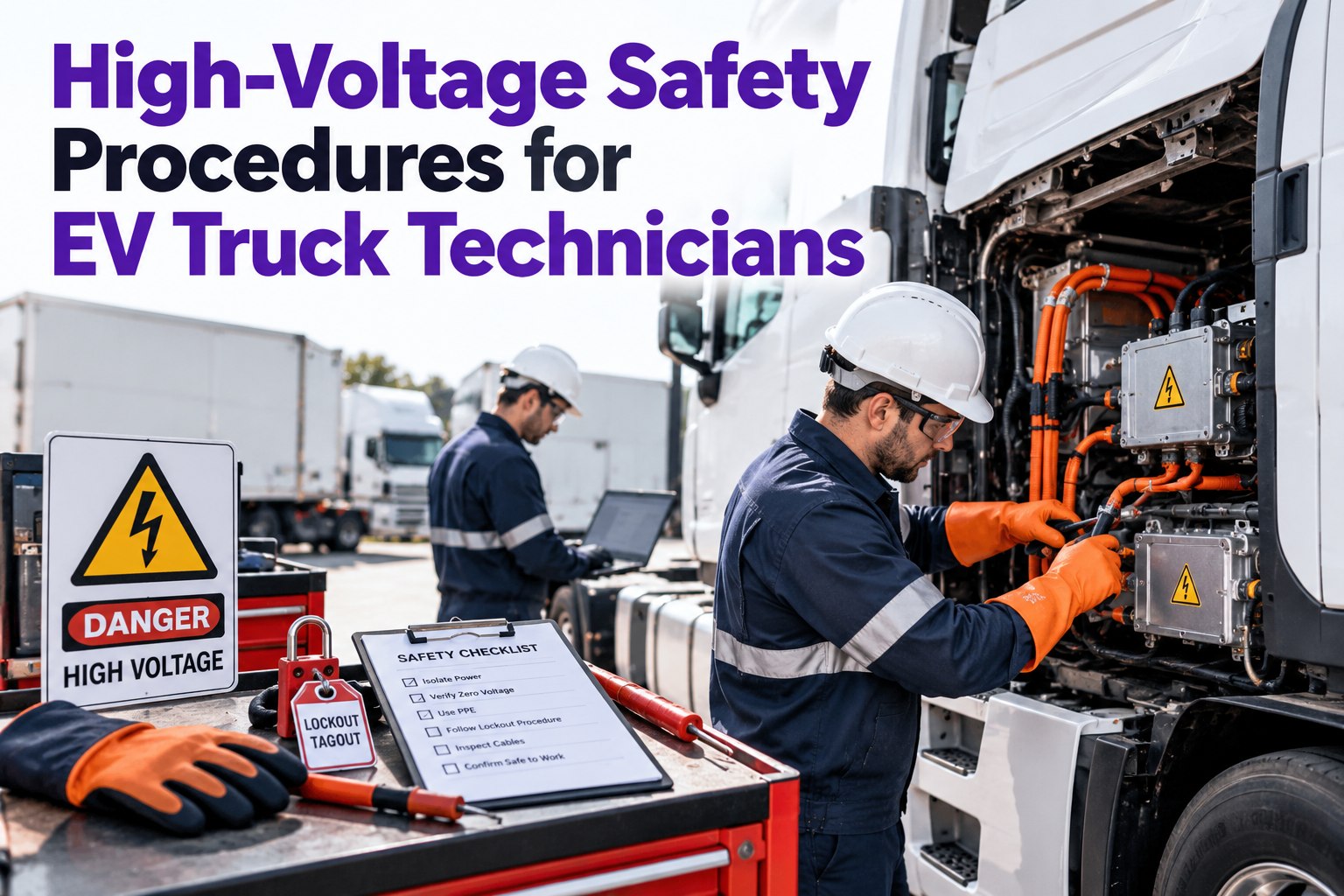
HV technician workService by qualified, authorized staff
Driver trainingEV safety and inspection training given
Quick Readiness Check
Answer these honestly. Each unchecked box is a task for your next safety meeting.
Do drivers have an EV-specific pre-trip checklist?
Do they know never to touch high-voltage parts?
Is HV work limited to trained, authorized technicians?
Are defects reported with photos and tracked to completion?
Are PMs scheduled using the manufacturer's plan?
Can you pull a truck's inspection and repair history quickly?
Frequently Asked Questions
Do FMCSA inspection rules apply to electric trucks?
Yes. Electric trucks are commercial motor vehicles, so rules on driver inspections, DVIRs, annual inspections, and maintenance records apply. The standard lists do not cover high-voltage parts in detail, so fleets usually add their own EV items.
Start free and add EV items to your DVIR.
Should electric trucks have a different pre-trip inspection?
The standard items still matter, and most fleets add EV checks such as dash warnings, the charge port and cable, and a visual look for leaks or damage. Drivers should look and report, never touch high-voltage components.
Book a demo to see guided inspections in action.
Who can inspect high-voltage systems?
Only technicians trained and authorized under the manufacturer's procedures and your safety program. Drivers and general staff should stay out of high-voltage components.
How do I stay current as EV rules change?
Follow updates from FMCSA, CVSA, and your state, review your vehicle manufacturer's guidance, and revisit your checklist whenever something changes. Keep records so you can show what you did and when.
EV-Ready · Inspection-Ready
Build Your EV Inspection Process Before an Inspector Asks
Guided inspections, photo defects, traffic-light grading, work orders, and PM scheduling in one system built for trucking fleets. Start free to build your EV pre-trip and DVIR, or book a demo and we will walk through it with your fleet in mind.
No credit card required. Free for up to 3 trucks.