The most-missed signature in a fleet isn't the driver's or the mechanic's — it's the next driver's. Under §396.13, before a driver operates a truck whose last DVIR noted a defect, they have to review that report and sign that the repair status is acknowledged. Skip it and you've broken the chain of custody that the whole inspection system rests on — and handed an auditor a citation-ready finding, even if the repair itself was done perfectly. This guide shows how the acknowledgment fits the workflow without slowing dispatch. Start free and build next-driver acknowledgment into every handoff.
Find · Repair · Acknowledge
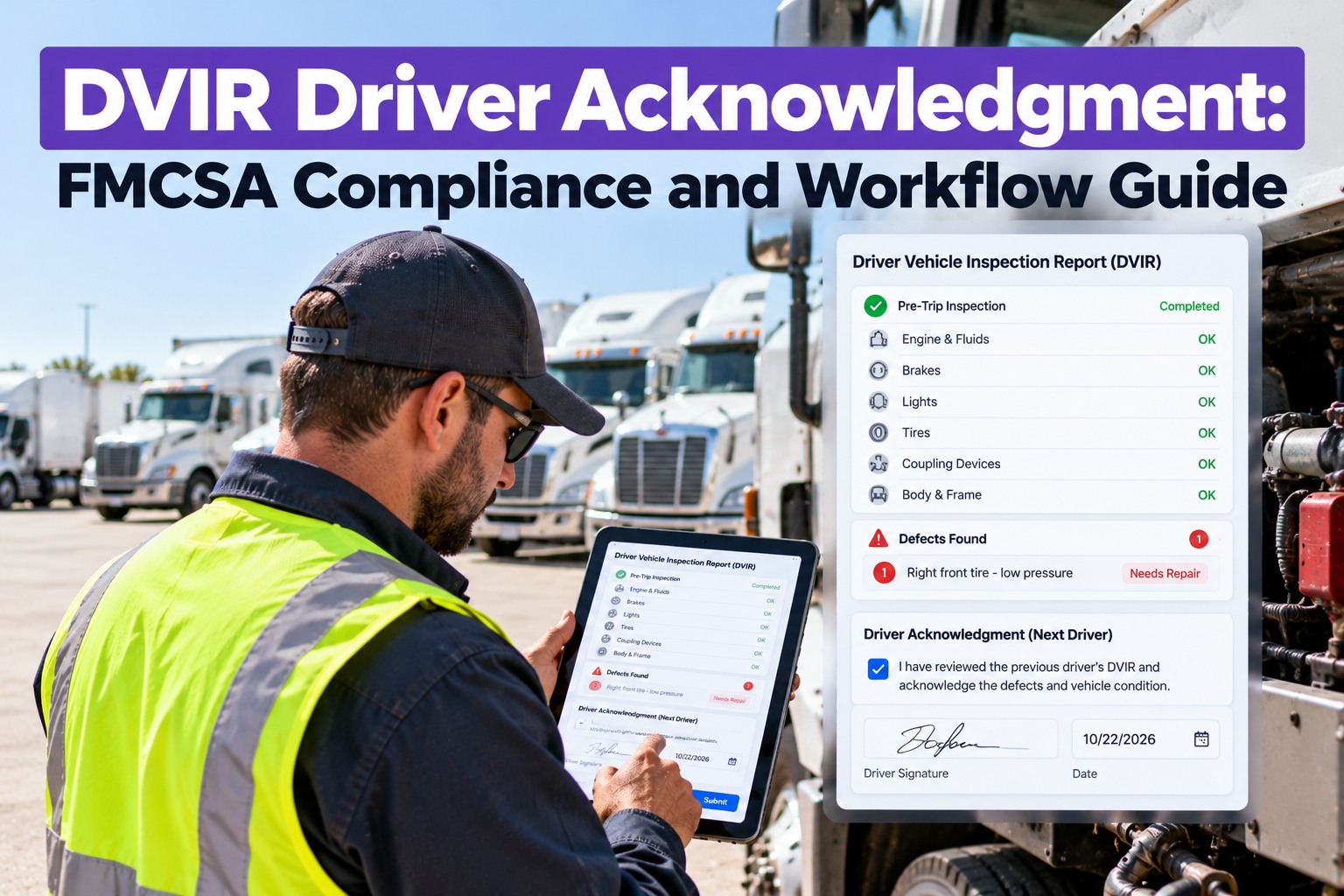
DVIR Driver Acknowledgment: FMCSA Compliance and Workflow Guide
A DVIR isn't complete when the mechanic signs — it's complete when the next driver acknowledges the fix. Truck Inspection & Maintenance Management Software carries each defect report through the full three-signature chain and puts the prior DVIR in front of the next driver before dispatch, so the acknowledgment happens by default instead of being the step everyone forgets.
§396.13the rule requiring the next driver's review
3signatures that make a DVIR complete
3 mothe report and its certifications are retained
The Three-Signature Chain of Custody
A defect-noting DVIR isn't one document with one signature — it's a chain of three, each from a different person, each a separate compliance point. Miss any link and the report is incomplete, which an auditor treats much like missing.
1
The reporting driver
At the end of the day's work, the driver prepares the DVIR and signs it, listing any defect that would affect safe operation or cause a breakdown.
§396.11(a)
↓
2
The carrier / mechanic
The carrier repairs any defect affecting safe operation and certifies on the original DVIR that it was corrected — or that no repair was needed.
§396.11(a)(3)
↓
3
The next driver
Before operating the truck, the next driver reviews the prior report and signs to acknowledge the repair status — the link most often missed.
§396.13
The complete-record rule A DVIR with a defect but no repair certification, or a repair with no next-driver acknowledgment, is an incomplete record — and in a compliance review an incomplete record is treated much the same as a missing one. All three signatures, on the original report, are what make it defensible.
Where the Handoff Breaks
The acknowledgment fails in predictable places, and all of them happen at the seam between one driver's shift and the next. Knowing the failure points is how you design them out.
✕The paper stays in the cabThe prior DVIR is in a binder or the last driver's door pocket, so the next driver never sees it to review.
✕The mechanic forgot to signThe repair was done but the certification line is blank — the chain breaks at link two and the acknowledgment has nothing to confirm.
✕Dispatch moved fastThe truck was reassigned and rolled before anyone put the open report in front of the next driver.
✕No record it happenedThe driver glanced at it verbally but nothing captured the acknowledgment, so for audit purposes it never occurred.
What §396.13 Actually Requires of the Next Driver
The rule is short and specific. Before driving, the next driver has three duties — and they apply to the driver personally, not just the carrier.
01Be satisfied the truck is safeThe driver must be satisfied the vehicle is in safe operating condition before operating it.
02Review the last DVIRIf the prior report noted a defect, the driver reviews it to see what was found and what was done.
03Sign the acknowledgmentThe driver signs the prior report to acknowledge the repair status before the truck moves.
The Acknowledgment Workflow — Without Slowing Dispatch
The fear is that another required signature means another delay at shift change. Built right, it doesn't — it becomes a two-tap gate that only appears when there's actually a defect to acknowledge.
1Defect loggedPrior driver's DVIR notes a defect and closes the shift
→
2Repair certifiedShop fixes it and certifies the correction on the report
→
3Surfaced at handoffNext driver sees the open report on their device, not a binder
→
4Acknowledged & loggedOne tap records the review with a timestamp before the truck rolls
Software That Carries the Chain Through Every Handoff
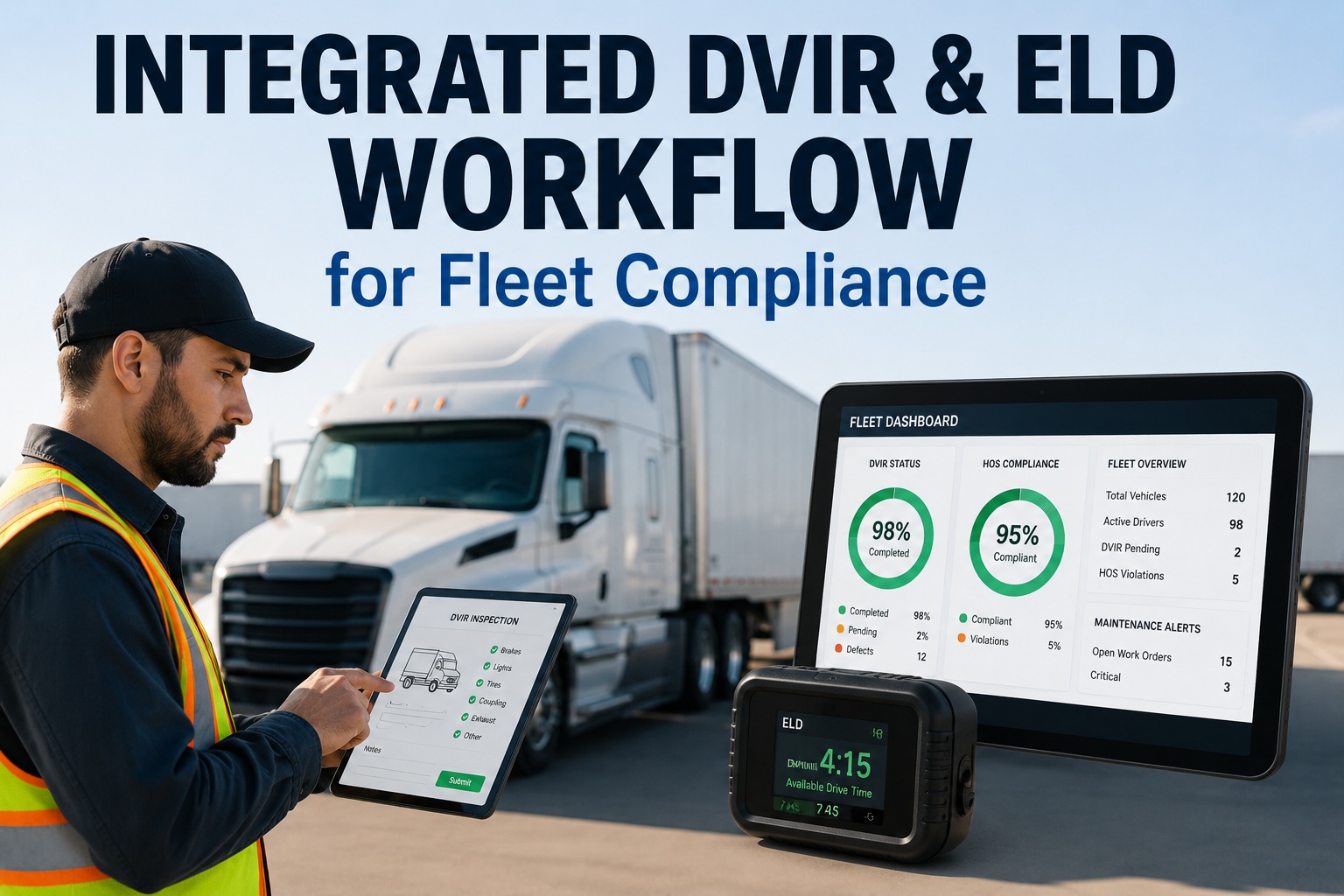
Helping with exactly this is the job. Truck Inspection & Maintenance Management Software keeps each defect-noting DVIR open until all three signatures are on it — the reporting driver, the repair certification, and the next driver's acknowledgment. When a driver is assigned a truck whose last report had a defect, the prior DVIR appears on their device and the acknowledgment is a required step before dispatch, timestamped and tied to the vehicle. A "no-defect" day carries no gate, so the acknowledgment only appears when the rule actually calls for it — compliance without the shift-change bottleneck. And because every signature is captured, producing the complete chain for an auditor is a lookup, not a paper hunt.
Why Auditors Look Here First
Signature-chain gaps are among the easiest findings for an auditor to score, because they're documentary and binary — the signature is either there or it isn't. That makes the acknowledgment a high-value thing to get right.
⊘Binary and visibleA missing signature needs no interpretation — it's a clear gap on the face of the record.
⊘Independent of the repairThe violation stands even when the actual maintenance was done correctly and on time.
⊘Easy to accumulateOn paper the gaps pile up unnoticed across hundreds of handoffs until someone pulls the file.
Frequently Asked Questions
What is DVIR driver acknowledgment under FMCSA rules?
It's the next driver's required review and sign-off under §396.13. When the last DVIR on a truck noted a defect, the rule says the driver who operates it next must first be satisfied the vehicle is in safe condition, review that prior report to see what was found and what was done, and sign to acknowledge the repair status before driving. It's the third link in the three-signature chain — after the reporting driver and the carrier's repair certification — and it's the one fleets most often miss, because it happens at the seam between shifts where the handoff is easiest to rush.
Does every DVIR need a next-driver acknowledgment?
The acknowledgment specifically attaches to reports that noted a defect. If the prior DVIR listed a defect, the next driver must review and sign it before operating the truck. On a no-defect day there's no defect report to acknowledge in the same way — which is exactly why a well-built workflow only raises the acknowledgment gate when there's actually an open defect report, so it never becomes a pointless extra tap at every shift change. Note that the driver's underlying §396.13 duty to be satisfied the vehicle is safe applies before every trip regardless.
What happens if the next-driver signature is missing during an audit?
A missing acknowledgment is a recordkeeping violation in its own right, independent of whether the repair was actually done. In a compliance review the chain of custody is what's examined, and a DVIR that shows a defect and a repair but no next-driver acknowledgment is an incomplete record — treated much like a missing one. Because the finding is binary and documentary, it's one of the easier things for an auditor to cite, and because the gaps accumulate quietly on paper across many handoffs, fleets often don't discover them until the file is pulled.
How do electronic DVIRs handle driver acknowledgment?
Electronic DVIRs are well suited to it because the system can carry the report forward and force the review. Instead of hoping the prior paper report made it from one cab to the next, the open defect report appears on the next driver's device when they're assigned the truck, and the acknowledgment becomes a required, timestamped step before dispatch. FMCSA permits electronic creation, maintenance, and signing of DVIRs, and the practical advantage is exactly this: the chain of custody is enforced by the workflow rather than left to memory, and the complete three-signature record is retrievable instantly when an auditor asks.
Contact us to put electronic DVIR acknowledgment on your fleet.
Reviewed · Signed · Logged
Never Lose a DVIR on the Missing Third Signature
Truck Inspection & Maintenance Management Software keeps every defect-noting DVIR open until the reporting driver, the repair certification, and the next driver's acknowledgment are all on it — surfacing the prior report at handoff and capturing the sign-off before dispatch. Fleets run it to keep the chain of custody intact and walk into any review with complete records.
No credit card required. Free for up to 3 trucks. Built for FMCSA-compliant fleets.