On a manufacturing dock, a stalled yard truck doesn't just sit there — it backs up every trailer behind it, idles loading crews, and ripples straight into missed production targets. Yard trucks, spotters, and hostlers work in the harshest duty cycle in the fleet: thousands of hook-and-release cycles, constant stop-start, and zero tolerance for a no-show. Yet most plants still run them reactively, waiting for a breakdown that the data says was preventable. The numbers are brutal — the average large plant loses $253 million a year to unplanned downtime, and those costs are now climbing 113% faster than inflation. The good news: a disciplined preventive maintenance and fast defect-to-repair workflow can cut dock truck downtime by 40% or more. This guide shows exactly how, lever by lever. Truck Inspection & Maintenance is the system that makes it happen. Talk to our team to map it to your dock.
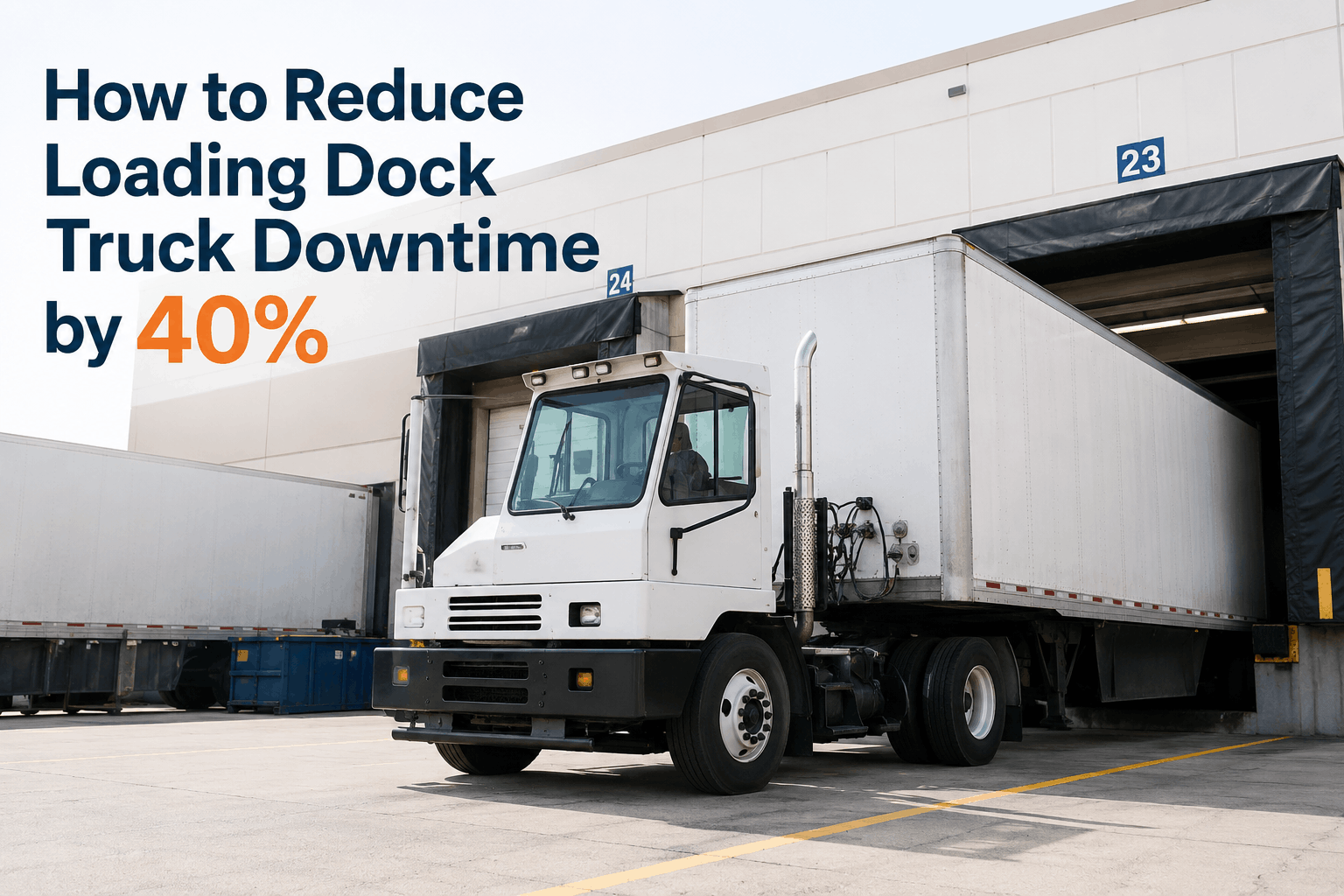
How to Reduce Loading Dock Truck Downtime by 40%
Yard truck PM, dock integration & faster defect-to-repair — the full playbook.
Why Dock Trucks Fail More Than Road Trucks
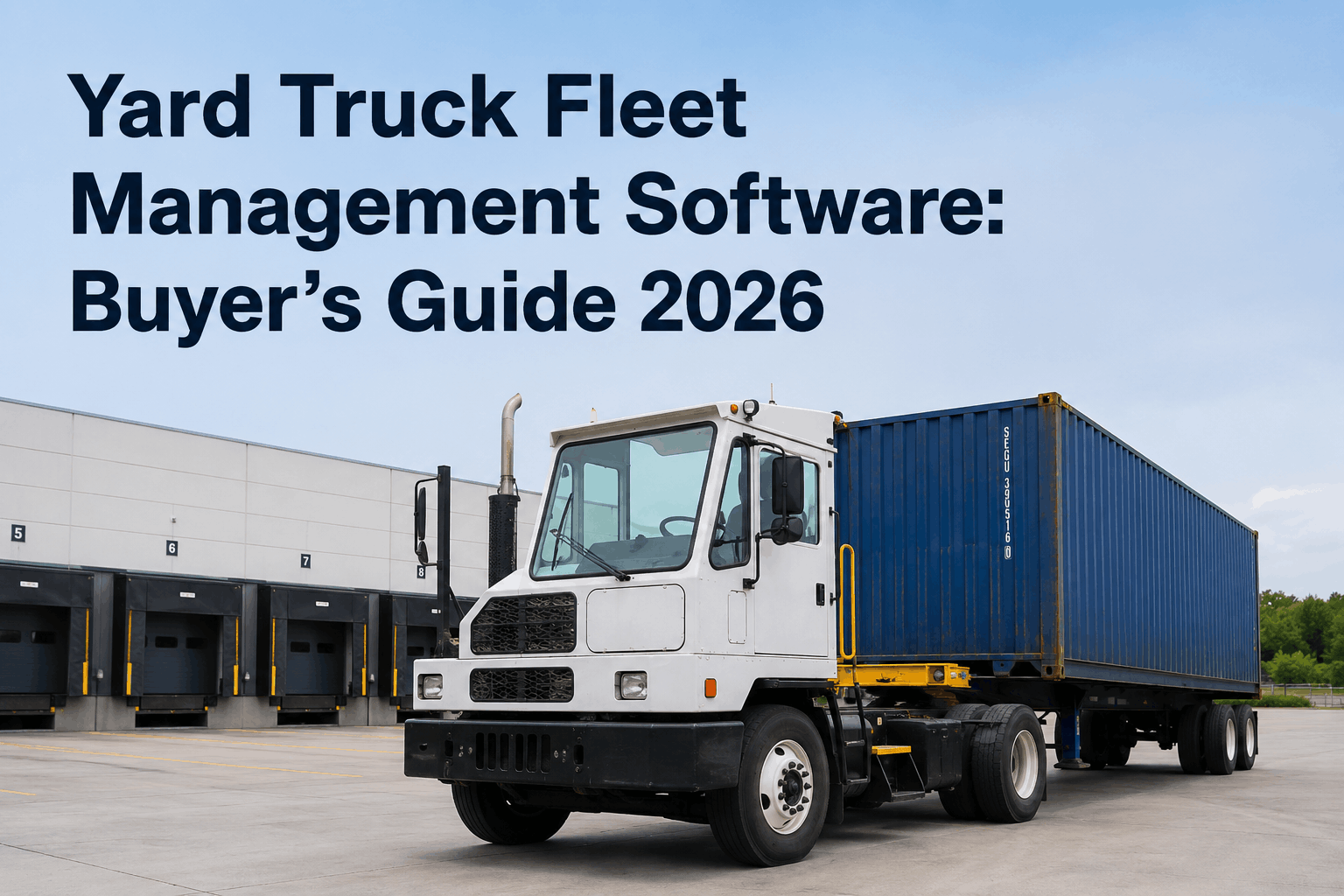
A yard truck lives a punishing life that a highway tractor never sees. It's purpose-built to move trailers between dock doors in seconds, which means its duty cycle is almost entirely stop-start: hundreds of hook-and-release cycles a shift, constant low-speed maneuvering, and a fifth wheel and hydraulics that take more abuse in a week than an over-the-road unit sees in a month. That intensity accelerates wear in predictable places — and predictable wear is exactly what a schedule can defeat. The plants still losing dock time are the ones treating these workhorses like ordinary trucks.
Hook & lift system
The hydraulic fifth wheel cycles constantly. Seals, hoses, and the boom take the heaviest, most repetitive load on the truck.
Brakes & tires
Endless stop-start and tight turns wear brakes and tires far faster than highway duty — and they're safety-critical in a busy yard.
Transmission & drivetrain
Frequent direction changes and shifting under load stress the driveline and spike transmission temperatures.
The 40% Comes From Four Levers
Cutting downtime by 40% isn't one big fix — it's four compounding levers. Each tackles a different slice of lost time, and together they move a reactive dock to a proactive one. Here's where the hours come back. Start a free account to begin pulling these levers on your own fleet today.
Usage-based preventive maintenance
Schedule service on engine hours and cycle counts, not the calendar — a yard truck's real wear is in hours, not miles. A healthy shop runs a 4-to-20 ratio: four hours of planned maintenance prevents twenty hours of unplanned downtime.
Daily pre-shift inspections
A 5-minute operator check on hook system, brakes, tires, and lights catches the small defects that become mid-shift breakdowns. Drivers are your earliest warning system — make reporting one tap.
Fast defect-to-repair workflow
The biggest hidden downtime isn't the repair — it's the lag before it starts. Auto-route every reported defect into a work order with parts and severity attached, so a truck moves from "down" to "in the bay" in minutes.
Parts & spare-truck readiness
Stock the fast-wearing parts — hook seals, brake components, filters — and stagger PM so you never lose multiple spotters at once. A truck waiting on a part is downtime you chose.
Turn a reactive dock into a 95%-uptime dock
Truck Inspection & Maintenance runs hour-based PM, mobile pre-shift inspections, and instant defect-to-work-order routing for every yard truck — so a defect becomes a scheduled repair, not a surprise breakdown. No hardware, no contracts. Sign up free and start cutting downtime this week.
Where the Downtime Hours Hide
To cut downtime you have to see its anatomy. Most "downtime" isn't wrench time — it's the waiting that surrounds it. This is the breakdown of a typical unplanned dock-truck failure, and where each lever claws time back.
The wrench time is often the smallest slice. The 40% reduction comes almost entirely from collapsing detection, reporting, and parts-wait — not from working faster.
Before vs After: A Reactive Dock vs a Managed One
The contrast is stark once a real workflow is in place. Same trucks, same dock — different system. Reach our team to see what the shift looks like for your operation.
- ✕Trucks run until they break mid-shift
- ✕Defects reported verbally, then forgotten
- ✕Repairs stall waiting on unknown parts
- ✕One down spotter backs up every dock door
- ✕No data on what keeps failing
- ✓PM fires on hours before failure hits
- ✓Defects logged with photos, instantly routed
- ✓Fast-wear parts stocked and ready
- ✓Staggered PM keeps spare capacity available
- ✓Failure trends drive smarter schedules
Frequently Asked Questions
Why do yard trucks break down more than highway trucks?
Duty cycle. A yard truck (spotter, hostler, terminal tractor) is built for hundreds of hook-and-release cycles per shift, constant stop-start, and tight low-speed maneuvering. Its hydraulic fifth wheel, brakes, and transmission take more repetitive stress in a week than an over-the-road unit sees in a month. That wear is predictable — which is exactly why a schedule built around it works. Start a free account to schedule by real usage.
Should I schedule dock truck PM by miles or hours?
Hours and cycles, not miles. A spotter barely accumulates mileage but racks up enormous engine-hour and hook-cycle wear. Odometer-based intervals miss almost all of it. Trigger service on engine hours and cycle counts so the schedule matches how the truck actually wears — that's the foundation of the whole downtime reduction.
Where does the 40% reduction actually come from?
Mostly from collapsing the waiting around repairs, not the repairs themselves. In a typical failure, detection lag, reporting delay, and parts-wait dwarf the actual wrench time. Daily inspections catch issues early, mobile reporting kills the lag, and parts readiness ends the wait. Add usage-based PM that prevents many failures outright, and 40% is realistic. Talk to our team about your numbers.
What's the maintenance-to-downtime ratio I should target?
In a high-performing fleet, roughly four hours of planned maintenance prevents about twenty hours of unplanned downtime — a 1-to-5 payback. Shifting the balance toward proactive care stabilizes the whole dock operation. Most plants are surprised how little planned time it takes to eliminate the big unplanned hits once they track it.
Can my operators do the daily inspections?
Yes, and they should. A trained operator can complete a 5-minute pre-shift check on the hook system, brakes, tires, lights, and fluids before the shift starts. They're your earliest warning system — the goal is to make reporting a defect as easy as one tap so nothing gets lost between the yard and the shop. Sign up free to put inspections on every operator's phone.
How fast can we see results?
Faster than most expect. Defect-to-repair and reporting improvements show up almost immediately, since they attack waiting time you're losing right now. PM-driven failure prevention builds over the following weeks as the schedule catches wear early. Because one down spotter backs up an entire dock, even early gains have outsized impact on throughput and missed-production risk.
Cut the downtime that's stalling your dock.
Truck Inspection & Maintenance runs hour-based PM, mobile pre-shift inspections, instant defect-to-work-order routing, and failure-trend analytics for every yard truck and spotter. Free for up to 3 vehicles, no hardware, no contracts. See the 40% for yourself.