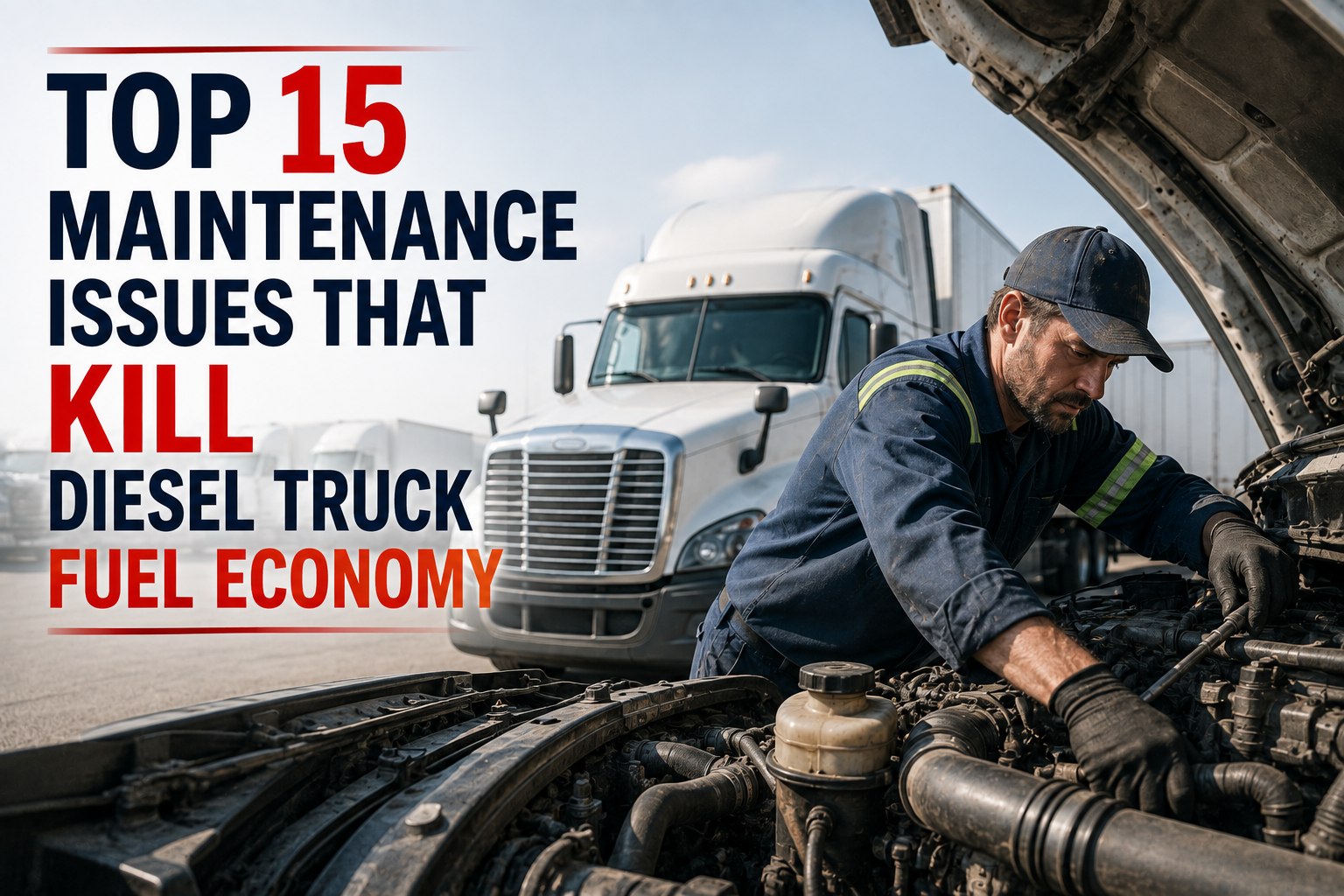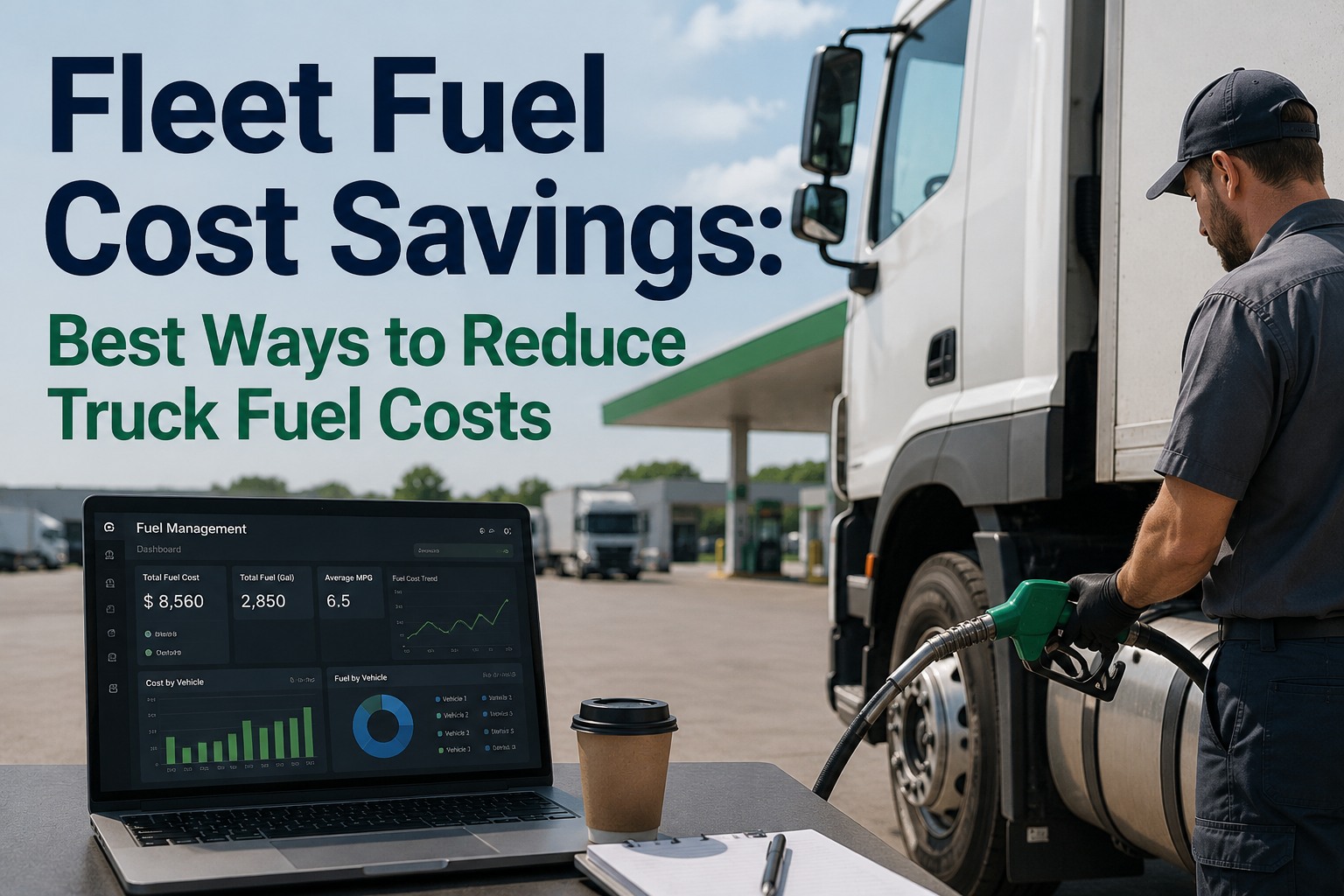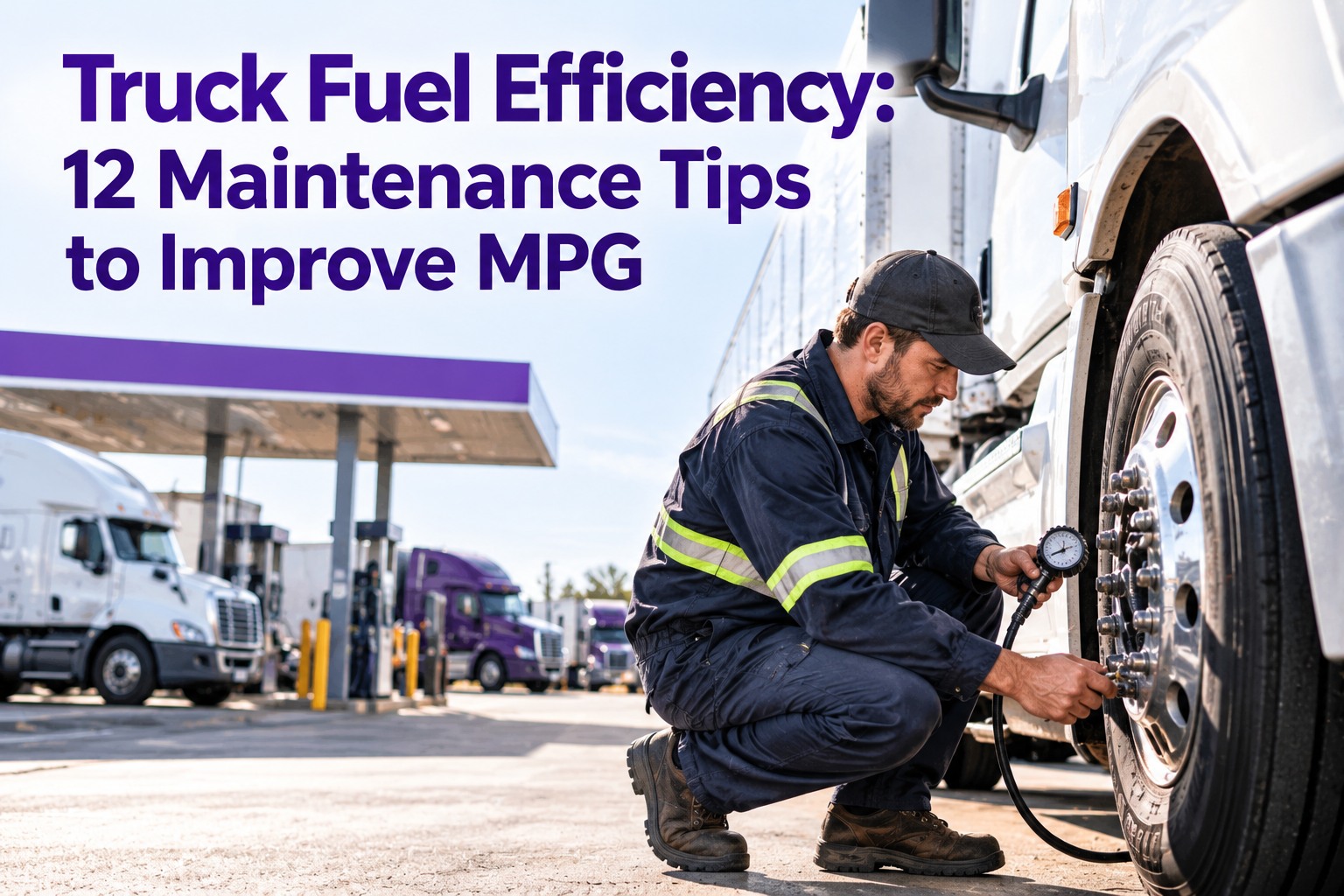
Two trucks run the same lane with the same load and come back with fuel bills hundreds of dollars apart — and the difference is almost always maintenance, not driving. Fuel is 30–40% of what it costs to run a truck, and a poorly maintained one burns 10–25% more than one kept right. The good news is that most of that gap comes from a dozen specific, fixable things. Here are the twelve, each with what it's actually worth at the pump. Start free and put every fuel-saving check on a schedule.
Truck Fuel Efficiency: 12 Maintenance Tips to Improve MPG
Every tenth of an MPG is maintenance you either did or didn't do. Truck Inspection & Maintenance Management Software keeps the checks that drive fuel — tire pressure, filters, injectors, alignment, idle — on a schedule, and flags the one that's quietly costing you gallons before it shows up on the fuel card.
Where the Fuel Actually Goes
Before the tips, know what you're fighting. At highway speed, most of a truck's fuel is spent pushing air and rolling tires — which is exactly why aero and tire maintenance move the needle more than anything under the hood.
Tires & Rolling Resistance
The cheapest MPG on the truck lives here — tires are a bigger fuel lever than most drivers realise, and the fix is often just air.
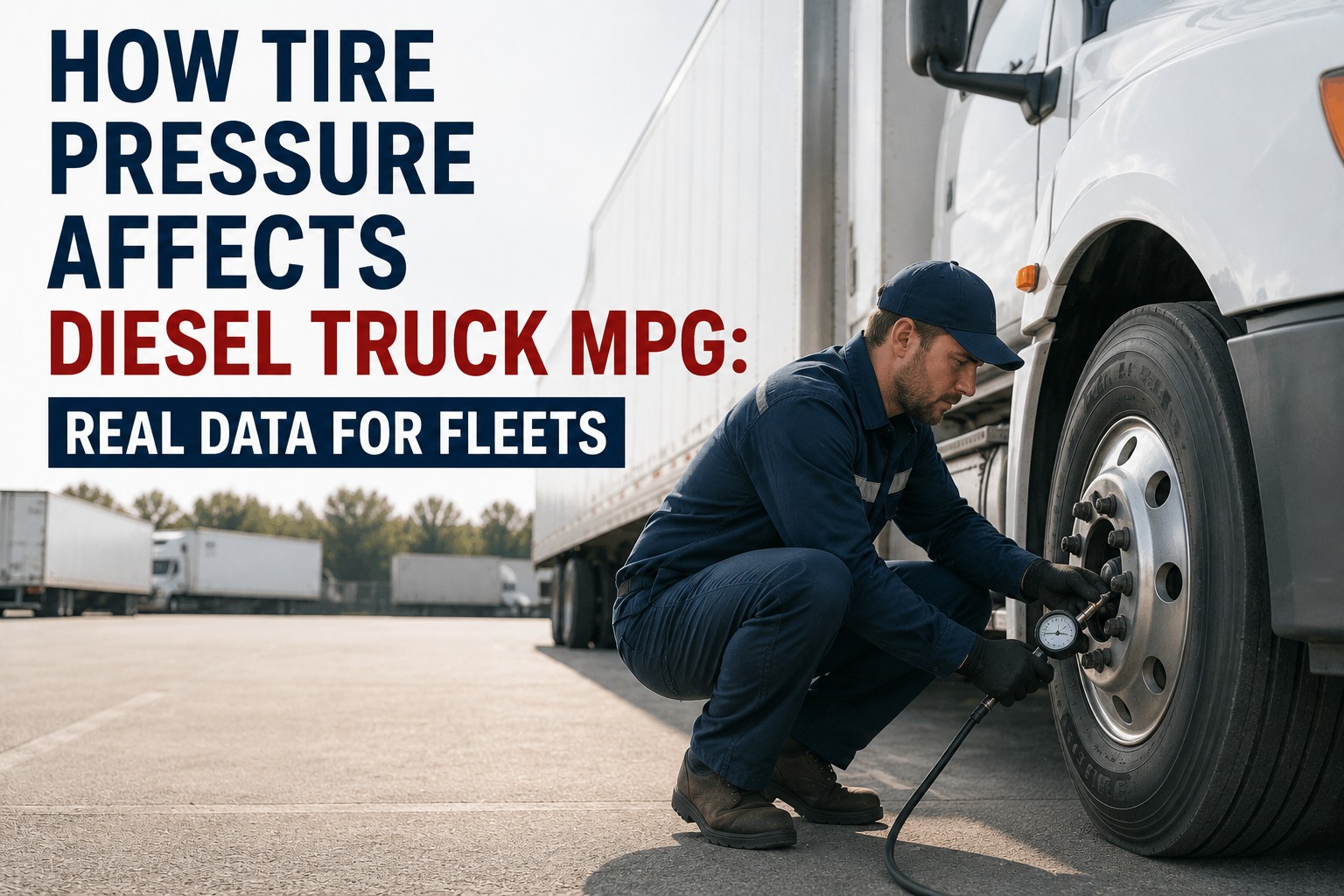
Every 1 psi under spec costs about 0.2% in fuel, and a drive-axle set can quietly sit 10+ psi low. Proper inflation across the fleet is worth roughly $1,500–$2,500 per truck a year.
A truck out of alignment drags its tires instead of rolling them, scrubbing off both tread and MPG. Aligned axles roll straight and burn less — and the tire-wear pattern tells you when it's drifted.
Low-rolling-resistance tires and properly matched duals cut the energy lost to the road. Mismatched or badly worn tires add resistance the engine pays for every mile.
Engine, Fuel & Air
Following the maintenance schedule alone buys 4–8% in fuel. These are the under-hood checks that keep combustion clean and efficient.
A restricted air filter starves the engine and forces it to work harder for the same power. Replace on the interval — roughly every 15,000–30,000 miles — and check restriction between changes.
Worn or dirty injectors spray a poor pattern, burning fuel incompletely — you feel it as lost power and black smoke. Healthy injectors burn every bit of fuel they meter.
The manufacturer-spec oil at the right interval cuts internal friction. Clean fuel filters belong here too — a restricted filter makes the pump and engine work harder than they should.
A soot-loaded DPF raises exhaust backpressure and drives extra regenerations, both of which burn fuel. Keep soot and ash in range so the engine isn't fighting its own exhaust.
A sensor or emissions fault can push the engine into a rich or derated state that quietly wastes fuel. A $200 maintenance item left alone can turn into $2,000 of wasted fuel.
Aerodynamics & Driveline
Aero drag is up to half the fuel bill at highway speed, so keeping the aero package intact is pure MPG — a full package is worth 5–12%.
Side skirts, gap reducers, and fairings only pay off intact — a cracked skirt or missing fairing is drag you're fueling. A complete, undamaged aero package can improve efficiency 5–12%.
Dragging brakes, dry wheel bearings, and binding U-joints all steal power before it reaches the road. A free-rolling driveline is fuel that goes to motion, not friction.
Weight, Idle & Habits
The last lever is operational — what the truck carries and how long it sits running. Small, consistent wins that add up over a year.
Idling burns 0.8–1.5 gallons an hour for zero miles — two hours a day wastes $7,000–$12,000 per truck a year. An APU or a shutdown policy turns that straight into savings.
Every 100 pounds of excess weight trims roughly 1% off efficiency. Clear out the junk that rides around in the truck and trailer and the engine has less to haul.
Software That Protects Every Tenth of an MPG
Helping with exactly this is the job. Truck Inspection & Maintenance Management Software keeps the twelve checks that drive fuel on a schedule — tire pressure, air filters, injectors, alignment, DPF, aero condition — and turns a tripped reading or a fault code into a dated work order before it starts costing gallons. Because every check is logged against the truck, the one unit burning 10% more than its neighbours stops being a mystery on the fuel report and becomes a specific thing to fix. The $200 item gets done before it becomes $2,000 at the pump.
The Math on a Fleet
These percentages feel small until you run them across a fleet and a year. That's where a tenth of an MPG turns into real money.
Frequently Asked Questions
Stop Paying for Maintenance You Didn't Do at the Pump
Truck Inspection & Maintenance Management Software keeps the twelve fuel-driving checks on a schedule, flags the one quietly costing you gallons, and logs every reading against the truck so the thirsty unit is obvious. Fleets run it to turn a tenth of an MPG, across every truck and every mile, into money that stays in the business.