Utility line trucks — bucket trucks, digger derricks, transmission lifts — are the most expensive and most operationally critical assets in any electric or telecom fleet. When a line truck goes down during a storm restoration, the cost isn't just the repair invoice. It's a lineworker crew sitting idle at $400-$800 per hour in burdened labor, a mutual aid commitment missed, customer outage minutes ticking up on every regulatory scorecard, and a single hydraulic failure that can hold up the restoration of an entire neighborhood. Industry data is unambiguous: heavy equipment fleets average 14% unplanned downtime, with hydraulic failures alone driving 45% of breakdowns. Fleets running structured PM cut unexpected failures by 85%; predictive maintenance combined with proper parts staging delivers a documented 30-50% downtime reduction within 12-18 months. This guide is the operational playbook utility fleet managers actually run — the 5 downtime sources to attack, the 5-pillar reduction strategy, storm-season prep timeline, parts-staging tier model, and component-specific PM cadence. Apply all five pillars and a 30%+ uptime gain is the conservative target. Start your free trial and run utility fleet inspections on software built for storm-ready operations.
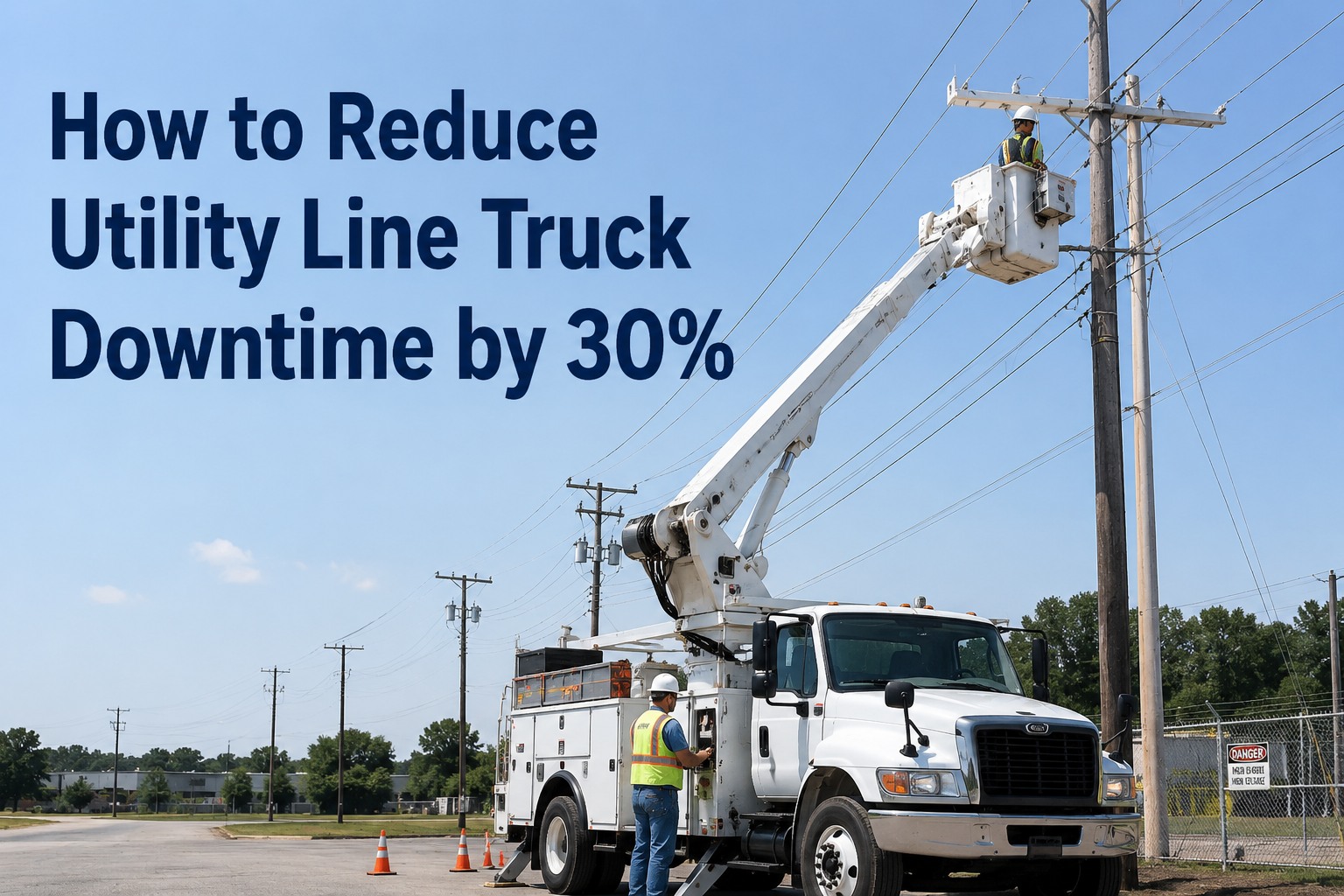
How to Reduce Utility Line Truck Downtime by 30%
The 5-pillar uptime playbook for storm-ready electric and telecom fleets — parts staging, PM cadence, and hot-swap strategy.
Why Utility Line Trucks Have a Different Downtime Profile
A line truck is not a delivery van. It's a $200K-$400K asset combining a chassis, an aerial device, an insulated boom (dielectric-tested annually), outrigger systems, hydraulic pumps, and high-voltage proximity safety equipment. Each subsystem has its own failure mode and downtime impact. Generic fleet maintenance approaches miss the components that actually take these trucks out of service:
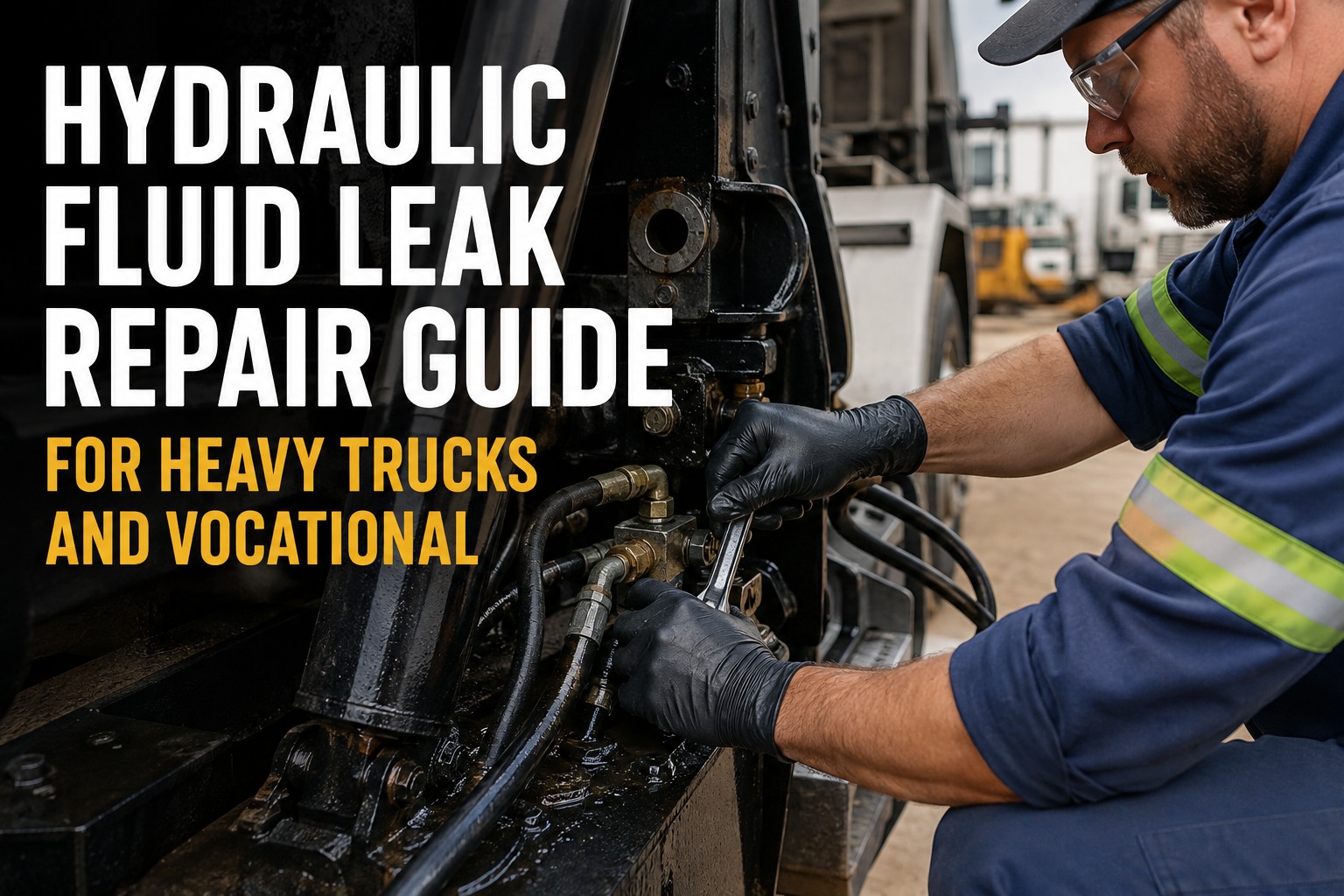
Hydraulic System Failures
Pumps, hoses, cylinders, fluid contamination. The dominant failure mode on bucket trucks and digger derricks — and the one paper inspections miss most often.
Aerial Device / Boom
Boom pins, rotation bearings, leveling sensors, insulation testing failures. Annual dielectric inspection finds many; daily DVIRs catch the rest.
Chassis & Drivetrain
Engine, transmission, brakes, suspension. Standard heavy-duty truck issues — but downtime impact is amplified because the aerial mission is blocked.
Outrigger / Stabilizer
Outrigger cylinders, pads, control valves. Any outrigger fault is an immediate OOS — the boom cannot be deployed without 4-corner stability.
Electrical & Controls
PTO controls, upper/lower controls, joysticks, foot pedals, emergency stops. Modern trucks have CAN-bus diagnostics; older trucks need DVIR detail.
The 5-Pillar Downtime Reduction Playbook
The 30% target is achievable, but only by stacking five pillars — no single pillar gets you there alone. Industry data shows structured PM alone delivers ~85% reduction in unexpected failures, while predictive maintenance adds 30-50% downtime cut. Truck Inspection & Maintenance runs every pillar from one platform:
Component-Specific PM Cadence
Hydraulic fluid and filter every 500-1,000 hours, dielectric testing annually, boom pin grease every 250 hours, outrigger cylinder service quarterly. Service by aerial-device hours, not chassis mileage.
Tiered Parts Staging Strategy
3-tier model: yard stock (24-hour parts), regional warehouse (72-hour), OEM order (1-3 weeks). Most parts that ground a line truck are tier 1 — having them staged before storm season is the difference.
Hot-Swap Spare Vehicles
Maintain 1 ready-to-deploy spare line truck per 8-10 working units. When a primary truck fails, swap crews to the spare while repair is in progress. Lost crew time drops dramatically.
Digital DVIRs with Photo Capture
Lineworkers photo-document defects on the truck and the boom every shift. Defects route to maintenance instantly; trend analysis surfaces wear patterns before failure. ~85% catch rate vs ~35% on paper.
Storm-Season Pre-Inspection
Annual deep inspection 60-90 days before storm season. Dielectric test, full hydraulic flush, outrigger cycle test, boom rotation calibration. Trucks enter storm season in known-good condition.
Run all five pillars on one platform.
Truck Inspection & Maintenance handles aerial-device PM by hours, digital DVIRs with photo capture, parts inventory by tier, hot-swap availability tracking, and storm-season inspection workflows. Built for utility fleets. Free for up to 3 vehicles. Contact support to plan your rollout.
The Storm Season Prep Timeline — Start 90 Days Out
Utility fleet managers preparing for hurricane, ice, or severe-weather season can't wait until forecast week. The work starts 90 days out. Truck Inspection & Maintenance automates this calendar so nothing slips:
Asset Audit & Triage
Full inventory: which trucks are storm-ready, which need work, which units are spare-tier candidates. Identify and order long-lead-time parts now.
Deep Inspection & Dielectric
Schedule annual aerial device inspection and dielectric/insulation testing. Hydraulic fluid analysis. Boom pin and rotation bearing service. Outrigger cylinder cycle test.
Parts Staging & Supplier Confirm
Stage tier-1 parts (hoses, filters, lights, tire spares) at yard. Confirm tier-2 regional warehouse stock. Lock OEM service appointments with primary providers for storm-window coverage.
Crew Readiness & Drills
Mutual aid agreements current. Crew safety equipment audited. Stage hot-swap spare trucks closer to operational depots. Run a deployment drill — measure actual time-to-bucket-up.
Final 72-Hour Sweep
Top off fluids, full inspections, generators tested, fuel reserves filled. Position trucks at staging depots. Live dispatch dashboard with truck status across the fleet.
The 3-Tier Parts Staging Model
The parts a utility line truck needs to get back into service almost never include exotic items — they're predictable, repeatable wear and consumable parts. The tier model below is what high-uptime utility fleets actually run:
Yard Stock — 24 Hour
Regional — 72 Hour
OEM Order — 1-3 Weeks
PM Cadence by Component — Aerial-Hour Based
Utility line truck PM schedules by chassis mileage misses the components that fail most. The boom, hydraulics, and outriggers run on engine and PTO hours — not road miles. Schedule by what actually wears:
The Utility Fleet ROI — 25 Line Trucks, Year 1
Utility fleet ROI is unusually clean because every avoided breakdown maps to lineworker labor that didn't sit idle. The math below is for a 25-truck electric utility operation hitting moderate (not aggressive) targets:
Frequently Asked Questions
What's the average downtime for a utility line truck?
Industry baseline is 14% unplanned downtime across heavy equipment fleets. Utility line trucks specifically often run higher (16-20%) due to hydraulic and aerial-device failure modes that generic PM misses. Top-quartile utility fleets running structured PM + predictive workflows hit 6-10% unplanned downtime — meaningfully better than industry average.
How long does it really take to cut downtime by 30%?
12-18 months for full implementation across all 5 pillars. Pillar 1 (PM cadence) and Pillar 4 (digital DVIRs) start showing impact within 90 days. Pillar 2 (parts staging) and Pillar 5 (storm prep) compound during the first storm season. Pillar 3 (hot-swap fleet) requires the largest capital commitment but unlocks the biggest single uptime number. Sign up free to start with Pillars 1 & 4 immediately.
Why is hydraulic failure so dominant in utility trucks?
Aerial devices run hydraulic systems harder than almost any other commercial vehicle: continuous boom up/down/rotation cycles, outrigger deployment, sometimes 8-12 hours of active hydraulic work per shift in storm conditions. Heat, contamination, and seal degradation accelerate. Hydraulic failures drive 45% of breakdowns industry-wide; catching them via fluid analysis, hose inspection trends, and pump performance monitoring is the single biggest downtime lever.
How many hot-swap spare trucks should a utility fleet maintain?
Industry rule-of-thumb: 1 spare per 8-10 active line trucks for normal operations; 1 per 5-6 during declared storm season. The spares should be deployable within hours — not "available somewhere in the yard." Hot-swap units need to be storm-prepped on the same cadence as the primary fleet.
How does Truck Inspection & Maintenance support utility fleets specifically?
The platform supports hour-based PM scheduling (not just miles) for aerial devices, parts inventory by tier with reorder triggers, hot-swap availability tracking per depot, dielectric test compliance calendars, and digital DVIRs with photo capture for bucket truck and digger derrick workflows. Storm-season pre-flight templates run from one dashboard.
Is annual dielectric testing legally required?
Yes — OSHA 1910.269 requires annual dielectric/insulation testing for all insulated aerial devices used in electric utility work. Records must be retained and produced on demand. Non-compliance is both a safety risk to lineworkers and a citation exposure. Talk to our team for utility-specific compliance calendars.
Hit the 30% downtime reduction target on every line truck.
Truck Inspection & Maintenance runs all 5 pillars — aerial-hour PM, parts staging, hot-swap tracking, digital DVIRs, storm-season workflows — on one platform built for utility fleets. Free for up to 3 vehicles. No hardware. No contracts.