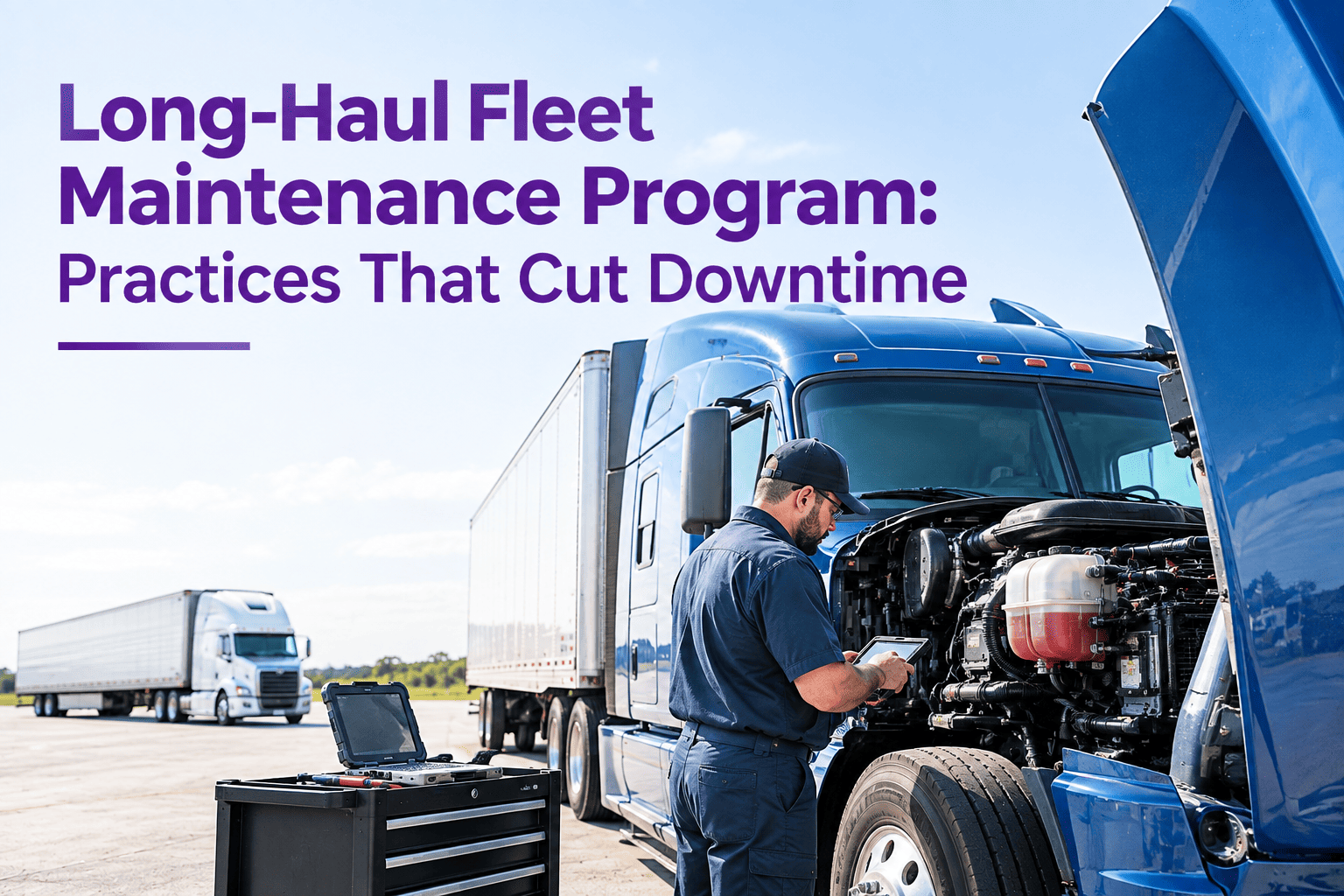
A long-haul tractor covers 100,000+ miles a year, hits every PM interval every 8 to 12 weeks, and is at least 1,500 miles from the fleet's shop when the odometer trips. Standard PM programs written for the yard fail on OTR — the truck is due when it's due, and the truck is nowhere near home. What works is a program that forecasts each unit's odometer against the dispatch plan, matches the due date to a location window, bundles work into the same stop, and routes roadside defects straight into work orders. Truck Inspection & Maintenance Management Software runs that entire cadence — mileage-based PM triggers, location-aware due-soon alerts, mobile DVIRs on the shoulder, and a national-vendor work-order routing engine. Start free and run long-haul OTR reliability on TIM.
Your Truck Is Due for Service — And It's 2,000 Miles From Your Shop
OTR PM planning fails when it only watches the odometer. The truck hits the interval on the road, gets serviced late at a premium vendor, or worse — breaks down on the shoulder because the PM window slipped. Truck Inspection & Maintenance Management Software schedules PMs by mileage, engine hours, and location, routes roadside defects into work orders, and keeps a complete unit history that every vendor writes back to.
The A / B / C Service Cascade — Long-Haul PM Sequenced by Mileage
OTR fleets structure PM as a mileage-tier cascade — A service at short intervals catches basics; B service catches drivetrain; C service is the deep annual overhaul. TIM sequences the cascade against each unit's actual odometer, not the fleet average.
- Engine oil + filter change
- Chassis lube, all fittings
- Air + fuel filter check
- Tire pressure + tread depth
- Full DVIR walkaround
- Everything in Service A
- Transmission fluid + filter
- Differential fluid check
- Brake system inspection + adjustment
- Coolant test + top-up
- Everything in Services A + B
- Full coolant flush + replace
- Injector cleaning / spec check
- Suspension bushing overhaul
- DOT annual inspection
The 3-Step Location-Aware PM Workflow — Where the Truck Will Be When It's Due
OTR PM planning lives or dies on the two-week forecast: given this unit's current mileage and its dispatch plan, where will it be when the next service interval hits? TIM runs the answer as a three-step workflow that starts every Monday morning.
Take the unit's current mileage, project forward using its actual weekly average — not the fleet average. Team operations at 5,000 mi/wk hit intervals twice as fast as solo drivers. TIM projects each unit individually and fires due-soon alerts early enough to plan.
If the PM lands in 1,800 miles and the truck routes through home terminal in 1,500, you have a window. If it lands mid-lane, activate a national-vendor account. TIM overlays the dispatch plan against the PM forecast and surfaces the decision.
A tractor parked for an oil service is the cheapest downtime the fleet will ever buy. TIM checks every due-soon item within a 5K-mile window and adds it to the same work order — one stop, one WO, one line on the P&L.
The 6 Systems Long-Haul Breakdown Prevention Focuses On
Not every system fails on the shoulder. Roadside breakdown data shows six systems account for the overwhelming majority of OTR incidents. TIM's daily DVIR and B-service template weight these disproportionately.
The #1 cause of long-haul roadside events. Tread depth, pressure, sidewall damage checked daily; casings tracked per position.
Sleeper tractor pulls 24/7 on the batteries — HVAC, inverter, hotel loads. Five-minute inspection at every A service.
Mountain grades wear brakes at multiples of highway rates. Brake stroke measurement at every 10K-mile check.
Coolant loss + radiator restriction cause derate + tow. Coolant tested every oil service, radiator core inspected quarterly.
APU failure means engine idling all night — fuel burn + regulatory exposure. Sleeper HVAC failure is a driver-retention event.
Highway regen cycles that don't complete = derate at the worst possible time. TIM correlates active regens against DTC codes on the unit.
Mileage Cascade · Location Forecast · Roadside Routing — All in TIM
Truck Inspection & Maintenance Management Software runs the OTR reliability program end-to-end: A/B/C service cascade sequenced per unit, location-aware due-soon alerts, mobile DVIR that works offline on the shoulder, and roadside defects routed straight into work orders so no vendor visit goes untracked. The truck earns miles instead of sitting.
The Remote-Driver Support Loop — When the Shop Is 2,000 Miles Away
An OTR driver is the truck's only eyes and ears for weeks at a stretch. What separates a fleet that runs at 94% PM compliance from one at 60% is how well the driver and the shop stay connected when there's a continent between them. TIM closes that loop three ways.
Daily DVIR runs on the driver's phone, works offline, photo-verifies defects, syncs the moment cell returns. Shop sees the finding before the truck reaches the yard.
When roadside repair is required, TIM routes the work order to the closest approved vendor from the fleet's national account list. Vendor writes back to the unit record.
Every vendor invoice, roadside repair, DVIR defect, and PM signoff files against the same unit record. No lost history when the truck moves from vendor to vendor across lanes.
Frequently Asked Questions
An OTR Fleet That Earns Miles Instead of Chasing Odometers by Phone
TIM runs the long-haul PM cascade against each unit's actual odometer, forecasts due dates against the dispatch plan, routes roadside defects to national vendors, and keeps every vendor visit on the unit record. Downtime becomes the exception, not the norm.