A dry engine on a tractor gets you a tow. A dry engine on a reefer gets you a $50,000 spoiled load, a failed FSMA temperature log, and a voided cargo insurance claim — all from one fluid level nobody checked. Refrigerated units are unforgiving in a way road tractors aren't: they run four separate fluid systems, they clock hours while parked at a dock, and a slow loss in any one of them ends with warm cargo and a food-safety event, not just a breakdown. This guide lays out the fluid check program that keeps reefer uptime above 99% — the four systems and how each is checked, why hours beat miles, the intervals that matter, and the pre-trip-to-PM cadence that catches loss before the load is ever at risk. Start a free trial and schedule reefer fluid checks by engine hour automatically.
Cold Chain Reefer · Fluid Check Program
The Reefer Fluid Check Program for 99%+ Uptime
A reefer isn't one fluid system — it's four, each on its own clock, each capable of ending the cold chain if it runs low undetected. Here's the discipline that keeps every load cold from origin to dock.
4fluid systems to track
Hoursnot miles — clocks at the dock
$50K+load lost to one missed level
99%+uptime target for cold chain
The Four Fluid Systems on Every Reefer
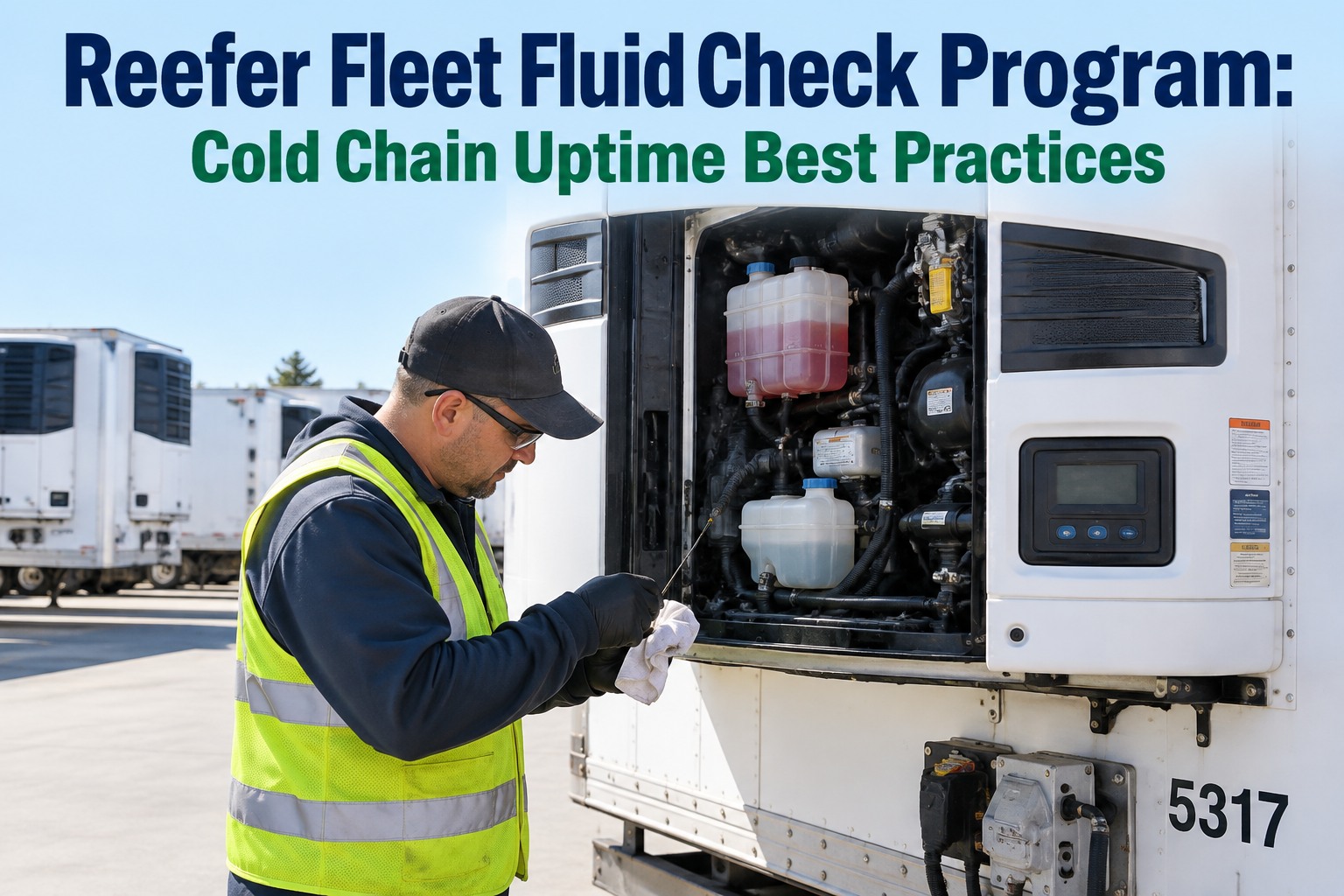
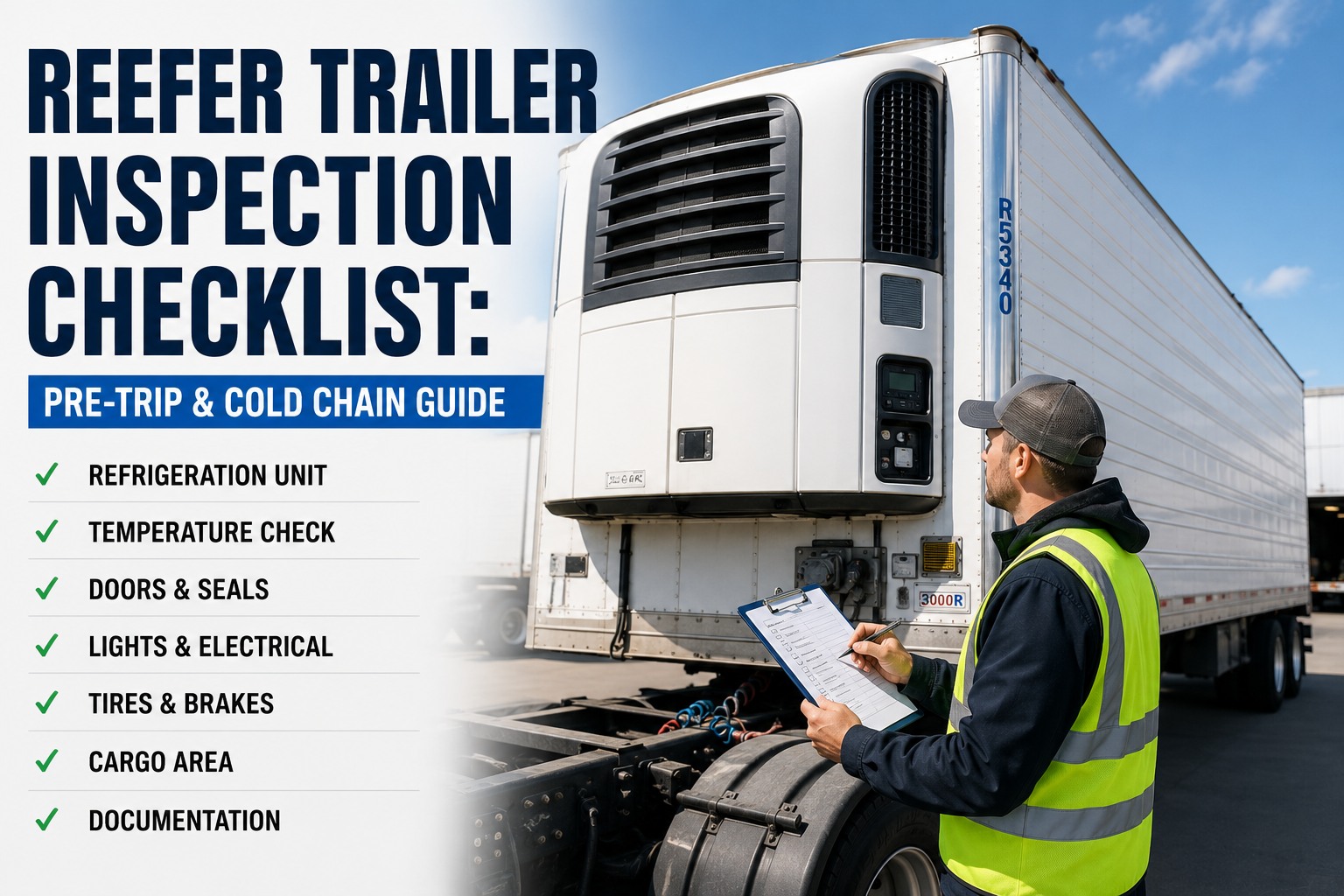
This is what makes reefer fluid discipline different from a tractor. The refrigeration unit is a self-contained diesel powerplant with four independent fluid systems — and the driver's daily check has to touch all four, because any one of them going low quietly takes down the whole unit.
Engine Oil
Dipstick level + condition, every pre-trip
The reefer diesel runs under heavy, sustained load in temperature extremes. Newer units run CJ-4/CK-4 with combination full-flow and bypass filters for extended intervals — but level and color still get checked daily. Reefer engines do not tolerate deferred oil the way a truck engine does.
Coolant
Level at reservoir + freeze point
Same job as any diesel — but a reefer engine that overheats mid-route shuts down and the box warms immediately. Check level cold, watch for weeping hoses, and verify freeze protection ahead of winter. A blocked tank vent quietly starves the system.
Refrigerant
Sight glass daily · licensed charge check every ~6 mo
The fluid that actually moves the heat. Drivers read the sight glass for bubbles/clarity; a low charge shows as a unit that runs constantly but can't pull down to setpoint. Charge and operating pressure must be verified by a licensed technician — roughly every six months.
Fuel & Water Separator
Level daily · drain separator regularly
The reefer has its own diesel tank, filter, and separator. Contaminated or water-laden fuel is a leading cause of reefer failure — run out of fuel and the cold chain stops cold. Fuel from reputable sources, change filters every service, and drain the water separator, especially in cold weather.
Why all four, every time A tractor driver who checks oil and rolls is usually fine. A reefer driver who checks oil but skips the sight glass or the fuel separator has left three of four failure paths unwatched — and the one they skipped is the one that warms the load. The daily reefer fluid check is a four-point check by design.
Ask how a four-system reefer check gets standardized.
The Rule That Changes Everything: Hours, Not Miles
Base reefer PM on tractor mileage and you will systematically under-service your highest-runtime units. It's the single most common reefer maintenance mistake — and the easiest to fix.
250–500
engine hours between PMs
A reefer clocks hours while parked. The unit runs refrigeration at a loading dock, in a yard, overnight — accumulating engine hours with zero miles on the odometer. Mileage-based scheduling never sees those hours.
High-utilization units burn hours fast. A unit running 18+ hours a day needs PM roughly every 250 hours; one averaging 8–12 hours daily can stretch toward 500. Both are invisible to a mileage trigger.
The meter is already there. Thermo King and Carrier Transicold units carry hour meters that feed telematics directly — so hours-based PM scheduling can be fully automated once the trigger is set to hours, not miles.
The Interval Reference
Exact intervals vary by unit age and manufacturer — newer units with combination filters and modern oil stretch further — so always confirm against the OEM schedule. These are the industry-standard checkpoints to build your program around.
Daily / Pre-Trip
Four-fluid check
Oil level & condition, coolant level, refrigerant sight glass, fuel level + separator. Plus the automated 15-minute PTI diagnostic on modern units.
~500 hrs
Interim service
Oil & filter, fuel filter, belt/tensioner inspection, sensor calibration, door seals, evaporator condition. Interim check on high-runtime units.
~1,500 hrs
Full "A" PM
Complete PM: oil, filters, belts, refrigerant charge check, coolant, gear fluid. Many fleets align this with the annual DOT inspection when hours line up.
~3,000 hrs
Major "B" PM
Deep service interval on newer units — the extended schedule modern reefers with combination oil filters and CJ-4/CK-4 oil are designed to reach.
Schedule Every Reefer Fluid Check by the Hour Meter
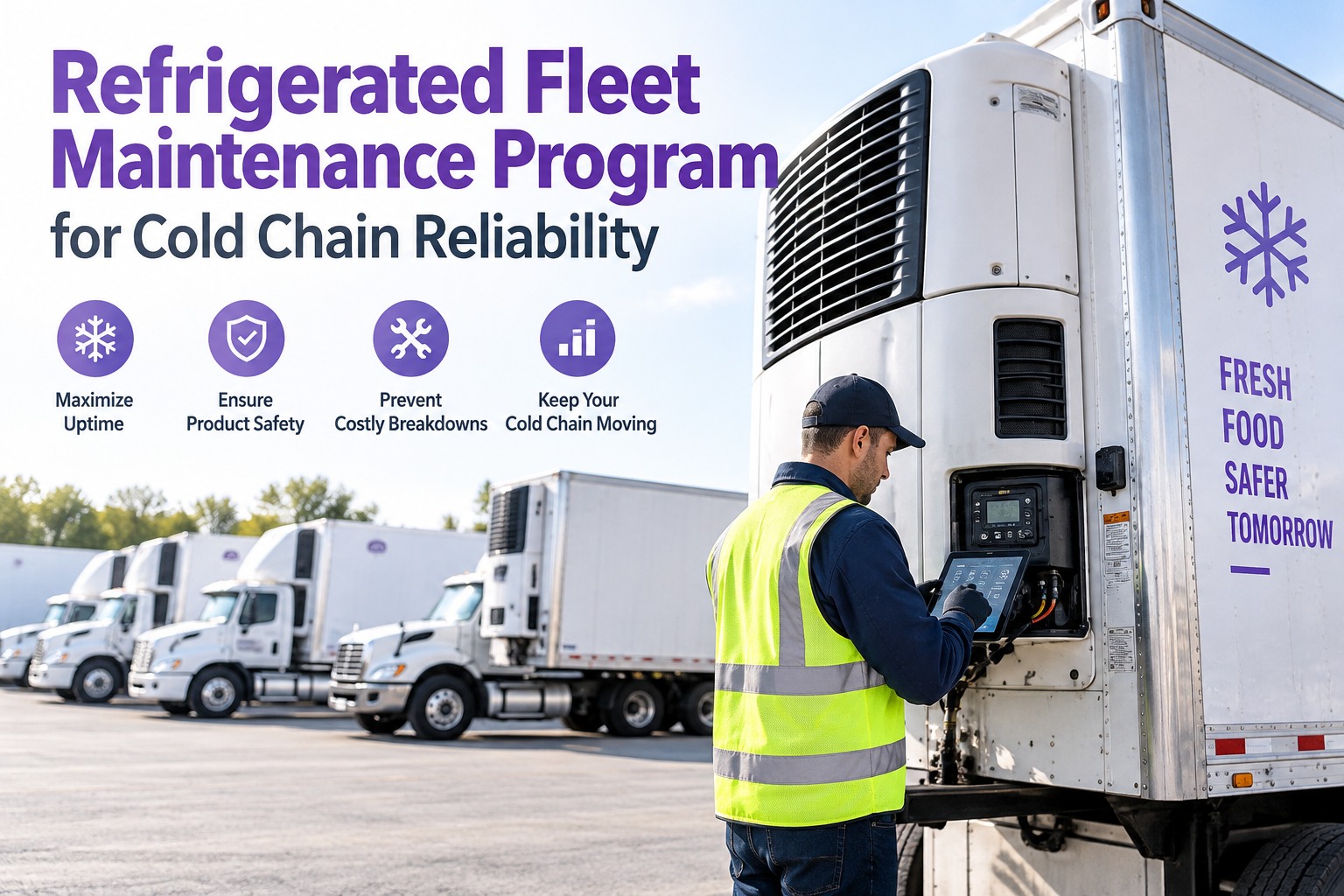
Truck Inspection & Maintenance runs the full inspection-to-repair loop for cold chain fleets: the four-fluid daily check lives in the driver's mobile DVIR, PM fires automatically on engine-hour thresholds pulled from the unit — not tractor miles — and a low level or bad sight-glass reading routes straight to a work order. Sensor-calibration and refrigerant-check records stay audit-ready for FSMA and DOT alike. Fleet managers stop chasing paperwork and start driving uptime.
Why Undetected Loss Is Catastrophic — Not Just Costly
On a tractor, a slow fluid loss ends in a breakdown. On a reefer, the same loss cascades into a chain of failures that reaches all the way to a food-safety investigation. That's why the check discipline is non-negotiable.
1
Fluid runs low undetected — oil, coolant, refrigerant, or fuel drops below the safe level between checks.
↓
2
The unit can't hold setpoint — the box drifts even a few degrees above the required temperature mid-haul.
↓
3
The load is compromised — a 2–4°F excursion on produce or pharma can destroy a $50,000+ shipment.
↓
4
The compliance event hits — failed FSMA temperature log, food-safety investigation, and voided cargo insurance for that load.
Delaying a $500 oil change to 700 hours can turn into a $5,000 engine failure — and that failure can be sitting under a full load of frozen product. The math always favors the check.
Start free and make the four-fluid check happen on every unit, on schedule.
Frequently Asked Questions
How often should a reefer unit get a full PM service?
By engine hours, not calendar or mileage. High-utilization units running 18+ hours a day typically need a PM around every 250 hours; units averaging 8–12 hours daily can run toward 500 hours between services. A fuller "A" service commonly lands near 1,500 hours, with newer units reaching a "B" interval around 3,000 hours thanks to combination oil filters and modern CJ-4/CK-4 oil. Always confirm the exact schedule against your Thermo King or Carrier Transicold manual for the specific unit.
Start free and trigger PM automatically off the hour meter.
Why can't we schedule reefer PM off tractor mileage like everything else?
Because a reefer accumulates engine hours whenever it's running refrigeration — including while parked at a dock, staged in a yard, or holding temperature overnight — none of which adds a mile to the tractor. A reefer running continuous refrigeration burns hours far faster than the tractor pulling it earns miles. Schedule off mileage and your busiest, highest-risk units get systematically under-serviced, which is exactly how condemned-load counts climb. Hours-based scheduling, pulled from the unit's own meter, is the fix.
What fluids does a driver actually check at pre-trip versus what needs a technician?
At pre-trip, the driver checks all four levels: engine oil (dipstick and condition), coolant (reservoir level), refrigerant (sight-glass clarity), and fuel (level plus draining the water separator), alongside the unit's automated 15-minute diagnostic. What requires a licensed technician is the refrigerant charge and operating-pressure verification — recommended roughly every six months — and sensor calibration against a reference thermometer at each PM. The driver catches level loss daily; the technician catches the things a level check can't see.
How does fluid discipline actually connect to cold chain uptime?
Directly. The best cold chain fleets don't have fewer breakdowns because of better equipment — they have fewer because they treat uptime as a managed outcome, with software that tracks engine hours and flags PM before the failure window. When every unit gets its four-fluid check on schedule and its PM on hours, low-level failures get caught in the yard instead of mid-route. That's the difference between a fleet condemning a dozen loads a year and one condemning two.
Talk to our team about building a reefer fluid program on Truck Inspection & Maintenance.
Four fluids · By the hour · Load protected
Keep Every Load Cold, Start to Dock
Truck Inspection & Maintenance automates the full inspection-to-repair loop for cold chain fleets — the four-fluid daily check in a mobile DVIR, engine-hour PM scheduling straight from the unit, instant defect routing when a level or sight glass reads wrong, and FSMA- and DOT-ready recordkeeping. Stop chasing paperwork and start driving reefer uptime above 99%.
No credit card required. Free for up to 3 trucks. Built for FMCSA-compliant fleets.